
Choose by Chemistry: Arabica or Robusta for Acidity, Body, Caffeine

Pick Arabica for a sweeter, brighter, more complex cup, and pick Robusta when you want more caffeine, heavier body, and thick crema. A 2025 comparative study confirms Robusta packs more caffeine and antioxidant activity, while Coffee Studies notes Arabica wins on flavor nuance. Roast level and brew method shift how far each species leans into its strengths, and The Flaming Bean builds its lineup around exactly that trade-off.
TL;DR:
- Robusta contains nearly double the caffeine and offers higher antioxidant activity than Arabica, making it more resilient and better suited for strong brews.
- Arabica is prized for its complex, sweet, and aromatic flavor profile, typically used in specialty and pour-over coffee, while Robusta provides a fuller mouthfeel and thicker crema.
- Growing costs for Arabica are higher due to its need for high altitude, cooler temperatures, and limited cultivation regions, whereas Robusta thrives in hotter, lower-elevation environments.
- The roast level significantly alters the flavor of both species, with lighter roasts highlighting Arabica’s acidity and origin nuances, and dark roasts emphasizing Robusta’s body and bitterness.
- Optimal brewing methods depend on the coffee species, with espresso blends favoring Robusta for crema, and pour-over or drip methods better showcasing Arabica’s acidity and aromatics.
Table of Contents
- Arabica vs Robusta at a Glance
- Taste and Cup Profile: What Each Species Actually Tastes Like
- Why Arabica and Robusta Taste So Different Chemically
- Growing Conditions and Why Arabica Costs More
- Matching Arabica and Robusta to Your Brew Method
- How Roast Level Changes What You’re Actually Buying
- How The Flaming Bean Chooses Between Arabica and Robusta
- Two Roasts Built Around This Exact Trade-Off
- The Verdict on Arabica vs Robusta
- Sources
Arabica vs Robusta at a Glance
The two species split cleanly on caffeine, chemistry, and cost, and those differences show up in every cup you brew.
- Caffeine content: Arabica runs about 1.2 to 1.7% by weight, while Robusta typically doubles that at 2.2 to 4%.
- Chemistry: Arabica carries more sugar and lipids, which drives sweetness and aroma. Robusta carries more chlorogenic acid (CGA), which adds bitterness and a fuller mouthfeel.
- Market position: Arabica makes up roughly 60% of global production and dominates specialty coffee, while Robusta fills instant coffee, commodity blends, and a deliberate slice of espresso tradition.
- Price: Arabica costs more to farm and typically sells at a premium over Robusta.
Those numbers explain almost everything else in this comparison, including why your morning drip tastes nothing like a Vietnamese iced coffee.
Taste and Cup Profile: What Each Species Actually Tastes Like
Arabica leans sweet and layered. Expect brighter acidity, more aromatic range, and tasting notes that stretch from citrus and berry to floral tones and milk chocolate, depending on origin and processing. That complexity is why third-wave roasters build almost their entire lineup around it, and why single-origin coffees are almost always Arabica.
Robusta tastes rougher and heavier, and that’s the point in the right context. Common notes include peanut, raw wood, and dark chocolate, with a bitterness that cuts through milk instead of getting lost in it. That’s exactly why it shows up in:
- Traditional Italian espresso blends, where it builds crema and punch
- Vietnamese coffee, brewed strong and balanced against sweetened condensed milk
- Instant coffee, where its hardier chemistry survives processing better
Pro Tip: If an espresso pulls a thick, tan crema and hits harder than the flavor notes suggest, there’s likely Robusta in the blend, even if the bag doesn’t say so directly.
Pour-over and drip methods flatter Arabica’s acidity and aroma. Milk-forward and high-caffeine drinks flatter Robusta’s body. Match the bean to the method, not the other way around.
Why Arabica and Robusta Taste So Different Chemically
The flavor gap starts in the bean’s chemistry, not just the roast.
The caffeine gap is bigger than most drinkers realize, and this makes understanding caffeine effects on health important. Robusta contains close to double the caffeine of Arabica by weight, and a 2025 study on species and roast interactions found Robusta also delivers the highest antioxidant activity of the two, with Arabica landing in the middle once roast level is factored in.
Roasting changes both species further. Heat progressively breaks down CGA and flavonoids, and darker roasts lose the most of both, trading some of that raw antioxidant potential for the Maillard browning compounds that build roasted, caramelized flavor.
Growing Conditions and Why Arabica Costs More
Arabica needs altitude, typically in higher elevation ranges, along with cooler temperatures and consistent rainfall. That narrow window limits where it grows and pushes up labor and land costs. Robusta tolerates lower elevations, hotter climates, and far more environmental stress, which is part of why it’s the hardier crop on paper.
- Yield: Robusta plants produce a significantly higher yield per hectare than Arabica.
- Disease resistance: Robusta resists coffee leaf rust and other pests far better than Arabica.
- Growing cost: Robusta typically costs less to farm, which flows directly into shelf price.
- Major regions: Arabica concentrates in Ethiopia, Colombia, and parts of Central America; Robusta dominates in Vietnam, Brazil, and Indonesia.
That combination of scarcity and difficulty is the real reason Arabica sits at a premium, not marketing.
Matching Arabica and Robusta to Your Brew Method
The brewing method you favor should decide which bag you grab, more than any label on the shelf.
- Espresso blends: Add 10 to 30% Robusta to an Arabica base for extra crema and body; some traditional Italian blends push toward 30 to 40% in southern-style recipes.
- Pour-over and drip: Choose 100% Arabica to let acidity and aroma come through cleanly, and grind slightly coarser to avoid over-extracting bitterness.
- Instant coffee: Expect mostly Robusta, since its chemistry survives spray-drying and freeze-drying better and its lower cost fits the category.
- Vietnamese coffee: Look for Robusta, brewed strong through a phin filter, built specifically to stand up to sweetened condensed milk.
- Moka pot and stovetop: A Robusta-leaning blend holds up well under pressure brewing; see our best moka pot coffee beans for specific picks.
How Roast Level Changes What You’re Actually Buying
Roast level rewrites the flavor profile of both species, sometimes more than the species itself does. Lighter roasts preserve more CGA and acidity, which is why light-roasted Arabica tastes brighter and more distinct by origin. Push that same bean into a dark roast and you flatten the acidity, mute the origin character, and lean into body instead, which is closer to what Robusta already delivers naturally. Our guide to coffee roast levels breaks down exactly where those shifts happen.
Before you buy, check for:
- A roast date within the last few weeks, not just a “best by” date
- Whether the bag says single-origin (usually Arabica) or blend (often includes Robusta)
- Vague “bold” or “high caffeine” language, which often signals Robusta content without saying so directly
Pro Tip: Don’t write off Robusta on principle. Fine Robusta lots from India and Indonesia, processed carefully, can taste clean and nutty rather than rubbery, and some specialty roasters now use them deliberately in espresso.
How The Flaming Bean Chooses Between Arabica and Robusta
Every blend starts with what the cup needs to do, not which species sounds more premium. Arabica earns its place when a roast needs sweetness and clarity. Robusta earns its place when a blend needs weight, crema, or a real jolt of caffeine. That’s the same logic behind how roasting shapes flavor development across our whole lineup, and it’s why craftsmanship at The Flaming Bean means picking the right bean, not just the trendiest one.
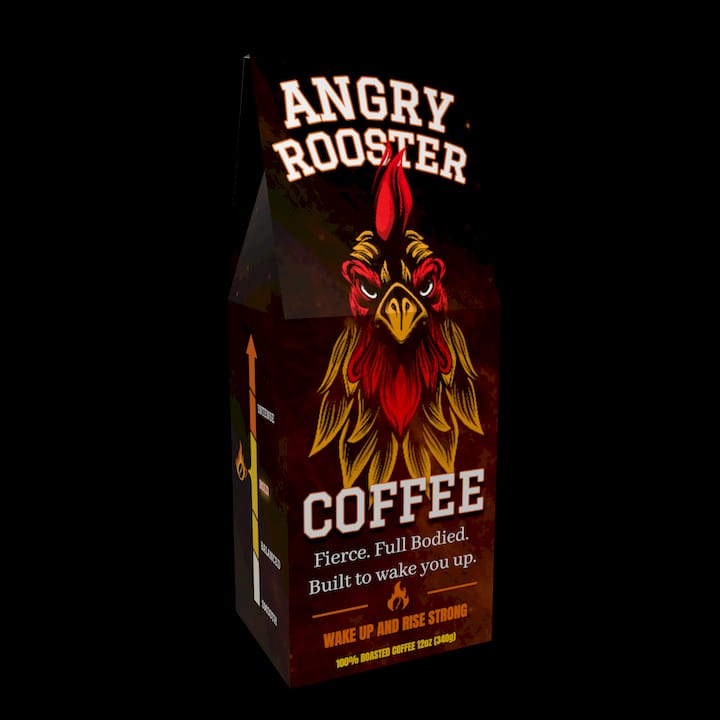
Evening Roast leans Arabica-forward, built for readers who want a smooth, aromatic cup without the edge. Angry Rooster leans into Robusta’s strengths, delivering bold body and a real caffeine kick for readers who want their coffee to hit hard. Neither is the “better” bean. They’re built for different mornings.
Two Roasts Built Around This Exact Trade-Off
If everything above points you toward sweetness and nuance, Evening Roast is your Arabica-forward answer. It’s smooth, approachable, and built for the reader who wants a comforting cup without sacrificing flavor complexity.
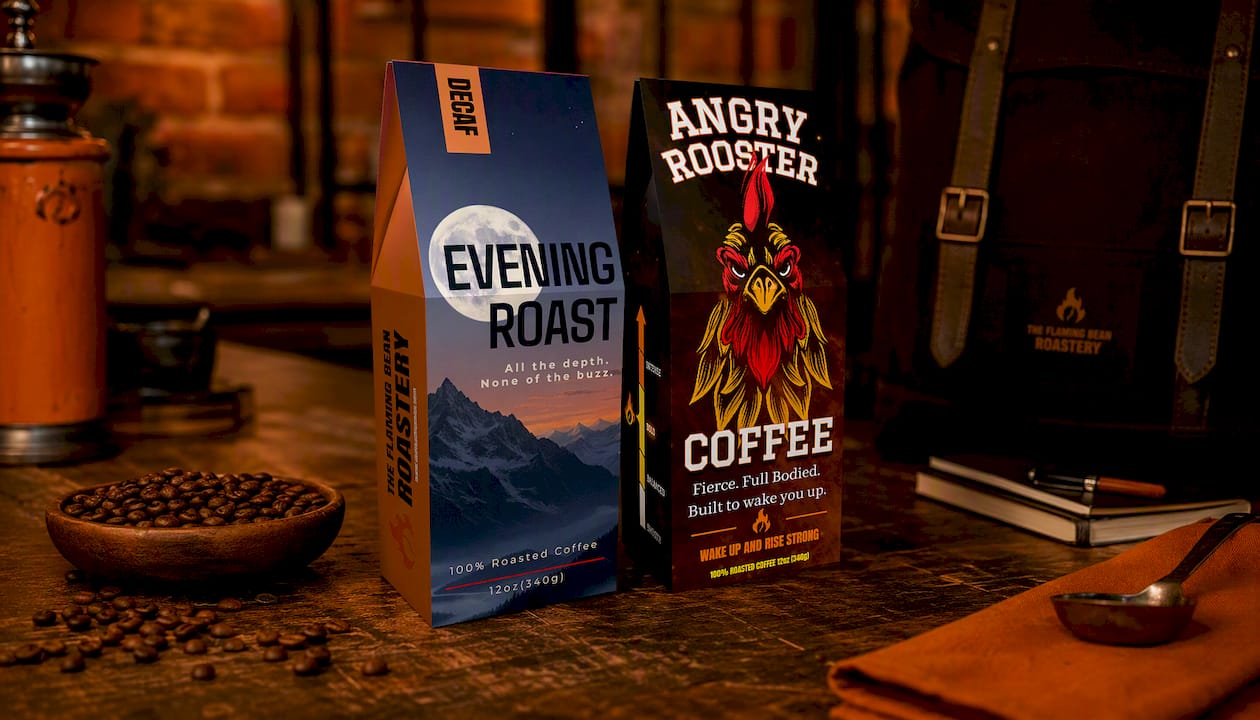
If you want the opposite, something bold enough to fuel a demanding morning, Angry Rooster brings the Robusta-driven punch, thicker body, and higher caffeine hit that a straight Arabica cup can’t deliver. Grab the Angry Rooster blend when you need coffee that works as hard as you do.
Not sure which fits your routine? Read our guide on choosing the right roast for your cup, then order a bag of whichever roast matches how you actually drink coffee.
The Verdict on Arabica vs Robusta
Robusta’s advantage isn’t just caffeine, it’s resilience: the same chlorogenic acid that makes it taste harsher also helps it survive pests, heat, and rough processing that would ruin a delicate Arabica crop. That’s not a flaw in the bean. It’s a different bean built for a different job, and most coffee drinkers never get told that directly.
The mistake I see most often is treating this as a quality hierarchy instead of a fit question. Arabica isn’t “the good bean” and Robusta isn’t “the cheap bean,” even though pricing patterns make it look that way on a shelf. Fine Robusta lots exist for a reason: processed carefully, they can outperform mediocre Arabica in the exact same cup. The real skill is matching the bean’s actual chemistry, high CGA, high caffeine, low sugar, to a brew method built to use those traits instead of fighting them. Espresso wants Robusta’s crema. Pour-over wants Arabica’s acidity. Buying against that logic is how people end up disappointed by beans that were never wrong to begin with.
— Tony
Sources
- Comparative effects of species and roasting on caffeine, chlorogenic acid and antioxidant activity (2025)
- Arabica and Robusta: the differences — Food & Wine (2025)
- Arabica vs Robusta — Coffee Studies (2026)
- Robusta vs Arabica: Why It Actually Matters for Your Cup | Pulled Journal
Comments