
Brew Better Coffee at Home: A Practical Guide

Brewing better coffee at home means controlling three variables above all else: grind size, coffee-to-water ratio, and brew time. Get those right, and balanced extraction follows naturally. The gold standard ratio for drip and pour-over is 1:15 to 1:16 coffee to water, while espresso uses a tighter 1:2 ratio with a 25–30 second extraction window. These numbers are not arbitrary. They reflect decades of barista practice and sensory science, and they give you a repeatable starting point every single morning. Fresh beans, clean equipment, and a consistent technique complete the picture.
What do you need to brew better coffee at home?
The right equipment does not need to be expensive. It does need to be accurate and consistent.
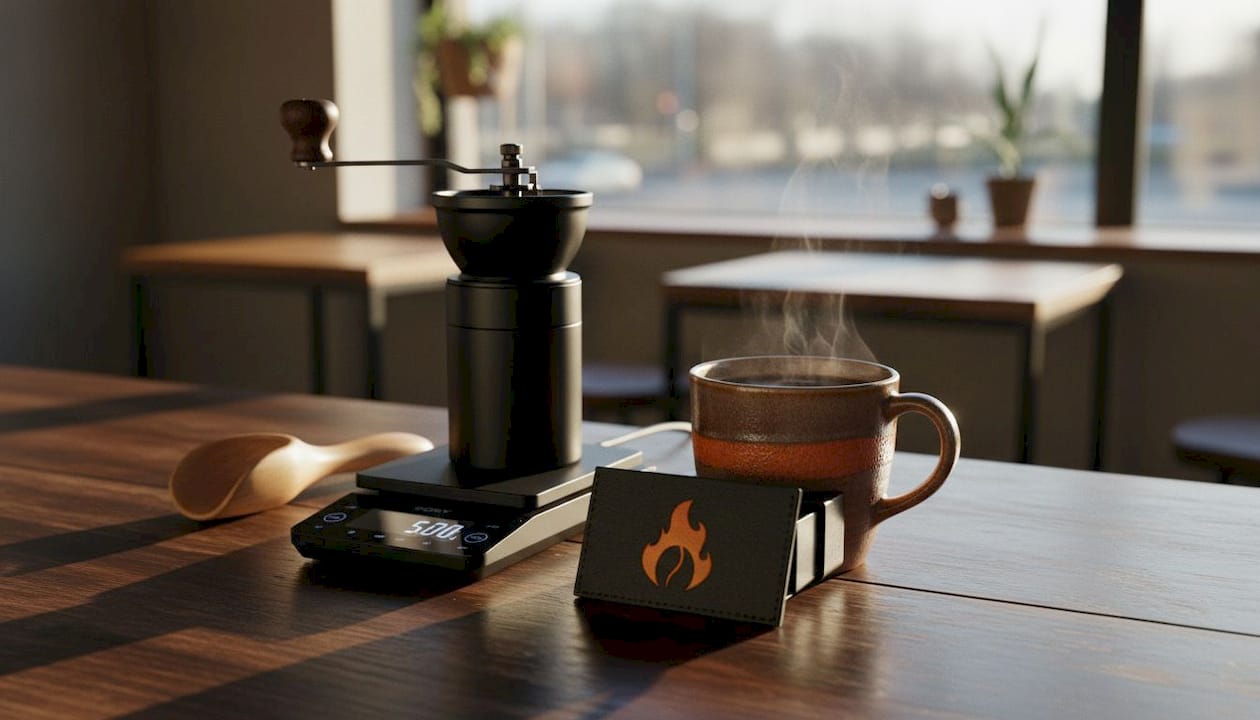
Grinder: the single biggest upgrade you can make
A burr grinder produces uniform particle sizes. Blade grinders chop unevenly, creating a mix of fine dust and large chunks in the same batch. That uneven mix causes some particles to over-extract while others under-extract, producing a cup that tastes both bitter and sour at once. Switching to a burr grinder is the fastest way to improve flavor without changing anything else.
Scales, water, and beans
A digital scale removes guesswork from your ratio. Measuring by volume (scoops) introduces error because coffee density varies by roast level and bean origin. A scale accurate to 0.1 grams costs less than a bag of specialty coffee and pays for itself immediately.
Water quality matters more than most home brewers expect. Filtered water and clean equipment produce noticeably brighter, cleaner cups. Tap water with high mineral content or chlorine flattens flavor. Descale your brewer monthly and rinse all gear before each use.
Bean freshness is the third pillar. The optimal freshness window is 2–4 weeks after the roast date. Beyond four weeks, beans lose the CO2 gases that support balanced extraction, and the cup goes flat. Always check the roast date on the bag, not the “best by” date. The Flaming Bean prints roast dates clearly so you know exactly what you are buying. For more on why this matters, see why roast date matters for peak flavor.
| Equipment | Why it matters |
|---|---|
| Burr grinder | Consistent particle size for even extraction |
| Digital scale | Accurate coffee-to-water ratio every brew |
| Gooseneck kettle | Controlled pour speed and water placement |
| Filtered water | Removes off-flavors from chlorine and minerals |
| Fresh whole beans | CO2 gases support balanced extraction |
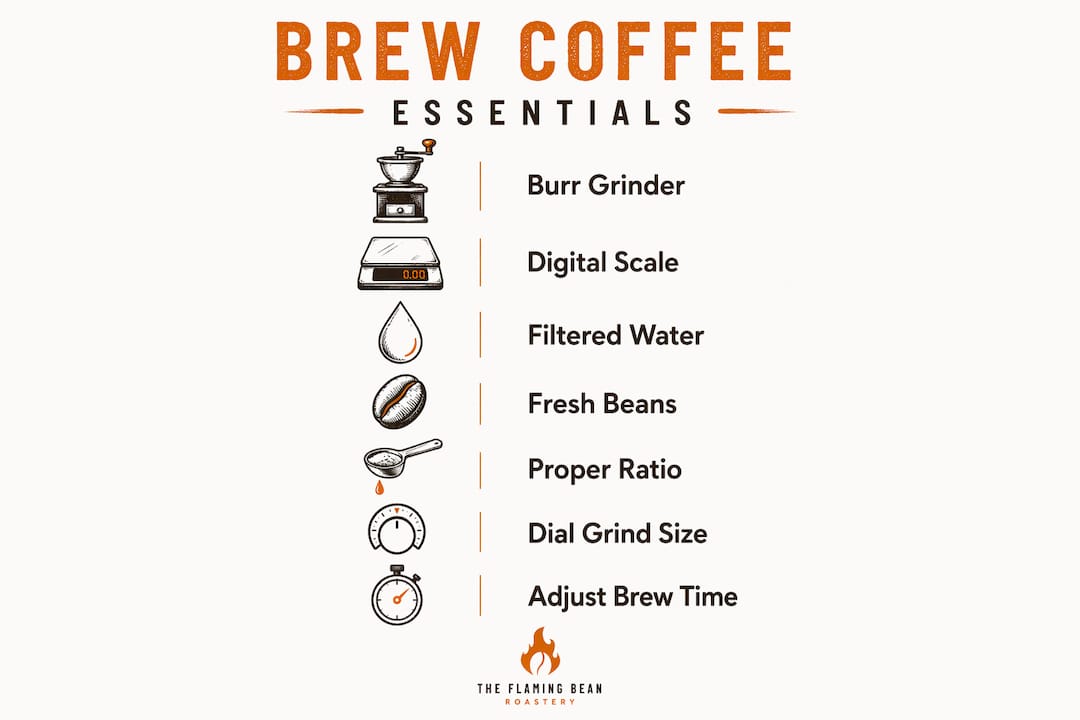
Pro Tip: Buy whole beans and grind immediately before brewing. Pre-ground coffee loses flavor within 15–30 minutes of grinding because the increased surface area accelerates oxidation.
How do you dial in grind size, ratio, and brew time?
Dialing in coffee is the industry term for the iterative process of adjusting variables until your cup tastes balanced. The one-variable-at-a-time method is the only reliable way to do it. Change grind, ratio, and time all at once, and you cannot know which adjustment fixed or broke the cup.
Reading your cup before you adjust anything
Taste tells you exactly what went wrong. Sour or sharp flavors signal under-extraction: the water did not pull enough from the grounds. Bitter or harsh flavors signal over-extraction: the water pulled too much. Weak or watery coffee is a ratio problem, not an extraction problem. Fix extraction first with grind size, then tune strength with ratio.
Step-by-step adjustment process
- Brew your baseline. Use the 1:15 ratio and your method’s recommended grind size. Taste the result and note what is wrong.
- Adjust grind size first. If the cup tastes sour, grind finer to slow extraction. If it tastes bitter, grind coarser to speed it up. Change by one setting at a time.
- Re-brew and taste again. Do not adjust anything else until extraction feels balanced, meaning no sharp sourness or harsh bitterness.
- Adjust ratio for strength. Once extraction is balanced, adjust coffee strength by adding more coffee for a stronger cup or less for a lighter one.
- Lock in your recipe. Write down the grind setting, dose, water weight, and brew time. Repeat it exactly next time.
| Taste problem | Likely cause | Fix |
|---|---|---|
| Sour or sharp | Under-extraction | Grind finer or increase brew time |
| Bitter or harsh | Over-extraction | Grind coarser or decrease brew time |
| Weak and watery | Low coffee dose | Increase ratio (more coffee, same water) |
| Muddy or gritty | Too-fine grind or wrong method | Grind coarser, check filter type |
Pro Tip: Keep a simple brew log. Note the date, grind setting, dose, water weight, brew time, and a one-sentence tasting note. After five brews, patterns become obvious and adjustments get faster.
What are the best home brewing methods?
Each brewing method rewards slightly different techniques. Understanding the parameters for each one lets you get the best from whatever gear you already own.
Pour-over
Pour-over produces a clean, bright cup with clear flavor distinction between origins. Use a medium-fine grind with a 1:16 ratio and water at 200–205°F. Start with a bloom: pour twice the weight of your coffee dose in water and wait 30–45 seconds. This releases trapped CO2 and primes the grounds for even extraction. Total drawdown time should land between 3 and 4 minutes. If it runs faster, grind finer. If it stalls, grind coarser.
French press
French press delivers a full-bodied, rich cup because the metal filter allows oils and fine particles into the brew. Use a coarse grind and steep for 4 minutes exactly before pressing slowly. Steeping longer than 4 minutes causes over-extraction and bitterness. Press gently and pour immediately. Leaving brewed coffee sitting on the grounds continues extraction even after pressing.
AeroPress
The AeroPress is the most forgiving method for home brewers. It tolerates a wide range of grind sizes and brew times, making it ideal for experimenting. A medium-fine grind with a 1:15 ratio and a 1–2 minute steep covers most recipes. Invert the AeroPress for longer steeps without dripping. The short brew time and low brewing temperature make it naturally less bitter than other methods.
Espresso
Espresso is the most technically demanding method. Grind size is the most sensitive variable: even a half-step change on your grinder shifts extraction dramatically. Use a fine grind, dose 18–20 grams, and target a 1:2 yield in 25–30 seconds. Tamp with even, level pressure. Uneven tamping causes channeling, where water finds a path of least resistance through the puck and extracts unevenly. For roast selection guidance, see what is espresso roast and how it affects flavor.
Cold brew and drip
Cold brew is coarse-ground coffee steeped 12–18 hours in cold or room-temperature water, then diluted to taste. The long, cold steep produces a smooth, low-acid concentrate with almost no bitterness. It is the easiest method to batch-brew for the week. Drip machines work best when you treat them like a pour-over: use filtered water, a fresh burr-ground dose, and clean the machine regularly.
| Method | Grind size | Ratio | Brew time |
|---|---|---|---|
| Pour-over | Medium-fine | 1:16 | 3–4 minutes |
| French press | Coarse | 1:15 | 4 minutes |
| AeroPress | Medium-fine | 1:15 | 1–2 minutes |
| Espresso | Fine | 1:2 | 25–30 seconds |
| Cold brew | Coarse | 1:8 (concentrate) | 12–18 hours |
How do you troubleshoot and refine your brewing process?
Most flavor problems have a simple cause. Identifying the right one saves you from chasing fixes that do not apply.
- Sour cup: Grind is too coarse, water is too cool, or brew time is too short. Grind finer first.
- Bitter cup: Grind is too fine, water is too hot, or brew time is too long. Grind coarser first.
- Flat or dull cup: Beans are stale or equipment is dirty. Check your roast date and clean your gear.
- Weak cup: Dose is too low. Increase coffee weight while keeping water weight the same.
- Muddy or gritty cup: Grind is too fine for your filter type, or you are using a blade grinder. Switch to a burr grinder and grind coarser.
Clean equipment is not optional. Dirty brewers and stale water add off-flavors that no amount of grind adjustment will fix. Rinse your gear after every use and deep-clean weekly. A clean machine lets you taste the actual effect of your adjustments instead of background contamination.
The most common mistake home brewers make is adjusting two or three variables at once after a bad cup. You end up with a different bad cup and no idea why. Change one thing, brew again, taste, and then decide your next move. Patience here is the actual skill.
Pro Tip: Take a photo of your grinder’s setting dial each time you find a recipe you love. Settings drift, and a photo takes two seconds to reference next time.
For a deeper look at café-quality techniques you can apply at home, The Flaming Bean’s barista guide covers professional methods adapted for home equipment.
Key takeaways
Brewing better coffee at home requires fresh beans, a burr grinder, accurate ratios, and the discipline to adjust only one variable per brew until the cup tastes balanced.
| Point | Details |
|---|---|
| Use the right ratio | Start at 1:15 to 1:16 for drip and pour-over; 1:2 for espresso. |
| Grind fresh with a burr grinder | Consistent particle size is the foundation of even extraction. |
| Check your roast date | Use beans within 2–4 weeks of roast for best flavor and dial-in ease. |
| Adjust one variable at a time | Change grind, then ratio, then time. Never adjust all three at once. |
| Keep your equipment clean | Dirty gear adds off-flavors that no recipe adjustment can fix. |
What I have learned from years of dialing in coffee at home
The first thing I got wrong was thinking equipment was the answer. I bought a nicer kettle, a better dripper, and still made mediocre coffee. The problem was not the gear. It was that I was changing three things at once every time a cup disappointed me and then wondering why nothing improved.
The real shift came when I started treating each brew like a small experiment. One change. Taste. Note. Repeat. Within a week of doing that, I had a pour-over recipe I could hit consistently. Within a month, I had dialed in my French press and AeroPress too. The process is genuinely enjoyable once you stop treating a bad cup as a failure and start treating it as data.
The other thing I underestimated was bean freshness. I used to buy whatever was on sale and wonder why my carefully measured brews still tasted flat. Fresh beans from a roaster who prints the roast date changed that completely. You can feel the difference when you grind them: the aroma is immediate and sharp, not dull and dusty.
My honest advice: start with one method, learn it completely, and resist the urge to buy more gear until you have mastered what you own. The benefits of whole bean coffee are real, but only if you grind them fresh and brew with intention. Patience and repetition beat expensive equipment every time.
— Tony
The Flaming Bean makes it easier to brew well at home
Great technique only goes as far as your beans will take you. The Flaming Bean roasts every batch to order and prints the roast date on every bag, so you always know you are working within that critical 2–4 week freshness window.
If you want a smooth, approachable cup for evenings at home, the Evening Roast is roasted specifically for low bitterness and easy drinkability. It works beautifully in a French press or pour-over at the 1:16 ratio. For something bolder, Abyssal delivers a deep, full-bodied cup that holds up well in espresso. And if you want your coffee to do more than taste good, the Safe Ground blend supports organizations protecting vulnerable communities. Every bag you buy puts something good into the world.
FAQ
What is the best coffee-to-water ratio for home brewing?
The standard ratio is 1:15 to 1:16 for drip and pour-over methods, meaning 1 gram of coffee per 15–16 grams of water. Espresso uses a 1:2 ratio with a 25–30 second extraction time.
Why does my coffee taste sour at home?
Sour coffee signals under-extraction. The most common causes are a grind that is too coarse, water that is too cool, or a brew time that is too short. Grind finer and taste again before changing anything else.
How fresh do coffee beans need to be?
Beans taste best within 2–4 weeks of the roast date. Beyond four weeks, they lose the CO2 gases that support balanced extraction, and the cup tastes flat regardless of your technique.
Does water quality really affect coffee flavor?
Filtered water produces a noticeably cleaner, brighter cup compared to unfiltered tap water. Chlorine and high mineral content both suppress flavor, so filtered water is one of the easiest free upgrades you can make.
What is the easiest brewing method for beginners?
The AeroPress is the most forgiving method for new home brewers. It tolerates a wide range of grind sizes and brew times, produces a clean cup quickly, and is easy to clean after each use.
Recommended
- Make Cafe Quality Coffee at Home: A Barista Guide – The Flaming Bean Roastery
- How to Choose the Right Coffee Roast for Your Cup – The Flaming Bean Roastery
- Why Coffee Beans Are Oily: A Home Brewer’s Guide – The Flaming Bean Roastery
- Bold Coffee Blends: 9 Examples Worth Brewing – The Flaming Bean Roastery
Comments