
How to Choose a White Label Coffee Roaster in 2026

What is a white label coffee roaster, and is it right for you?
A white label coffee roaster is a production partner that roasts, packages, and fulfills coffee under your brand name using pre-developed blends sold to multiple businesses simultaneously. You apply your branding. They handle everything behind the scenes. It’s one of the fastest ways to launch a coffee brand without owning a roaster or sourcing green beans yourself.
The model works well for entrepreneurs who want to move quickly and keep startup costs low. Here’s what you’re getting into:
Key benefits:
- Fast launch timelines, often within weeks rather than months
- Lower capital investment since product development is already done
- Reduced operational complexity with sourcing, roasting, and fulfillment handled for you
- Ability to test market demand before committing to custom product development
Key limitations:
- Minimal customization, usually restricted to branding and packaging only
- Competitors can sell the exact same coffee under different labels
- Lower profit margins compared to private label or in-house roasting
- Less control over flavor profiles, bean origins, and roast development
White label sits between wholesale purchasing and private label manufacturing. With wholesale, you resell someone else’s branded product. With private label, you commission a custom blend made exclusively for you. White label lands in the middle: your brand, their recipe, shared across multiple buyers. Knowing that distinction upfront shapes every decision that follows.
How much does white label coffee cost, and what margins can you expect?
White label coffee carries the lowest gross margins among coffee business models. Roasters use it primarily to fill production capacity through volume rather than to generate premium pricing. That’s not a flaw in the model. It’s just how the economics work, and you need to plan around it.
Gross margins on white label and private label channels tend to be lower than for direct-to-consumer online sales and own-brand cafes, reflecting a trade-off between volume and margin. The trade-off is volume potential. White label channels can move high quantities, which helps cover fixed costs even when per-unit margin is thin.
Financial pros of white label coffee:
- Lower upfront costs because product development is already complete
- No investment in roasting equipment or green bean sourcing infrastructure
- Faster cash flow cycle with shorter time to first sale
Financial cons to plan for:
- Shared blends limit your ability to charge a premium based on the coffee itself
- Minimum order quantities (MOQs) affect cash flow, especially early on
- Contract terms like 30–45 day payment windows can create short-term pressure
Statistic callout: White label production offers the lowest gross margins among coffee business models, serving mainly to optimize roasting capacity through volume rather than premium pricing.
Profitability in this model depends on more than unit cost. Repeat purchase rate, brand positioning, and pricing strategy all shape your total economics. A well-priced white label product with strong customer loyalty can outperform a poorly marketed private label line. Understanding loyalty pricing strategies early gives you a real edge in building that repeat business.
What factors matter most when you choose a white label coffee roaster?
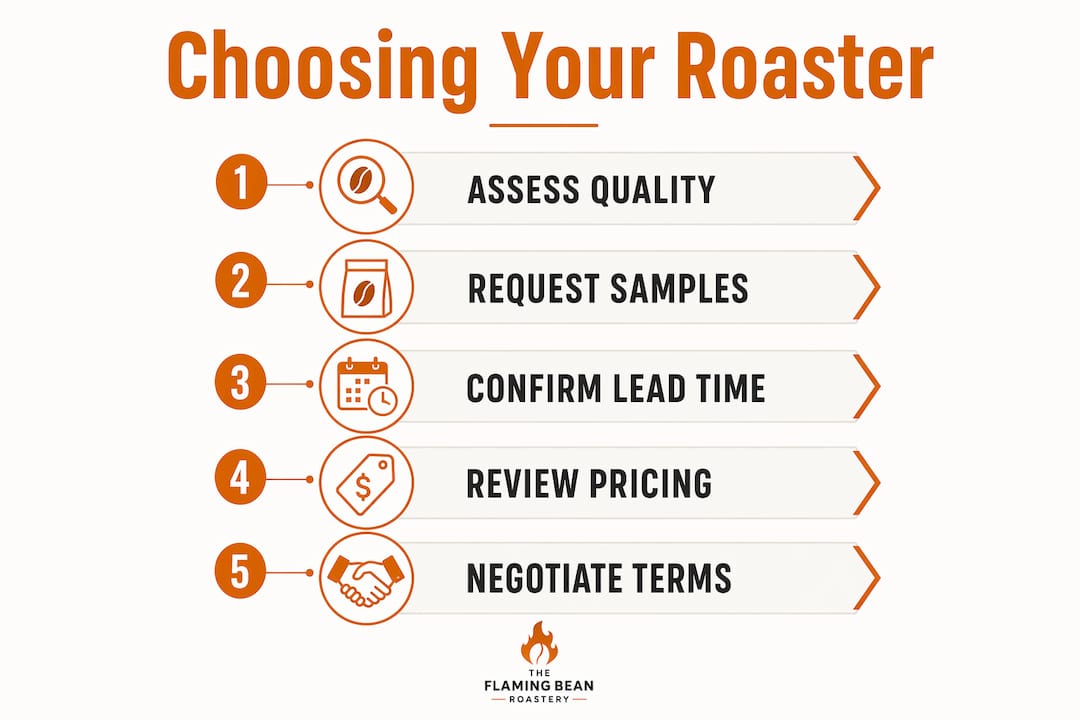
Not every roaster offering white label services is worth your time. The gap between a serious partner and a label-slapping operation is wide, and the wrong choice costs you more than money. Here’s what to evaluate before signing anything.
Quality control and consistency: Ask whether the roaster cups and scores every batch to SCA standards. A roaster without a documented cupping process is guessing, not controlling. Consistency matters more than a single great sample, because your customers expect the same cup every time.
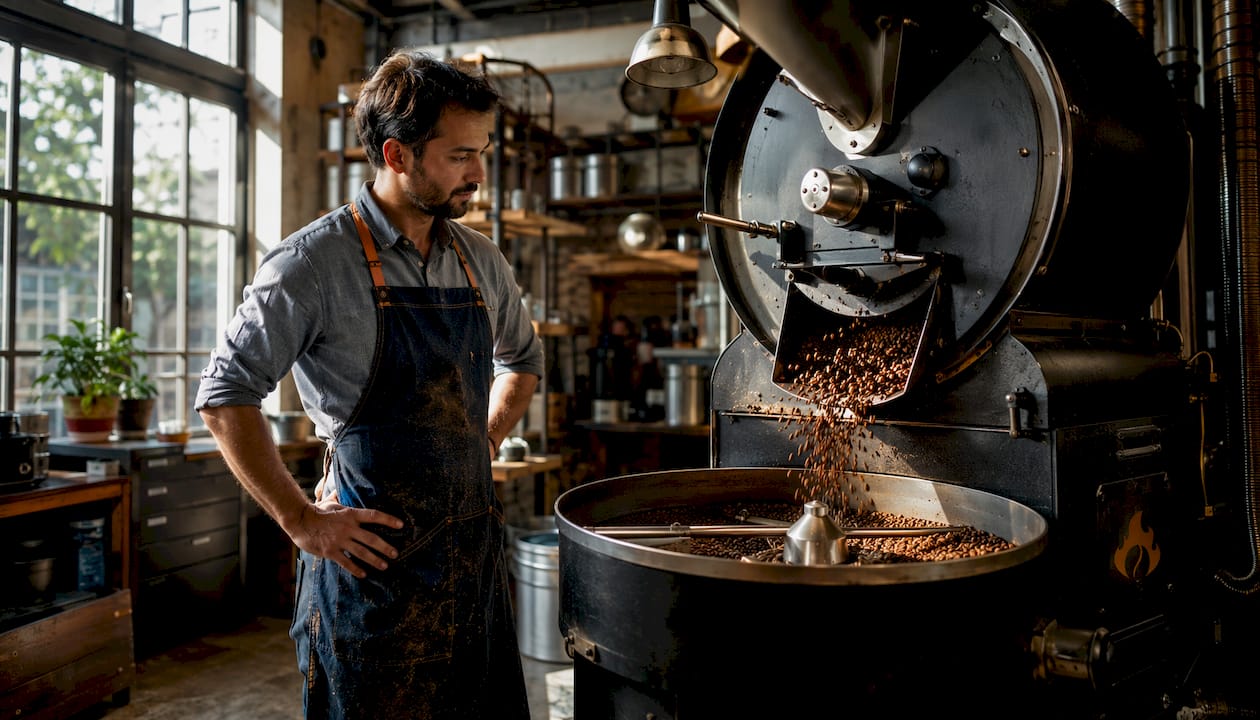
Sourcing transparency: You should be able to ask where the green beans come from and get a real answer. Sourcing traceability and direct farm relationships give your brand a story worth telling, even within white label constraints.
Checklist of factors to verify:
- Documented quality control process with cupping access for clients
- Clear sourcing information and available origin documentation
- Flexible MOQs that can grow with your order volume
- Realistic lead times from order to delivery, confirmed in writing
- Accessible point of contact who stays reachable after the contract is signed
- Certifications such as organic, Fairtrade, or Rainforest Alliance where relevant
- Verifiable client references and demonstrated track record
Pro Tip: Request samples from at least three roasters and cup them side by side. Taste differences that seem minor in isolation become obvious in direct comparison, and they will matter to your customers.
Lead times vary widely. Some roasters turn orders in 5–7 days; others need 3–4 weeks. Get this confirmed in writing before you commit, especially if you’re planning a product launch with a fixed date. You can learn more about evaluating roaster quality to sharpen your vetting process before you start conversations with potential partners.
White label vs. private label vs. in-house roasting: which model fits your business?
The right model depends on where you are in your business, not just what sounds appealing. Here’s how the three approaches compare across the factors that actually drive decisions.
| Factor | White label | Private label | In-house roasting |
|---|---|---|---|
| Cost per pound | Lowest | Moderate to high | Variable, high upfront |
| Flavor and sourcing control | Low | High | Full |
| Brand differentiation | Limited (shared blends) | Strong (exclusive blend) | Full |
| Profit margins | 30–45% | Moderate to high | Highest potential |
| Time to market | Weeks | Months | — |
| Investment required | Low | Moderate | High |
White label suits startups testing a concept or launching quickly with limited capital. Private label suits brands focused on exclusivity and long-term differentiation once they’ve validated demand. In-house roasting makes sense only when volume and brand ambition justify the equipment, staffing, and sourcing infrastructure.
Many successful brands follow a clear progression: start with white label to build market presence, then transition to private label once the brand has traction. That path keeps early risk low while leaving room to grow into something more distinctive. For a deeper look at how these roast partnership types compare, The Flaming Bean’s resource guide breaks it down clearly.
How does packaging and branding work with a white label roaster?
White label arrangements typically allow branding customization on existing blends, but packaging innovation is limited. You’re working within the roaster’s existing formats, which usually means choosing from bag types like foil valve bags or resealable kraft bags, then applying your label design.
Key branding factors to review with any roaster:
- Bag types and sizes available within their standard lineup
- Whether they offer in-house design support or require finished artwork
- Label printing minimums and turnaround times
- How much visual differentiation is possible within their packaging templates
- Whether your packaging can carry certifications or origin callouts
Generic packaging is the most common pitfall. If your bag looks identical to ten other brands using the same roaster, your product competes on price alone. The brands that win in white label invest in strong visual identity, compelling copy, and packaging that communicates a clear point of view. For inspiration on what that looks like in practice, The Flaming Bean’s custom branding examples show how entrepreneurs have built distinct identities even within standard packaging formats.
Expert tips for building a strong white label roasting partnership
The best white label partnerships are built on transparency, not just price. Roasters who offer flexible volume scaling, accessible contacts, and proven client results are worth paying a little more for. The ones who disappear after the contract is signed will cost you far more in the long run.
Pro Tip: Before committing to a roaster, ask to see examples of brands they’ve built and scaled. A roaster with verifiable client success stories is a fundamentally different partner than one offering only product samples.
Here’s what strong partnerships look like in practice:
- The roaster can walk you through their quality control process step by step
- You have a named contact who responds within 24 hours
- Volume minimums are flexible and tied to your growth stage, not just their convenience
- Contract terms include clear exit clauses without punishing penalties
- They support your brand goals, not just your order volume
The private label coffee market is growing as consumers increasingly seek quality and value in branded products. That trend creates real opportunity for entrepreneurs who build their white label foundation carefully. The brands that thrive are the ones who treat their roasting partner as a collaborator, not just a supplier.
The Flaming Bean approaches every partnership with that same mindset. Transparent sourcing, rigorous quality standards, and a genuine commitment to the brands we work with are what set a great roasting partnership apart from a transactional one.
Key Takeaways
Choosing the right white label coffee roaster comes down to quality control, sourcing transparency, flexible terms, and a partner who treats your brand as seriously as you do.
| Point | Details |
|---|---|
| White label suits startups | It offers fast launch timelines and low upfront costs, ideal for testing demand before scaling. |
| Margins run 30–45% | White label carries the lowest gross margins among coffee models, so volume and repeat purchase drive profitability. |
| Vet quality control first | Confirm the roaster cups to SCA standards and can provide sourcing documentation before committing. |
| Packaging drives differentiation | Strong visual identity and clear brand copy matter most when the coffee blend itself is shared. |
| Scale into private label | Many brands start white label and transition to exclusive blends once market demand is validated. |
Ready to launch your branded coffee?
The Flaming Bean offers wholesale roasting partnerships built around quality, transparency, and brands that mean something. Whether you’re launching your first product or scaling an existing line, we’d love to be part of your story.
Explore our Safe Ground blend to see what purpose-driven, expertly roasted coffee looks like under a brand that stands for something real.
Recommended
- Types of Coffee Roast Partnerships: A Pro Guide – The Flaming Bean Roastery
- How to Choose the Right Coffee Roast for Your Cup – The Flaming Bean Roastery
- How to Evaluate Coffee Roaster Quality Like a Pro – The Flaming Bean Roastery
- Examples of Custom Coffee Branding for Entrepreneurs – The Flaming Bean Roastery
Comments