
Coffee Brand Differentiation Explained for Enthusiasts

Coffee brand differentiation is the process of establishing a distinct identity and value that separates one coffee brand from the rest in a saturated marketplace. The industry term for this is brand positioning, and understanding it helps you make smarter purchasing decisions and spot which brands are genuinely different versus just loudly marketed. With branded coffee outlets in the US projected to reach 51,100 by 2029, the pressure to stand out has never been greater. Coffee brand differentiation explained properly goes beyond packaging and slogans. It covers quality signals, emotional positioning, community building, and operational transparency.
What are the key factors that differentiate coffee brands in 2026?
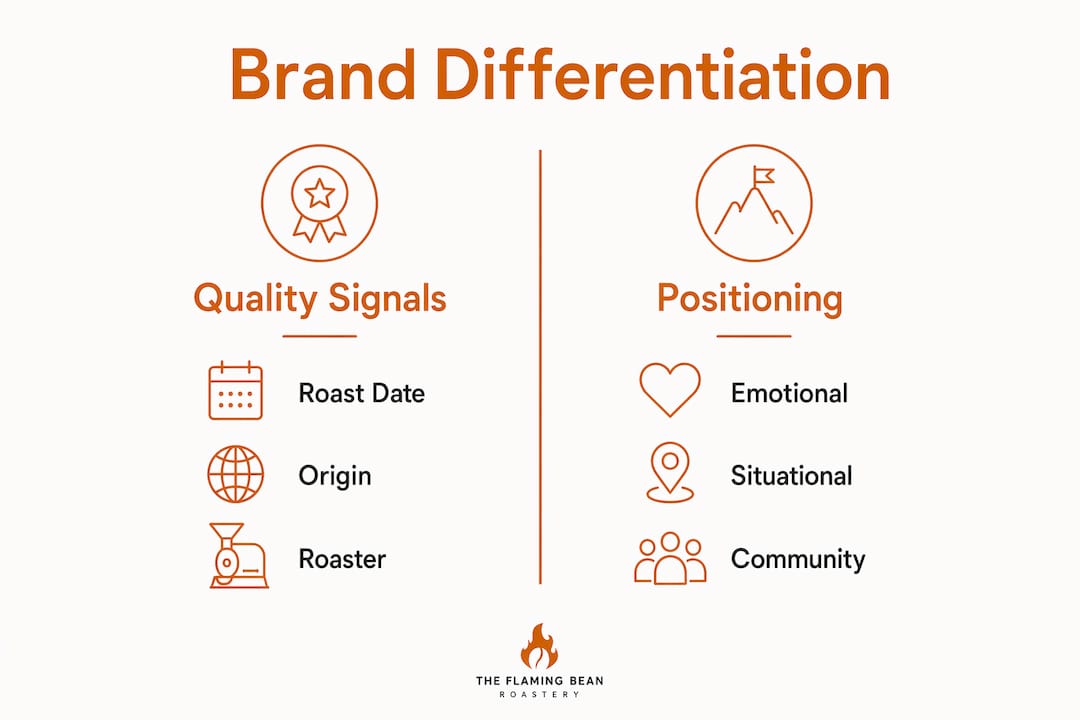
The most reliable quality signals in coffee are roast date, explicit origin specificity, and roaster reputation. These three factors let you filter out commodity-grade coffee fast. A bag that lists “Ethiopia Yirgacheffe, harvested October 2025, roasted March 4, 2026” tells you something real. A bag that says “premium blend” tells you almost nothing.
Roast date and origin specificity are the quickest ways to assess whether a brand is serious about quality. Roasters who hide this information are usually sourcing undifferentiated commodity beans. Brands that publish it are making a verifiable promise.
Vague marketing terms like “artisan,” “craft,” and “small-batch” have lost credibility because they carry no standard definition. Any roaster can print them. The brands that earn trust use specifics: named farms, processing methods like washed or natural, and altitude ranges. These details are checkable, which is exactly why they build confidence.
Operational transparency is another powerful differentiator. Brands that let customers see their roasting process, storage conditions, and sourcing relationships create experiential trust that marketing copy cannot replicate. This kind of openness signals that a brand has nothing to hide and everything to prove.
Here are the core quality signals to look for when evaluating a coffee brand:
- Roast date: Printed clearly on the bag, ideally within the last four weeks
- Origin specificity: Country, region, farm, or cooperative named explicitly
- Processing method: Washed, natural, honey, or anaerobic listed on the label
- Roaster reputation: Verifiable history, competition results, or sourcing partnerships
- Certifications: Fair Trade, Rainforest Alliance, or Direct Trade relationships
Pro Tip: Check the coffee bean origins on any bag before you buy. If the label only says “South America blend,” that is a signal the brand is not competing on quality.
How do emotional and situational positioning drive differentiation?
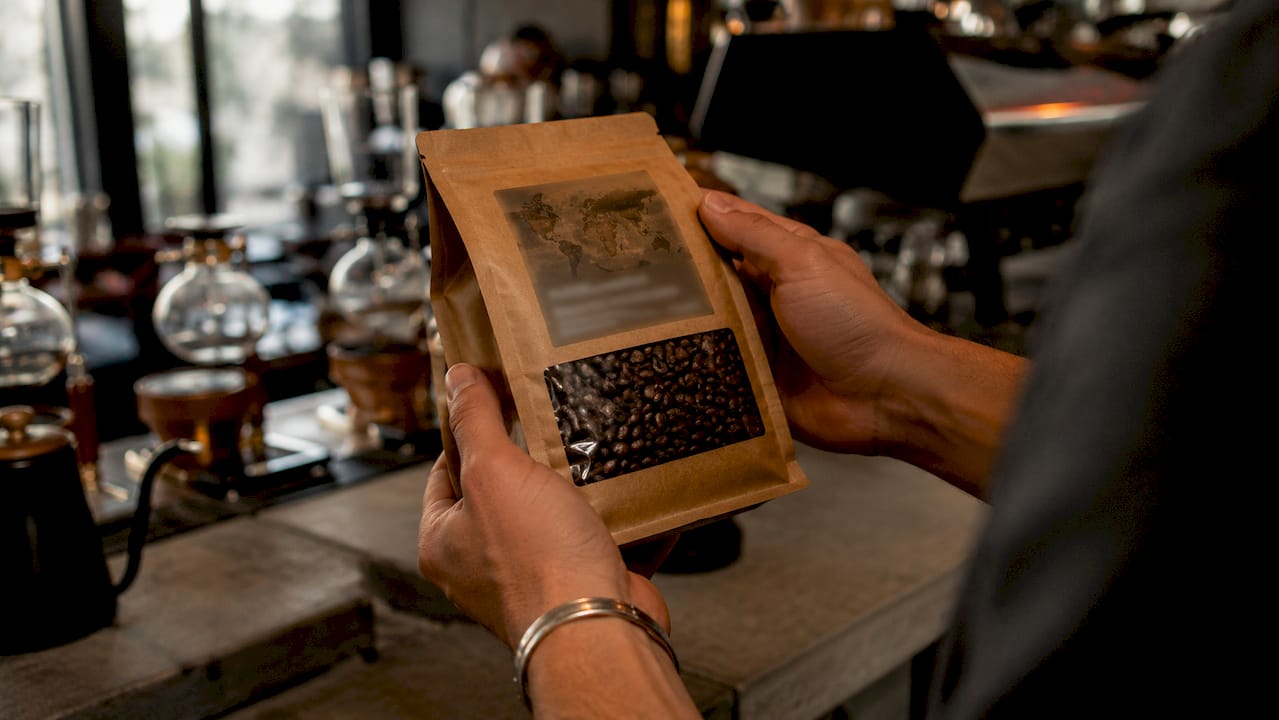
Better coffee is now the baseline. The brands pulling ahead are the ones that own specific moments in a customer’s day. This shift from product claims to moment meaning is one of the most significant changes in coffee brand strategies over the past five years.
Successful brands focus on owning moments, defining specific occasions and moods their coffee serves. A brand that says “this is your 5:00 AM focus fuel” speaks more directly to a customer than one that says “great taste, every time.” Moment meaning simplifies the consumer’s choice and deepens their connection to the product.
“Better coffee is the baseline. Moment meaning is what differentiates and drives preference. If your brand doesn’t own a specific occasion in the customer’s mind, you’re competing on price.”
Situational positioning works because it answers a question customers already have: “Which coffee fits right now?” A bold, high-caffeine roast fits the early morning grind. A smooth, low-acid option fits a relaxed evening. The Flaming Bean applies this directly. Its Evening Roast is positioned for exactly that wind-down moment, while Abyssal speaks to customers who want something deep, intense, and unapologetic.
The brands that struggle with emotional positioning usually have the same problem: they try to be everything to everyone. Challenger coffee brands win through clarity, founder credibility, and distinct visual identity. If a customer cannot explain your brand in one sentence, your differentiation is weak. That single-sentence test is a fast and honest diagnostic.
Situational positioning also shows up in how brands name and describe their products. Names like “Mission Fuel” or “Liquid Liberation” from The Flaming Bean’s lineup do not just describe a coffee. They describe a feeling, a purpose, and a type of person. That specificity creates a stronger emotional pull than generic flavor descriptors alone.
What role does community engagement play in sustaining differentiation?
Community is where differentiation becomes durable. A great product gets you a first purchase. A great community gets you a repeat customer who also brings friends. This is the core logic behind community-first Lifetime Value (LTV) models that leading coffee brands now build around.
The data on this is clear. Tiered loyalty programs that reward engagement behaviors like writing tasting notes, joining virtual cuppings, and making referrals boost 90-day retention rates from 61% to 83%. That is a 22-percentage-point lift driven entirely by community participation, not discounts.
Here is how the most effective community programs are structured:
- Entry-level engagement: Easy actions like reviewing a purchase or sharing on social media earn small rewards.
- Mid-tier participation: Virtual cuppings, tasting note submissions, and recipe contributions unlock exclusive products.
- Referral incentives: Customers who bring in new buyers receive meaningful rewards, reducing acquisition costs.
- Circle programs: High-engagement members get early access, direct roaster communication, and co-creation opportunities.
Community programs require dedicated resources to run well, but they produce durable growth and organic acquisition through peer referrals. The investment pays back through lower churn and higher average order value. The Flaming Bean’s approach to building a coffee community reflects this same philosophy: connection is not a marketing tactic, it is the product itself.
Statistic callout: Subscribers engaging with community programs show 22 percentage points higher 90-day retention. That gap represents the difference between a brand customers forget and one they recommend.
How do independent coffee shops differentiate from large chains?
Independent cafés hold one advantage that no chain can buy: genuine local identity. A chain delivers consistency across thousands of locations. An independent café delivers specificity to one neighborhood, one community, and one set of regulars who feel genuinely known.
Independent shops score higher ratings than chains in community feeling and personal connection. That advantage comes from local knowledge, staff relationships, and the ability to adapt quickly to what customers actually want. A chain cannot rename a drink after a regular. An independent café can.
The “third place” concept, the idea that a café is neither home nor work but a meaningful social space, is something chains attempt but rarely achieve. Independent cafés build it naturally because their identity is tied to a specific place and set of people. Consistent branding across all touchpoints reinforces that identity, from the logo on the cup to the music playing in the room.
| Differentiator | Independent café | Large chain |
|---|---|---|
| Local identity | Strong, place-specific | Standardized across locations |
| Customer relationships | Personal, name-based | Transactional |
| Menu flexibility | High, adapts to community | Low, centrally controlled |
| Brand authenticity | Rooted in local story | Corporate-managed narrative |
| Community feeling | Organic and genuine | Manufactured at scale |
Pro Tip: Independent brands should treat their physical space as a brand asset. Every detail, from the bag design to the playlist, communicates who you are. Inconsistency in any of these signals weakens the overall brand impression.
How can coffee brands apply differentiation strategies practically?
Differentiation does not happen by accident. It requires deliberate choices across product, communication, and customer experience. The brands that get it right align all three consistently.
Start with a clear quality foundation. Publish your roast dates, name your origins, and explain your processing methods. This is table stakes for specialty positioning. From there, build your emotional layer by defining the specific moments your coffee serves. Do not try to own every occasion. Pick one or two and commit.
Here is a practical checklist for applying differentiation strategies:
- Clarify your brand in one sentence. If you cannot do it, your customers cannot either.
- Publish verifiable quality signals. Roast date, origin, and processing method on every bag.
- Define your moment. Morning focus? Evening calm? Weekend ritual? Name it and build around it.
- Build community before you need it. Start a loyalty program early, even a simple one.
- Invest in local search and organic content. With 51,100 branded outlets projected by 2029, visibility in local search is a real competitive edge.
- Keep visual branding consistent. Every touchpoint should feel like the same brand.
The Flaming Bean applies these principles across its entire lineup. Products like Safe Ground go further by tying the purchase to a cause, which adds a values-based layer of differentiation that purely product-focused brands cannot match. Purpose-driven positioning is one of the strongest forms of unique coffee brand identity available today.
Key Takeaways
Coffee brand differentiation requires verifiable quality signals, clear emotional positioning, and consistent community investment working together across every customer touchpoint.
| Point | Details |
|---|---|
| Quality signals matter most | Roast date, origin specificity, and roaster reputation are the top credibility markers. |
| Moment meaning drives loyalty | Brands that own specific occasions in a customer’s day outperform those selling generic quality. |
| Community raises retention | Tiered loyalty programs lift 90-day retention from 61% to 83% through engagement behaviors. |
| Local identity is a real advantage | Independent cafés build genuine community feeling that large chains cannot replicate at scale. |
| Clarity is the foundation | If a customer cannot describe your brand in one sentence, your differentiation is not working. |
What I’ve learned about coffee brand differentiation after years in the industry
Most brands get differentiation backwards. They start with the product and work outward, hoping the quality speaks for itself. It rarely does. The coffee market is full of genuinely excellent roasters who are invisible because they never defined what moment they serve or who they are for.
The clarity test is the most honest tool I know. Ask five customers to describe your brand in one sentence. If you get five different answers, you do not have a brand. You have a product. That gap is where most differentiation work actually needs to happen, not in sourcing or roasting, but in communication.
Community is the part most brands underinvest in until it is too late. Building it takes time and real resources. But the brands that commit early end up with customers who do their marketing for them. Peer referrals from engaged community members cost almost nothing and convert at a much higher rate than paid acquisition.
The one mistake I see repeatedly is trying to differentiate on too many dimensions at once. Quality, sustainability, community, flavor, price, and experience all at the same time produces noise, not clarity. Pick your two or three strongest pillars and build everything around them. The brands that do this well, including The Flaming Bean with its combination of quality roasting and purpose-driven products, are the ones that stick in people’s minds long after the cup is empty.
— Tony
What The Flaming Bean gets right about standing out
The Flaming Bean puts the principles of coffee brand differentiation into practice across its entire lineup.
The bold, deep character of Abyssal speaks directly to customers who want intensity and specificity in their cup. The smooth, approachable Evening Roast owns the wind-down moment with clarity. And Safe Ground adds a values layer that turns a purchase into a contribution to something larger. Each product has a defined moment, a clear identity, and a story worth sharing. That is what a differentiated coffee brand looks like in practice. We invite you to explore the full lineup at The Flaming Bean and taste the difference for yourself.
FAQ
What is coffee brand differentiation?
Coffee brand differentiation is the process of creating a distinct identity and value proposition that separates one coffee brand from others in the market. It covers quality signals, emotional positioning, community engagement, and operational transparency.
What are the top quality signals that differentiate coffee brands?
Roast date, origin specificity, and roaster reputation are the three most reliable quality signals. Brands that publish these details are making verifiable promises; brands that hide them are usually selling commodity coffee.
How do loyalty programs help coffee brands stand out?
Tiered loyalty programs that reward engagement behaviors boost 90-day retention rates from 61% to 83%. That lift comes from community participation, not discounts, which makes it far more durable.
Why do independent cafés outperform chains on brand loyalty?
Independent cafés build genuine local identity and personal customer relationships that chains cannot replicate at scale. That community feeling consistently produces higher ratings and stronger repeat purchase behavior.
How does purpose-driven branding differentiate a coffee company?
Purpose-driven products tie a purchase to a cause, adding a values-based layer of identity that purely product-focused brands cannot match. The Flaming Bean’s Safe Ground blend is a direct example of this approach in action.
Recommended
- Examples of Custom Coffee Branding for Entrepreneurs – The Flaming Bean Roastery
- What Does Co-Branding Mean for Coffee Brands? – The Flaming Bean Roastery
- Coffee Roast Levels Explained: Your Flavor Guide – The Flaming Bean Roastery
- Bold Coffee Blends: 9 Examples Worth Brewing – The Flaming Bean Roastery
Comments