
Coffee Extraction Explained for Home Baristas

Coffee extraction is water dissolving soluble compounds from roasted, ground coffee. That’s the whole thing. The goal isn’t maximum extraction. It’s balanced extraction, and the Specialty Coffee Association gives you a clear target to aim for:
- Extraction yield (EY): a typical range of the dry coffee mass dissolved into the brew
- TDS (brewed coffee strength): a typical percentage range of dissolved solids in brewed coffee
- Espresso TDS: a higher percentage range of dissolved solids than brewed coffee, with the same EY target range
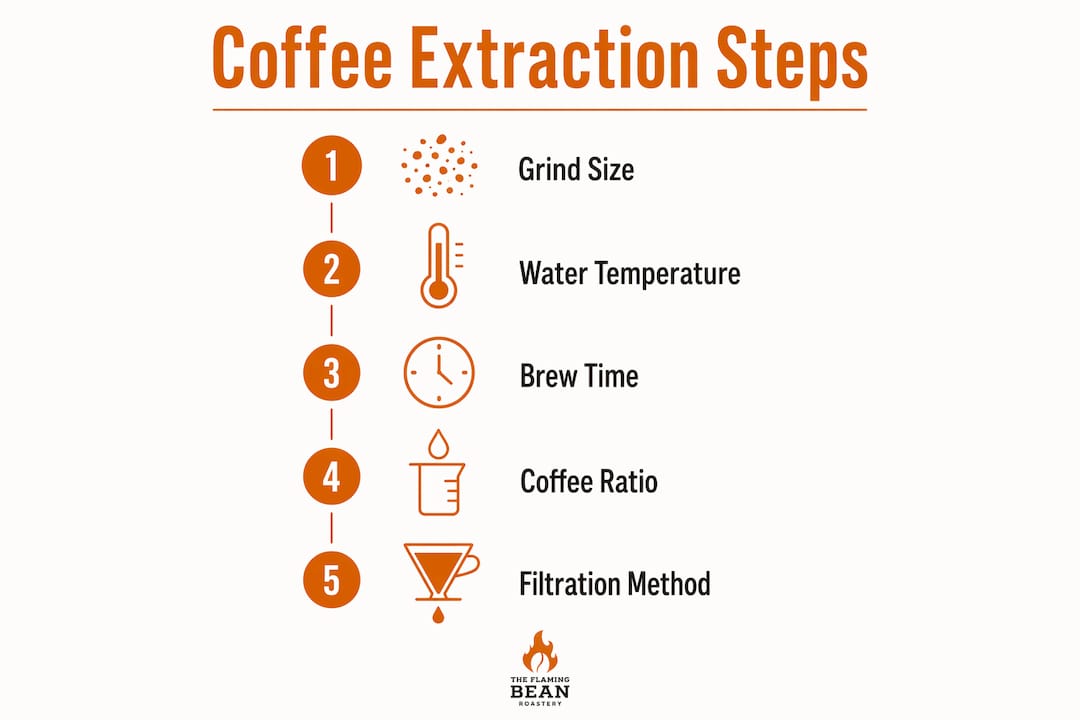
- Four control variables: grind size, brew ratio, contact time, water temperature
The one-line troubleshooting cheat you’ll use constantly: sour cup means under-extracted, so go finer, longer, hotter, or increase your dose. Bitter cup means over-extracted, so go coarser, shorter, cooler, or reduce your dose. Everything else in this article is the explanation behind those two sentences.
Table of Contents
- What is coffee extraction? The chemistry behind every cup
- How extraction shows up in flavor: what you’re actually tasting
- What are the four variables that control extraction?
- What’s the difference between strength and extraction yield?
- How do you dial in and troubleshoot your brew?
- How does extraction differ across espresso, pour-over, immersion, and cold brew?
- What tools do you actually need to measure extraction?
- Why balanced extraction beats maximum extraction every time
- Key Takeaways
- Why extraction balance starts at the roaster, not the brewer
- Coffees roasted with extraction balance in mind
- Further reading and measurement resources
What is coffee extraction? The chemistry behind every cup
Extraction is dissolution. When hot water contacts ground coffee, it acts as a solvent, pulling soluble compounds out of the cellular structure of the bean. What stays behind is insoluble material: cellulose, plant fibers, and the physical structure of the grounds themselves. Only about 28–30% of a roasted coffee bean is even soluble in water, which is why hitting 18–22% EY is considered ideal rather than a compromise.
The compounds don’t all dissolve at once. They extract in a predictable sequence:
Organic acids extract first, giving brightness and fruit notes. Caffeine and sugars follow, adding sweetness and body. Melanoidins and complex sugars come next, contributing depth and mouthfeel. Bitter phenolic compounds and plant fibers extract last, and pulling them in excess is what makes coffee taste harsh and drying.
This sequence is why timing matters so much. Stop too early and you get the acids without the sweetness. Push too far and the bitterness overwhelms everything that came before.
Roast level changes how quickly this sequence moves. Darker roasts are more porous and soluble, so compounds extract faster. Lighter roasts are denser and need more time, finer grinding, or hotter water to reach the same yield. Understanding your roast level is the first step to predicting how your coffee will behave in the brewer.
How extraction shows up in flavor: what you’re actually tasting
Every sensory descriptor in your cup maps back to a chemical stage. Brightness and acidity come from the organic acids extracted early: citric, malic, and acetic acids produce the fruity, tangy notes you taste in a well-pulled light roast. Sweetness and body arrive with the sugars and caffeine. Melanoidins give you the heavier, chocolatey, roasted depth that defines a dark roast’s character. Bitter phenolics and fibers, when they show up, produce the drying, astringent finish that lingers unpleasantly.
Under-extraction below 18% EY leaves a cup sour and thin. Over-extraction above 22% EY pulls bitter phenolic compounds and causes a drying, astringent finish.
A practical example: imagine a light-roast Ethiopian pour-over that tastes sharply sour with no sweetness. The grind was too coarse, water moved through too fast, and extraction stopped in the acid phase before sugars had a chance to dissolve. Now flip it: a dark roast French press that tastes hollow and oddly bitter at the same time. That’s uneven extraction, where some particles over-extracted while others barely contributed. The flavor balance you’re chasing sits between those two failure modes.
Filtration also shapes what you taste. Paper filters trap oils and fine particles, producing a cleaner, brighter cup where acidity reads more clearly. Metal filters let oils and fines pass through, adding body and a heavier mouthfeel. The body of a coffee is strongly influenced by filtration method, often more noticeably than small changes in EY. Two cups at identical extraction yield can taste completely different based on how they were filtered.

What are the four variables that control extraction?
Extraction rate and final balance are controlled by four primary variables. Here’s how each one works and what to reach for first:
- Grind size: Finer grinding increases surface area, speeding up extraction. Coarser grinding slows it down. Grind is the fastest, most precise variable to adjust and should be your first move when dialing in.
- Brew ratio: More coffee relative to water increases both strength and extraction rate. Less coffee produces a weaker, potentially under-extracted cup. A typical brew ratio is used as a starting point for different methods, such as pour-over and espresso, described in qualitative terms.
- Contact time: Longer contact means more compounds dissolve. Shorter contact means fewer. This is your second adjustment lever after grind.
- Water temperature: The SCA recommends 91–94°C (196–201°F) for most brewing methods. Hotter water extracts faster and more aggressively. Cooler water slows extraction and can favor certain compounds over others.
Secondary factors matter too, especially once you’re dialing for precision:
- Agitation and turbulence: Stirring or blooming increases mass transfer, pulling compounds out faster. A gentle pour-over bloom (30 seconds with twice the coffee weight in water) degasses the grounds and improves even saturation.
- Filtration method: Paper vs. metal changes body and clarity independently of EY.
- Water chemistry: Soft water under-extracts; hard water over-extracts. Magnesium enhances flavor extraction; calcium adds hardness. Many specialty shops use filtered water with controlled mineral content.
- Bed depth and dose: A deeper coffee bed slows flow and increases contact time in espresso and pour-over.
Pro Tip: Change one variable at a time. Adjust grind first because it has the most direct, predictable effect on extraction rate. Only move to contact time or temperature after grind adjustments stop improving the cup.
What’s the difference between strength and extraction yield?
These two are not the same thing, and confusing them is one of the most common mistakes home baristas make.
TDS (Total Dissolved Solids) measures concentration: how much dissolved coffee is in your cup right now. It’s what you taste as “strength.” A strong, intense cup has high TDS. A watery cup has low TDS.
Extraction yield (EY) measures efficiency: what percentage of the dry coffee mass actually dissolved into the brew. A cup can be strong (high TDS) but under-extracted (low EY) if you used a lot of coffee but brewed it poorly. It can also be weak (low TDS) but over-extracted (high EY) if you used very little coffee and brewed it too long.
The SCA Brewing Control Chart defines the sweet spot for EY and TDS as 18–22% extraction yield and 1.15–1.35% TDS for brewed coffee; espresso targets the same EY range at much higher TDS (8–12%).
The formula for calculating EY is:
EY% = (TDS% × beverage mass) / dry grounds mass
Worked example: you brew 20 g of coffee into 300 g of liquid, and your refractometer reads 1.4% TDS.
EY = (1.4 × 300) / 20 = 21%
That’s right in the SCA sweet spot. If TDS came back at 1.0%, EY would be 15%, which is under-extracted regardless of how the cup tastes.
For most home brewers, a refractometer is optional. Consistent brew ratio and grind control get you most of the way there. A digital scale accurate to 0.1 g is the single most useful tool you can own. When you’re ready to go deeper, a refractometer like the Atago PAL-COFFEE or DiFluid R2 Extract gives you real numbers to work with.
How do you dial in and troubleshoot your brew?
Follow this sequence every time you’re working with a new coffee or a new method:
- Set your brew ratio. Start at 1:15 for pour-over, 1:12 for French press, 1:2 for espresso.
- Choose a starting grind. Medium-fine for pour-over, coarse for French press, fine for espresso.
- Brew and record. Note brew time, total weight in, total weight out, and water temperature.
- Taste before adjusting. Identify the primary fault: sour, bitter, weak, or hollow.
- Adjust one variable. Grind first. Taste again before touching anything else.
Troubleshooting table
| Symptom | Likely cause | Fix |
|---|---|---|
| Sour, sharp, thin | Under-extraction (EY below 18%) | Grind finer, increase brew time, raise water temp, or increase dose |
| Bitter, drying, astringent | Over-extraction (EY above 22%) | Grind coarser, shorten brew time, lower water temp, or reduce dose |
| Weak, watery | Low TDS, possibly low EY | Increase dose or grind finer |
| Hollow, sour and bitter simultaneously | Uneven extraction | Improve grind consistency, adjust distribution, check water saturation |
Three starter recipes
Pour-over (e.g., Safe Ground): 20 g coffee, 300 g water at 93°C, medium-fine grind, 30-second bloom, total brew time 3:00–3:30.
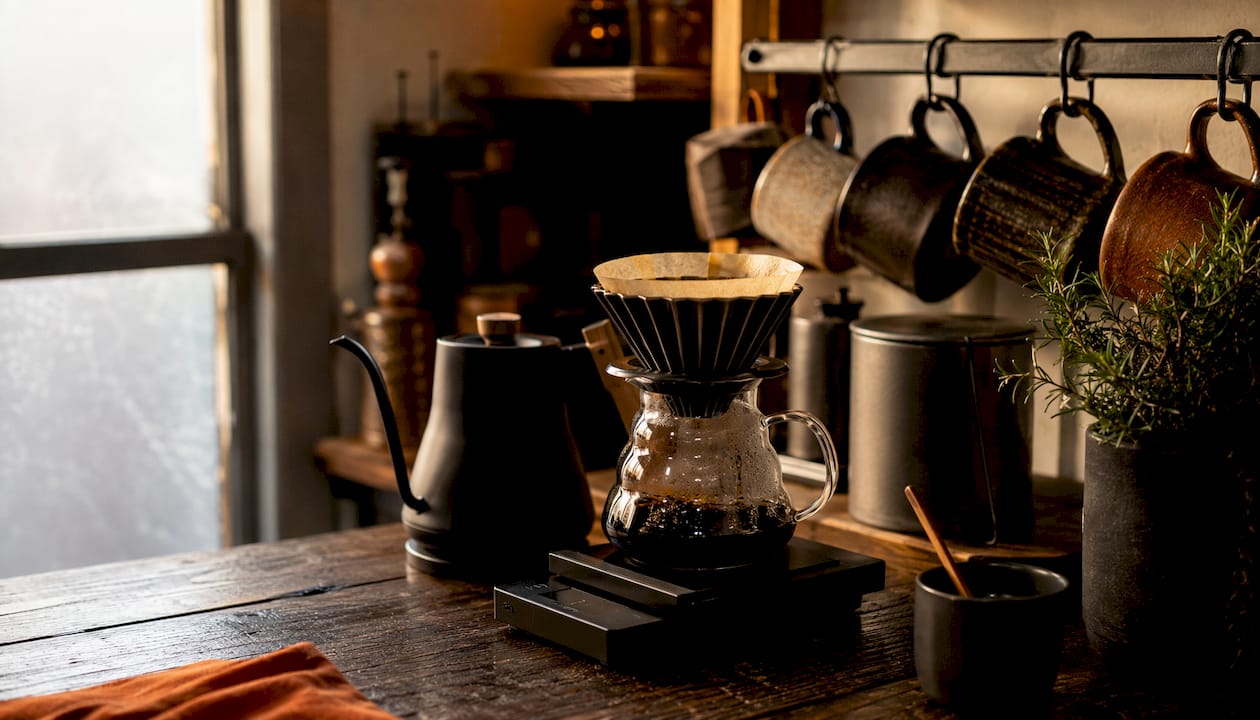
French press (e.g., Abyssal): 30 g coffee, 360 g water at 93°C, coarse grind, 4-minute steep, gentle press. Expect a fuller body and richer mouthfeel.
Espresso (e.g., Evening Roast): 18 g in, 36 g out, fine grind, target 25–30 seconds extraction time. Treat the timing as a guide, not a rule. Taste and yield matter more than the stopwatch.
For a more detailed step-by-step approach, The Flaming Bean’s barista guide walks through cafe-quality technique at home.
How does extraction differ across espresso, pour-over, immersion, and cold brew?
Each method extracts at a different speed and through a different mechanism. Understanding the difference helps you set realistic targets and avoid applying espresso logic to a French press.
Espresso compresses extraction into a short time period using high pressure. The pressure forces water through a dense puck, extracting at high speed and producing very high TDS. Grind consistency and distribution matter enormously here because channeling (water finding a path of least resistance through the puck) causes uneven extraction even when timing looks right.
Pour-over uses gravity and flow rate. Extraction speed depends on grind size, bed depth, and how you pour. A well-executed pour-over at medium-fine grind and recommended temperature typically finishes in a few minutes and produces a clean, bright cup because paper filtration removes oils and fines.
French press and immersion methods soak grounds for a few minutes at a coarser grind. Because grounds stay in contact with water the entire time, extraction is more even across the bed. Metal filtration keeps oils in the cup, producing the heavier body that French press is known for. Filtration method has a stronger effect on perceived body than modest changes in EY.
Cold brew uses room-temperature or cold water over 12–24 hours. Cold water slows extraction dramatically, favoring certain soluble fractions and producing a naturally low-acid, sweet, heavy-bodied concentrate. EY targets are similar, but the process is far less sensitive to grind size than hot methods.
| Method | Brew ratio | Typical time | Filtration | Body |
|---|---|---|---|---|
| Espresso | low brew ratio | short extraction time | Metal (portafilter) | Heavy, syrupy |
| Pour-over | moderate brew ratio | moderate extraction time | Paper | Clean, bright |
| French press | moderate brew ratio | moderate extraction time | Metal | Full, oily |
| Cold brew | higher brew ratio, concentrate | extended extraction time | Paper or metal | Heavy, low-acid |
What tools do you actually need to measure extraction?
You don’t need a lab. You need a few reliable tools, prioritized by impact.
- Digital scale (0.1 g accuracy): The single most important tool. Weighing both coffee and water removes the biggest source of inconsistency in home brewing. A Hario V60 Drip Scale or Acaia Pearl are popular choices, but any accurate kitchen scale works.
- Burr grinder: Blade grinders produce inconsistent particle sizes, which causes uneven extraction. A burr grinder (conical or flat) produces a more uniform grind distribution. Entry-level options like the Baratza Encore or 1Zpresso JX-Pro are reliable starting points.
- Thermometer or temperature-controlled kettle: Water temperature directly affects extraction rate. A gooseneck kettle with a built-in thermometer (Fellow Stagg EKG, Bonavita Variable) lets you hit 91–94°C consistently.
- Refractometer (optional but useful): A refractometer measures TDS directly, letting you calculate EY with the formula above. Worth the investment once you’re dialing recipes reproducibly and want real data. The DiFluid R2 Extract is a well-regarded option at a reasonable price point.
If you don’t have a refractometer yet, use taste and ratio as proxies. Brew the same ratio every time, adjust grind until the cup tastes balanced, and note your settings. Consistency is the goal, and a scale gets you 80% of the way there before you ever need a TDS meter.
Pro Tip: Before adjusting any variable, taste the cup at the same temperature every time. A hot cup masks bitterness; a cool cup amplifies sourness. Let it drop to around 60°C before your diagnostic sip.
Why balanced extraction beats maximum extraction every time
Chasing maximum yield is a common mistake. The goal is balance, not the highest possible number. A cup at 23% EY isn’t better than one at 20% EY. It’s just more extracted, and the extra extraction usually means more bitter phenolics and a harsher finish.
The concept that changes how you think about this is evenness. Two cups can register the same EY on a refractometer and taste completely different. If extraction is uneven across particle sizes, coarser particles contribute under-extracted sour notes while finer particles contribute over-extracted bitter ones. The average looks fine. The cup doesn’t.
This is why grind consistency matters as much as grind size. A grinder that produces a wide range of particle sizes creates a wide range of extraction rates in the same brew. The result is a cup that tastes simultaneously sour and bitter, which is the clearest sign of uneven extraction rather than a simple under/over problem.
The 80/20 rule in coffee holds that bean quality and roast set the ceiling for what’s possible, while brewing variables determine how close you get to that ceiling. Extraction science won’t rescue a poorly roasted coffee. But it will let you consistently reach the best version of a well-roasted one.
Pro Tip: If your cup tastes both sour and bitter at the same time, don’t just grind finer. First check your grinder’s consistency and your water distribution across the bed. Uneven saturation is usually the culprit, not a simple EY problem.
Key Takeaways
Balanced extraction, not maximum yield, is the goal: aim for 18–22% EY and 1.15–1.35% TDS for brewed coffee; espresso targets 8–12% TDS at the same EY range. Adjust grind first, and taste every change before making another.
| Point | Details |
|---|---|
| SCA targets to memorize | Aim for 18–22% EY and 1.15–1.35% TDS for brewed coffee; espresso targets 8–12% TDS at the same EY range. |
| Grind is your first lever | Adjust grind size before contact time or temperature for the fastest, most predictable extraction changes. |
| Sour vs. bitter diagnosis | Sour means under-extracted; go finer, longer, or hotter. Bitter means over-extracted; go coarser, shorter, or cooler. |
| Evenness matters as much as yield | A cup at the right EY can still taste bad if extraction is uneven across particle sizes. |
| The Flaming Bean | Evening Roast, Abyssal, and Safe Ground are roasted for balanced extraction and work well with the starter recipes above. |
Why extraction balance starts at the roaster, not the brewer
Here’s an opinion worth saying plainly: most home baristas spend too much time adjusting brew variables and not enough time thinking about whether the coffee they’re working with was roasted to be extractable in the first place.
Roast development is where extraction balance begins. A coffee that’s been rushed through the roast, or one that’s been taken too dark without proper development time, creates structural problems that no grind adjustment will fully fix. Under-developed roasts have dense, resistant cell walls that extract unevenly. Over-roasted coffees are so porous and soluble that they hit bitter notes before you’ve had a chance to pull sweetness through.
The variables covered in this article, grind, ratio, time, temperature, are real and they matter. But they’re adjustments within a range set by the roaster. When a coffee dials in easily, when small grind changes produce predictable, clean flavor shifts, that’s not luck. That’s the result of a roast that was developed with extraction in mind.
The 80/20 principle applies here directly. Bean origin and roast development set the ceiling. Your brewing variables determine how close you get to it. Spend time choosing coffees roasted by people who think about this, and your dialing-in sessions get shorter, your results get more consistent, and the cup gets better faster.
One more thing: don’t underestimate how much roasting shapes flavor development. The Maillard reactions and caramelization that happen during roast create the very compounds you’re trying to extract. If those reactions were cut short or pushed too far, no amount of precision brewing recovers them.
Coffees roasted with extraction balance in mind
We roast every coffee at The Flaming Bean with home brewers in mind. That means roast profiles developed to extract cleanly across a range of methods, not just under ideal cafe conditions.
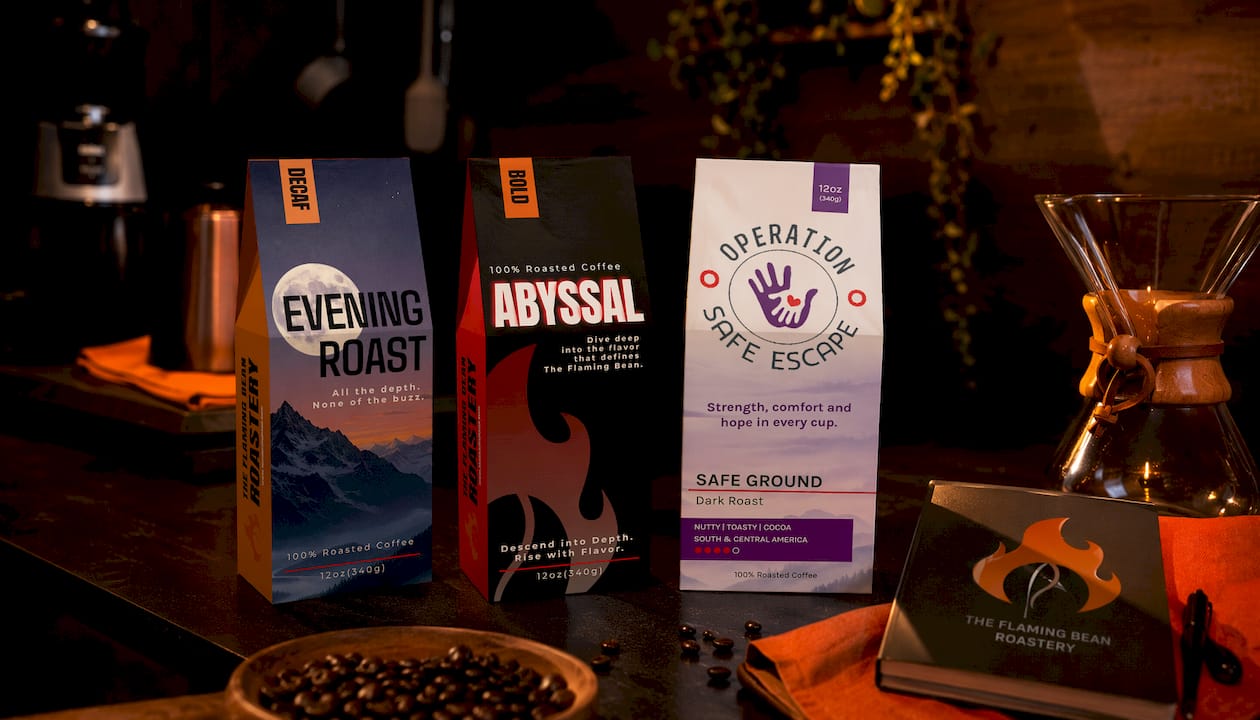
Three roasts worth trying with the recipes in this article:
Evening Roast is our smoothest, most approachable option. It’s developed for balanced sweetness and body, which makes it forgiving to dial in. Start with the pour-over recipe above (20 g, 300 g water, 93°C) and it’ll reward you quickly.
Abyssal is built for depth. The darker roast profile makes it ideal for French press and espresso, where fuller body and lower acidity shine. Use the immersion recipe (30 g, 360 g water, 4-minute steep) for a rich, heavy cup.
Safe Ground is our everyday versatile roast. It works across pour-over and drip methods and is a great coffee to practice dialing in because it gives clear, readable feedback at each extraction stage. Every bag also supports organizations working to protect vulnerable individuals.
Pick one, brew it with the starter recipe that matches your method, and taste the difference that a well-developed roast makes. Browse all our roasts at theflamingbean.com.
Further reading and measurement resources
These are the sources and references worth bookmarking if you want to go deeper on extraction science and measurement:
- Specialty Coffee Association (SCA) — The primary source for the Brewing Control Chart, extraction yield targets, and water temperature standards. The SCA’s brewing standards are the industry baseline.
- Coffee extraction chemistry: yield, TDS, and solubles — A clear breakdown of the EY formula, TDS measurement, and the worked calculation used in this article.
- Coffee extraction — Wikipedia — A solid overview of extraction variables and the chemistry behind them.
- Coffee extraction timing and flavor — ITA Coffee — Good explainer on how timing shapes flavor across different brew methods.
- Espresso extraction timing — Zelda & Rocky — Practical perspective on why the 30-second espresso rule is a starting point, not a law.
- Coffee body and filtration — Explains how filtration method affects mouthfeel and perceived body independently of extraction yield.
- Caffeine and extraction — Covers how grind, temperature, and contact time affect caffeine levels in the cup.
- The Flaming Bean: brew better at home — Practical brewing guide with common troubleshooting for home setups.
Recommended
- Make Cafe Quality Coffee at Home: A Barista Guide – The Flaming Bean Roastery
- Brew Better Coffee at Home: A Practical Guide – The Flaming Bean Roastery
- What Is Espresso Roast? Flavor, Brew & Buying Tips – The Flaming Bean Roastery
- Why Coffee Beans Are Oily: A Home Brewer’s Guide – The Flaming Bean Roastery
Comments