
Coffee Flavor Wheel Explained: Your Complete Tasting Guide

The coffee flavor wheel is the definitive framework for describing and understanding the diverse flavors found in coffee. Developed by the Specialty Coffee Association (SCA) and World Coffee Research (WCR), the 2016 flavor wheel contains approximately 110 descriptors arranged in three concentric rings. It gives coffee enthusiasts and professionals a shared vocabulary to identify, compare, and communicate what they taste. Whether you’re sipping an Ethiopian Yirgacheffe or a bold Indonesian Mandheling, the wheel turns vague impressions into precise, repeatable descriptions. Understanding the coffee flavor wheel is the first real step toward tasting coffee with intention.
How is the coffee flavor wheel structured?
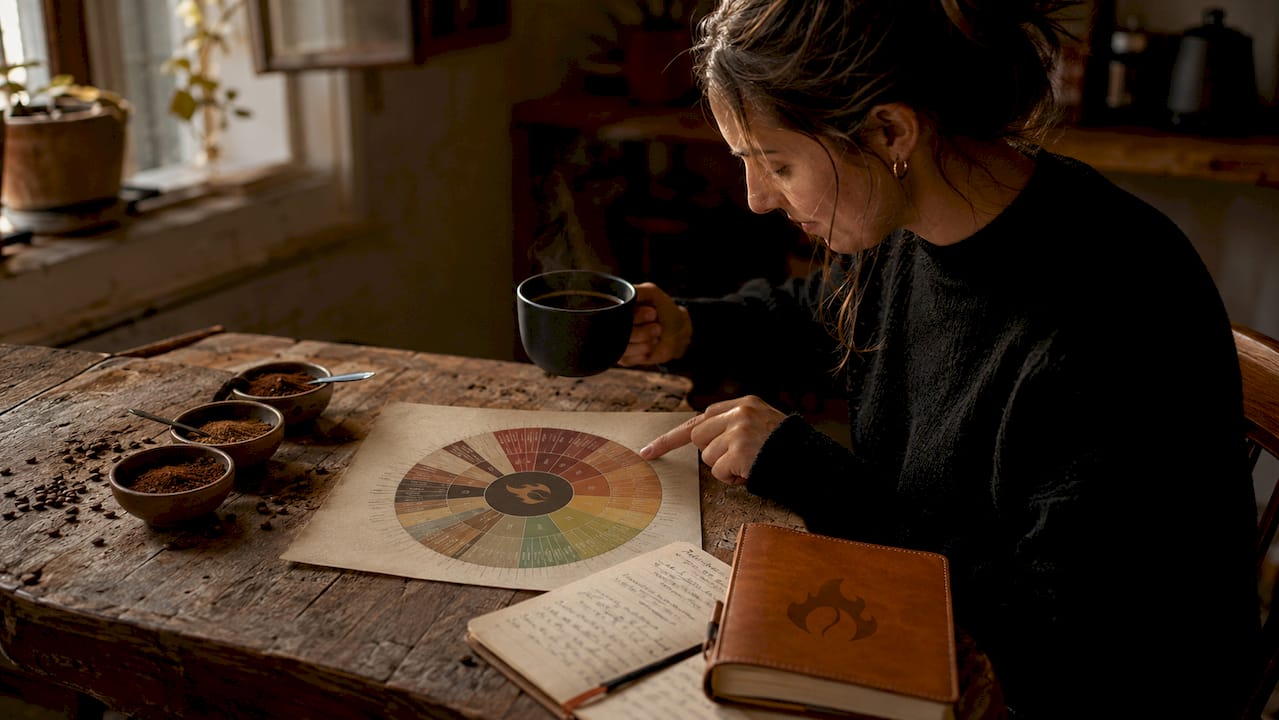
The wheel organizes flavor into three rings, moving from broad to specific as you read outward. The innermost ring holds 9 major flavor categories. The middle ring subdivides each category into groups. The outer ring lists the most precise flavor notes you can detect in a cup.
The 9 primary categories are:
- Floral (jasmine, rose, chamomile)
- Fruity (berry, citrus, dried fruit)
- Sour/Fermented (winey, sour aromatics)
- Green/Vegetative (raw, beany, olive oil)
- Other (papery, chemical, earthy)
- Roasted (tobacco, burnt, cereal)
- Spices (pepper, anise, clove)
- Nutty/Cocoa (almond, hazelnut, chocolate)
- Sweet (brown sugar, vanilla, caramel)
Reading the wheel correctly means starting at the center and working outward. If your cup tastes fruity, you move to the middle ring to narrow it down to berry or citrus. Then you check the outer ring for the most specific match, such as blackberry or grapefruit.
The wheel also serves a calibration purpose. Palate calibration using this shared vocabulary ensures consistent communication among global coffee professionals, competition judges, and enthusiasts. That consistency is what makes the wheel genuinely useful beyond casual tasting.
| Ring | Function | Example |
|---|---|---|
| Innermost | Major flavor category | Fruity |
| Middle | Subcategory grouping | Berry |
| Outer | Specific flavor note | Blackberry |
How do you use the coffee flavor wheel for tasting?
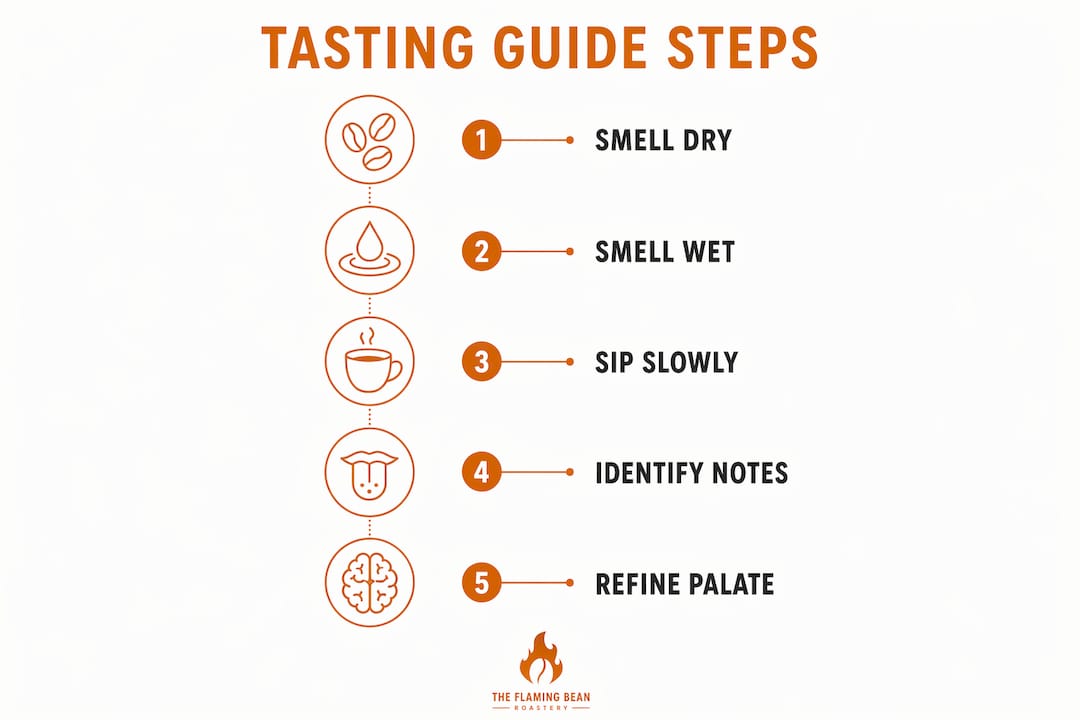
Effective use of the wheel starts before you take your first sip. Smell the dry grounds, then smell the wet grounds after adding hot water. Aroma accounts for a large portion of what you perceive as flavor, so skipping this step costs you real information.
The five evaluation dimensions used in professional cupping sessions are aroma, flavor, acidity, body, and aftertaste. The flavor wheel works alongside all five, not just the taste dimension. Acidity tells you whether a fruity note is bright and citrus-like or soft and berry-like. Body tells you whether a nutty note feels light or heavy on the palate.
Follow these steps during a tasting session:
- Smell the dry grounds. Note any immediate impressions. Write them down without overthinking.
- Brew and smell the wet coffee. Aroma opens up with heat. Look for floral, fruity, or roasted signals.
- Sip and let the coffee coat your whole mouth. Resist swallowing immediately. Let it sit for two to three seconds.
- Start at the center of the wheel. Pick the broadest category that fits. Is it sweet? Roasted? Fruity?
- Move outward to the middle ring. Narrow your choice to a subcategory.
- Check the outer ring. Identify the most specific descriptor that matches your experience.
- Note the aftertaste. Some notes only appear after swallowing. Roasted and spice notes often linger here.
Pro Tip: Train your palate between tasting sessions by eating fresh fruit, dark chocolate, and roasted nuts without other flavors competing. Your brain builds flavor memory faster when you taste ingredients in isolation.
A common mistake is trying to identify too many notes at once. Start with one or two clear impressions per cup. Precision beats quantity every time.
What are the key flavor notes and where do they come from?
Flavor notes in coffee are not added. They arise from the bean’s genetics, the soil it grew in, the altitude of the farm, and how the cherry was processed after harvest. The flavor wheel excludes flavoring agents added post-roast, focusing entirely on these inherent qualities. That distinction matters because it means every note you identify is a real product of the coffee’s origin and craft.
Origin shapes flavor more than almost any other factor. Ethiopian Yirgacheffe coffees consistently show prominent fruity and floral notes, often landing on jasmine, bergamot, and blueberry on the outer ring. Indonesian Mandheling maps to the earthy and other categories, with notes of cedar, dark chocolate, and tobacco. Kenyan coffees frequently show berry and citrus profiles, while Colombian coffees lean sweet and fruity with caramel and apple notes.
Processing also drives flavor formation. The Fruity category subdivides into Fermented Fruit, Berry, Dried Fruit, Other Fruit, and Citrus Fruit, and these distinctions often trace back to how the coffee cherry was processed. Natural (dry) processing, where the cherry dries around the bean, tends to produce intense berry and fermented fruit notes. Washed processing produces cleaner, brighter citrus and floral notes.
Roasting shapes the Roasted, Nutty/Cocoa, and Spices categories. Light roasts preserve origin-driven fruity and floral notes. Dark roasts develop tobacco, burnt sugar, and bitter chocolate notes through Maillard reaction chemistry. Understanding how roasting shapes flavor helps you predict where on the wheel a coffee will land before you even taste it.
“The flavor wheel does not just describe what coffee tastes like. It explains why two coffees from the same country can taste completely different. Origin, variety, processing, and roast each push the wheel in a different direction. Learning to read those signals is what separates a casual drinker from a genuine coffee enthusiast.”
What challenges come up when reading the flavor wheel?
The wheel is a tool, not a rulebook. Individual palate differences affect flavor perception significantly. Two people tasting the same cup may land on different outer-ring descriptors while agreeing on the same middle-ring subcategory. That is normal, and it does not mean one person is wrong.
Coffee flavor perception involves not only taste but also aroma and retronasal olfaction, with five primary taste sensations detected on the tongue: bitterness, sweetness, sourness, saltiness, and umami. The wheel captures most of this complexity, but mouthfeel and texture sit outside its visual framework. A coffee can feel creamy, thin, or syrupy in ways the wheel does not directly address.
Common challenges coffee enthusiasts face include:
- Confusing similar notes. Blackberry and dark cherry sit close together on the wheel. Tasting them side by side in real fruit helps you tell them apart in a cup.
- Mistaking roast character for origin character. A heavily roasted Ethiopian coffee may show more Roasted notes than Fruity ones. The roast can mask origin flavors.
- Over-identifying notes. Listing eight descriptors for one cup usually means you are guessing. Two or three confident notes beat a long uncertain list.
- Ignoring negative descriptors. The wheel includes unpleasant categories like Green/Vegetative and Other (papery, chemical). These signal processing defects or poor storage, and recognizing them is just as valuable as identifying positive notes.
Using the flavor wheel alongside other sensory tools, such as a coffee flavor balance guide, gives you a fuller picture of what is in your cup. The wheel tells you what the flavors are. Balance tells you how well they work together.
Key Takeaways
The coffee flavor wheel is the most reliable tool for building a precise, shared vocabulary around coffee taste, and using it consistently is what separates intentional tasting from guesswork.
| Point | Details |
|---|---|
| Start broad, move outward | Begin at the center ring and narrow down to specific notes on the outer ring. |
| Origin drives flavor | Ethiopian, Kenyan, Colombian, and Indonesian coffees each map to distinct wheel categories. |
| Processing matters | Natural processing produces berry and fermented notes; washed processing produces citrus and floral notes. |
| Aroma is half the flavor | Smell dry grounds and wet grounds before tasting to capture the full flavor profile. |
| Calibrate your palate | Tasting fruits, spices, and chocolates in isolation builds the sensory memory the wheel requires. |
Why the flavor wheel changed how I taste coffee
I resisted the flavor wheel for longer than I should have. My early instinct was that putting coffee into categories felt clinical and removed from the pleasure of drinking it. I was wrong about that.
The first time I used the wheel with real intention, I was tasting a washed Ethiopian coffee from The Flaming Bean. I had always described it as “bright and fruity,” which told me nothing useful. Working through the wheel, I landed on bergamot and jasmine in the floral subcategory, and dried apricot in the fruity subcategory. Those two descriptors told me something real about the bean’s origin and processing. They also made the next cup more interesting, because I was listening for something specific.
The mistake I see most often with beginners is jumping straight to the outer ring. They read “blackberry” on the wheel and go hunting for blackberry in the cup. That approach almost always fails. The wheel works from the inside out, not the outside in. Train yourself to ask “is this fruity or roasted?” before you ask “is this blueberry or cherry?”
The wheel also changed how I talk about coffee with other people. Saying “this tastes like dark chocolate and cedar” is a conversation starter. Saying “this is good” is not. The vocabulary the wheel gives you is social as much as it is technical. Use it that way.
— Tony
Taste the difference with The Flaming Bean
Knowing how to read a flavor wheel is one thing. Having great coffee to practice with is another.
The Flaming Bean sources coffees from renowned growing regions specifically to showcase the full range of the flavor wheel. The Evening Roast is a great starting point for enthusiasts building their palate. Its smooth, approachable profile sits firmly in the Sweet and Nutty/Cocoa categories, making it easy to identify and describe. For those ready to explore bolder territory, The Flaming Bean’s signature blends cover everything from bright fruity and floral profiles to deep roasted and earthy ones. Each cup is a chance to put the wheel to work.
FAQ
What is the coffee flavor wheel?
The coffee flavor wheel is a standardized sensory tool developed by the Specialty Coffee Association and World Coffee Research. It organizes approximately 110 flavor descriptors into three concentric rings, from broad categories to specific notes.
How do you read the coffee flavor wheel?
Start at the innermost ring and identify the broadest category that matches your cup, such as Fruity or Roasted. Then move outward through the middle and outer rings to find the most specific descriptor.
Why do coffee flavor profiles differ by origin?
Coffee origin determines the bean’s genetics, soil chemistry, and altitude, all of which shape flavor. Ethiopian Yirgacheffe produces fruity and floral notes, while Indonesian Mandheling produces earthy and other notes, as shown by origin-driven flavor profiles.
Does the flavor wheel include flavored coffees?
No. The flavor wheel focuses exclusively on inherent coffee flavors derived from genetics, soil, and processing. Flavoring agents added after roasting are not part of the wheel’s framework.
Can beginners use the coffee flavor wheel effectively?
Yes. Beginners should start by identifying one or two broad categories per cup rather than chasing specific outer-ring notes. Pairing the wheel with a coffee origins guide helps connect flavor expectations to specific regions.
Recommended
- Coffee Roast Levels Explained: Your Flavor Guide – The Flaming Bean Roastery
- What Is a Coffee Blend? Your Complete Flavor Guide – The Flaming Bean Roastery
- What Does Balance Mean in Coffee? A Flavor Guide – The Flaming Bean Roastery
- Types of Coffee Bean Origins: A Flavor Guide – The Flaming Bean Roastery
Comments