
Coffee Roast Levels Explained: Your Flavor Guide

Coffee roast level is defined as the stage of heat development a green bean reaches during roasting, measured by temperature and physical transformation. To understand coffee roast levels is to understand why two cups from the same origin can taste completely different. The specialty coffee industry recognizes four main roast categories: light, medium, medium-dark, and dark. Each one delivers a distinct flavor profile, body, and brewing demand. Whether you brew with a Chemex, a French press, or a home espresso machine, roast level determines your coffee’s acidity, sweetness, bitterness, and how forgiving it is to brew.
What are the main coffee roast levels?
The four main roast levels are light, medium, medium-dark, and dark, each defined by a specific temperature range and roasting milestone. Understanding these ranges is the foundation of all coffee roast knowledge.
Two key events shape every roast profile. The first crack happens around 196°C when steam and CO2 burst through the bean structure, creating an audible popping sound. The second crack, occurring closer to 225°C, signals deeper cellular breakdown and the start of dark roast territory.
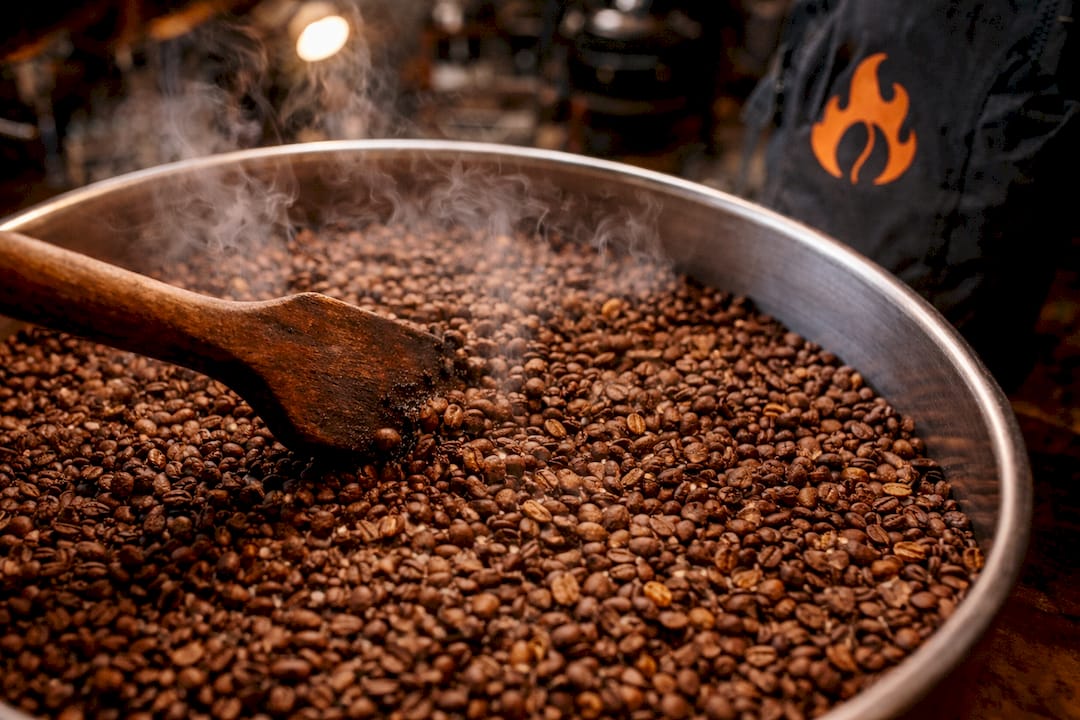
| Roast Level | Temperature Range | Key Stage | Bean Appearance |
|---|---|---|---|
| Light | 196–205°C | Just after first crack | Pale brown, dry surface |
| Medium | 210–220°C | Between first and second crack | Medium brown, dry surface |
| Medium-Dark | 220–225°C | Approaching second crack | Dark brown, slight sheen |
| Dark | 225–240°C | Through second crack | Very dark, oily surface |
Roasting time and temperature together alter the bean’s chemistry. Sugars caramelize, acids break down, and moisture evaporates. The longer a bean stays in the drum, the more its original fruit and floral notes give way to roast-driven flavors like caramel, chocolate, and smoke.
How do roast levels shape flavor and appearance?
Roast level is the single biggest driver of what ends up in your cup. Each stage produces a recognizable set of flavors, aromas, and physical traits.
Light roast coffee preserves the bean’s origin character. Expect bright acidity, fruity notes like blueberry or citrus, and a lighter body. Light roasts are denser with a dry, pale surface because less moisture has escaped and no surface oils have developed. Ethiopian and Kenyan single origins shine at this level.
Medium roast flavors sit in a sweet spot. Caramelized sugars create a mild sweetness, acidity softens, and body increases. Medium roast is the most versatile and forgiving roast for home brewers. Colombian and Brazilian beans are classic choices here.
Medium-dark roasts push further into caramel and chocolate territory. Body becomes fuller, and a slight bittersweet edge appears. The bean surface shows a faint sheen as oils begin to migrate outward.
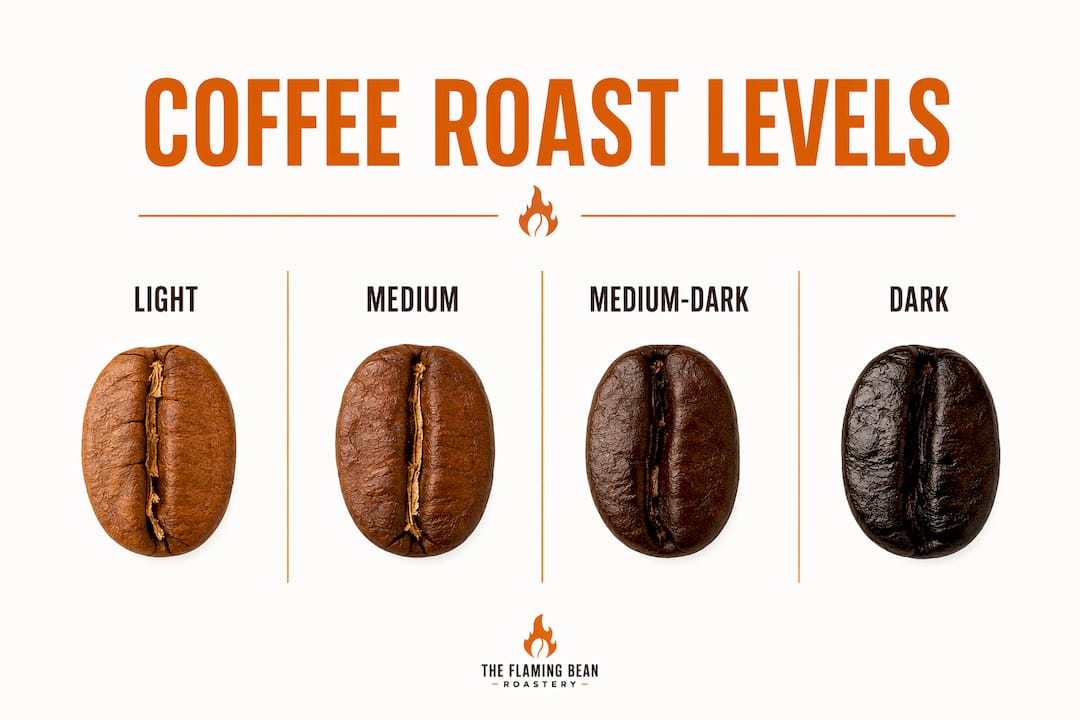
Dark roast coffee characteristics include bold, smoky, and sometimes bittersweet flavors. Origin notes are largely replaced by roast character. Beans are visibly oily, expanded, and noticeably lighter in weight due to moisture loss.
Here is a quick comparison across the four levels:
| Trait | Light | Medium | Medium-Dark | Dark |
|---|---|---|---|---|
| Acidity | High | Moderate | Low | Very low |
| Body | Light | Medium | Full | Heavy |
| Sweetness | Subtle | Balanced | Rich | Low |
| Bitterness | Low | Low-moderate | Moderate | High |
| Surface Oils | None | None | Slight | Heavy |
| Aroma | Floral, fruity | Nutty, caramel | Chocolate, spice | Smoky, bold |
Physical changes matter beyond appearance. As roasting progresses, beans become more porous and less dense. That structural shift directly affects how water extracts flavor during brewing.
How to identify coffee roast levels by sight and smell
You can identify a coffee’s roast level before you ever brew it. These sensory cues are reliable and fast.
Visual inspection:
- Pale brown with no surface sheen signals a light roast
- Medium brown with a dry surface indicates a medium roast
- Dark brown with a slight gloss points to medium-dark
- Very dark, visibly oily beans confirm a dark roast
Aroma cues:
- Light roasts smell floral, tea-like, or fruity when ground
- Medium roasts carry a nutty, caramel-like fragrance
- Dark roasts produce a smoky, bold, almost woody scent
Brewing adjustments matter just as much as identification. Light roasts require precise brewing controls because they are less soluble and harder to extract. Use a finer grind, water around 93–96°C, and a longer contact time to pull out their full complexity. Under-extraction with light roasts produces sour, thin coffee.
Dark roasts extract more easily due to their porous structure. A coarser grind and slightly cooler water, around 88–92°C, prevent over-extraction and excessive bitterness.
Pro Tip: If your light roast tastes sour, grind finer and raise your water temperature by 2–3°C before changing anything else. That single adjustment fixes most light roast extraction problems.
Good brewing gear matters here. A quality burr grinder from a collection like The Flaming Bean’s grinders gives you the grind consistency each roast level demands.
What are common misconceptions about coffee roast levels?
Several widely held beliefs about roast levels are simply wrong. Clearing them up helps you make better choices.
- Dark roast does not mean more caffeine. Caffeine content is similar across roasts. The bold flavor of a dark roast reads as “strong,” but that is roast character, not caffeine.
- Light roast is not weaker. Light roast coffee often has slightly more caffeine by weight because less is burned off during roasting.
- Dark roast is not better for espresso by rule. Medium and medium-dark roasts produce excellent espresso with more complexity and sweetness.
- Oily beans are not fresher. Surface oils on dark roasts are a sign of cellular breakdown, not quality or freshness.
Freshness is where dark roasts lose ground. Dark roasts go stale faster because their oily, porous surface exposes more area to oxygen. Buy dark roast coffee in smaller quantities and consume it within 2–3 weeks of the roast date for peak flavor.
Light roasts, while more stable, are the most demanding to brew well. They reward patience and precision. Light roasts require more precise grind and temperature control, making them the most challenging for beginners.
Pro Tip: Start with a medium roast to build your brewing instincts. Once you can consistently pull a balanced cup, move to light roasts for complexity or dark roasts for boldness.
Which roast level matches your brew method?
Pairing roast level to brew method is one of the fastest ways to improve your coffee. The right match amplifies what each roast does best.
| Brew Method | Best Roast Level | Why It Works |
|---|---|---|
| Pour-over (Chemex, V60) | Light to medium | Highlights acidity, origin notes, and clarity |
| Drip coffee maker | Medium | Balanced, forgiving, consistent results |
| AeroPress | Medium to medium-dark | Flexible pressure suits both fruity and chocolatey profiles |
| French press | Medium-dark | Full immersion suits heavier body and bold flavor |
| Espresso machine | Medium-dark to dark | High pressure extracts bold flavor without sourness |
| Cold brew | Dark | Long steep time tames bitterness and builds sweetness |
Pour-over methods like the Hario V60 or Chemex are built for light roasts. Their slow, controlled flow rate gives water time to pull out the delicate fruit and floral notes that define a quality light roast. Rushing the pour or using dark roast in a V60 produces a flat, one-dimensional cup.
Espresso and milk-based drinks like lattes and flat whites pair best with medium-dark and dark roasts. The bold, caramelized flavors cut through milk without disappearing. The Flaming Bean’s Evening Roast is a great example of a medium-dark profile that holds up beautifully in both black and milk-based preparations.
For whole bean coffee drinkers, grinding fresh for each brew method makes a measurable difference in cup quality regardless of roast level.
Key takeaways
Roast level is the most direct lever you have over coffee flavor, and matching it to your brew method and taste preference produces consistently better cups.
| Point | Details |
|---|---|
| Four roast categories exist | Light, medium, medium-dark, and dark each have distinct temperatures and flavor profiles. |
| Light roasts need precise brewing | Use finer grind and higher water temperature to avoid sour, under-extracted results. |
| Dark roasts stale quickly | Buy in small amounts and consume within 2–3 weeks of the roast date. |
| Caffeine is not roast-dependent | Bold flavor does not equal more caffeine; levels are similar across all roast types. |
| Match roast to brew method | Pour-over suits light roasts; espresso and French press suit medium-dark and dark. |
Why roast level exploration changed how i brew
I spent years defaulting to dark roast because it felt like the “serious” coffee choice. Bold, smoky, no-nonsense. Then a barista at a small specialty shop handed me a light roast Ethiopian brewed on a V60, and I genuinely thought I was drinking a different beverage. Bright, almost wine-like, with a blueberry finish I had never associated with coffee.
That cup forced me to rethink everything. The truth is, most people never move past their default roast because nobody explains that each level is essentially a different flavor category, not just a different intensity. Dark roast is not more coffee. It is a specific flavor transformation.
My honest recommendation: start with a medium roast and brew it consistently for two weeks. Learn what balanced extraction feels like in your hands. Then try a light roast from the same origin and notice what the roaster preserved. After that, a dark roast will make complete sense as a deliberate choice rather than a default.
The other thing I have learned is that freshness matters more than roast level for most people. A fresh medium roast beats a stale dark roast every single time. Check the roast date, not just the bag design.
Invest in a good burr grinder before you invest in expensive beans. Grind consistency is the variable that separates a good cup from a great one at every roast level.
— Tony
Find your perfect roast at the flaming bean
Ready to put this roast knowledge to work? The Flaming Bean makes it easy to explore every level of the roast spectrum with coffees crafted to highlight exactly what each stage does best.
From the smooth, approachable character of the Evening Roast to the bold depth of The Flaming Bean’s signature blends like Abyssal and Angry Rooster, there is a roast here for every palate and every brew method. Pair your new favorite coffee with the right gear from The Flaming Bean’s coffee makers collection to get the most out of every bag. Trying multiple roasts side by side is the fastest way to discover what you actually love. We make that easy.
FAQ
What are the four coffee roast levels?
The four main roast levels are light, medium, medium-dark, and dark. Each is defined by a specific roasting temperature range and produces distinct flavors, body, and acidity.
Does dark roast coffee have more caffeine?
No. Caffeine content is similar across all roast levels. Dark roast tastes bolder and more intense, but that is roast character, not a higher caffeine concentration.
Why does my light roast taste sour?
Sourness in light roast coffee signals under-extraction. Light roasts are less soluble and need a finer grind and higher water temperature to extract properly. Adjust grind size first, then water temperature.
How quickly does dark roast coffee go stale?
Dark roast should be consumed within 2–3 weeks of the roast date. Its oily, porous surface exposes more area to oxygen, causing faster flavor degradation than lighter roasts.
Which roast level is best for beginners?
Medium roast is the best starting point. It is the most forgiving roast for different brew methods and delivers a balanced cup without the precision demands of light roast or the intensity of dark roast.
Comments