
Stop Wasting Beans: Match Bag Size to Your 2‑Week Flavor Window

Sealed whole beans hold peak flavor for about 3 to 4 weeks, and only 1 to 2 weeks once opened. Ground coffee peaks even faster, often within a few days. Instant and pods can last a year or more sealed, while brewed coffee is best within hours. The rule that ties it all together: keep coffee airtight, cool, dark, and grind it right before you brew. Coffee almost never turns “unsafe.” It just loses its aroma fast.
TL;DR:
- Whole beans maintain peak flavor for 3 to 4 weeks unopened, but only 1 to 2 weeks once opened, while ground coffee is best used within a week.
- Roast date matters more than expiration date because flavor fades within two to three weeks post-roast, regardless of packaging, especially if beans are kept in proper valve-sealed bags.
- Instant coffee and pods last much longer, with sealed instant remaining stable for a year or more, and individual pods retaining freshness until their printed best-by date.
- Brewed coffee should be consumed within an hour for flavor, refrigerated black coffee lasts 3 to 4 days, and cold brew concentrate stays good for 7 to 10 days refrigerated.
- Purchase smaller quantities based on your consumption rate, prioritize fresh roast dates over packaging and storage gadgets, and buy more often to keep coffee within its flavor window.
Table of Contents
- How Long Is Coffee Good for, Exactly?
- Why Roast Date Matters More Than the Bag Itself
- Why Does Ground Coffee Go Stale So Much Faster?
- Why Do Instant Coffee and Pods Last So Much Longer?
- How Long Can You Keep Brewed Coffee and Cold Brew?
- A Weekly Storage Routine That Actually Keeps Coffee Fresh
- How Can You Tell If Coffee Has Gone Bad?
- What Roasters Know That Most Coffee Drinkers Don’t
- What Actually Matters When You’re Trying to Keep Coffee Fresh
- Fresh Coffee, Delivered Before the Flavor Fades
- Sources
How Long Is Coffee Good for, Exactly?
The honest answer depends on the form the coffee takes, not just the calendar. A sealed bag of whole beans and an open tin of instant coffee age at wildly different speeds, and treating them the same is how most people end up with a stale cup and no idea why.
The table below breaks down what to expect across the formats you’re most likely to have in your kitchen right now, from unopened bags to that pitcher of cold brew in the fridge.
None of these numbers describe a safety cutoff. They describe when the coffee stops tasting like coffee and starts tasting like cardboard. The one exception is dairy: if you’ve added milk or cream to any of the above, that drink follows standard dairy safety guidance, not coffee’s own timeline.
Why Roast Date Matters More Than the Bag Itself
Freshly roasted beans release carbon dioxide for days after roasting, a process called off-gassing. That’s why premium bags have a one-way valve. It lets gas escape without letting oxygen sneak in. This is also why the Serious Eats testing with the Specialty Coffee Association found that roughly 40 major aroma compounds fade within two to three weeks at room temperature, no matter how nice the bag looks.
That timeline is the real reason a roast date matters more than a “best by” date. A best-by date can sit a year out. The flavor clock starts ticking the day the beans leave the roaster, not the day you buy the bag.
Here’s how to handle storage once that bag is in your hands:
- Keep beans in the original valve bag if it’s foil-lined and resealable. It’s already built to manage gas and block light.
- Transfer to an opaque, airtight canister only if the original bag has no valve or a weak seal.
- Squeeze excess air out of the bag before resealing, or use a canister with a lid that pushes air out as it closes.
- Keep the container away from the stove, a sunny window, or anywhere temperatures swing.
Pro Tip: If you buy beans in bulk, freeze the unopened extra bags right away instead of leaving them in the pantry. Tape over the one-way valve before freezing to help prevent moisture ingress, and pull one bag at a time. Avoid thawing and refreezing the same bag, as condensation from temperature changes can harm quality.
Why Does Ground Coffee Go Stale So Much Faster?
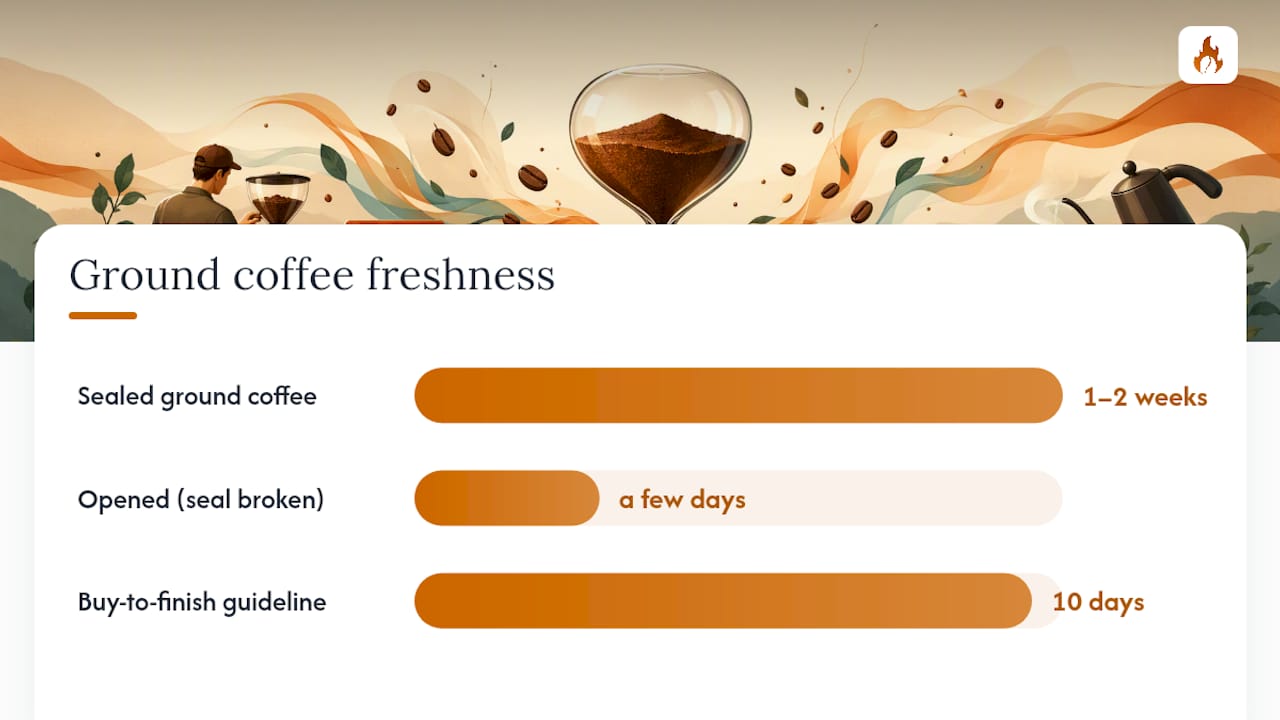
Grinding beans multiplies their surface area by a huge margin, which means far more surface exposed to oxygen at once. That’s the entire reason ground coffee stales in days while whole beans hold on for weeks. The Kitchn’s storage research puts ground coffee’s realistic peak freshness at one to two weeks sealed, dropping to just a few days once you break the seal.
If pre-ground is what you buy, work with that timeline instead of fighting it:
- Buy amounts you’ll finish within 10 days, not a giant bag “to save trips.”
- Keep it in an airtight container with as little empty air space as possible.
- In humid climates, refrigeration can slow staling, but only in a sealed, moisture-proof container, since ground coffee absorbs odors and dampness almost instantly in an open fridge.
- Skip the freezer for ground coffee unless you’re portioning small amounts for genuine long-term storage. The exposed surface area makes it far more prone to condensation damage than whole beans.
Why Do Instant Coffee and Pods Last So Much Longer?
Instant coffee goes through a process that strips out most of the volatile compounds that make fresh-roasted coffee smell so good in the first place. That’s a tradeoff: less aroma to lose means less aroma to protect. Sealed instant coffee can stay consistent for one to two years or longer without much flavor change.
Pods work differently. Each one is individually sealed at the factory, so it holds until the printed best-by date regardless of how long the box sits in your cabinet. Once you open an instant coffee jar, keep the lid tight and store it somewhere dry. Moisture is really the only enemy instant coffee has.
How Long Can You Keep Brewed Coffee and Cold Brew?
Brewed coffee has the shortest clock of anything on this list, and it starts the moment it stops touching the heating element.
- Black coffee, first hour: This is peak flavor. After 30 to 60 minutes on a burner or in a carafe, oils start breaking down and the taste turns flat or bitter.
- Black coffee, refrigerated: You can stretch it to 3 or 4 days in a sealed container, but expect duller flavor, not the cup you made it for.
- Cold brew concentrate: Because it’s brewed cold and typically stronger, concentrate holds up for 7 to 10 days refrigerated.
- Diluted cold brew: Once you’ve watered it down or added milk, treat it like brewed coffee, good for 3 to 4 days at most.
If cream or milk enters the picture at any stage, follow standard dairy rules: don’t leave it out longer than two hours at room temperature, coffee timeline or not.
A Weekly Storage Routine That Actually Keeps Coffee Fresh
Good storage isn’t a one-time setup. It’s a handful of small habits repeated every week, and most of them take less effort than the mistakes they replace.
When you buy:
- Choose whole bean over pre-ground whenever you can. Grinding is the step that starts the clock ticking.
- Check the bag for an actual roast date, not just a best-by date, and learn to read the label if it’s not obvious where to find it.
- Buy only what you’ll use in 2 to 3 weeks. A bigger bag isn’t a better deal if half of it goes flat before you get there.
When you store:
- Unopened bags with a good valve seal go straight into a cool, dark cabinet, not the counter next to the stove.
- Once opened, transfer to an opaque airtight canister and press out extra air before closing the lid.
- Long-term extras get portioned into single-use vacuum bags and frozen immediately, sealed valve taped shut, no repeated thawing.
Every day:
- Grind only the amount you’re brewing right now, not a week’s worth at once.
- Keep the grinder, canister, and any backup bags away from windows, stovetops, and dishwashers venting heat.
Pro Tip: If you drink two cups a day, a 12-ounce bag lasts you roughly two weeks at that pace, right in line with the peak flavor window. Match your bag size to your actual drinking speed instead of buying based on price per pound, and you’ll rarely have coffee going stale on you.
How Can You Tell If Coffee Has Gone Bad?
Trust your nose before your eyes. Fresh coffee smells sharp and inviting; stale coffee smells flat, papery, or faintly like cardboard. A rancid, oily smell means the natural oils have oxidized, and the flavor will taste hollow or sour no matter how you brew it.
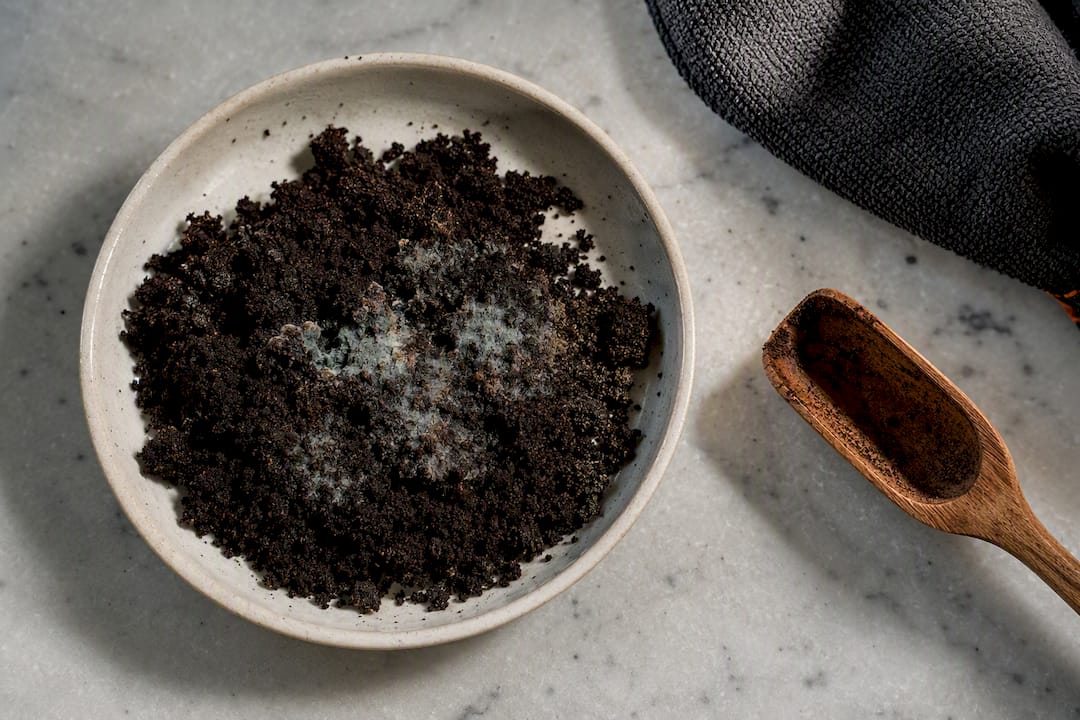
Visual cues matter too, but for a different reason. Any moisture, clumping, or visible mold means the coffee has been exposed to dampness, and that batch needs to go straight in the trash. Dry, stale coffee won’t hurt you. Coffee that’s grown mold absolutely can.
What Roasters Know That Most Coffee Drinkers Don’t
Professional roasters treat the days right after roasting as part of the recipe, not an afterthought. That’s where the industry testing on off-gassing becomes genuinely practical instead of just interesting trivia.
Freshly roasted coffee needs a short rest, not immediate use. Espresso in particular tends to taste better after resting 4 to 5 days post-roast, since excess carbon dioxide trapped in the beans can otherwise choke extraction and throw off crema. That same CO₂ release is also why a valve bag exists in the first place.
Reducing oxygen exposure, not just keeping beans in a dark jar, is the single biggest lever for preserving aroma long term. A vacuum-sealed portion beats an opaque canister with a loose lid every time, because it’s the oxygen you’re managing, not just the light.
The practical version of this advice is simple: buy in smaller, more frequent batches rather than one large bag you’re hoping to stretch. Subscription-based roast-to-door timing keeps you closer to that 3 to 4 week peak window than any storage trick can on its own.
What Actually Matters When You’re Trying to Keep Coffee Fresh
Most storage advice out there focuses on containers, canisters, gadgets with one-way valves you can buy separately, vacuum sealers, all of it. That’s not wrong, exactly. It’s just aimed at the wrong problem.
The bigger lever is timing, not equipment. A $40 canister won’t save beans that were roasted eight months ago and sat in a warehouse before they ever reached your cabinet. Meanwhile, a plain mason jar will do just fine for beans that are two weeks off the roaster and gone in ten days. The conventional wisdom oversells storage hardware and undersells the roast date printed on the bag, if it’s printed at all.
If you take one thing from all this: check the roast date before you check the price per pound. Buy less, buy more often, and let the beans stay in their flavor window instead of trying to drag a stale bag back to life with a better jar. That single habit does more for your morning cup than any storage gadget on the market.
— Tony
Fresh Coffee, Delivered Before the Flavor Fades
Roast-date tracking only works if the coffee reaches you while that date still means something. Evening Roast ships with its roast date printed right on the bag, sealed with a one-way valve so it stays inside that 3 to 4 week peak window rather than aging on a shelf somewhere before it ever reaches your kitchen.
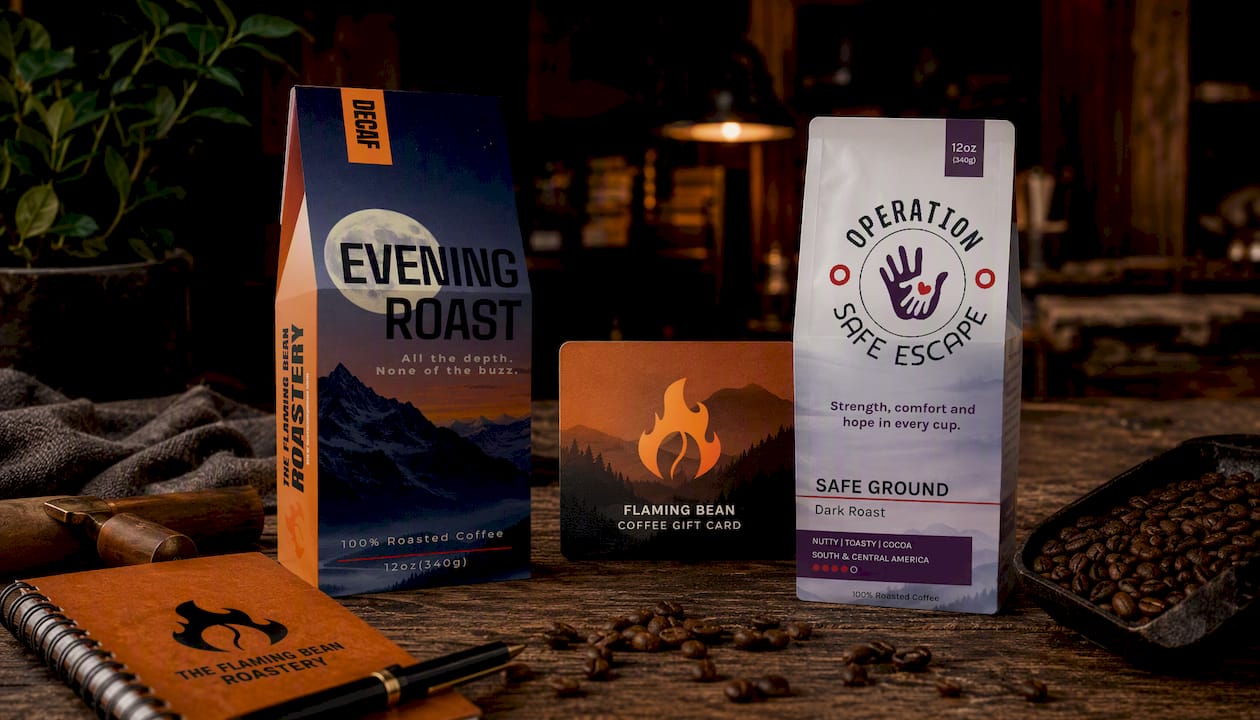
A subscription cadence built around quick roast-to-door timing helps address the problem of coffee going stale before you finish the bag. If your beans arrive days after roasting instead of weeks, you’re drinking closer to peak flavor every single time, not just on the days you happen to buy a fresh bag. Safe Ground follows the same roast-date labeling and packaging, with a portion of proceeds supporting anti-exploitation efforts, so the freshness and the purpose aren’t separate decisions. If you’re shopping for someone who’d rather pick their own roast, a Flaming Bean Coffee Gift Card lets them choose a fresh bag on their own schedule instead of guessing. Set up a subscription or send a gift card today, and let the roast date do the work your pantry can’t.
Sources
- How long does coffee last? — WebstaurantStore blog
- The Best Way to Store Coffee, According to a Professional Roaster — Serious Eats
- The Best Way to Store Coffee Beans for Maximum Freshness — The Kitchn
- How long does coffee last? — Healthline
Comments