
Coffee Tea Bags: Your Guide to Retail, Subscription & Wholesale

Most buyers should start with retail bags for personal or small-team use, move to a subscription when weekly demand becomes predictable, and contact a wholesale or private-label program the moment resale or branded supply enters the picture. Here are three steps to take right now:
- Request a wholesale information sheet or sample pack before committing to any volume.
- Set a trial cadence (two to four weeks) to test coffee on your actual equipment.
- Confirm two things immediately: roast-date transparency and sample or cupping availability. If a supplier won’t share either, move on.
The term “coffee tea bag” circulates online as informal shorthand for retail coffee bags and single-serve coffee packets, but in procurement conversations it refers to roasted whole-bean or ground coffee sold in retail bags, subscription plans, and wholesale or private-label programs. That’s the buying decision this guide covers.
Key Takeaways
Retail bags, subscriptions, and wholesale programs each serve a different buyer profile. Confirm roast-date transparency and sample availability before committing to any supplier.
| Point | Details |
|---|---|
| Match model to volume | Retail for 1–5 lb/month, subscription for predictable weekly demand, wholesale or private label for 20+ lb/month or resale. |
| Run a four-to-six-week pilot | Use the fourth delivery as your consistency check before signing long-term terms. |
| Demand roast-date transparency | Every bag should show the actual roast date; “best by” alone is not sufficient. |
| Watch for contract red flags | No samples, exclusive-use clauses without benefits, and vague machine maintenance terms are the three most common traps. |
| The Flaming Bean | Offers retail bags (Evening Roast), subscriptions, and wholesale or private-label programs with sample packs and roast-schedule alignment. |
Table of Contents
- Which purchase model fits your situation?
- How do you evaluate a wholesale or subscription partner?
- What do costs and volumes typically look like?
- How do you run a tasting and pilot before committing?
- How do roast dates and storage affect what you receive?
- What contract red flags should you watch for?
- The Flaming Bean makes the procurement process straightforward
- What actually decides a good supplier relationship
- Ready to order retail bags, a subscription, or a wholesale program?
- Sources
Which purchase model fits your situation?
Pick the model that matches your volume and goals. Each one serves a different buyer.
- Retail bags (1–5 lb/month): Best for individuals, home brewers, and small teams. Order as needed, no commitment.
- Subscription (5–20 lb/month, predictable cadence): Ideal for offices, resellers, and anyone who wants fresh coffee arriving on a fixed schedule. B2B subscriptions tend to deliver more predictable revenue and higher order values, and bundled options (grinders, filters) reduce churn while raising average order value.
- Wholesale or private label (20+ lb/month, resale or branded supply): For cafés, retailers, and organizations that need custom-labeled bags or consistent bulk supply. Many independent roasters start wholesale accounts with relatively low minimum orders and price per pound with tiered breaks as volume rises.
- Office machine subscription: For high-volume offices that want a full-service solution. These programs bundle a professional machine, scheduled supplies, maintenance, and training so your team gets consistent coffee without managing equipment separately.
Pro Tip: If you’re unsure between subscription and wholesale, ask the roaster whether they offer a consultative standing-order account. The best partners act as advisors, not just suppliers, and will help you dial in the right volume and roast profile before you sign anything.
How do you evaluate a wholesale or subscription partner?
Procurement teams and small business owners need a clear checklist before shortlisting suppliers. Run through these criteria in order.
Core evaluation criteria:
- Roast-date transparency: every bag should show the roast date, not just a “best by” window.
- Sample and cupping availability: a supplier who won’t send samples before a contract is a red flag.
- Quality-control practices: ask how they guarantee batch-to-batch consistency.
- Minimum order quantities (MOQ): confirm these match your actual weekly or monthly demand.
- Pricing tiers: request a wholesale sheet and compare per-pound rates at your expected volume.
- Delivery and freight terms: local delivery on roast day is ideal; shipped accounts typically pay freight unless they hit a free-shipping minimum.
- Invoicing terms: net 15 or net 30 are standard; anything shorter without a discount signals cash-flow pressure on the supplier’s side.
- Equipment and training support: buying wholesale directly from a roaster often includes training, recipes, and equipment help that a distributor won’t provide.
Vendor shortlisting process:
- Request wholesale sheets from three to five roasters.
- Compare per-pound tiers at your target volume.
- Check that the roaster’s roast schedule aligns with your order cadence.
- Ask specifically how they measure and guarantee repeatability across production runs.
- Confirm whether a machine lease creates exclusive-supply obligations before you sign.
Consistency is the primary objective for private-label and wholesale contracts, and experts recommend multi-person cuppings to reduce personal bias. For private-label programs specifically, an experienced roaster handles blending, packaging, and production scale so you get branded retail bags without managing production yourself. See The Flaming Bean’s guide on choosing a white-label coffee roaster for a deeper breakdown.
Pro Tip: Cup with at least three team members and test your two finalists on the equipment you actually use in service. A coffee that scores well in a cupping but pulls poorly on your espresso machine is the wrong choice.
What do costs and volumes typically look like?
Volume and pricing vary by buyer type, but the patterns below give you a realistic starting model.
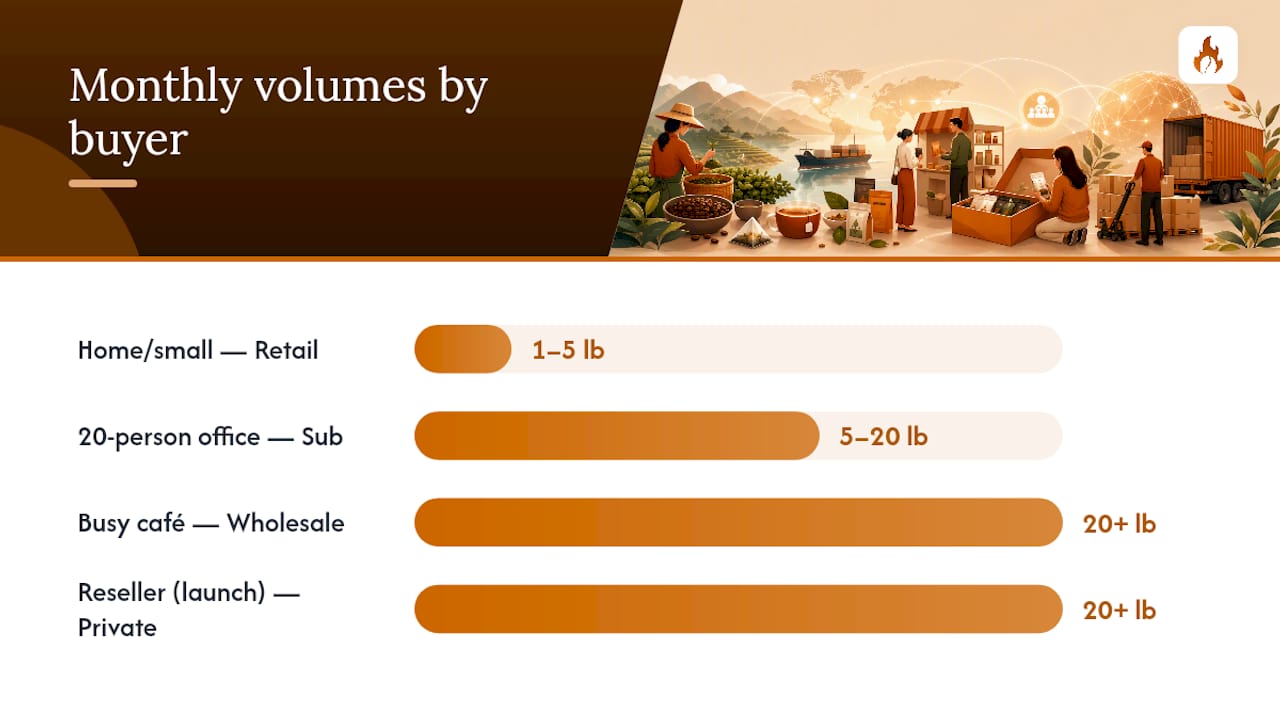
| Buyer profile | Typical monthly volume | Purchase model | Key cost signals |
|---|---|---|---|
| Home or small team | 1–5 lb | Retail bags | Per-bag retail price; no freight minimum |
| 20-person office | 5–20 lb | Subscription or wholesale | Per-pound tier; possible free local delivery |
| Busy café | 20+ lb | Wholesale or private label | Tiered per-pound pricing; freight or local route |
| Branded reseller | 20+ lb (launch) | Private label | Blend development; packaging run minimums |
A few pricing signals worth knowing: blends generally cost less per pound than single-origin coffees because roasters can manage green-coffee sourcing more flexibly. Private-label options commonly incur additional costs related to packaging and labeling, and shorter runs cost more per unit than longer ones. Local delivery scheduled with roast day can enhance freshness and simplifies troubleshooting compared with long-distance shipped accounts. For packaging choices and how barrier materials affect shelf life, the Coffee Bags Direct guide on ground coffee bags is a practical reference.
Always calculate total landed cost: product price plus freight, plus any storage cost if you’re holding more than two weeks of inventory.
How do you run a tasting and pilot before committing?
A four-to-six-week pilot protects you from a bad long-term contract. Here’s the workflow:
- Request samples. Ask for both roasted samples and, where available, green samples. Requesting samples and following CQI-style cupping protocols reveals true quality beyond website claims.
- Run a structured cupping. Score aroma, acidity, body, and aftertaste using a shared protocol so all tasters evaluate the same attributes.
- Brew blind on your equipment. Pull espresso, brew filter, or steam milk with each finalist. Performance under your actual extraction conditions is what matters.
- Gather multi-person scores. Aggregate scores from at least three tasters to reduce individual preference bias.
- Run a two-to-four-week standing-order pilot. Treat it like a real account: same order size, same cadence, same delivery route.
- Build in an exit checkpoint. Agree in writing that you can exit after the pilot if quality or service doesn’t meet the agreed standard.
Pro Tip: Make the fourth delivery your consistency check. The first three shipments are often the supplier’s best effort. The fourth one, arriving after the initial attention fades, reveals whether the roast profile and freshness hold up across a real production cycle.
How do roast dates and storage affect what you receive?
Roast-date transparency is non-negotiable. A bag that shows only a “best by” date tells you nothing about when the coffee was actually roasted. Order to land within a few days of the roast date when possible, and plan to use most of your inventory within about one month of roast for the best flavor.
Storage best practices:
- Keep bags sealed, in a cool, dark location away from heat sources and direct light.
- Avoid the refrigerator for whole-bean coffee; condensation damages the bean surface.
- Ground coffee loses volatile aromatics faster than whole bean, so order ground coffee in smaller, more frequent batches.
- Packaging with one-way degassing valves and strong barrier layers extends shelf life significantly. The Flaming Bean’s guide on designing coffee brand packaging covers how material choices affect both shelf life and brand presentation.
Sync your standing order with the roaster’s fixed roast days. If a roaster roasts on Tuesdays and you order on Mondays, you’ll receive coffee within 24 hours of roast. That’s the freshest supply chain available in a wholesale relationship.
What contract red flags should you watch for?
A few warning signs are worth knowing before you sign anything.
- No roast dates on bags. This suggests the supplier is working from aged inventory.
- Refusal to provide samples or cupping. No legitimate wholesale roaster declines this.
- Exclusive-use clauses without matching price or service benefits. Exclusivity is only reasonable if you’re getting a meaningful discount or dedicated service in return.
- Unusually low per-pound prices. Prices well below market often signal low-grade green coffee or stale inventory.
- Vague repair and maintenance terms for bundled machines. If a machine lease doesn’t specify response times and who pays for parts, you’re exposed.
Common buyer mistakes to avoid:
- Ordering a domestic-grade machine for high-volume commercial use.
- Buying too much inventory at once before confirming demand.
- Skipping the pilot phase because the sales conversation went well.
- Failing to verify that MOQ matches your actual monthly usage.
Pro Tip: Before signing, ask the supplier to show you the last three roast-batch QC records for the blend you’re buying. A supplier with nothing to hide will share them without hesitation.
The Flaming Bean makes the procurement process straightforward
The Flaming Bean offers retail bags, subscription plans, and wholesale or private-label programs built around the same checklist this guide covers: roast-date transparency, sample availability, consistent roast profiles, and real support for buyers at every volume.
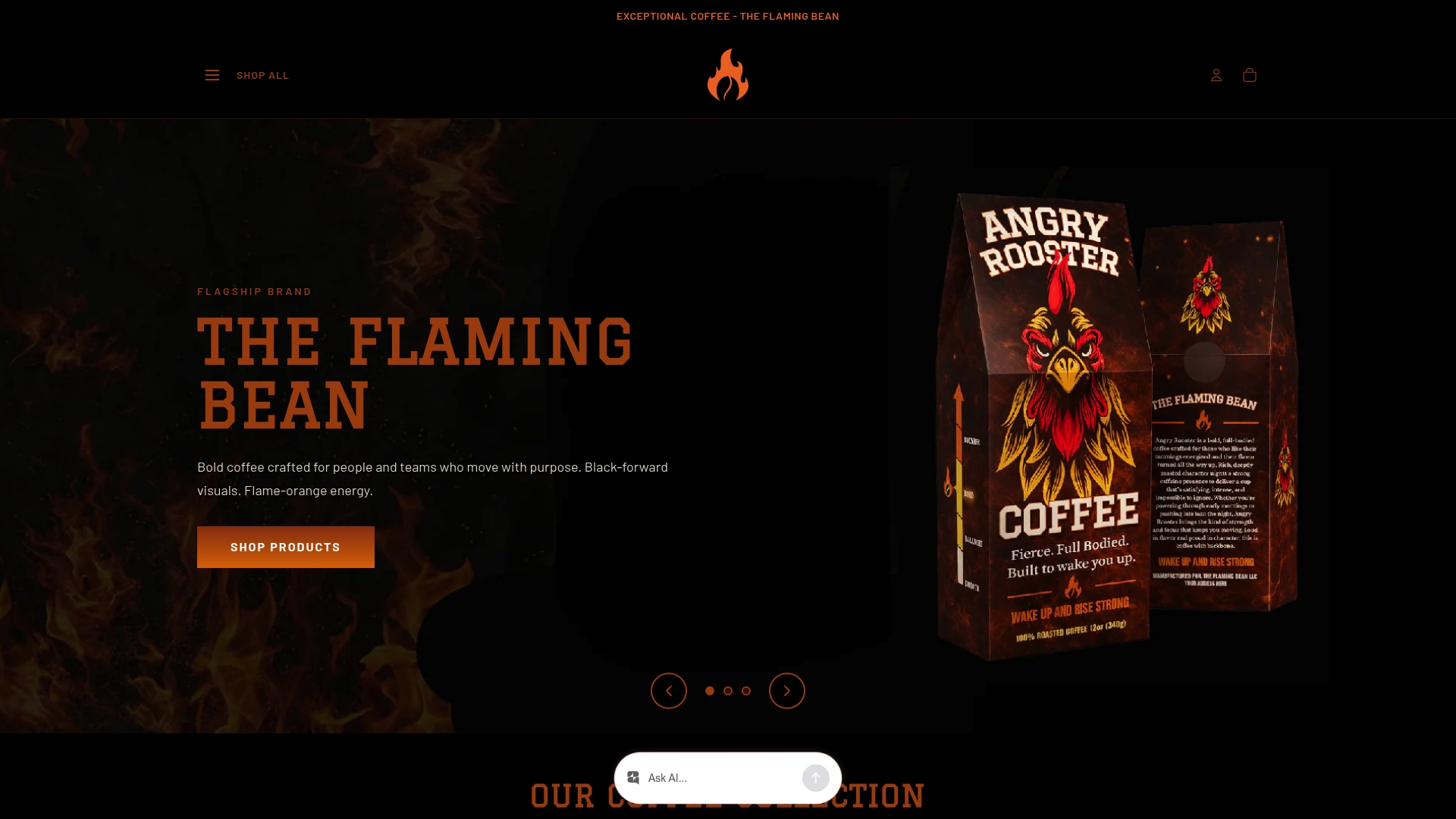
Start with Evening Roast as your trial retail bag. It’s a smooth, approachable profile that works well across brew methods and makes a reliable benchmark for comparing other coffees on your equipment. For mission-driven organizations, Safe Ground is a purpose-built blend that supports digital safety and community protection causes while delivering a quality cup worth serving.
For wholesale and private-label buyers, The Flaming Bean provides sample packs, roast-schedule alignment, flexible MOQs, and custom labeling support. Equipment guidance is available through the coffee makers collection for buyers setting up office or café installs. Request a wholesale information sheet directly through the website to get per-pound pricing at your target volume and confirm lead times before your first standing order.
What actually decides a good supplier relationship
The procurement frameworks in this guide are useful, but the single factor that separates a good supplier from a frustrating one is consistency. Not the first shipment. The twelfth.
Most suppliers perform well during the sales phase. The real test is whether the roast profile, freshness, and service hold up after the initial attention fades. A pilot phase exists precisely to catch the gap between a supplier’s best effort and their standard effort.
The other thing buyers underestimate is responsiveness. When a shipment arrives late or a roast profile shifts, how fast does the supplier acknowledge it and fix it? That answer is worth more than any price advantage. A roaster who calls you before you notice a problem is a partner. One who waits for you to complain is a vendor.
The Flaming Bean’s sample and cupping process, roast-date transparency, and mission-driven blends like Safe Ground are brand signals worth weighing alongside price. They tell you something about how the company operates when no one is watching.
Ready to order retail bags, a subscription, or a wholesale program?
The Flaming Bean is a direct-to-consumer and wholesale roastery built for buyers who want fresh, traceable coffee without the complexity of a large distributor. Whether you’re ordering a single retail bag to test a new roast, setting up a recurring subscription for your office, or launching a private-label program for your brand, the process starts with a sample and a conversation.
Request a wholesale information sheet or order your first bag of Evening Roast today. Roast dates are on every bag, samples are available before any commitment, and the team is ready to align your standing order with the roast schedule so you receive coffee at peak freshness every time.
Sources
- A coffee shop owner’s guide to finding a wholesale roaster
- Is an office coffee machine subscription worth it?
- How to Buy Wholesale Coffee: Minimums, Pricing, Private Label & Tastings (2026)
- 32 Coffee Subscription Trends Shaping Ecommerce Growth | Swell
- How to produce a successful private label coffee? | Lincoln & York
Comments