
The 7 Most Common White Label Coffee Mistakes to Avoid

Most white label coffee launches fail for the same seven reasons: locking in branding before testing the product, skipping cupping on real service equipment, ignoring service tolerance, overlooking milk performance, underestimating supply stability, launching with too many SKUs, and training staff to experiment instead of repeat. The single fix that prevents most of the damage is simple. Test with your actual machines, your actual milk, and your actual staff before you finalize specs or approve a packaging run.
That order matters more than most new roasters realize. We built The Flaming Bean around the idea that a coffee has to earn its label in the cup before it earns a spot on the shelf, and that discipline is what separates cafés that scale from ones that reprint labels twice a year.
- Branding before product validation
- Skipping cupping and in-service testing
- Ignoring service tolerance and machine variability
- Overlooking milk performance
- Underestimating supply stability and lead times
- Overcomplicating the launch with too many SKUs
- Training for experimentation instead of consistency
Key Takeaways
Avoiding the most common white label coffee mistakes comes down to one rule: validate the coffee under real service conditions before finalizing packaging, contracts, or staff training.
| Point | Details |
|---|---|
| Test before you brand | Run in-service tasting and milk drink trials before approving packaging or ordering large print runs. |
| Cupping isn’t the finish line | Pair cupping with espresso extraction and milk tests under simulated rush conditions. |
| Lock supply terms in writing | Require roast-date labeling, a named account contact, and clear MOQ and lead-time commitments. |
| Start with fewer SKUs | Launch with one or two reliable blends and track repurchase rate before expanding the lineup. |
| Train for consistency, not creativity | Build recipes and recovery steps staff can repeat exactly, shift after shift. |
| Partner with a tested supplier | The Flaming Bean supports white label launches with sample cupping, flexible MOQs, and blends like Abyssal and Evening Roast built for real café service. |
Table of Contents
- Mistake 1: Prioritizing Packaging Before the Product Is Proven
- Mistake 2: Skipping Cupping and Real-Service Testing
- Mistake 3: Ignoring Service Tolerance and Machine Variability
- Mistake 4: Overlooking Milk Performance in Milk-Based Drinks
- Mistake 5: Underestimating Supply Stability and Lead Times
- Mistake 6: Overcomplicating the Launch With Too Many SKUs
- Mistake 7: Training for Experimentation Instead of Consistency
- How Experienced Operators Avoid These White Label Coffee Errors
- Not Assessing Whether the Blend Fits Your Customers’ Palate
- Neglecting Quality Control Throughout the Supply Chain
- Failing to Establish Clear Contractual Terms With Your Supplier
- Ignoring Labeling and Food Safety Compliance
- Underestimating Ongoing Performance Monitoring
- Overlooking Scalability as Demand Grows
- Tony’s Take: Test Like You Mean It
- Build Your White Label Coffee Program With The Flaming Bean
- Sources
Mistake 1: Prioritizing Packaging Before the Product Is Proven
Packaging sells the first cup. It does nothing for the fortieth cup made during a Saturday rush by a barista who has never touched the blend before. Ordering 5,000 printed bags before a single lot has survived a real shift is the most expensive and most common of all the common white label coffee mistakes café owners make.
Run small in-service batches before artwork gets locked. A few checks catch most problems early:
- In-service tasting across a full shift, not a quiet afternoon
- A basic shelf or counter visibility test with real customers walking by
- A naming sanity check with staff and a handful of regulars
Pro Tip: Print a short-run label proof or use a plain sticker on a test bag before committing to a full packaging order. It costs almost nothing and saves you from reprinting a thousand units over a name nobody liked.
Mistake 2: Skipping Cupping and Real-Service Testing
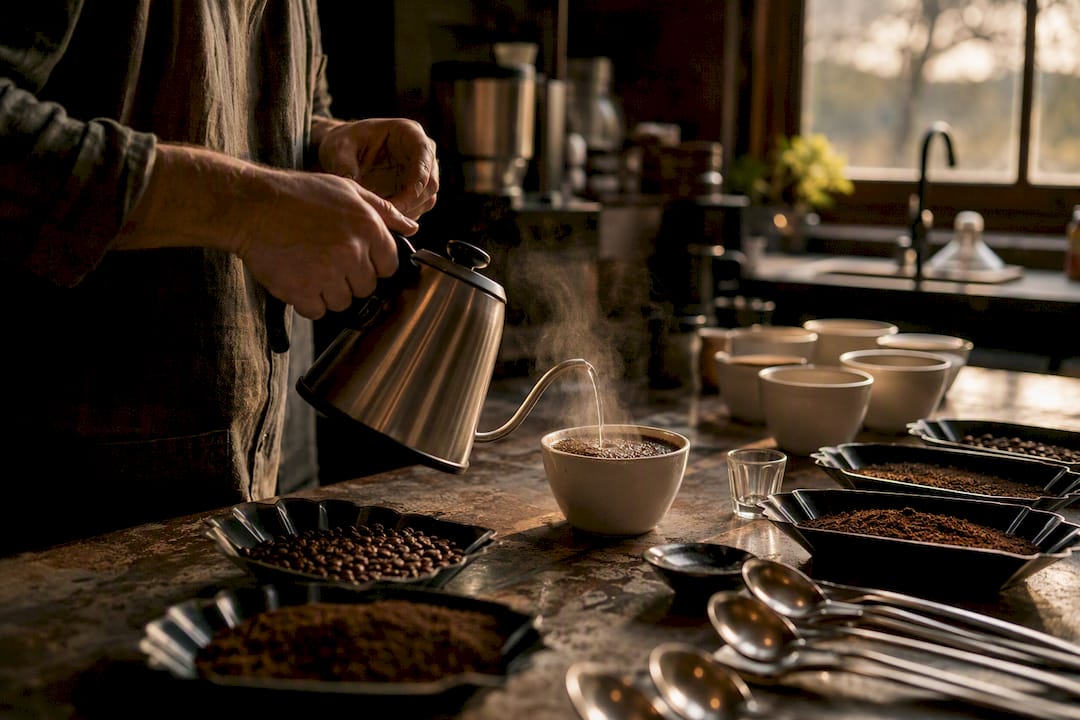
Cupping tells you whether a coffee is well made. It does not tell you whether it survives a milk pitcher or a four-minute ticket time during a lunch rush. Coffees that score beautifully on the cupping table can turn flat and bitter the moment they meet steamed milk, which is exactly why cupping alone should never be the final gate before a purchase order goes out.
A minimal testing sequence looks like this:
- Cup the sample against your current house coffee, blind if possible
- Pull espresso shots at your actual grind and dose settings, not the roaster’s recommended defaults
- Prepare cappuccinos and lattes during a simulated rush, with the barista who will actually make them
- Log results by lot number and require at least two consistent lots before signing anything long term
Ask your roaster for multiple cupping samples from different roast dates, not one perfect batch.
Mistake 3: Ignoring Service Tolerance and Machine Variability
Service tolerance is how well a coffee holds its character across the range of conditions a busy café actually creates: hotter group heads late in the shift, inconsistent tamping pressure, grinders that drift after 40 pounds of use. A blend with poor tolerance turns thin and loses sweetness the moment volume picks up, and volatility under heat is the number one complaint operators report after switching suppliers.
Look for these traits before committing to a blend:
- Fuller body that holds up as extraction temperature climbs through a shift
- Stable sweetness rather than a narrow “perfect dial in” window
- Controlled acidity that doesn’t turn sharp when slightly over extracted
- A roast profile the supplier can repeat lot after lot, not just once
Test across every machine and grinder combination your locations actually run, not just the demo unit at the roastery.
Mistake 4: Overlooking Milk Performance in Milk-Based Drinks
Milk changes coffee more than most new operators expect. It mutes sweetness, amplifies bitterness, and exposes any thinness in body that black coffee tastes hide easily. A blend that tastes rich as an espresso shot can taste watery the second it’s poured into a 12-ounce latte, and that gap is where a lot of white label programs quietly lose repeat customers.
Test three drinks under real conditions and score them on a simple pass or fail basis:
- Straight espresso for baseline sweetness and body
- A cappuccino for how the coffee holds up against foam and heat
- A full latte for how much character survives dilution
If a drink fails, adjust before you blame the coffee: try a finer grind, a slightly higher dose, or ask the roaster about a small blend ratio tweak.
Pro Tip: Have two different baristas run the same milk test independently. If their scores disagree, the recipe isn’t dialed in yet, not the coffee.
Mistake 5: Underestimating Supply Stability and Lead Times
A blend that performs perfectly in testing is worthless if the supplier can’t deliver it consistently. Supply gaps force cafés into last-minute substitutions, and customers notice a flavor shift faster than owners expect.
Before signing anything, confirm these terms in writing:
- Roast-date labeling on every bag, with a defined roasting cadence you can plan around
- A named account contact who owns your order, not a shared support inbox
- Flexible minimum order quantities or a staged ramp-up schedule as volume grows
- Confirmed lead times plus a documented backup plan for delays
- Reorder points and a safety stock target so a late shipment never means an empty hopper
A white label roaster comparison should weigh cupping quality and sourcing transparency alongside these operational terms, since a roaster that won’t commit to a contact person or a reorder plan rarely improves once you’re locked in. Suppliers who publish roast dates and offer flexible volumes tend to be the ones worth building a long relationship with.
Mistake 6: Overcomplicating the Launch With Too Many SKUs
Ambition kills more launches than bad coffee does. Trying to debut a light roast, a dark roast, a decaf, and two flavored blends at once spreads training, inventory, and cupping attention too thin to get any of them right.
Start smaller than feels comfortable:
- One or two blends that match your existing customer base and daily volume
- A short, time-boxed window for any experimental SKU, with a clear decision date attached
- Low-MOQ packaging and a digital storefront to test niche flavors before a wholesale commitment
- Repurchase rate and turnover per SKU as the only two metrics that decide whether a new item earns a permanent spot
Low minimum order quantities now make it realistic to test a new flavor with a few hundred units instead of a few thousand, which removes most of the financial risk from staying disciplined about SKU count.
Mistake 7: Training for Experimentation Instead of Consistency
A barista who loves to experiment is a asset in a lab and a liability behind a bar during a rush. Consistency, not creativity, is what keeps a white label coffee tasting the same in March as it did in January.
- Build training around a fixed dialing sheet and a documented recipe for each core drink
- Give staff a clear, three-step recovery process for when a shot runs fast or slow, instead of leaving it to instinct
- Schedule routine batch cuppings so the whole team tastes drift before customers do
Customer-facing language should stay just as simple. Skip the extraction ratios and processing methods. Describe coffee the way customers actually think about it: bold, smooth, an afternoon pick-me-up, a wind-down evening cup. Service consistency is what customers actually notice and remember.
Pro Tip: Post the dialing sheet where every barista can see it during a shift, not in a binder in the back office nobody opens after week one.
How Experienced Operators Avoid These White Label Coffee Errors
Operators who launch cleanly treat the process in three distinct phases instead of one big leap, and the checklist below reflects the sequence that shows up across most successful launches.
Pre-launch:
- Define why the coffee exists (a signature house blend, a charity tie-in, a seasonal offer) before touching roast profiles
- Run cupping alongside full in-service trials, using the protocol described earlier
- Confirm roast-date labeling, named account contact, and MOQ terms in writing before ordering packaging
Launch:
- Limit the release to one or two SKUs
- Train staff on fixed recipes and recovery steps, not open experimentation
- Carry extra safety stock for the first six to eight weeks
- Track early KPIs weekly: repurchase rate, fill rate, and green or roasted waste
Post-launch:
- Schedule cuppings monthly, not just at launch
- Review the supplier relationship quarterly against the original contract terms
- Rationalize SKUs based on actual rotation speed and repurchase data, not gut feeling
Roasters who define brand purpose and validate with low-MOQ prototypes before scaling consistently avoid the expensive rework that hits operators who skip straight to full production runs.
Not Assessing Whether the Blend Fits Your Customers’ Palate
A technically excellent coffee can still be the wrong coffee for your café. A specialty roaster’s bright, acidic single origin might score high on a cupping table and still confuse a customer base that grew up on smoother, darker diner-style coffee. Palate fit is a separate question from quality, and skipping it is one of the more overlooked mistakes in coffee branding.
Start by looking at what already sells. If your current drip coffee or espresso already has loyal regulars, a white label blend that shifts too far from that profile risks alienating the customers who built your business in the first place. A neighborhood café serving mostly commuters grabbing a quick cup wants something forgiving and approachable. A specialty coffee bar with regulars who ask about processing methods can support something more adventurous.
Test new blends with a cross-section of actual regulars, not just staff or friends who already like specialty coffee. Offer small tasting pours for a week and ask simple questions: too bitter, too sour, too weak, just right. That kind of informal feedback loop catches mismatches that a professional cupping panel, focused purely on technical quality, will miss entirely. The goal isn’t the “best” coffee in some abstract sense. It’s the best coffee for the people actually walking through your door.
Neglecting Quality Control Throughout the Supply Chain
Quality control that stops at the roaster’s door is quality control that fails eventually. A lot can look perfect on a cupping form and still degrade during a poorly timed shipment, a warehouse stint at the wrong humidity, or weeks sitting past its ideal freshness window on your own shelf.
Build checkpoints at each handoff instead of trusting one inspection at the start. Check incoming shipments against the roast date printed on the bag, and reject or flag anything that arrives outside your agreed freshness window. Store beans away from heat, light, and moisture, and rotate stock so older lots get used first. Run a quick cupping or taste check on new shipments before they go into regular rotation, not after a customer complains.
Quality control problems most often surface after a supplier changes hands, changes equipment, or scales up production to meet new demand. That’s precisely when consistency slips, because the systems that worked at a smaller scale sometimes don’t hold at a larger one. Build a habit of periodically comparing a fresh shipment against a sample from your first order. If the two don’t taste like the same coffee, something upstream has drifted, and it’s worth a direct conversation with your account contact before the problem reaches a customer’s cup.
Failing to Establish Clear Contractual Terms With Your Supplier
A handshake and a price list are not a contract, and too many café owners discover that the hard way after their first supply disruption. Vague verbal agreements about “flexible” minimum orders or “quick” lead times fall apart the moment a supplier gets busy or short on inventory, leaving the café with no leverage and no recourse.
A clear agreement should spell out exact minimum order quantities and whether they step up over time, lead times in business days rather than vague estimates, and what happens if a shipment is late or a lot doesn’t meet agreed quality standards. It should also name pricing terms for at least a defined period, since green coffee costs shift and a supplier locked into old pricing has less incentive to prioritize your account.
Responsibility for quality issues deserves its own line. Who absorbs the cost if a batch fails your taste test after delivery? Does the supplier replace it, credit it, or is that a loss you eat? White label agreements typically favor speed and lower upfront cost over the exclusivity a private label deal offers, and that trade-off should be explicit in writing, not assumed by either side. A supplier that hesitates to put these terms on paper is telling you something about how they’ll behave once you’re a paying customer instead of a prospect.
Ignoring Labeling and Food Safety Compliance
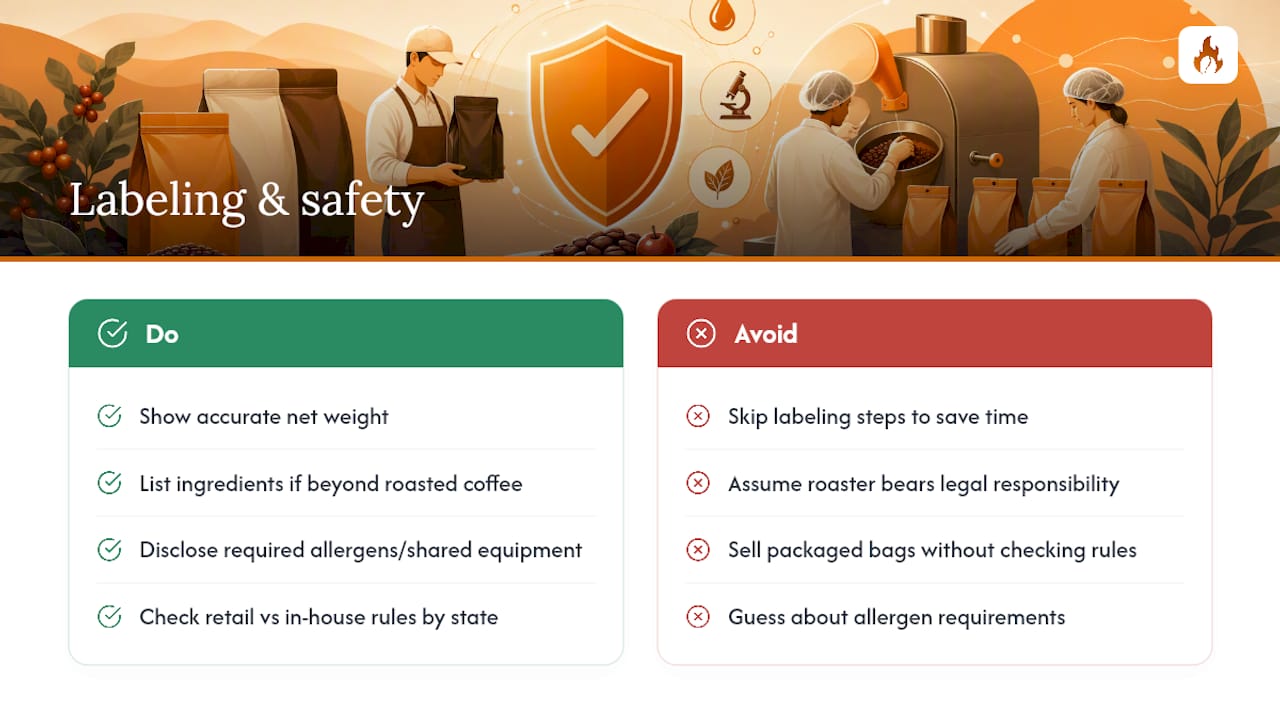
Coffee is a food product, and food products carry legal labeling requirements that vary by where you sell and how you sell it. Skipping this step doesn’t just risk a fine. It risks a recall, a retailer delisting your product, or a liability claim if an allergen or ingredient goes unlisted.
At minimum, packaging needs accurate net weight, a list of ingredients if the blend includes anything beyond roasted coffee, and any required allergen disclosures if the product shares equipment with tree nuts, dairy flavorings, or other allergens. If you sell packaged bags at retail rather than only serving brewed cups in-house, additional labeling rules typically apply, and the requirements differ depending on your state and whether you sell across state lines.
Roasters who supply white label programs regularly should already understand these requirements for their own private label clients, but the legal responsibility for accurate labeling generally sits with the brand whose name is on the bag, not just the roaster doing the physical work. Confirm in your contract who handles label review and who is responsible if a compliance issue surfaces after products are already on shelves. When in doubt on a specific rule, a quick consultation with a food safety attorney or your state’s department of agriculture is worth more than guessing.
Underestimating Ongoing Performance Monitoring
Launch day isn’t the finish line. It’s the start of a feedback loop that most café owners stop running once the initial excitement fades, and that’s exactly when quality drift starts going unnoticed.
Set a recurring cadence for checking the coffee against its original standard: a monthly cupping session comparing a current bag to your launch sample, a quarterly review of the supplier relationship against your contract terms, and ongoing tracking of simple numbers like repurchase rate and customer complaints tied specifically to the white label product.
Feedback loops work best when they’re structured, not incidental. Relying on “someone would mention it if the coffee tasted off” assumes staff are paying close attention and customers are vocal, and neither assumption holds reliably during a busy shift. Build a short, standing checklist that someone actually owns. If a lot fails a monthly cupping, the fix should happen before the next batch ships, not after a customer complains three weeks in a row. The businesses that keep a white label program strong for years, not just for a launch quarter, tend to be the ones treating monitoring as a permanent part of operations rather than a one-time quality check.
Overlooking Scalability as Demand Grows
The coffee that worked perfectly at 50 pounds a month can create real problems at 500 pounds a month, and that shift catches a lot of otherwise well-run cafés off guard. Growth changes everything from roasting capacity to lead times to how forgiving your MOQ terms need to be.
Ask your supplier directly about their production ceiling before you need it. A small batch roaster who handles your current volume beautifully may not have the equipment or staff to double your order on short notice, and finding that out during a supply crunch is far worse than finding it out in a planning conversation. Confirm whether pricing changes at higher volumes, whether lead times stretch as your orders grow, and whether the roast profile stays consistent when a batch size increases.
Growing demand also strains staff training and inventory systems that worked fine at a smaller scale. A recipe sheet that one barista memorized works differently once you’re training a fifth or sixth new hire, and safety stock levels calculated for modest volume need recalculating as sales climb. Build a habit of revisiting your supplier agreement and your internal systems every time volume jumps by a meaningful margin, rather than waiting until something breaks to notice the plan needs updating.
Tony’s Take: Test Like You Mean It
Most launches don’t fail because the coffee was bad. They fail because nobody tested it the way customers would actually drink it. At The Flaming Bean, cupping and MOQ testing happen before packaging conversations start, not after. That order isn’t a preference. It’s the only sequence that actually protects a brand’s reputation once real customers show up.
Build Your White Label Coffee Program With The Flaming Bean
You’ve seen what goes wrong when packaging outruns testing, when MOQs are rigid, or when a supplier disappears the moment volume grows. The Flaming Bean runs low-MOQ testing and full sample cupping before any large order gets placed, so you find out whether a blend survives your milk and your machines before you’ve committed to a pallet.
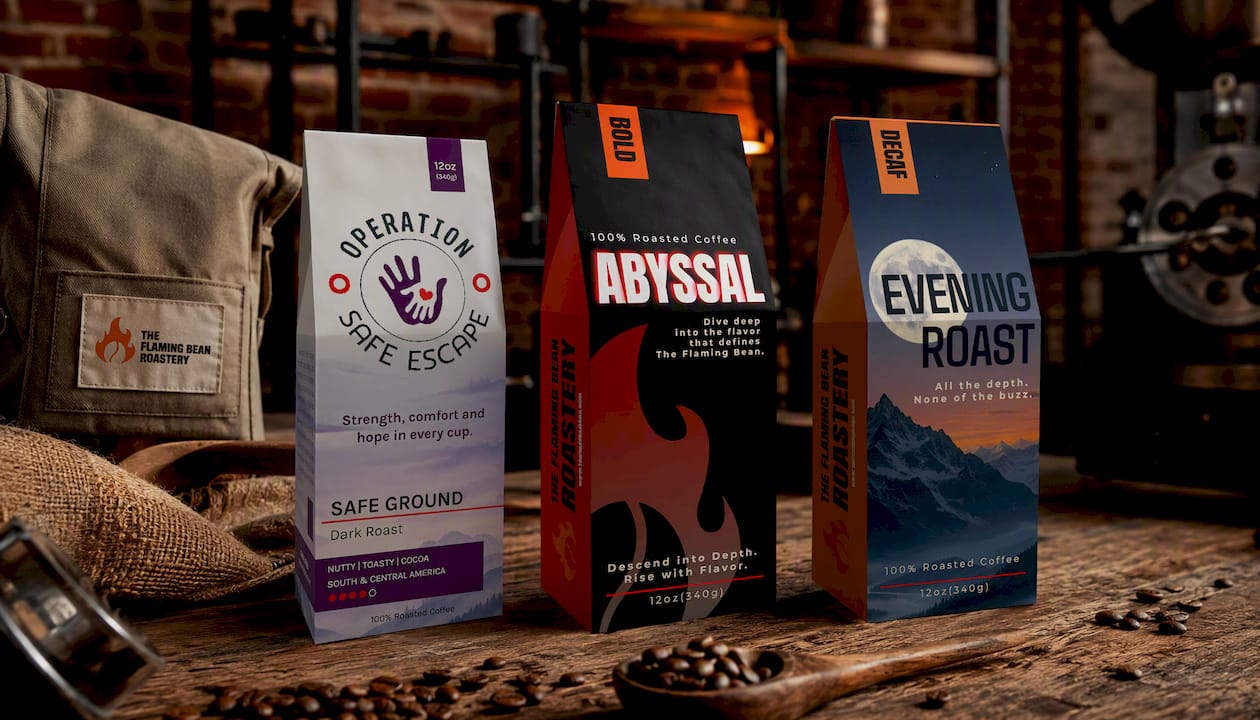
Our roasting team works from proven profiles you can license or adapt for your own program. Safe Ground offers a full-bodied profile built for milk-based service and a mission tie-in your customers can feel good about. Abyssal brings a bold, service-tolerant character suited to high-volume espresso bars. Evening Roast gives you a smoother, approachable option for subscription and afternoon-daypart menus. Every blend ships with roast-date labeling and a named account contact, so you’re never guessing where an order stands.
Ready to test a blend against your own equipment and staff? Start your private label program with The Flaming Bean and get sample cupping scheduled before you commit to a single case.
Sources
- Launching your own custom branded coffee: A roaster’s guide - MTPak Coffee
- How to build your own coffee brand | White Label Contract Roasters
- White label vs private label explanation - Thomasnet
Recommended
- How to Choose a White Label Coffee Roaster in 2026 – The Flaming Bean Roastery
- White Label vs. Private Label: A Small Brand Guide – The Flaming Bean Roastery
- Design Coffee Brand Packaging: A Roaster’s 2026 Guide – The Flaming Bean Roastery
- How to Make Coffee Less Bitter: 12 Easy Fixes – The Flaming Bean Roastery
Comments