
3 Conference Coffee Service Routes That Fix Attendee Flow for Planners

For most conferences, pick one of three routes: a staffed espresso bar for hospitality and sponsor visibility, distributed batch-brew or self-serve stations for speed at low cost, or a hybrid that blends both. Espresso bars win on experience, self-serve wins on throughput and budget, and hybrids solve the problem of serving a packed session break without a long line. The sections below cover logistics, staffing, menu, cost, branding, and the exact questions to ask a vendor.
TL;DR:
- Self-serve stations are the most cost-effective and fastest but offer little branding or hospitality, making them ideal for high throughput needs.
- Vendors often quote per person, per station, or hourly; negotiate clear details on staffing, travel fees, and equipment responsibilities before signing.
- Place stations near attendee traffic flow, consider staggered schedules or distributed setups, and size stations based on peak demand to prevent bottlenecks.
- Large conferences require multiple stations with expanded menus, while smaller events usually suffice with a single self-serve or batch-brew station.
- Confirm venue logistics like power, water, permits, and timing well in advance, and integrate coffee service smoothly into the overall event schedule.
Table of Contents
- Service formats explained: pros, cons, throughput, and best use cases
- Operational logistics and venue requirements: power, water, and venue rules
- Staffing, throughput, and service timing: avoid bottlenecks
- Menu and beverage options: what to serve and how complexity affects operations
- Pricing and cost drivers: how quotes are built and what to negotiate
- Branding and sponsor activation: scoping coffee as a sponsor deliverable
- How to choose a coffee service vendor: checklist and exact questions
- Why The Flaming Bean fits conference coffee service
- Equipment rental vs. purchase considerations
- Customization for dietary needs beyond milk alternatives
- How event size and duration shape service choice and pricing
- Coordinating coffee with overall event catering and timing
- Technology enhancements: mobile ordering and cashless payment
- What I’ve learned scoping coffee for conferences
- Request a quote from The Flaming Bean for your next event
- Sources
- FAQ
Service formats explained: pros, cons, throughput, and best use cases
Self-serve or batch-brew stations are the workhorse option: large urns or airpots, cream and sugar set out, and no line because guests pour their own. They’re the cheapest format and the fastest to refill during a packed schedule, but they offer no hospitality moment and little room for branding beyond signage.
Mobile espresso carts or staffed bars add a barista making drinks to order. They slow throughput but raise the experience, which is exactly why sponsors like them: a branded cart with a barista becomes a visible activation, not just a beverage stop.
Cold-brew stations work well for afternoon slots or warm-weather events, served over ice with minimal staffing.
Distributed stations spread two or three smaller setups across a venue instead of one central bar, cutting walking distance and easing congestion when sessions release attendees at the same time.
Hybrid models combine a staffed bar near registration with self-serve stations near breakout rooms, giving planners a premium moment without forcing every guest through one line.
- Self-serve/batch brew: lowest cost, fastest access, minimal branding.
- Espresso cart or bar: highest hospitality value, best for sponsor activations.
- Cold brew: low staffing, seasonal fit.
- Distributed stations: best for large venues with simultaneous breakout releases.
- Hybrid: balances speed and experience for mixed-goal events.
Branding options differ by provider, so whatever format you choose, write the specific deliverables (cups, sleeves, signage) into the scope of work rather than assuming they’re included.
Operational logistics and venue requirements: power, water, and venue rules
Coffee service logistics are venue logistics first and beverage logistics second. Conference-hosting guidance recommends preparing catering lead times and logistical arrangements well in advance of the event, and the same discipline applies to coffee vendors booked separately from full catering, according to the guide to hosting international conferences.
Before signing a vendor contract, confirm these items directly with the venue:
- Load-in windows and whether vendor access requires a day-before setup or same-day arrival only.
- Power availability: dedicated circuits versus shared house power, and the amperage each station needs.
- Water access for urns or espresso machines, including whether a nearby sink or water line is required.
- Venue rules on catering exclusivity, required insurance certificates, and any temporary food permits.
- Approval timeline: how far ahead the venue needs vendor certificates and floor plans.
Pro Tip: Put every logistics item, from amperage to permit deadlines, directly into the vendor’s statement of work so nothing gets assumed on event day.
Coordinate these details with venue operations early, since a missing permit or an undersized circuit can shut down a station regardless of how good the coffee is.
Staffing, throughput, and service timing: avoid bottlenecks
Sizing a coffee service starts with expected peak demand, not average attendance. A staffed espresso cart typically produces somewhere in the range of 70 to 120 drinks per hour depending on menu complexity and barista count, while batch-brew stations move faster since guests serve themselves.
- Estimate stations by peak window: if 300 attendees hit a 20-minute break at once, one cart will not keep up.
- Add a second barista or a second cart when expected demand crosses the upper end of a single station’s hourly capacity.
- Place stations near natural traffic flow, not tucked in a corner, to prevent one line from blocking a hallway.
- Stagger session break times across tracks when possible, or use distributed stations so simultaneous releases don’t funnel everyone to one bar.
Coffee’s role in attendee flow is well documented: communal refreshment points support networking, and station placement and timing affect satisfaction as much as the drink itself, according to research on coffee and food solutions at workplaces. Slow service during a break does more damage to attendee mood than a limited menu ever will.
Menu and beverage options: what to serve and how complexity affects operations
A solid conference menu covers espresso drinks, brewed coffee, decaf, cold brew, tea, and at least two milk alternatives. Every specialty item you add, from flavored syrups to pour-over, adds prep seconds per cup and multiplies at scale.
- Small conferences (under 150 guests): brewed coffee, decaf, one milk alternative, simple signage.
- Mid-size conferences (150 to 500 guests): add espresso drinks, cold brew, and a second milk alternative.
- Large conferences (500-plus guests): full espresso menu across multiple stations, with batch brew handling overflow volume.
Label allergens and dietary options clearly on signage so attendees don’t have to ask, which also speeds up the line since guests self-select before reaching the counter. Keep the specialty list short during peak windows and expand it during slower stretches, since a long menu during a rush is the fastest way to build a line that stretches out the door.
Pricing and cost drivers: how quotes are built and what to negotiate
Vendors typically quote per person, per station, or as an hourly package with a minimum. Guest count and service type drive most of the cost, but staffing hours, travel and setup fees, disposables, and specialty ingredients like flavored syrups or oat milk add up fast.
- Per-person pricing works best for full-day events with predictable headcounts.
- Per-station or hourly pricing suits shorter events or a single break window.
- Travel, setup, and breakdown fees are often billed separately from the beverage cost itself.
- Disposables (cups, lids, sleeves) and specialty ingredients are common add-ons that inflate a quote beyond the base rate.
Ask every vendor to put staffing hours, minimum guarantees, travel fees, and cancellation terms in writing before you sign. For a full breakdown of cost ranges and what drives them, see this event coffee catering cost guide.
Branding and sponsor activation: scoping coffee as a sponsor deliverable
Coffee service is one of the easiest sponsor packages to build because it’s visible, photographed, and revisited multiple times a day. Branded cups, sleeves, signage, and named specialty drinks are common deliverables, but production lead times vary, so confirm artwork deadlines early.
- Branded cups or sleeves: usually need final art weeks ahead of print.
- Signage and named drinks: low lead time, easy to swap between sessions.
- Sample approval: build in a review step before the sponsor’s logo goes to print.
- Measurement: QR codes on cups or a branded photo moment near the bar give sponsors something concrete to point to afterward.
Pro Tip: Confirm the venue’s signage rules and any extra fees for branded displays before promising a sponsor placement you can’t deliver.
Custom counters or modular cube setups from vendors like Tiaz Custom Cubes can turn a basic cart into a full branded station without a permanent build.
How to choose a coffee service vendor: checklist and exact questions
Score vendors on five criteria: throughput capacity, menu fit for your attendee count, branding flexibility, proof of insurance, and references from comparable events.
- Ask directly: “How many drinks per hour can your team produce at peak, and with how many staff?”
- Ask: “What are your power and water requirements per station?”
- Ask: “Can you provide a sample tasting before we sign?”
- Ask: “What’s your cancellation policy, and is a deposit refundable?”
- Ask: “Can you send a certificate of insurance that meets our venue’s requirements?”
Red flags include a vendor who won’t commit to a written staffing plan, can’t produce insurance documentation, or hedges on setup timing. Score two or three bids side by side on these five points and the right choice usually becomes obvious fast.
Why The Flaming Bean fits conference coffee service
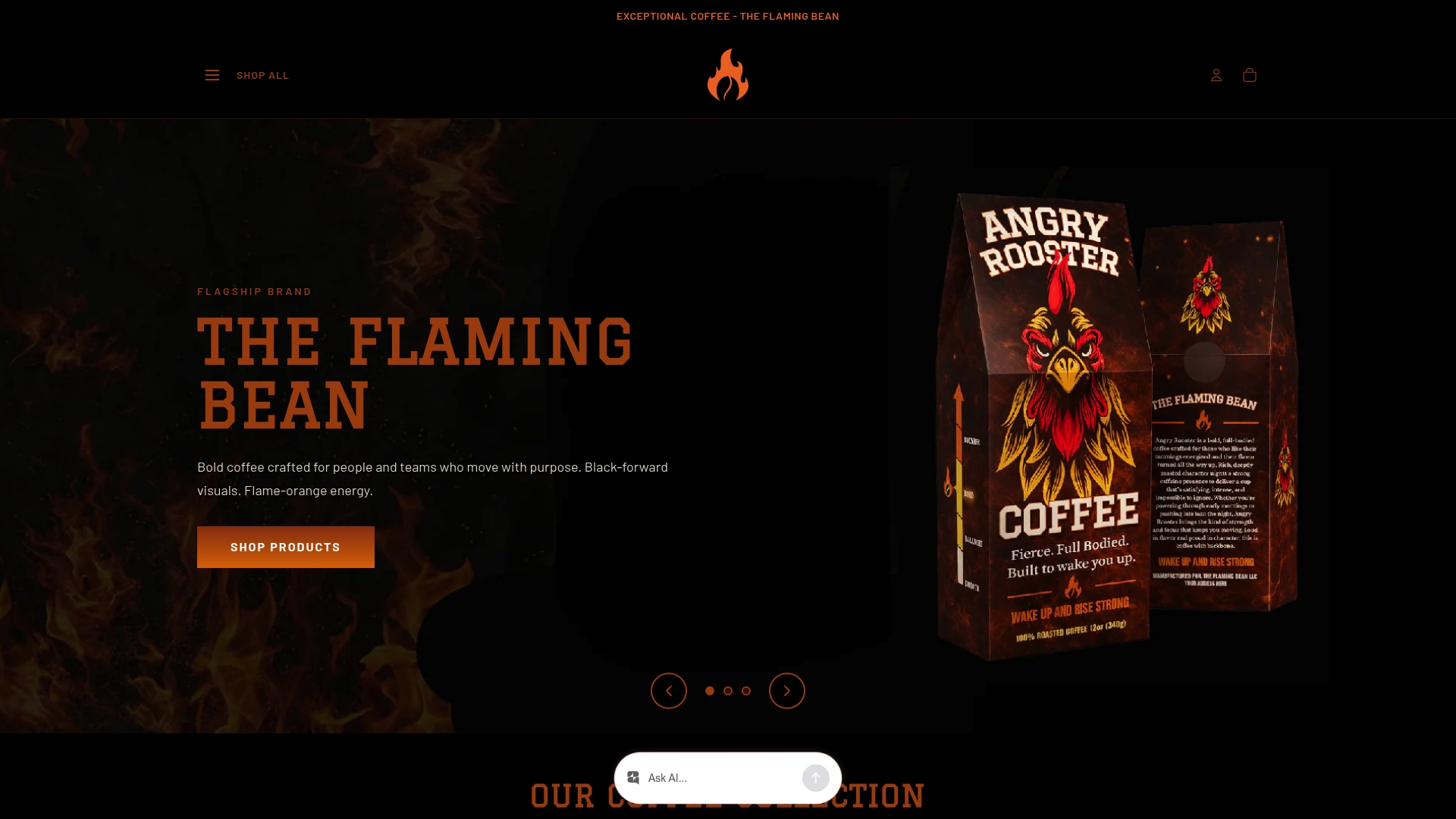
The Flaming Bean roasts bold, distinct blends built for exactly this kind of moment, from Evening Roast’s smooth afternoon profile to Angry Rooster’s stronger morning kick and Abyssal’s deeper character. The company also runs private-label and wholesale programs, which matter for planners who want a consistent supply relationship rather than a one-off order.
- Event-ready roasts sized for conference volume, ordered ahead of your date.
- Private-label and wholesale options for organizations running recurring events.
- A dedicated resource on corporate event coffee with vendor-specific logistics and FAQs.
- When requesting a quote, share your site plan, power specs, and expected peak windows so the proposal matches your actual event.
Equipment rental vs. purchase considerations
Renting espresso machines, urns, and grinders makes sense for a single annual conference or a one-off event, since you avoid storage, maintenance, and the upfront cost of commercial equipment. Rental vendors typically include setup and breakdown in the fee, which removes a logistics headache for a planner already juggling a dozen other vendors.
Purchasing makes more sense for organizations running recurring events, like a company with quarterly all-hands meetings or a venue that hosts conferences monthly. Owning equipment means no rental fees stack up over time, and you control the exact machines your team trains on. The tradeoff is upfront cost, storage between events, and the maintenance schedule that commercial espresso equipment demands.
A middle path many planners choose is a hybrid: rent the espresso equipment for the event’s specialty drinks but purchase simpler gear, like airpots or batch brewers, for recurring self-serve use. If your organization is weighing this decision, browsing a coffee maker collection gives a sense of what owning equipment actually involves versus renting it for a single date.
Whichever route you take, confirm who’s responsible for transport, setup, and breakdown in writing. A rental agreement that doesn’t specify who delivers and picks up the equipment is a gap that surfaces at the worst possible time, usually right as the venue wants the loading dock cleared.
Customization for dietary needs beyond milk alternatives
Milk alternatives get most of the attention, but a well-run conference coffee service should also plan for sugar-free syrups, allergen-free stations, and clear cross-contamination practices. Attendees managing diabetes, celiac disease, or nut allergies need more than an oat milk option to feel served.
Sugar-free syrup options are inexpensive to add and solve a real need for guests avoiding sugar. Stock at least one or two flavors alongside the standard syrups, and label them clearly so guests don’t have to ask.
Allergen-free stations matter most for events with a food-allergic population large enough to justify a separate prep area, using dedicated equipment to avoid cross-contact with nut-based syrups or shared milk pitchers. For most conferences, a labeled ingredient list posted at the station solves the bulk of the concern without a fully separate setup.
Decaf should always be available and clearly marked, since it’s often overlooked until a guest asks and the line stalls while staff searches for it. The same goes for herbal tea, which covers guests avoiding caffeine entirely.
Build these options into your initial scope conversation with the vendor rather than adding them after the menu is finalized, since allergen protocols affect station layout and staffing, not just the ingredient list.
How event size and duration shape service choice and pricing
A half-day event for 50 people has entirely different coffee needs than a three-day conference for 2,000. Smaller, shorter events generally do fine with a single self-serve or batch-brew station, since low guest count means throughput is rarely the bottleneck. The cost per person tends to run higher on these small jobs because setup and staffing fees get spread across fewer guests.
Larger events change the math. A multi-day conference with parallel session tracks needs multiple stations placed near breakout rooms, staggered staffing shifts, and a menu built to handle repeat visits from the same attendees across several days. Per-person costs often drop as volume increases, since fixed costs like travel and setup get absorbed across a bigger order.
Duration matters as much as headcount. A single four-hour event needs one setup and one breakdown, while a three-day conference needs supply restocking, staff rotation, and possibly a different menu each day to keep things interesting. Vendors often price multi-day events differently from single-day ones, since ingredient and disposable costs scale with total service hours, not just attendee count.

When requesting quotes, always specify both guest count and total service hours. A vendor pricing a “500-person event” without knowing whether that’s a 3-hour reception or a 3-day conference is guessing, and that guess usually shows up as a change order later.
Coordinating coffee with overall event catering and timing
Coffee service rarely stands alone. It has to fit inside the same catering timeline as breakfast, lunch, and any afternoon snack service, which means your coffee vendor’s setup and breakdown windows need to align with your food caterer’s schedule rather than compete for the same loading dock or kitchen access.

Build your master event timeline first, then slot coffee service into it rather than treating it as an afterthought. If breakfast catering ends at 9:00 AM and the first session break isn’t until 10:30 AM, your coffee station needs to bridge that gap without a refill delay.
Conference-hosting guidance recommends ensuring coffee and tea are available continuously throughout a meeting day rather than only during scheduled breaks, according to the guide to hosting international conferences. That continuous-availability principle matters most at events with long single-track sessions, where attendees drift in and out rather than breaking as a group.
Coordinate with your venue’s operations team and your food caterer on shared resources: if both vendors need the same kitchen space, water line, or loading dock at the same time, someone’s setup gets delayed. For workflow planning around guest flow and shared timing across food and beverage vendors, see this food and lodging workflow guide.
Technology enhancements: mobile ordering and cashless payment
Mobile ordering has moved from novelty to expectation at larger conferences. A QR code at the station that lets attendees place an order ahead of arrival cuts the time they stand at the counter, which matters most during a 15-minute break serving hundreds of people at once.
Cashless payment integration matters even when the coffee itself is free to attendees, since sponsor-branded stations sometimes sell premium add-ons or merchandise alongside the coffee. A card reader or tap-to-pay terminal removes the friction of a cash-only setup that slows every transaction down.
For sponsor-branded activations, technology also creates a measurement opportunity. A QR code that leads to a sponsor’s landing page, paired with the coffee station, gives sponsors a way to track engagement beyond a simple headcount. That data point often matters more to a sponsor than the visual branding itself.
None of this technology replaces good staffing and station placement. A mobile ordering app on top of an undersized station just moves the bottleneck from the counter to the pickup window. Treat tech enhancements as a way to speed up a well-designed service, not a fix for a service that’s already understaffed for the crowd size.
What I’ve learned scoping coffee for conferences
An important approach is treating coffee service as a flow and attendee experience problem, not merely a line item. Fix your station placement and staffing math before you worry about the menu. Check the vendor questions above, and if you’re evaluating The Flaming Bean for your event, our corporate event coffee page is the right place to start.
— Tony
Request a quote from The Flaming Bean for your next event
We built The Flaming Bean around bold roasts and honest sourcing, and that’s exactly what we bring to a conference floor. Our lineup of bold, carefully crafted roasts works as a standard menu or a branded pour for a sponsor activation, and wholesale programs support repeat-event organizers seeking consistent supply.
- Order roasts directly for event supply or set up a wholesale account for recurring conferences.
- Add a Flaming Bean Coffee Gift Card to a sponsor giveaway or speaker gift bag.
- Sample our Safe Ground blend, one of our mission-driven roasts that supports a meaningful cause with every bag sold.
Reach out through our event coffee page to request a quote, and share your guest count, dates, and site details to get a proposal back quickly.
Sources
The guide to hosting international conferences covers catering expectations and advance planning lead times for large meetings. Research on coffee and food solutions at workplaces supports the throughput and attendee-flow guidance used throughout this piece. A trade summary on coffee breaks and productivity backs the case for investing in quality refreshment at events.
- The New Importance of Coffee and Food Solutions at Workplaces
- Guide to hosting meetings of the International Coffee Council and the World Coffee Conference
FAQ
What is the 15-15-15 coffee rule?
The term isn’t a standardized industry rule with one fixed definition, and no source in this guide defines it precisely. If you’ve seen it referenced elsewhere, treat it as informal advice rather than an established catering standard, and confirm the specifics directly with whoever cited it.
What is the best coffee machine for a corporate office?
The right machine depends on office size and how many people you’re serving daily, ranging from a simple batch brewer for a small team to a commercial espresso machine for a larger staff. Browse a coffee maker collection to compare options suited to different office sizes.
What is the 80/20 rule for coffee?
There’s no single standardized “80/20 rule” for coffee service defined in industry guidance, so treat any version you’ve encountered as informal shorthand rather than a fixed standard. If you’re trying to plan menu ratios, it’s more reliable to base decisions on your own attendee preferences and past event data.
How can I make coffee for a large crowd?
Batch-brew urns or airpots are the most efficient way to serve a large crowd quickly, since guests pour their own and no barista bottleneck forms. For crowds with mixed preferences, pair batch brew with one staffed espresso station to cover both speed and specialty drink demand, as outlined in the hybrid format above.
How far in advance should I book conference coffee service?
Book several months ahead for large conferences, since conference-hosting guidance recommends preparing catering and logistical arrangements well in advance of the event, according to the guide to hosting international conferences. Smaller events have more flexibility, but confirming power, water, and venue access early avoids last-minute surprises.
Comments