
Event Coffee Catering Cost: What You'll Actually Pay

Half of all coffee-catering bookings land between $765 and $1,700, with a median booking of about $1,040 for a standard two-hour staffed espresso bar. That’s your starting benchmark. Once you know your guest count, you can narrow that fast.
Here’s the quick per-guest breakdown:
- Under 50 guests: higher per-head cost, often in the range of tens of dollars per guest, because fixed setup fees get spread across fewer people
- 50 to 99 guests: a moderate per-guest cost in the low teens to low twenties range
- 100 to 249 guests: usually per-guest cost around ten to high teens range, and this is where a second cart may enter the conversation
- 250 to 499 guests: often per-guest cost in the low to mid-teens range, with multiple baristas standard
- 500+ guests: frequently lower per-guest cost due to efficiency gained by scale
Every quote you’ll see follows roughly the same formula: a base fee, plus an hourly rate, plus travel, plus whatever add-ons you choose.
Key Takeaways
Event coffee catering cost depends primarily on guest count and service style, with per-guest price falling sharply as events scale past 100 to 250 guests.
| Point | Details |
|---|---|
| Median booking benchmark | A standard two-hour staffed bar typically costs around $1,040, with half of bookings between $765 and $1,700. |
| Per-guest cost drops with scale | Small events run $20 to $38 per guest; events over 500 guests often fall under $10 per guest. |
| Watch the staffing threshold | One barista tops out around 40 to 75 drinks per hour, so crossing that count adds a full second base fee. |
| Get itemized quotes always | Ask vendors to separate base fee, hourly rate, travel, and add-ons before comparing prices. |
| Match service style to your goal | The Flaming Bean offers drop-off, staffed bar, and mission-driven blends like Safe Ground for cause-focused events. |
Table of Contents
- What a Standard Coffee Catering Package Includes
- Cost by Event Size: What You’ll Actually Pay Per Guest
- What Drives Price: Five Levers Worth Questioning
- How to Budget Smarter Without Cutting Corners
- Why Book The Flaming Bean for Your Event
- Payment Terms and Deposits You Should Expect
- Cancellation and Refund Policies That Affect Your Total Cost
- Hired Catering vs Self-Service: Which Fits Your Budget?
- Specialty Coffee vs Standard Drip: What the Quality Difference Costs
- The Real Question Behind Every Coffee Catering Quote
- Book Your Event Coffee Bar With The Flaming Bean
- Sources
What a Standard Coffee Catering Package Includes
A standard event coffee catering cost quote should cover the barista, the equipment, and the consumables, full stop. That means:
- One or more trained baristas
- A commercial espresso machine and grinder
- Cups, lids, napkins, stirrers
- Standard syrups (vanilla, caramel, sometimes seasonal)
- Dairy and at least one milk alternative (oat is now close to standard)
- Setup and breakdown time, usually 30 to 60 minutes on each end
What often gets left off the quote until later: travel fees beyond a set radius, per-drink charges once you exceed a guest cap, overtime past the booked window, and gratuity. Ask about all four before you sign anything.
Service style changes what’s included. A drop-off order is boxed coffee and airpots with no staff. A staffed cart means a barista making drinks to order. A full coffee truck adds a broader menu and sometimes cold brew on tap, and it usually costs more to book because of the vehicle logistics.
Pro Tip: Ask every vendor for a line-item quote, not a flat number. If they can’t break out base fee, hourly rate, and travel, that’s a sign the “extras” will show up later.
Cost by Event Size: What You’ll Actually Pay Per Guest
Coffee catering prices don’t scale in a straight line. They scale in steps, and understanding why saves you from sticker shock.
Fez Coffee’s pricing data puts most professional mobile espresso bar bookings for 100 to 200 guests over 3 to 4 hours between $1,200 and $3,500, with per-guest costs of $10 to $22 depending on market. Here’s how that plays out across common event sizes:
The reason for the drop: fixed costs like setup, transport, and minimum booking fees get spread over more cups. Flashquotes’ booking data shows per-guest cost falling by roughly 75% between very small events and very large ones.
A few example calculations to anchor your own budget:
- 100 guests, 2-hour staffed bar: one cart, one to two baristas, base fee plus hourly rate typically lands in the low to mid-thousands, with per-guest cost roughly ranging in the low to mid-teens.
- 250 guests, 3-hour service: you’re likely crossing into two-cart territory since one barista maxes out around 40 to 75 drinks per hour, pushing the total into several thousands range.
- 40 guests, 90-minute drop-off: skipping staff entirely and going with boxed coffee can bring the total cost to a few hundred dollars, though per-guest cost remains relatively high.
The jump from one cart to two isn’t a small bump. It’s a step change, often adding another base fee entirely rather than a marginal per-guest increase.
What Drives Price: Five Levers Worth Questioning
Every coffee catering quote breaks down into the same five variables. Push on each one and you’ll understand exactly why two vendors quoted you numbers $800 apart.
- Base fee: covers prep, transport, setup, and breakdown, independent of how many hours you book
- Hourly rate: the guest-facing service window, where most vendors charge per hour per barista
- Travel and logistics: mileage beyond a set radius, parking, venue permit requirements, load-in restrictions
- Timing premiums: weekend, holiday, and peak-season bookings often cost more than weekday mornings
- Add-ons: branding, specialty drinks, and menu customization
One operational fact explains a lot of the pricing you’ll see: a single staffed cart typically maxes out around 40 to 75 quality drinks per hour depending on menu complexity. Order a menu heavy on lattes and cold foam, and that ceiling drops. Cross it, and you need a second barista or cart, which resets your base fee.
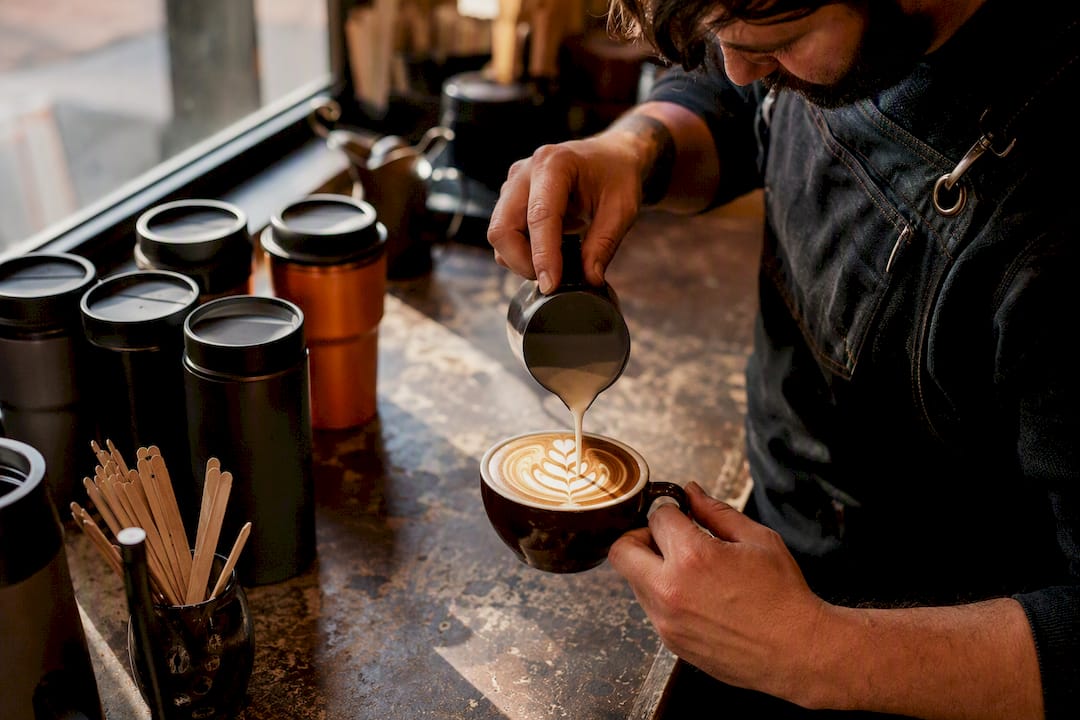
Typical add-on ranges worth budgeting for: latte printing runs $150 to $400 flat, branded cups cost $1.50 to $3.50 each depending on method and order size, and a custom cart wrap runs $100 to $600. An espresso martini station or specialty cocktail-coffee add-on for evening events typically carries its own hourly upcharge on top of the base bar.
How to Budget Smarter Without Cutting Corners
Matching service style to your actual goal is the single biggest lever you control. A staffed espresso bar makes sense when coffee is part of the guest experience, like a wedding reception or a branded activation. Drop-off or boxed coffee makes more sense for a working meeting where caffeine is a utility, not a moment.
- Book off-peak when you can. Weekday mornings often carry lower rates than Saturday evenings.
- Bundle services. If you’re already working with a caterer, ask whether combining coffee with a broader package brings the hourly rate down.
- Ask for an itemized quote. Base fee, hourly rate, travel, and add-ons should each appear as separate lines.
- Cap your hours or your drink count. An open-ended “as many drinks as guests want” bar can quietly balloon your total.
- Ask about recurring-event rates. Corporate teams booking coffee catering monthly or quarterly often qualify for bundled pricing that a one-off event won’t get.
Pro Tip: Before comparing quotes, write down your guest count, event length, and must-have menu items. Vendors price inconsistently when the request itself is vague.
Why Book The Flaming Bean for Your Event
The Flaming Bean built its event catering program around the same craft roasting that goes into every retail bag, which means your guests get specialty-grade coffee instead of a generic drip station. Menu flexibility is part of the pitch: pair a bold, rich cup like Abyssal with an evening reception, or lean on the smooth, easygoing Evening Roast for a daytime corporate gathering where guests want something approachable.
What sets the offering apart is the option to serve a mission-driven blend. Safe Ground supports organizations working to protect vulnerable people, so a nonprofit gala or a corporate giving event can tie the coffee bar directly to the cause being celebrated.
A coffee bar that supports a cause your guests already care about turns a routine catering line item into part of the event’s story.
For planners weighing options, having a quick reference to hospitality terms helps when negotiating logistics and supplier contracts.
- Craft-roasted beans instead of commodity-grade coffee
- Menu built around named blends with distinct flavor profiles
- Purpose-driven options for nonprofit and cause-focused events
- Flexibility to match blend to event tone, from bold to smooth
Payment Terms and Deposits You Should Expect
Most coffee catering vendors require a deposit to hold your date, typically 25% to 50% of the total quote. That deposit usually locks in your booking window and guest count estimate, and it’s often non-refundable once paid, since the vendor is turning down other bookings for your slot.
The remaining balance is commonly due somewhere between 7 and 14 days before the event, though some vendors collect the full amount at booking for smaller events under $500. Larger bookings, especially weddings and multi-day corporate activations, sometimes allow a payment plan split across two or three installments.
Guest count changes matter here. Most vendors let you increase headcount up to a set cutoff, often 5 to 7 days out, with the balance adjusted accordingly. Decreasing your count late usually doesn’t reduce your total, since staffing and inventory were already committed.
Ask specifically whether the deposit is a flat amount or a percentage, whether it’s refundable under any circumstance, and when the final guest count is locked. These three questions prevent the most common billing disputes after the event wraps.
A tip worth remembering: get the payment schedule in writing before you pay anything. Verbal agreements about “we’ll figure out the final balance later” tend to favor whoever wrote the contract.
Cancellation and Refund Policies That Affect Your Total Cost
Cancellation terms are where a good deal can quietly become an expensive mistake. Most coffee catering contracts scale refunds based on how far out you cancel: full or near-full deposit refund beyond 60 days, partial refund between 30 and 60 days, and little to no refund inside 14 to 30 days of the event.
Weather and venue changes complicate this further. Outdoor events are especially exposed, since a staffed cart or truck often can’t operate in heavy rain without a covered setup. Ask specifically whether the vendor has a rain contingency built into the contract, or whether a weather cancellation counts the same as any other late cancellation.
Rescheduling terms matter just as much as outright cancellation. Some vendors let you move your date once at no charge if you give enough notice, typically 14 to 30 days. Others treat a reschedule as a new booking entirely, which can mean forfeiting your original deposit and paying a new one.
Force majeure clauses, covering things like venue closures or extreme weather emergencies, aren’t universal. If your event has any real risk of disruption, whether it’s an outdoor summer wedding or a winter corporate retreat, get this clause explained in plain language before signing.
The bottom line: never assume “standard” cancellation terms. Read the actual contract language, and if refund percentages aren’t spelled out with specific day counts, ask the vendor to add them before you pay a deposit.
Hired Catering vs Self-Service: Which Fits Your Budget?
A staffed coffee catering service and a self-service or rental setup solve different problems, even though both put coffee in your guests’ hands.
Self-service options, like renting large-format coffee urns or ordering boxed coffee for pickup, cost less upfront. Drop-off boxed coffee typically runs $3 to $6 per guest, which beats almost any staffed option on pure price. The tradeoff is obvious: no barista, no espresso drinks, no experience beyond hot coffee in a box, and someone on your team has to manage setup, refills, and cleanup.
A staffed mobile espresso bar runs $10 to $18 per guest, and a full breakfast catering package with hot food runs $18 to $32 per guest. You’re paying for craft, service, and the fact that nobody on your planning team has to think about coffee once the cart arrives.
For a working lunch or small internal meeting under 30 people, self-service or a drop-off box is usually the smarter budget call. For a wedding, milestone celebration, or brand activation where the coffee experience itself is part of what guests remember, the staffed option earns its higher per-guest price. The middle ground many planners miss: a hybrid approach, staffing a bar for peak hours only and switching to a self-serve airpot station once the crowd thins out.
Specialty Coffee vs Standard Drip: What the Quality Difference Costs
Not all coffee catering quotes are pricing the same product. A vendor serving standard drip coffee from commodity-grade beans will always undercut a vendor roasting and serving specialty-grade coffee, and the price gap reflects real differences in sourcing and labor.
Standard drip service, often built around pre-ground commercial coffee, sits at the low end of any pricing band you’ll see, largely because the beans themselves cost a fraction of specialty-grade coffee and the service requires no barista skill. It works fine for a morning meeting where coffee is background fuel.
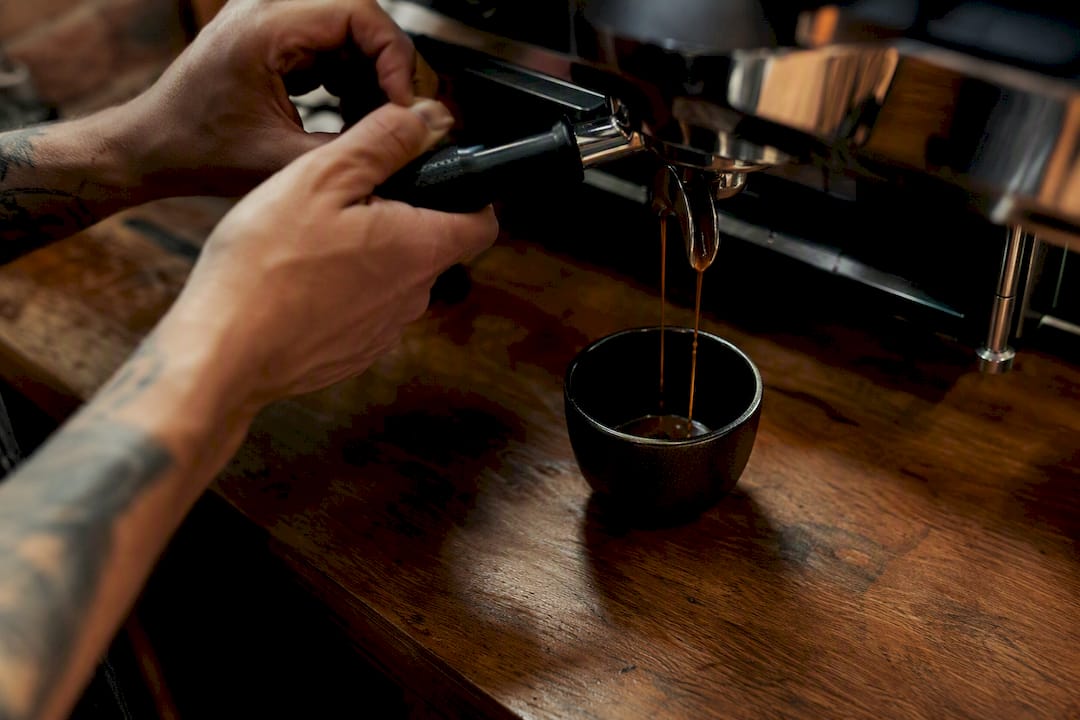
Specialty coffee, the kind poured through an espresso machine by a trained barista, costs more because you’re paying for three separate things: the bean itself, the equipment, and the skill to operate it correctly. A well-pulled espresso shot depends on grind consistency, machine calibration, and timing, none of which a standard airpot setup requires.
The quality tier also affects your add-on math. Latte art, pour-over stations, and single-origin features only make sense on top of a specialty base. Layering a printed-latte add-on onto a standard drip setup doesn’t work, since drip coffee has no foam to print on. If branding and presentation matter to your event, the specialty tier isn’t optional. It’s the foundation the add-on sits on.
The Real Question Behind Every Coffee Catering Quote
Most pricing guides treat coffee catering like a simple per-head calculation, and that’s where a lot of budgets go wrong. The math isn’t linear. It’s a step function, and the biggest driver isn’t your guest count. It’s whether your guest count crosses an operational threshold, like the point where one barista can’t keep up and a second cart becomes mandatory.
Conventional advice tells you to “get multiple quotes and compare.” That’s fine, but it misses the real skill: understanding why two quotes for the same headcount can differ by hundreds of dollars. Once you know a single cart tops out around 40 to 75 drinks per hour, you can predict when a vendor is quietly pricing in a second barista, and you can negotiate around that threshold instead of just accepting it.
The reader who does best here isn’t the one who finds the cheapest quote. It’s the one who understands their own event well enough to know whether they need a full staffed bar or something simpler. Start there, not with the price sheet.
— Tony
Book Your Event Coffee Bar With The Flaming Bean
If you’ve been comparing staffed espresso bars, drop-off boxes, and rental urns while trying to make the math work, The Flaming Bean gives you a fixed, transparent alternative built around craft roasting instead of commodity beans. You get specialty-grade coffee at every price tier, from a simple drop-off setup to a fully staffed cart, without sacrificing quality to hit a lower per-guest number.
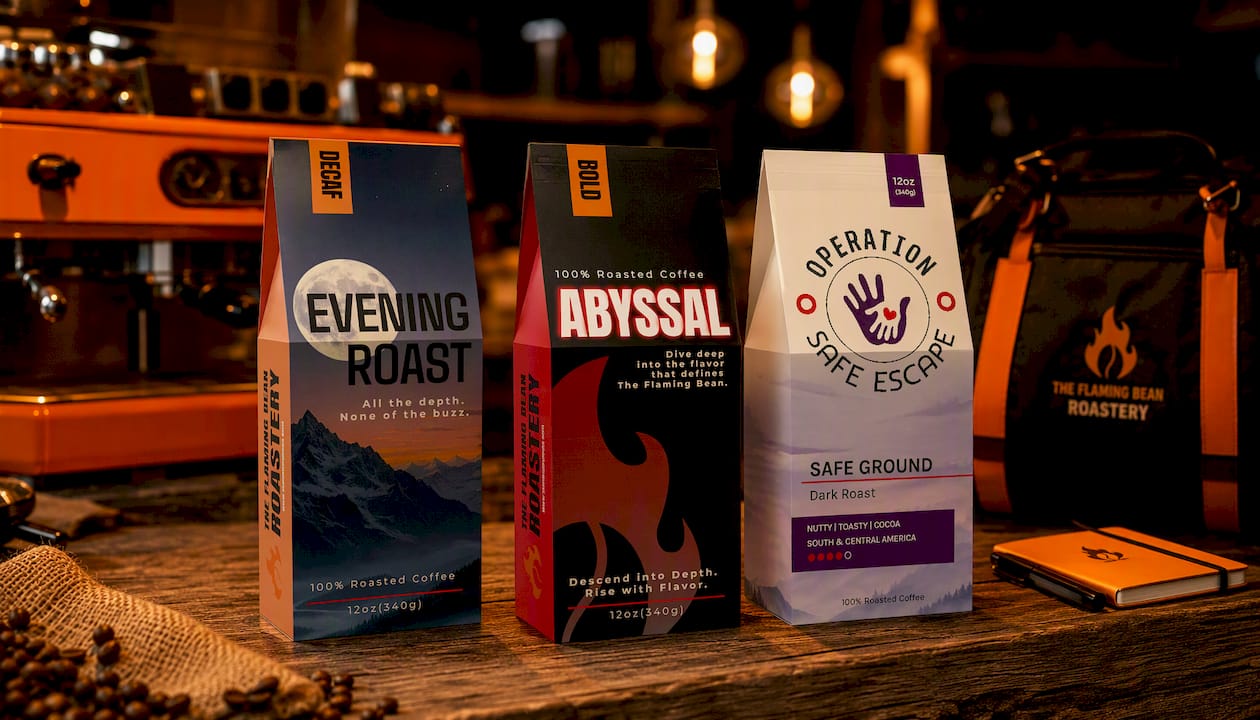
Choose a menu that fits your event’s tone. The Evening Roast works for daytime corporate gatherings that want something smooth and easy to drink in volume. Abyssal brings a bolder profile for evening receptions. And if your event has a cause attached, whether it’s a nonprofit fundraiser or a corporate giving day, Safe Ground lets your coffee bar support that mission directly.
Organizations planning recurring events or team programs can also explore wholesale coffee options for consistent pricing across multiple bookings. Reach out for a quote with your guest count and event date, and get an itemized breakdown before you commit a deposit.
Sources
- Coffee Catering Cost in 2026: Pricing Guide for Every Event Type — Reform Coffee
- How Much Does Coffee Catering Cost? A Complete Pricing Guide
- Coffee Catering Cost Per Guest: A Full Breakdown (2026) | Latte’Da
Recommended
- London Coffeehouse Blend: Order, Subscribe, or Cater – The Flaming Bean Roastery
- Nonprofit Private Label Coffee: Your Fundraising Playbook – The Flaming Bean Roastery
- Coffee Tea Bags: Your Guide to Retail, Subscription & Wholesale – The Flaming Bean Roastery
- Festive 4th of July Coffee Drinks: 6 Party-Ready Recipes – The Flaming Bean Roastery
Comments