
Mission-Driven Brands: Real Examples That Prove Purpose Works

Some of the most recognizable mission-driven brands today include Patagonia, 4ocean, Dr. Bronner’s, Cotopaxi, and The Flaming Bean. Each one backs its stated purpose with a concrete, verifiable mechanism: a legal structure, a certified giving model, or a published impact report that holds them accountable.
Here’s a quick look at what makes each one stand out:
- Patagonia — Mission: protect the planet. Proof: donates a portion of sales through 1% for the Planet and restructured its ownership to direct all profits to environmental causes.
- 4ocean — Mission: remove plastic from the ocean. Proof: operates as a Public Benefit Corporation and Certified B Corp, hiring full-time cleanup crews funded by product sales.
- Dr. Bronner’s — Mission: fair trade and regenerative business. Proof: structured as a California benefit corporation with supply-chain standards that enforce its values legally.
- Cotopaxi — Mission: gear for good. Proof: routes 1% of annual revenue to the Cotopaxi Foundation and publishes annual impact materials.
- The Flaming Bean — Mission: great coffee with real community impact. Proof: purpose-driven blends like Safe Ground and Mission Fuel direct proceeds to nonprofits protecting vulnerable individuals and strengthening communities.
A mission-driven brand is not simply a company with a mission statement. The difference is whether that mission shapes actual decisions, from product design to legal structure to how profits flow.
Table of Contents
- What do the best examples of mission-driven brands look like by category?
- How do these brands actually turn mission into action?
- What traits actually show a brand is mission-driven?
- What legal forms and certifications actually lock in a brand’s mission?
- Key Takeaways
- Why mission-driven coffee is worth paying attention to
- The Flaming Bean’s mission-driven blends
- Useful resources for going deeper
What do the best examples of mission-driven brands look like by category?
Environment and climate
4ocean sells bracelets and apparel, and every purchase funds ocean plastic removal. The company is both a Certified B Corp and a Public Benefit Corporation, which means its cleanup commitment is legally embedded in its governance, not just its marketing.
Patagonia goes further structurally. Its 2022 ownership transfer placed the company’s voting stock into the Patagonia Purpose Trust and all remaining equity into the Holdfast Collective, a nonprofit dedicated to fighting climate change. Every dollar of profit not reinvested in the business goes to environmental work.
World Wildlife Fund operates as a nonprofit with mission-first governance, publishing annual reports that document conservation outcomes by program and region.
Social services and advocacy
FreeFrom builds financial security for domestic violence survivors through direct cash grants and financial coaching. Its model ties every operational decision to survivor outcomes, and it publishes transparent program data.
DoSomething mobilizes young people around social causes through campaigns and volunteer programs, with measurable participation metrics reported publicly each year.
Access, inclusion, and affordability
Kiva provides microloans to underserved entrepreneurs globally, operating as a nonprofit with a peer-to-peer lending platform that has facilitated lending to millions of borrowers. DonorsChoose connects public school teachers with donors who fund specific classroom projects, with full transparency on how every dollar is spent.
Community development and giving models
Cotopaxi is a certified B Corp that channels a fixed share of revenue to its foundation, supporting poverty alleviation and health programs. The annual impact report is publicly available and tied to specific grant recipients.
The Flaming Bean’s community-focused coffee model follows a similar logic: purpose-driven blends connect buyers directly to causes, with proceeds supporting nonprofits working on digital safety, exploitation prevention, and community resilience.
Innovation for public good
Phare Bio uses a blended finance model to advance mission-driven biotech. Donor funding covers early-stage research, while commercial partnerships and spinouts fund clinical development. This structure lets the organization pursue treatments for neglected diseases without abandoning its social objectives when costs scale up.
How do these brands actually turn mission into action?
The table below compares how a selection of mission-driven brands operationalize their purpose across five practical dimensions.
| Brand | Mission focus | How mission is integrated | Legal status / certification | Evidence of impact | Customer-facing claim |
|---|---|---|---|---|---|
| 4ocean | Ocean plastic removal | Product sales fund cleanup crews | PBC + Certified B Corp | Published cleanup tonnage reports | Buy a product, fund a pound of trash removed |
| Dr. Bronner’s | Fair trade, regenerative supply chain | Supply-chain standards, benefit corp governance | California benefit corporation | Fair-trade audits, supplier reports | Fair-trade certified ingredients |
| Cotopaxi | Poverty alleviation, health | 1% revenue to foundation, B Corp operations | Certified B Corp | Annual impact report, named grant recipients | 1% of revenue to Cotopaxi Foundation |
| Patagonia | Environmental protection | Ownership restructured to nonprofit trust | Patagonia Purpose Trust / Holdfast Collective | Annual environmental grants disclosed | 1% for the Planet member |
| The Flaming Bean | Community safety, digital protection | Proceeds from mission blends go to nonprofits | Mission-integrated product line | Named nonprofit partners, cause-specific blends | Buy a blend, support a cause |
Three things separate credible mission integration from marketing-only claims. First, the mechanism is specific: a named legal structure, a fixed percentage, or a named nonprofit partner. Second, the evidence is public and updated: impact reports, audit results, or cleanup tonnage figures you can look up. Third, the mission shows up in governance, not just advertising. When a brand’s legal documents require stakeholder consideration, the mission survives leadership changes and acquisition pressure in a way that a tagline never could.
What traits actually show a brand is mission-driven?
Authenticity in mission-driven companies tends to show up in the same places, regardless of industry.
- Mission as decision arbiter. According to Oyster HR’s mission-driven company framework, the clearest signal is when mission guides tough operational choices, not just brand messaging. If a company turns down a profitable contract because it conflicts with its stated values, that’s real.
One signal most readers overlook: governance clauses in founding documents. A company that has written stakeholder consideration into its articles of incorporation or operating agreement has made mission legally binding. That’s harder to walk back than a press release. The Business Roundtable’s redefinition of corporate purpose to include all stakeholders reflects how mainstream this expectation has become, but legal embedding is what gives it teeth.
Mission erosion during growth is a documented risk. Peer communities like the Purpose Pledge exist specifically to help natural products companies stay true to their values as they scale or face acquisition pressure.
Pro Tip: Check whether a brand’s mission language appears in its legal filings, not just its website. State incorporation records and B Lab’s public directory are both searchable and free.
What legal forms and certifications actually lock in a brand’s mission?
Three structures are worth knowing.
Benefit corporations are a legal designation available in most U.S. states. Directors of a benefit corporation are legally required to consider the interests of employees, communities, and the environment alongside shareholders. Dr. Bronner’s operates as a California benefit corporation, which means its commitment to fair-trade supply chains and regenerative practices is embedded in its legal obligations, not just its brand story.
Certified B Corps go through B Lab’s independent audit process, which scores companies on governance, workers, community, environment, and customers. Certification must be renewed every three years. 4ocean holds both PBC status and B Corp certification, a combination that creates both legal accountability and independent verification.
Public benefit corporations (PBCs) are a specific variant of benefit corporation available in Delaware and several other states. They name a specific public benefit in their charter, which directors must actively pursue.
| Structure | Who grants it | Legal force | Renewal required | Public verification |
|---|---|---|---|---|
| Benefit corporation | State government | Yes, director duties | No (ongoing legal status) | State filings |
| Certified B Corp | B Lab (nonprofit) | No, but contractual | Yes, every 3 years | B Lab public directory |
| Public benefit corporation | State government | Yes, named benefit in charter | No (ongoing legal status) | State filings |
Impact reporting sits alongside these structures as a transparency layer. Brands like Cotopaxi publish annual impact materials tied to specific grant recipients and program outcomes. Without reporting, even a legal structure can become a formality.
A growing number of large companies have moved toward stakeholder-oriented governance language, as reflected in the Business Roundtable’s updated statement on corporate purpose. For readers evaluating coffee brands specifically, coffee certifications like fair trade and organic add another verification layer on top of corporate structure.
Food and beverage brands are increasingly embedding these commitments at the product level, a trend well documented in food and beverage formulation research that tracks how mission and sustainability claims are moving from marketing into product design and sourcing.
Key Takeaways
The most reliable evidence that a brand is truly mission-driven is a combination of legal structure, a specific and public giving mechanism, and independently verified impact reporting.
| Point | Details |
|---|---|
| Legal structure matters most | Benefit corporation or PBC status legally binds directors to stakeholder consideration, not just shareholders. |
| Certification adds independent proof | B Corp certification requires a third-party audit renewed every three years, making it harder to fake. |
| Impact reports must name specifics | Credible reports list named recipients, fixed percentages, and measurable outcomes, not just activities. |
| Red flags are easy to spot | Vague metrics, no third-party verification, and “up to” giving language all signal marketing over mission. |
| The Flaming Bean | Purpose-driven blends like Safe Ground and Mission Fuel tie product purchases directly to named nonprofit causes. |
Why mission-driven coffee is worth paying attention to
When we built The Flaming Bean’s product line, we wanted the mission to show up in the actual product, not just the about page. Blends like Safe Ground direct proceeds to organizations working on digital safety and exploitation prevention. Evening Roast is designed for the moments when community matters most, a smooth, approachable cup that reflects what we believe coffee can be: something that brings people together around shared values. We’re not claiming B Corp status or a foundation endowment. What we do have is a direct, named connection between what you buy and who benefits. That’s the standard we hold ourselves to, and it’s the same standard we’d encourage you to apply to any brand that calls itself purpose-driven.
The Flaming Bean’s mission-driven blends
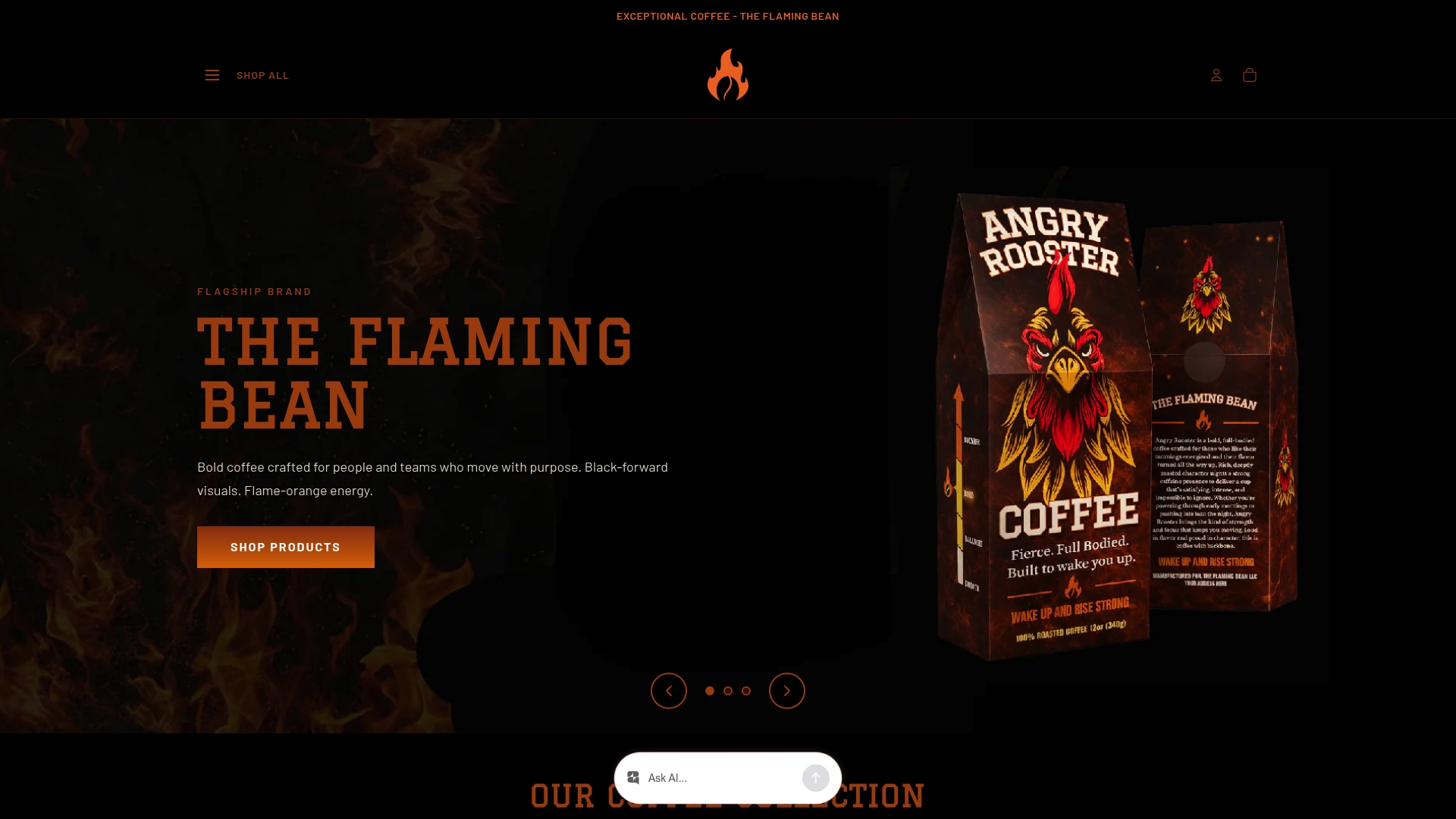
If you want coffee that does more than taste good, The Flaming Bean’s mission-driven blends are a straightforward place to start. Safe Ground supports organizations dedicated to protecting vulnerable individuals and advancing digital safety, with proceeds going directly to nonprofit partners. Evening Roast is a smooth, community-focused blend built for the end of the day, when good coffee and good company go hand in hand. Both are part of a broader collection of signature blends that connect every purchase to a cause. Browse the full lineup and find the blend that fits your values and your cup.
Useful resources for going deeper
These sources help you verify claims, find mission-driven organizations, and stay current on purpose-driven business practices.
- How Dr. Bronner’s Turned a Soap Company into a Blueprint for Regenerative Business | Yale Insights
- 4ocean | Our Mission to Remove Plastic + Trash from Our Oceans
- Cotopaxi — Gear For Good | Free shipping on orders $99+
- PHARE BIO
- What is a mission-driven company? | Global HR glossary
- Business Roundtable redefines the purpose of a corporation to promote an economy that serves all Americans
Comments