
Find Coffee Matching Your Palate: A Flavor Guide

Finding coffee matching your palate is defined as selecting a coffee whose acidity, body, roast depth, and flavor notes consistently satisfy your individual taste preferences. Most coffee drinkers settle for whatever is convenient, but the difference between a cup you tolerate and one you genuinely love comes down to sensory alignment. Expert panels of up to 250 chefs and sommeliers judge coffee quality using anchors like body, acidity, aroma, and texture. Those same anchors are exactly what you need to understand about yourself. This guide walks you through the full process, from identifying your flavor preferences to buying coffee that delivers them every time.
What key flavor components define your coffee palate?
Your palate responds to five core sensory attributes in every cup: acidity, body, sweetness, bitterness, and balance. Getting clear on each one is the fastest way to stop buying coffee that disappoints you.
Acidity is the bright, lively sensation you feel on the sides of your tongue. It reads as citrus, berry, or stone fruit. High-acidity coffees feel vibrant and clean. Low-acidity coffees feel smooth and flat.
Body describes the weight of the coffee in your mouth. A full-bodied coffee feels thick and coating, like whole milk. A light-bodied coffee feels closer to tea. Most drinkers who say they want “strong” coffee actually want full body, not more caffeine.
Sweetness and bitterness exist on a spectrum shaped largely by roast level. Light roasts preserve natural sugars and fruit-forward notes. Dark roasts develop bitter, smoky, and chocolatey compounds through the Maillard reaction. Roast level shapes the entire flavor experience more than any other single variable.
Balance is the quality that ties everything together. A balanced coffee does not let any single attribute dominate. It is the most universally appealing profile and the benchmark used in professional tasting competitions.
Flavor categories give you a practical vocabulary for what you taste:
- Floral: jasmine, lavender, rose (common in light-roast Ethiopian coffees)
- Fruity: citrus, berry, tropical fruit (common in washed African and Colombian origins)
- Nutty: almond, hazelnut, walnut (common in medium-roast Latin American coffees)
- Chocolatey: dark chocolate, cocoa, mocha (common in medium-to-dark roasts)
- Spicy: clove, cinnamon, black pepper (common in Sumatran and some natural-process coffees)
The Superior Taste Awards recognize coffees across all these categories. Three-star winners include diverse flavor profiles ranging from tropical fruit espresso to buttery white coffee, which proves that no single profile is objectively superior. Your job is to find the one that fits you.
How to assess your palate to find your perfect coffee match
Palate assessment is a skill, and like any skill, it improves with deliberate practice. The good news is that comparative tasting accelerates palate development far faster than tasting one coffee in isolation. Tasting two or three coffees side by side makes differences obvious that you would otherwise miss entirely.
A coffee flavor wheel is the most practical tool for naming what you taste. It breaks complex aromas and flavors into identifiable categories, which helps you move from “I like this” to “I like this because it has a bright citrus acidity and a medium body.” That specificity is what makes personalized coffee recommendations actually work.
Follow these steps to assess your palate systematically:
- Brew two coffees side by side. Use the same brewing method for both. Changing the method changes the flavor, which muddies your comparison.
- Taste black first. Milk and sugar mask acidity and body. Taste the coffee as brewed before adding anything.
- Slurp deliberately. Slurping aerates the coffee and spreads it across your entire palate, which is exactly what professional cuppers do.
- Identify the finish. Notice what lingers after you swallow. A long, sweet finish signals quality. A harsh or dry finish signals over-roasting or poor sourcing.
- Write it down. Keep a tasting journal with the coffee name, origin, roast level, and three flavor words. Patterns emerge quickly across five to ten entries.
- Repeat weekly. Palate sensitivity builds with frequency. One tasting session per week produces noticeable improvement within a month.
Pro Tip: Taste coffee in the morning before your first cup of the day. Your palate is freshest then, and you will detect subtleties that disappear after you have already had caffeine.
How do origin and roast interact to shape coffee flavor?
Origin and roast are the two biggest levers in coffee flavor, and they pull in opposite directions. Origin adds character. Roast either highlights or erases it.
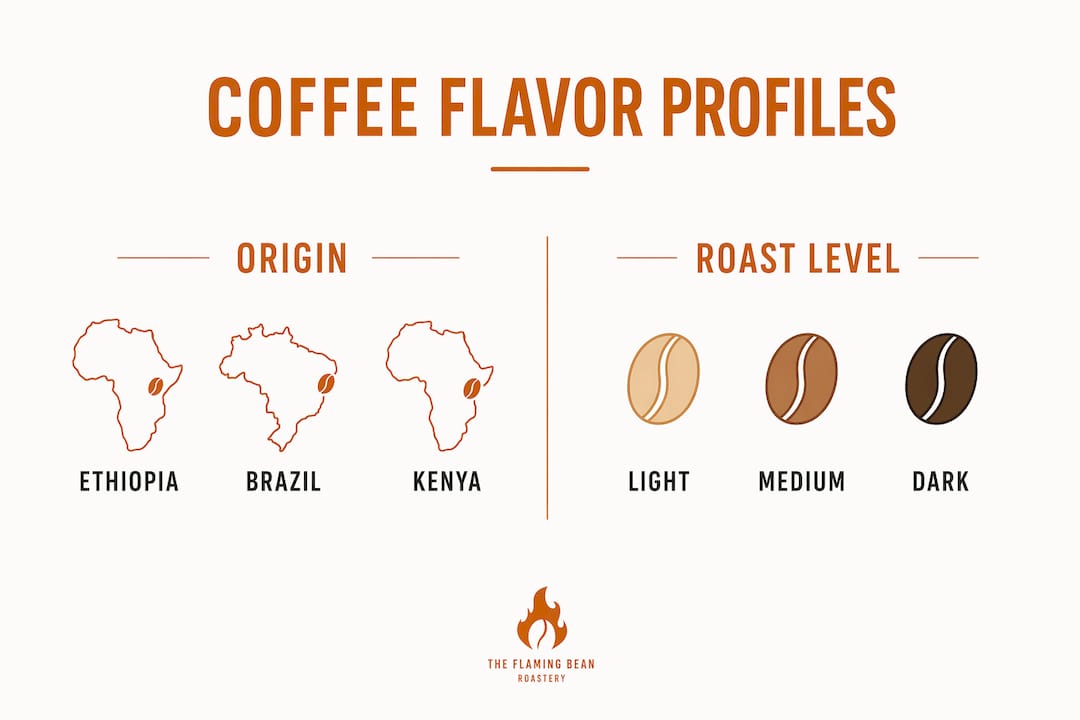
Single-origin coffees deliver the clearest expression of regional terroir. Ethiopian coffees grown at high altitude in Yirgacheffe or Sidamo carry floral and berry notes that come directly from the soil, climate, and processing method. Colombian coffees from Huila or Nariño tend toward caramel sweetness and mild citrus acidity. These flavors are real and measurable, not marketing language.
Blended coffees take a different approach. The 45° Parallelo blend, for example, combines beans from Brazil, Kenya, and Papua New Guinea to produce full body with a fruity aroma. Blends trade origin clarity for consistency and complexity. They are the better choice for drinkers who want a reliable, well-rounded cup every day. You can learn more about how origins shape flavor in The Flaming Bean’s coffee origins flavor guide.
The table below shows how origin and roast level combine to produce predictable flavor outcomes:
| Origin | Light Roast | Medium Roast | Dark Roast |
|---|---|---|---|
| Ethiopia | Floral, blueberry, jasmine | Berry jam, mild chocolate | Smoky, muted fruit |
| Colombia | Bright citrus, caramel | Balanced, nutty, sweet | Bittersweet, full body |
| Brazil | Mild, nutty, low acidity | Chocolate, almond, smooth | Dark chocolate, heavy body |
| Sumatra | Earthy, herbal, complex | Cedar, tobacco, full body | Smoky, bold, very low acidity |
| Kenya | Blackcurrant, tomato, wine | Dark berry, rich body | Roast-forward, reduced fruit |
Light roasts preserve origin character most faithfully. Dark roasts push all origins toward a similar smoky, bitter profile. If you love what a specific region produces, roast it lighter. If you want consistency across origins, go medium to dark. Understanding roast levels before you buy is one of the most practical skills a coffee enthusiast can develop.
What practical steps help you select and buy coffee matching your palate?
Buying coffee well is a separate skill from tasting it. Most drinkers make selection errors that no amount of palate training can fix.
Start with the roast date, not the expiration date. Roast date freshness directly improves aroma clarity and flavor intensity. Coffee peaks between 7 and 21 days after roasting for most brew methods. Beans roasted months ago deliver a flat, dull cup regardless of their origin or quality.
Follow these buying steps to get the right coffee every time:
- Read the flavor notes on the bag. Specialty roasters list tasting notes for a reason. “Dark chocolate, toasted almond, and brown sugar” tells you exactly what to expect.
- Match roast level to your palate findings. Use your tasting journal to identify which roast level consistently satisfies you, then filter your purchases by that level.
- Buy small batches first. A 4-ounce or 6-ounce sample costs less than a full bag and lets you confirm a coffee works for you before committing.
- Check the roast date. Buy coffee roasted within the last two weeks whenever possible. Avoid bags with no roast date listed.
- Try a subscription. Specialty roaster subscriptions deliver freshly roasted coffee on a schedule and often include tasting notes, which accelerates palate development.
Pro Tip: Brew the same coffee in a French press and a pour-over on the same day. The French press will emphasize body and oils; the pour-over will highlight acidity and clarity. You will learn more about your preferences in one morning than in a month of single-method brewing.
What common mistakes to avoid when finding coffee that suits your palate?
The biggest mistake most coffee enthusiasts make is treating price or brand reputation as a proxy for personal fit. A highly awarded coffee can still be wrong for your palate if its flavor profile does not match your preferences. Experts confirm that the best coffee depends on the consumer’s context, including their consumption ritual and what they add to the cup.
Milk and alternative milks change everything. Milk softens acidity and body, which means a coffee you dislike black may become your favorite with oat milk. The reverse is also true. A delicate light roast you love black can disappear entirely under whole milk. Always taste your coffee the way you actually drink it before deciding it is not for you.
Avoid these common errors:
- Chasing a single “best” coffee. No universal best exists. Flavor is situational, and your morning cup and your afternoon cup may need to be different coffees.
- Ignoring brewing method. Grind size, water temperature, and brew time all change flavor dramatically. A coffee that tastes bitter is often under-extracted or over-extracted, not inherently bad.
- Giving up after one bad cup. A stale bag, wrong grind, or off water temperature can ruin any coffee. Rule out variables before ruling out a bean.
- Skipping the black taste test. Tasting only with milk means you never learn what the coffee actually tastes like, which makes it impossible to build accurate preferences.
- Buying based on packaging alone. Beautiful bags do not guarantee quality. Look for roast dates, origin transparency, and specific flavor notes instead.
Patience matters more than most guides admit. Palate development takes time, and your preferences will shift as you taste more. That is not a problem. It is the process working.
Key Takeaways
Finding your perfect coffee match requires understanding your palate’s sensory preferences and systematically testing coffees by origin, roast level, and flavor profile until the right cup becomes obvious.
| Point | Details |
|---|---|
| Know your five sensory anchors | Acidity, body, sweetness, bitterness, and balance define every coffee experience. |
| Use comparative tasting | Tasting two coffees side by side reveals differences that isolated tasting misses entirely. |
| Match origin to roast level | Light roasts preserve regional character; dark roasts push all origins toward similar smoky profiles. |
| Prioritize roast date freshness | Buy coffee roasted within two weeks for the clearest aroma and flavor. |
| Avoid universal “best” thinking | The right coffee depends on your ritual, your additions, and your palate, not rankings or price. |
Why palate discovery is the most rewarding part of coffee
I have tasted hundreds of coffees over the years, and the ones that surprised me most were never the ones I expected to love. My first genuinely great cup of Ethiopian light roast tasted like blueberry tea, and I almost put it down because it did not match what I thought coffee was supposed to be. That moment taught me more about my own palate than any guide ever did.
The honest truth is that most people stop exploring too early. They find one coffee they like and stick with it for years, which is fine, but it means they never discover that they might love a washed Kenyan medium roast even more. Palate discovery is not about becoming a coffee snob. It is about giving yourself more options for genuine enjoyment.
My personal recommendation is to spend one month tasting across roast levels before you commit to a favorite. Start with a light roast from Africa, a medium roast from Latin America, and a dark roast blend. Taste them all black, then with your usual additions. The differences will be obvious, and your preferences will become clear fast.
The other thing I tell everyone: stop worrying about getting it right. Coffee is one of the few pleasures where the exploration itself is the reward. Every cup you taste, even the ones you dislike, teaches you something useful about what you actually want.
— Tony
Coffees from The Flaming Bean worth tasting
The Flaming Bean roasts coffees designed to match a wide range of palates, and three of them stand out as great starting points for enthusiasts building their flavor vocabulary.

The Evening Roast is built for mellow palates and low-key moments. It is smooth, approachable, and easy to love without any tasting experience. The Safe Ground blend delivers a balanced, clean cup that works well for drinkers who want consistency without sharp edges. For enthusiasts who already know they love bold, full-bodied coffee, the Angry Rooster brings the intensity. Each coffee ships with roast date transparency so you always know what you are getting. Browse the full lineup at The Flaming Bean and find the cup that fits your palate.
FAQ
What does “palate” mean in coffee tasting?
Your palate refers to your personal sensitivity and preference for flavors like acidity, body, sweetness, and bitterness. Understanding it helps you choose coffees that consistently satisfy you.
How do I know which roast level suits my taste?
Taste a light, medium, and dark roast side by side using the same brewing method. Your preference for brightness versus richness will become clear within one session.
Does milk change which coffee I should buy?
Yes. Milk softens acidity and body, which changes how a coffee tastes significantly. Always evaluate coffee the way you plan to drink it before deciding if it suits you.
What is the fastest way to develop my coffee palate?
Comparative tasting is far more effective than tasting one coffee at a time. Tasting two or three coffees side by side makes flavor differences immediately obvious.
How fresh does coffee need to be for the best flavor?
Coffee tastes best between 7 and 21 days after roasting. Roast date freshness directly affects aroma clarity and flavor intensity, so always check the bag before buying.
Recommended
- Coffee Flavor Wheel Explained: Your Complete Tasting Guide – The Flaming Bean Roastery
- Coffee Roast Levels Explained: Your Flavor Guide – The Flaming Bean Roastery
- Types of Coffee Bean Origins: A Flavor Guide – The Flaming Bean Roastery
- What Does Balance Mean in Coffee? A Flavor Guide – The Flaming Bean Roastery
Comments