
Wait 10 Days Before Freezing Coffee Beans, Then Seal and Portion

Yes, freezing coffee beans works, but only for long-term storage or special-occasion lots, not your everyday bag. Airtight packaging is the non-negotiable part: vacuum sealing or a well-taped freezer bag, with no repeated freeze-thaw cycles. Either freeze your roaster’s bag unopened, or vacuum-seal pre-weighed portions before it goes in the freezer.
TL;DR:
- Freezing coffee is best for long-term storage of bulk or specialty lots, extending freshness up to 3 to 6 months with proper sealing.
- Airtight packaging, such as vacuum sealing or well-taped freezer bags, is essential to prevent moisture and odor contamination during freezing.
- Freezing should be done after 10 days of roasting to allow initial degassing, with unopened bags sealed before storage for optimal preservation.
- Thaw frozen coffee slowly at room temperature and consider grinding straight from frozen for more consistent results, especially with light roasts.
- Repeated freeze-thaw cycles and inadequate sealing are common mistakes that degrade flavor, so portioning and careful packaging are key to success.
Table of Contents
- Should You Freeze Coffee? Weighing the Benefits and Risks
- When Should You Freeze Coffee for Best Flavor?
- How to Freeze Coffee Beans Step by Step
- Common Freezing Mistakes and How to Fix Them
- Why The Flaming Bean Recommends This Approach
- The Real Trade-Off Nobody Talks About Enough
- Get Coffee Worth Freezing (or Just Worth Drinking Fresh)
- Sources
- FAQ
Should You Freeze Coffee? Weighing the Benefits and Risks
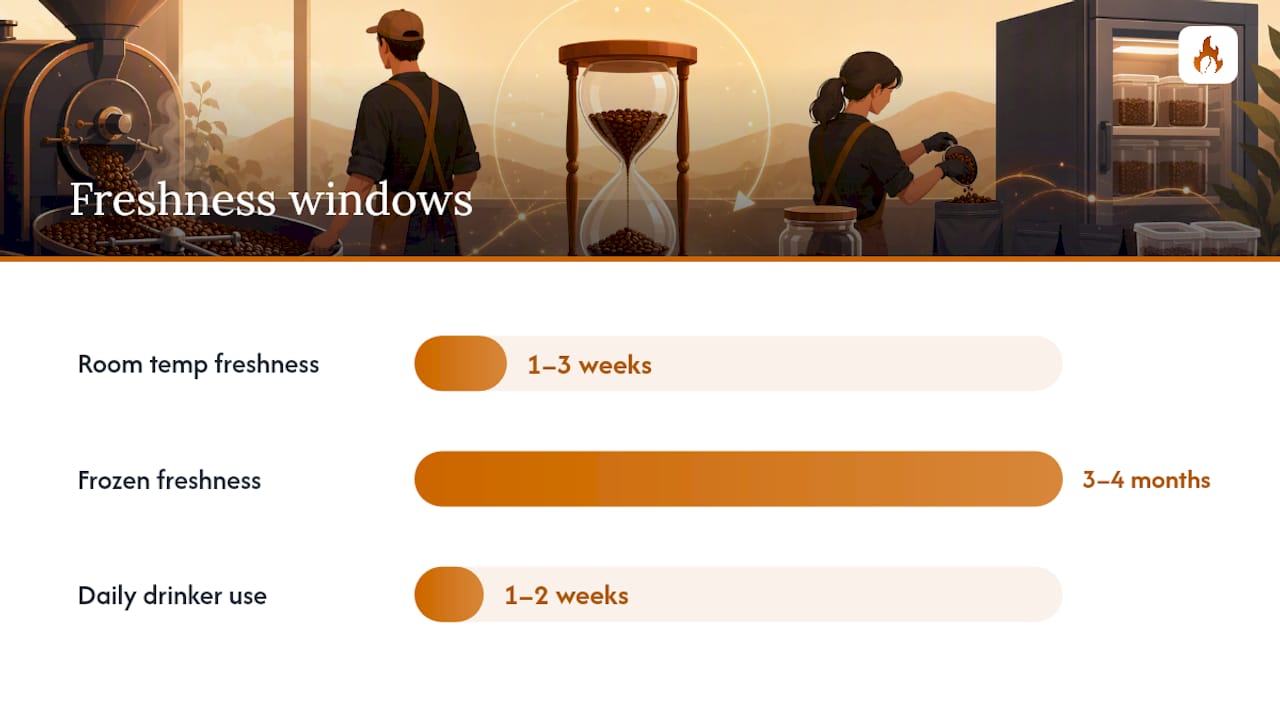
Freezing slows the two things that ruin coffee: staling and degassing. Beans held at room temperature stay near peak flavor for about 1 to 3 weeks, while beans that are frozen correctly can hold that freshness for 3 to 4 months. That’s a real window if you bought in bulk, snagged a limited harvest lot, or your subscription just sent more bags than you can drink before they turn stale.
The risk side is packaging failure, not the cold itself. Coffee is hygroscopic, meaning it pulls in moisture and odors from anything nearby, so a loose bag in a freezer full of last week’s leftovers can pick up flavors you don’t want in your cup.
Freezing makes the most sense for:
- Bulk purchases you can’t realistically drink within a month
- Rare or specialty lots you want to stretch across special occasions
- Subscription overflow when a new bag arrives before the last one is gone
Daily drinkers who go through a bag every week or two are usually better off skipping the freezer entirely and just matching bag size to how fast they actually drink.
When Should You Freeze Coffee for Best Flavor?
Timing changes the outcome more than most people realize. Coffee experts recommend waiting about 10 days after roast before freezing, giving the beans time to finish their initial degassing while they’re still near peak flavor. Freeze too early and you trap carbon dioxide that hasn’t fully escaped, which can throw off extraction later.
If you’re freezing a retail bag straight from the roaster, do it before opening it whenever possible. An unopened bag with an intact seal holds up far better over months than one that’s already been exposed to air, even briefly.
Realistic expectations matter here too:
- Most guidance points to a 3 to 6 month window for solid quality retention in the freezer
- Strict vacuum sealing can push that further, but freezing slows chemical aging, it doesn’t stop it
- Peer-reviewed and university research confirms that cold storage significantly slows the loss of volatile aromatic compounds without permanently halting the underlying chemistry
Think of the freezer as a pause button, not an off switch.
How to Freeze Coffee Beans Step by Step
Getting this right comes down to four things: packaging, portioning, placement, and patience when it’s time to use the coffee. Here’s the workflow specialty roasters actually use.
- Choose your packaging. Vacuum-seal bags are the gold standard because they pull out nearly all the air that causes freezer burn and stale flavor. No vacuum sealer? Use freezer-grade zipper bags and press out as much air as you can before sealing, sometimes called the squeeze technique. A rigid airtight container placed inside a zipper bag adds a second layer of protection if you’re worried about crushing or odor transfer.
- Portion before you freeze. Weigh out daily or two-week doses and seal each one separately. This way you’re never digging through a bulk bag with warm, humid hands, which introduces moisture every single time.
- Prep the bag. If you’re freezing an unopened retail bag, tape over the one-way valve. That valve is designed to let gas escape during storage, but it can also let air sneak back in over long freezer stretches, so taping it shut and avoiding repeated in-and-out trips protects the seal.
- Label everything. Write the roast date and freeze date on each portion. It sounds basic, but it’s the difference between grabbing your freshest lot and forgetting a bag existed for eight months.
- Store it in the back of the freezer. The door and front shelves see the most temperature swings every time the freezer opens. The back stays coldest and most stable, which matters more than most people expect.
- Thaw the right way. Let a sealed portion come up to room temperature before opening it. Opening a cold bag straight from the freezer invites condensation, and that moisture is exactly what you’re trying to avoid.
- Or grind straight from frozen. For light roasts especially, grinding beans while still frozen can actually improve consistency because the beans are more brittle and shatter more evenly. Expect to adjust your grind setting slightly coarser, and know that some burr grinders handle this better than others.
- Never refreeze an opened portion. Once a sealed dose comes out and warms up, use it. Repeated freeze-thaw cycles are the fastest way to introduce condensation and wreck flavor.
Pro Tip: If you’re experimenting with grinding from frozen, start with a single portion and dial in your grind size before committing your whole stash to the method. A stepped-adjustment burr grinder tends to tolerate frozen beans more gracefully than a cheap blade grinder.
Common Freezing Mistakes and How to Fix Them
Most freezer coffee disasters trace back to one of a handful of preventable errors.
- Loose or paper bags in the freezer. These offer almost no barrier to moisture or odor. Repackage into a vacuum-sealed bag or airtight container before freezing, every time.
- Freezer odors bleeding into your beans. Double-layer your sealing, and take stock of what else is in the freezer. A well-sealed bag next to strong-smelling leftovers is still a risk if the seal isn’t truly airtight.
- Partial thawing from door storage. Beans stored in the door or front shelf swing in temperature every time someone grabs ice. Move your portions to the back, where temperatures stay steady.
- Ice crystals or off-smells on opening. That’s a sign of degradation, usually from a compromised seal. When in doubt, brew a small test batch before committing a whole pot to questionable beans.
Why The Flaming Bean Recommends This Approach
Author Tony has spent years around roasting equipment and green coffee sourcing, and the freezing method outlined here reflects what actually holds up at roaster scale, not just kitchen folklore. The Flaming Bean applies the same logic to its own limited lots: portion first, seal tight, freeze once.
If you’re deciding what’s worth freezing, start with coffees that reward the extra effort. A smooth, approachable pour like Evening Roast holds up well as a portioned freezer staple for slower weeks, while a purpose-driven blend like Safe Ground is the kind of special lot worth freezing for an occasion rather than burning through in a single week. For more on why timing matters before beans ever reach your freezer, our post on why roast date matters covers the degassing science in more depth.
The Real Trade-Off Nobody Talks About Enough
Most advice on freezing coffee treats it like a universal upgrade, freeze everything, always, no downside. That’s not what the evidence supports. Freezing is a tool for a specific problem: too much coffee, not enough time to drink it fresh. If you’re buying a bag every week or two, the freezer adds a step and a risk without adding real benefit, since room-temperature storage already covers that shorter window just fine.
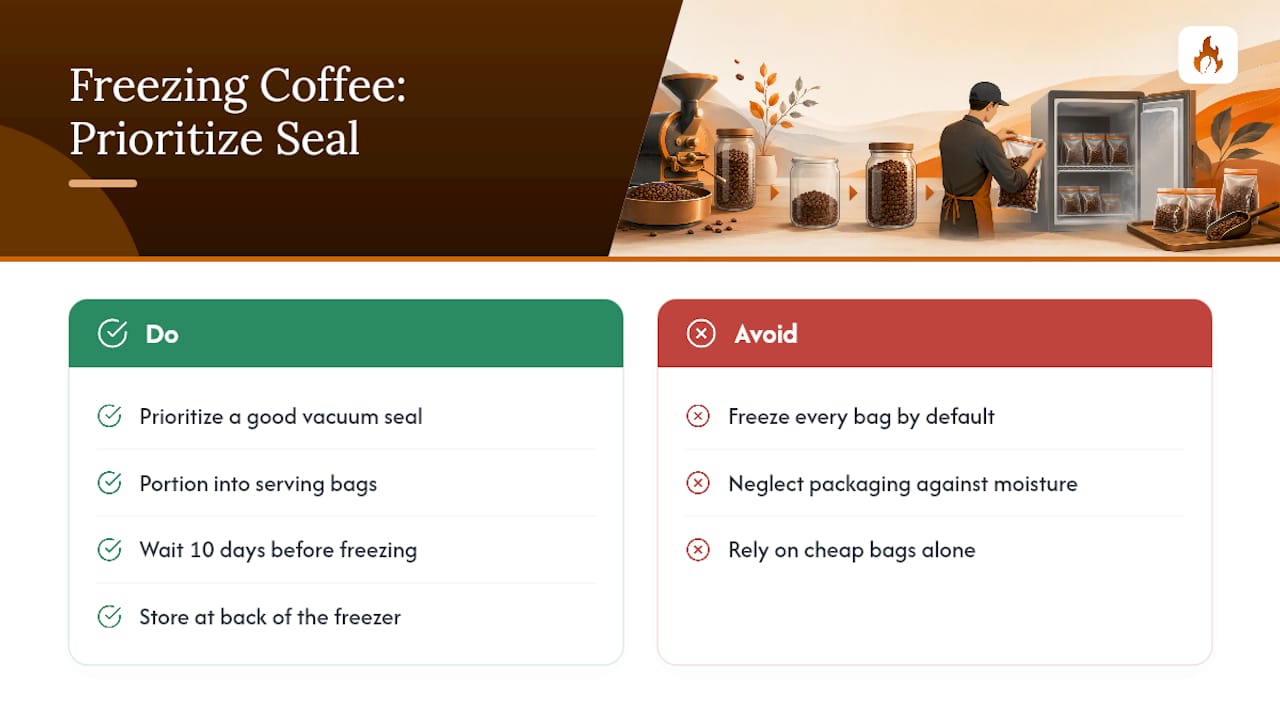
Where conventional advice falls short is the packaging conversation. People fixate on freezer temperature and completely ignore that coffee’s biggest enemy is moisture, not cold. A cheap bag in a good freezer will fail. A great vacuum seal in a mediocre freezer will outperform it every time.
If you take one thing from this article, prioritize the seal over everything else. Get the portioning and the packaging right first. The 10-day timing rule and back-of-freezer placement matter, but they’re refinements on top of a seal that actually holds.
— Tony
Get Coffee Worth Freezing (or Just Worth Drinking Fresh)
The edge is simple: bold, carefully roasted coffee in sizes that fit how you actually drink, whether that means a bag you’ll finish in two weeks or a special lot worth vacuum-sealing for later. Core roasts are picked for character and consistency, so the beans you’re freezing are worth the extra effort in the first place.
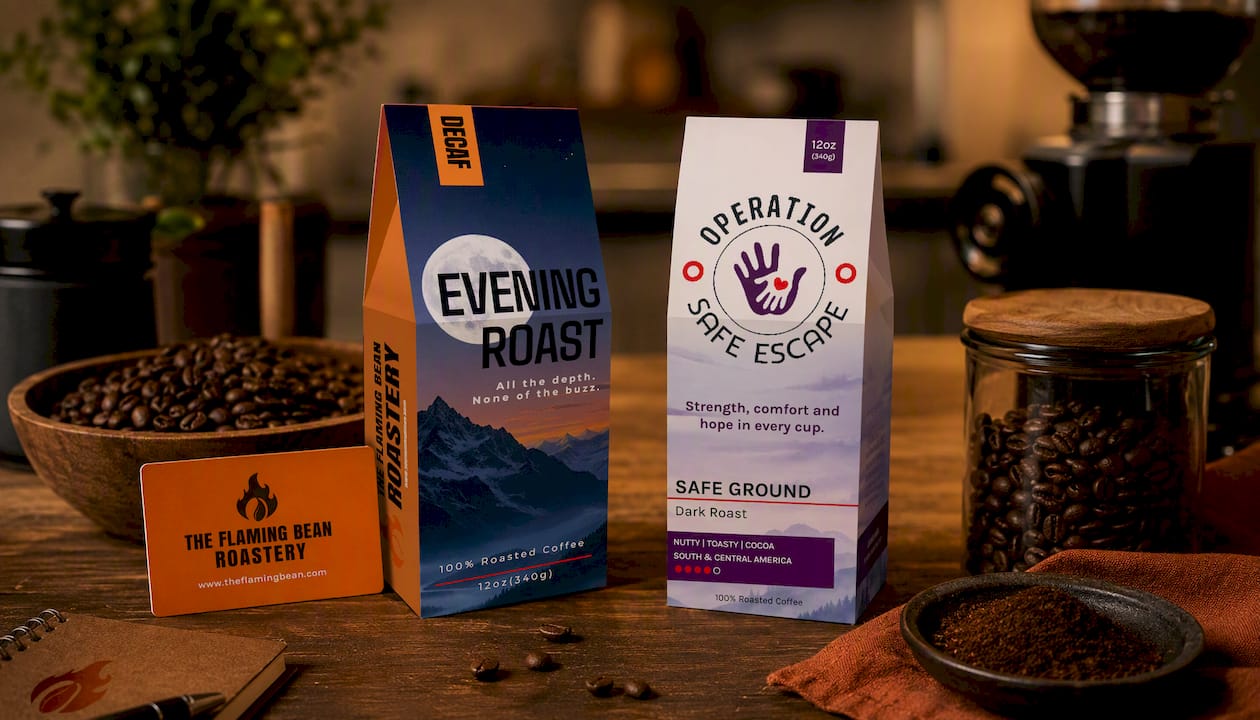
If bulk buying is the plan, browse the core Flaming Bean roasts and pick a lineup that matches your freezer strategy, portioned lots for weekly drinking, a special bag set aside for later. Not sure what a fellow coffee lover on your list would want? The Flaming Bean Coffee Gift Card runs from $10 to $100 and skips the guesswork entirely. Either way, the next step is the same: order beans worth protecting, then use the freezing method above to make them last.
Sources
- I asked coffee experts how to keep beans fresh—They said the same things
- Freezing your coffee beans keeps them fresher for longer
- Why you should probably freeze your coffee beans—and how to do it
- PMC article on aroma preservation and cold storage
- Storage and shelf life (About Coffee)
FAQ
Is Freezing Coffee Beans a Good Idea?
It’s a good idea for long-term storage, bulk buys, or special lots you’re not drinking within a few weeks. For everyday bags you’ll finish quickly, room-temperature storage in an airtight container is simpler and just as effective.
What Is the 15-15-15 Coffee Rule?
There’s no single agreed-upon “15-15-15” standard in coffee storage guidance, definitions vary depending on the source. If you’ve seen it referenced, treat it as informal shorthand rather than an established industry rule, and rely instead on the 10-day post-roast freezing window and 3 to 6 month freezer quality range covered above.
Is Coffee Still Good After Being Frozen?
Yes, properly frozen and sealed coffee stays good for roughly 3 to 6 months with solid flavor retention. Freezing slows the loss of volatile aroma compounds rather than stopping it, so quality gradually declines but doesn’t vanish overnight.
Should I Freeze Coffee Beans if Not Using in the Next 3 Months?
If you won’t finish a bag within a few weeks, freezing is a reasonable move, especially with vacuum sealing or a well-taped, airtight bag. Portion the beans before freezing so you’re only thawing what you need, and avoid opening the main stash repeatedly.
Comments