
10–12% Moisture: Buy and Roast Honey Processed Coffee Like a Roaster

Honey processed coffee is depulped coffee dried with its sticky mucilage left on the seed, not coffee treated with actual honey. That retained sugar layer typically builds greater sweetness and fuller body than a washed lot, while staying cleaner and more balanced than a full natural. It sits deliberately in the middle of the processing spectrum, and that middle ground is exactly why roasters chase it.
TL;DR:
- Higher-grade honey lots retain less mucilage and dry faster, resulting in brighter, lighter-bodied cups with little risk of fermentation issues.
- Darker honey grades, like black honey, involve longer drying and more mucilage retention, leading to syrupy sweetness and fuller body but increased drying risk.
- Proper turning frequency and moisture monitoring are crucial to prevent mold and uneven drying, especially in high-mucilage, slow-drying honey processes.
- Honey processing uses significantly less water than washed methods, offering environmental and cost benefits, but demands more attentive drying and turning practices.
- Storage should be in airtight, light-proof containers, with whole beans preferred; honey coffee’s residual sugars make it more prone to staling if stored improperly.
Table of Contents
- What Is Honey Processed Coffee, And Where Does It Fit?
- How Farms Actually Process A Honey Lot, Step By Step
- Understanding White, Yellow, Red, And Black Honey Grades
- Roasting And Brewing Honey Coffee: What Actually Changes
- Water Use And Sustainability Trade-Offs
- Why Mucilage Thickness Changes The Cup So Much
- Storing Honey Processed Coffee For Best Flavor
- Why Consumers Are Reaching For Honey Lots
- The Flaming Bean’s Take On Sourcing Honey Lots
- Coffee To Try If You Love Honey-Process Sweetness
- Sources
What Is Honey Processed Coffee, And Where Does It Fit?
The name comes from the Spanish word miel, meaning honey, because the mucilage left on the parchment after depulping feels sticky and looks amber as it dries. No actual honey ever touches the beans. That distinction matters because plenty of newcomers assume there’s a flavoring step involved when the process is purely mechanical and depends on how much fruit residue is left behind.
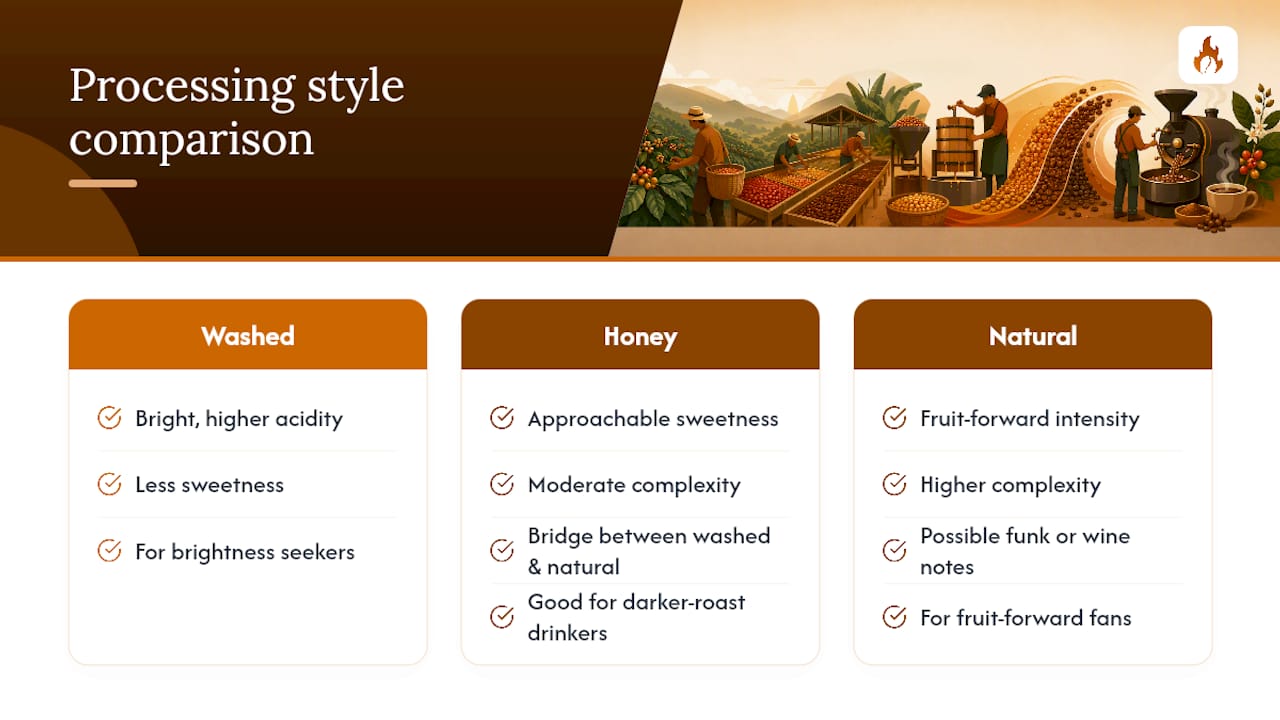
Think of processing methods as a spectrum rather than three separate boxes:
- Washed — mucilage fully removed before drying, producing the cleanest, brightest cup
- Honey — mucilage partially or fully retained, drying happens with skin off but fruit residue on
- Natural — whole cherry dried intact, skin and fruit and all
Honey processing lands squarely between those two poles, and that middle position is what gives it flexibility. Producers can dial mucilage retention up or down to chase a specific flavor target rather than committing to one extreme. Costa Rica gets credit for popularizing the technique during the early 2000s micro-mill boom, when small producers needed a way to differentiate lots without the water infrastructure that washing demands. The approach shares roots with Brazil’s older pulped natural method, but the honey label and its color-grade vocabulary took hold specifically in Central America.
How Farms Actually Process A Honey Lot, Step By Step
Honey processing looks simple on paper and gets fussy fast in practice. Here’s the actual workflow a producer follows from cherry to dried parchment.
- Selective harvest. Only ripe cherries go into the honey lot. Underripe or overripe fruit throws off sugar consistency, which throws off the whole batch.
- Depulping. The skin comes off mechanically, but the operator controls how much mucilage stays attached, sometimes running the cherry through a demucilaging machine calibrated to strip a specific percentage rather than all of it.
- Drying setup. Parchment goes onto raised beds or patios in a thin, even layer. Thickness here determines almost everything downstream.
- Turning. Workers rake or hand turn the parchment multiple times a day, sometimes hourly during peak sun, to keep sugars from clumping and fermenting unevenly.
- Moisture monitoring. Drying continues until the parchment hits roughly 10 to 12 percent moisture, checked with a calibrated moisture meter rather than guesswork.
- Quality control. Sample lots get pulled and cupped, checking for mold taint, uneven fermentation, or stuck beans before the batch gets bagged for rest.
The turning frequency is the part most home enthusiasts underestimate. Skip a few turns on a humid afternoon and the sugar layer traps moisture underneath, inviting mold before the lot ever reaches target dryness.
Pro Tip: If you’re buying green coffee or reading a producer’s lot sheet, ask for the recorded drying time in days and the final moisture percentage, not just the color grade. Two “red honey” lots can carry wildly different flavor outcomes if one dried in 12 days and the other took 20.
Green Coffee Collective calls this whole balancing act a “controlled compromise”, and that phrase captures it well. Producers are trading the predictability of a washed protocol for the flavor upside of a slower, riskier dry.
Understanding White, Yellow, Red, And Black Honey Grades
The color-grade system tells you how much mucilage stayed on the bean and how long the lot spent drying. More retained sugar means darker parchment, longer drying, and a bigger flavor swing away from washed-style cleanliness.
- White honey retains the least mucilage and dries fastest, landing closest to a washed profile with brighter acidity and lighter body.
- Yellow honey keeps a moderate amount of mucilage, dries at a medium pace, and lands right in the middle: noticeably sweeter than white, still balanced.
- Red honey retains substantially more mucilage, requires slower, more attentive drying, and pushes toward heavier body with rounder, less sharp acidity.
- Black honey keeps the most mucilage of the four, dries slowest, and demands the most turning discipline; expect syrupy sweetness and the fullest body in the lineup.
Each step up that ladder means more drying-day risk. Roastopedia’s breakdown of the grade system and mucilage retention ranges is worth reading in full if you’re sourcing green coffee, since the percentages vary by mill and matter more than the color name alone. When you’re evaluating a bag or a roaster’s lot notes, ask three things: the grade, the drying time in days, and the finished moisture percentage. Those three numbers tell you more than “honey processed” ever will on its own.
Roasting And Brewing Honey Coffee: What Actually Changes
The extra sugar and pectin on a honey-processed seed change how it behaves the moment it hits the roaster. Those exterior sugars caramelize faster during the Maillard phase, which means roasters generally pull back on heat application or extend the yellowing phase slightly to avoid scorching the surface before the interior develops. Insights on roast chemistry around development timing apply directly here, since a rushed roast on a sugar-heavy lot tends to taste flat or bready rather than sweet.
Common tasting notes on well-executed honey lots include:
- Brown sugar and caramel sweetness
- Stone fruit, particularly on lighter roasts of red or yellow grades
- Toffee and light chocolate on darker roasts
- A syrupy, coating body that’s heavier than a washed cup of the same origin
Retained soluble solids are the mechanism behind most of this. Cupping protocols consistently flag honey lots for medium to high sweetness perception and lower acid sharpness, a pattern tied directly to the extra dissolved solids left behind by the mucilage during drying.
For brewing, adjust rather than overhaul. Pour-over ratios can shift slightly leaner, since the extra sweetness compensates for less concentration. Espresso pulls tend to run thicker crema with a rounder, less acidic shot. Cold brew amplifies the syrupy body even further, which some drinkers love and others find heavy without dilution. If you’re dialing in grind size, err slightly coarser than you would for a washed lot at the same roast level, since the added sugars can make an overly fine grind taste muddled rather than clear.
Water Use And Sustainability Trade-Offs
Honey processing uses meaningfully less water than washed processing, since it skips the fermentation tanks and rinse cycles that washed lots require. For a micro-mill without reliable water access, that’s not a marketing angle, it’s the difference between processing coffee at all or not.
- Lower water demand cuts both environmental impact and mill operating cost
- Labor shifts from monitoring fermentation tanks to monitoring drying beds, which is arguably more attention-intensive, not less
- Producers in climates with stable dry-season sun often find honey processing more practical than gambling on a full natural dry
Honey lots tend to draw a real price premium at origin, which offsets the added labor cost of constant turning and moisture checks that washed processing doesn’t demand.
Why Mucilage Thickness Changes The Cup So Much
The single biggest variable inside honey processing isn’t the color grade label, it’s how thick the mucilage layer actually is when drying starts. A thin, uneven layer dries fast and unevenly, which can leave patches of parchment underdeveloped in sweetness while other patches over-ferment. A thick, consistent layer dries slower but more uniformly, assuming the mill turns it enough to prevent clumping.
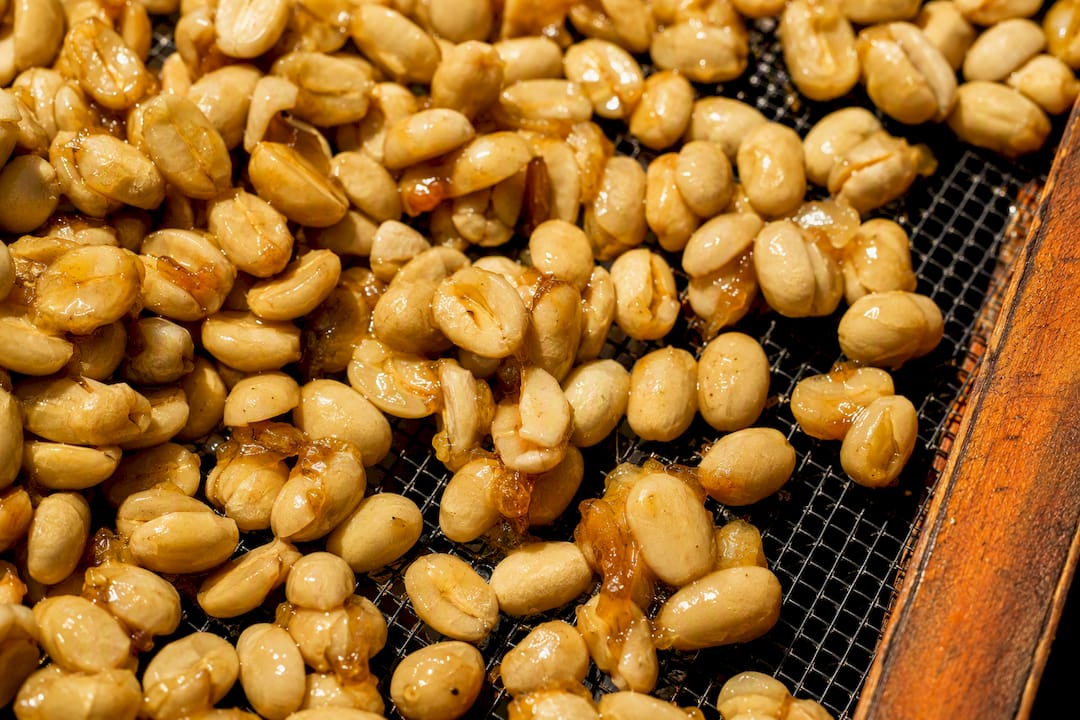
Thicker mucilage means more sugar, pectin, and acid sitting against the seed for a longer stretch of time. That extended contact generally results in black and red honey lots having heavier body and more pronounced sweetness compared to white honey’s lighter touch. But thickness cuts both ways: too much retained mucilage without enough turning traps moisture at the bean surface, and that’s where off flavors creep in, sometimes tasting fermented or vinegary rather than fruity.
Texture in the cup follows the same logic. A well-managed thick mucilage layer produces the syrupy, almost viscous mouthfeel honey lots are known for. A poorly managed one produces unevenness, some beans tasting overdeveloped and sweet, others tasting thin and underdone, because the drying wasn’t uniform across the batch. This is why two bags labeled with the same color grade from different mills can taste noticeably different. The grade tells you the target; the execution tells you what you actually got.
Storing Honey Processed Coffee For Best Flavor
Honey lots carry more residual sugar and slightly more variable moisture than washed coffee, which makes storage habits matter a bit more. Keep beans in an airtight container away from light and heat, and treat the sugar content as a reason to buy in smaller batches rather than stockpiling.
The extra soluble solids that make honey coffee sweet in the cup can also make it slightly more prone to staling once ground, since sugars and oils at the surface interact with oxygen faster than in a leaner washed bean. Whole bean storage extends freshness noticeably longer than pre-ground, and that gap matters more here than with a washed lot. Most honey-processed coffee tastes best within four to six weeks of the roast date, and grinding just before brewing preserves far more of that brown sugar and stone fruit character than grinding ahead of time ever will.
Why Consumers Are Reaching For Honey Lots
Honey processed coffee occupies an interesting spot in consumer perception. It’s not as mainstream a term as “washed” or as trend driven as “natural,” but among enthusiasts who’ve moved past their first bag of single-origin coffee, it’s often the processing method that finally clicks. The sweetness is approachable enough for drinkers coming from darker, more traditional roasts, while the complexity satisfies people chasing the fruit-forward intensity of naturals without the funk some naturals carry.
That middle-ground positioning shows up in how roasters market these lots too. Honey coffee gets framed less as an acquired taste and more as a bridge, the recommendation you make to someone who found a bright washed Ethiopian too sharp or a wild natural too wine-like. Demand has grown steadily as more producers refine drying protocols and buyers get more comfortable asking for grade and moisture specs by name rather than just trusting a bag’s marketing copy.
The Flaming Bean’s Take On Sourcing Honey Lots
We look for honey lots where the mill can hand us real numbers, drying days, moisture percentage, grade, not just a color name on a spec sheet. A well-executed lot should taste intentional: sweet, rounded, and clean, never muddled from a rushed dry. That’s the standard we hold every honey-processed coffee to before it earns a spot in our lineup.
— Tony
Coffee To Try If You Love Honey-Process Sweetness
If honey processing’s sweetness and body appeal to you, a few picks from our lineup translate that same character well. Evening Roast leans into balanced, rounded sweetness that mirrors what a well-dried yellow or red honey lot delivers, making it a natural next pour if you’re chasing that syrupy middle ground. Abyssal goes the other direction, offering bold, intense depth for drinkers who want contrast against honey’s softer profile rather than more of the same. Angry Rooster brings punchy, assertive character that pairs well as a comparison cup if you’re building out a tasting flight at home.
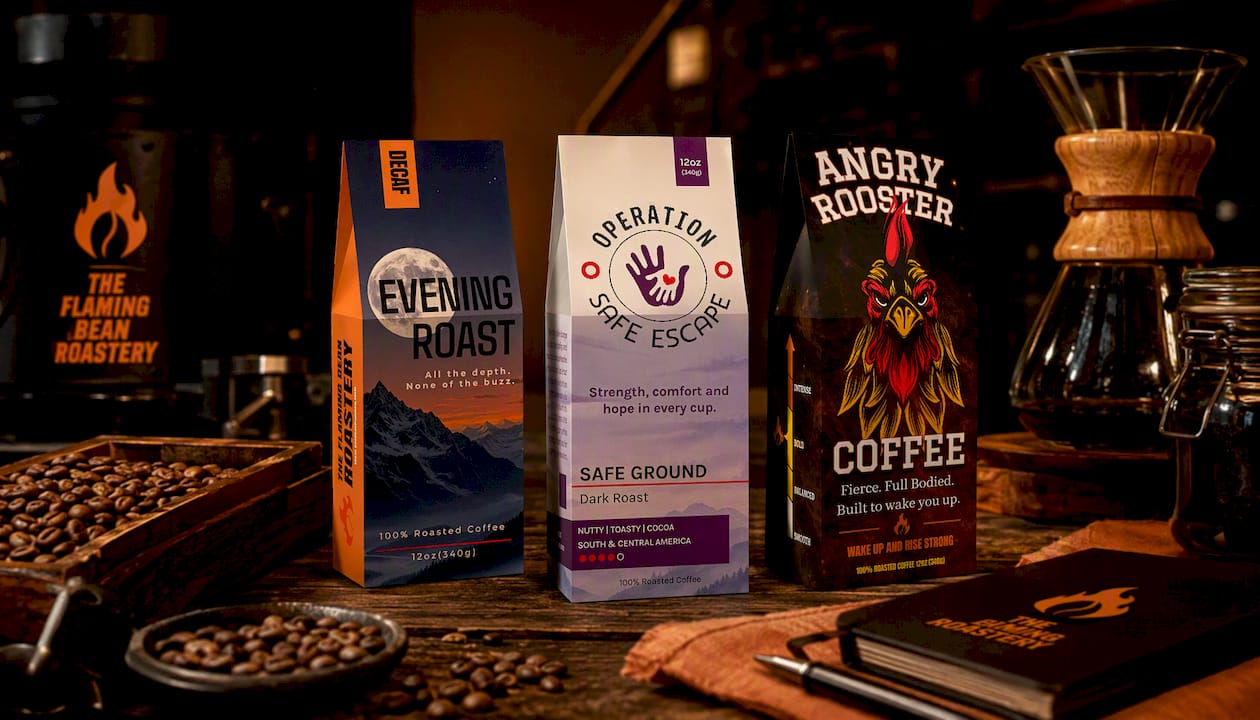
If you’d rather support a cause while you sip, Safe Ground channels part of its proceeds toward organizations protecting vulnerable people, without sacrificing cup quality. And if you’re not sure what a fellow coffee lover would pick, the Flaming Bean Coffee Gift Card lets them choose their own adventure. Start with the Evening Roast if you want the closest match to honey-process sweetness, or browse our signature blends to compare the full range side by side.
Sources
For deeper technical detail, Roastopedia’s breakdown of grade systems and moisture targets is worth bookmarking. Always check a lot’s own spec sheet for grade and moisture numbers rather than relying on marketing language alone.
- What is Honey Processed Coffee? | Sprudge
- Honey Processed Coffee: A Guide to Sourcing Sweetness and Texture – Green Coffee Collective
- The Honey Process: Roastopedia
- Honey Process Coffee Explained for Roasters and Buyers - FnB Tech
Comments