
How Soil Shapes Coffee Flavor: A Grower's Guide

Soil is the single most direct driver of coffee flavor complexity, determining how a plant absorbs minerals, ripens its cherries, and builds the sugar and acid profiles that define every cup. The role of soil in coffee flavor operates through three interconnected channels: mineral chemistry, pH balance, and microbial biology. Coffee plants grown in volcanic soils produce bright, citrusy notes, while clay-heavy soils yield heavier, earthier cups. Understanding these mechanisms gives growers and enthusiasts a real framework for evaluating quality at the source, long before a roaster ever touches the beans.
Which soil properties most directly affect coffee flavor?
Soil chemistry sets the ceiling for what any coffee plant can achieve in flavor. Four properties matter most: mineral content, pH, organic matter, and texture. Each one shapes a different stage of bean development.
Mineral content and acidity
Volcanic soils carry high mineral content that feeds the plant’s production of organic acids and aromatic compounds. These minerals act as raw materials for the biochemical reactions inside the cherry. Clay soils, by contrast, hold fewer free minerals and produce beans with a denser, earthier character. The difference is not subtle. Side-by-side cuppings of Ethiopian volcanic-grown coffee and Sumatran clay-grown coffee reveal distinct flavor fingerprints that trace directly back to soil composition.
pH and nutrient uptake
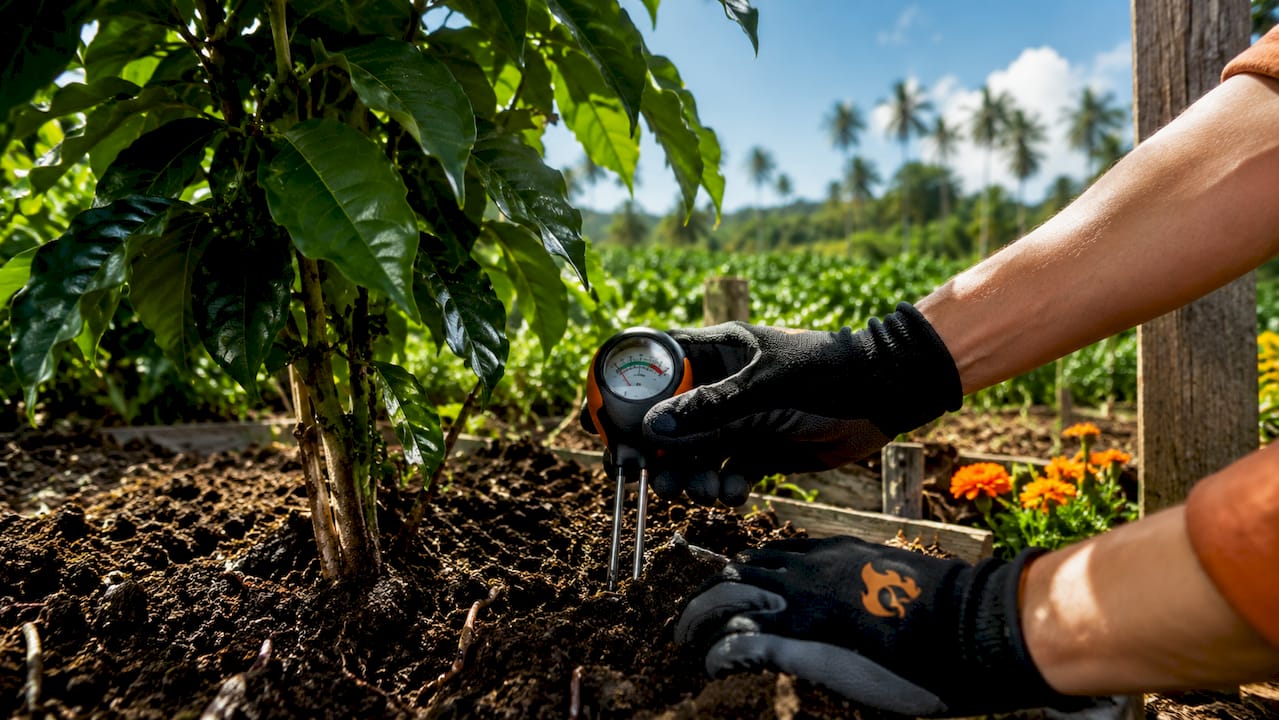
Coffee plants thrive at a soil pH of 6.0–6.5, the range where iron, manganese, and phosphorus become most available to roots. Outside that window, even nutrient-rich soil locks up the minerals a plant needs to build flavor precursors. A pH shift of just half a point can suppress the uptake of key compounds that later become the bright acids and sweet notes in the cup.
Organic matter and yield
Soil organic matter (SOM) levels of 4.1%–5.0% double coffee cherry yields compared to low-SOM fields. Higher yields from well-nourished plants also mean more consistent bean development across the crop. The energy the plant saves on stress responses gets redirected into ripening, which deepens flavor complexity.
Soil texture and cation exchange
Soil texture governs cation exchange capacity (CEC), which is the soil’s ability to hold and release charged mineral ions. A high-CEC soil keeps nutrients available between rain events, giving roots steady access to the building blocks of flavor. Sandy soils drain fast and lose nutrients quickly. Loamy soils with good structure hold moisture and minerals in balance, which slows cherry ripening and allows more complex sugars and acids to develop.
- Mineral content: Drives acidity and aromatic compound production
- pH 6.0–6.5: Unlocks maximum mineral availability for flavor precursors
- Organic matter: Fuels nutrient cycling and supports even cherry ripening
- Soil texture: Controls moisture retention and mineral release timing
- CEC: Determines how long nutrients stay accessible between watering cycles
Pro Tip: Test your farm’s soil pH every growing season. A simple pH meter and a targeted lime or sulfur amendment can unlock flavor potential that was already in your soil.
How do soil microbial communities influence coffee bean quality?
Soil is not an inert substrate. It is a living ecosystem where billions of bacteria and fungi perform the nutrient cycling that feeds coffee plants. Microbial communities enhance nutrient cycling and improve plant resistance to drought stress, which directly preserves the bean’s flavor potential during dry periods. A plant under drought stress diverts energy away from cherry development and into survival. Healthy soil biology reduces that stress load, keeping the plant focused on producing quality fruit.
Bacteria in the rhizosphere, the zone immediately around coffee roots, fix nitrogen and solubilize phosphorus into forms the plant can absorb. Mycorrhizal fungi extend the root system’s effective reach, pulling in water and micronutrients from soil zones the roots cannot physically access. Together, these organisms create a supply chain that no synthetic fertilizer program fully replicates.
Balanced soil management that builds microbial diversity produces more resilient plants and consistently superior flavor quality. The practical implication is that soil health metrics, including microbial biomass and fungal-to-bacterial ratios, are as relevant to cup quality as altitude or variety.
Practices that protect and build microbial communities include:
- Organic amendments: Coffee husk compost and pulp residue feed soil organisms and add carbon
- Reduced tillage: Tillage disrupts fungal networks; minimal disturbance keeps them intact
- Cover crops: Leguminous cover crops fix nitrogen and feed microbial populations between seasons
- Shade management: Moderate canopy cover regulates soil temperature and moisture, creating stable conditions for microbial activity
Pro Tip: Add composted coffee pulp back to your farm beds after processing. It returns carbon and nutrients to the soil while feeding the microbial populations that protect your next crop.
How does soil create flavor differences across regions?
Mineral fingerprints from soil create unique, identifiable sensory markers in coffee flavor, much like the terroir concept in wine. The analogy holds because the mechanism is the same. Minerals absorbed from the soil end up in the bean, where they influence enzyme activity, acid formation, and sugar concentration during ripening. The result is a flavor signature that reflects the ground the plant grew in.
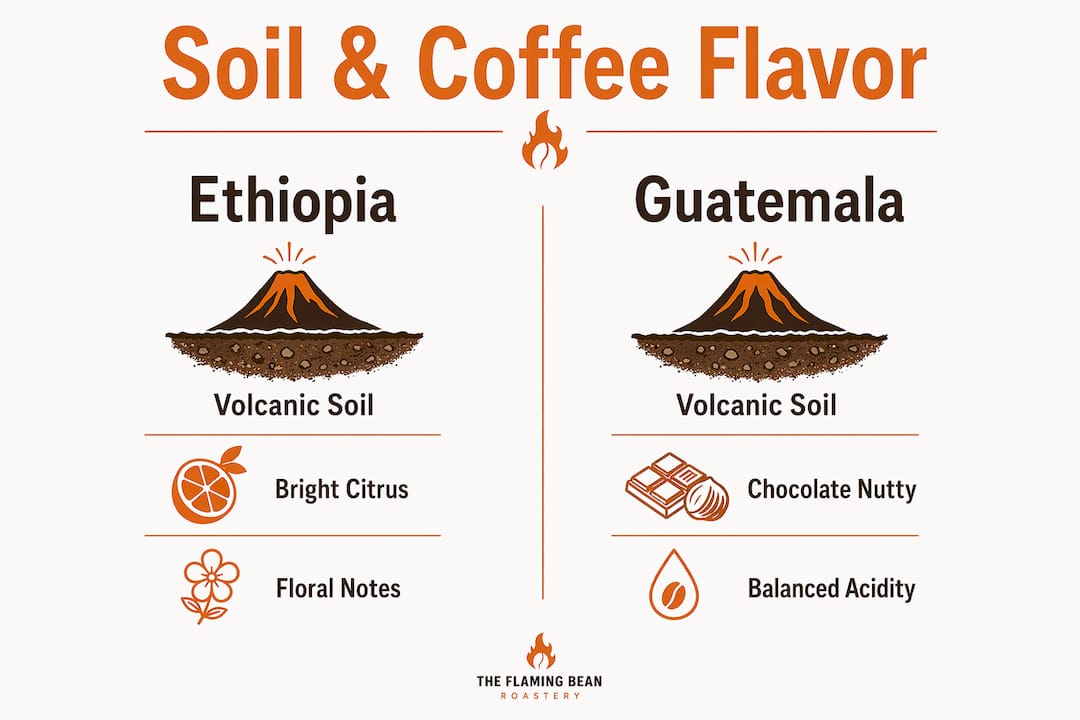
Ethiopia’s volcanic highlands produce coffees with bright citrus and floral notes. Guatemala’s volcanic soils, particularly in Antigua and Huehuetenango, yield clean acidity with stone fruit character. Sumatra’s clay-heavy soils produce the full-bodied, earthy, and sometimes herbal cups that define Indonesian coffee. These are not marketing descriptions. They are predictable outcomes of soil chemistry. Understanding coffee bean origins and flavor helps enthusiasts connect those regional signatures to what they taste in the cup.
| Region | Dominant soil type | Flavor character |
|---|---|---|
| Ethiopia | Volcanic, mineral-rich | Bright citrus, floral, berry |
| Guatemala | Volcanic, well-drained | Clean acidity, stone fruit, chocolate |
| Sumatra | Clay-heavy, dense | Earthy, full-bodied, herbal |
| Colombia | Volcanic and loamy mix | Balanced acidity, caramel, red fruit |
| Kenya | Red volcanic clay | Intense berry, wine-like, bright acidity |
Soil drainage also shapes flavor intensity. Well-drained volcanic soils force the plant to work harder for water, slowing cherry ripening and concentrating sugars. Dense clay soils retain moisture, which speeds ripening and produces a softer, less acidic cup. The coffee flavor wheel gives enthusiasts a vocabulary to identify these soil-driven notes during tasting. Growers can use the same tool to benchmark their soil management outcomes against expected flavor targets.
What soil management strategies improve coffee flavor?
Improving soil for flavor is a long-term practice, not a single-season fix. The most effective approach builds organic matter, protects microbial life, and manages inputs carefully.
-
Build soil organic matter consistently. Cover crops and residue retention are key to doubling coffee yield and enabling the slow cherry ripening that deepens flavor complexity. Aggressive fertilization does not replicate this effect. Organic matter feeds the soil food web, improves water retention, and buffers pH naturally.
-
Use balanced nutrient management. High-dose synthetic nitrogen pushes vegetative growth at the expense of fruit quality. Balanced programs that match nutrient inputs to soil test results keep the plant in productive equilibrium. Phosphorus and potassium support root development and cherry fill without the flavor-diluting effect of excess nitrogen.
-
Manage shade density carefully. Excessive shade above 60% reduces flowering and suppresses flavor precursor synthesis. Shade interacts with soil by moderating temperature and moisture, but too much canopy creates nutrient competition between the coffee plant and shade trees. The target is moderate, managed shade that stabilizes the soil environment without starving the coffee plant of light.
-
Apply organic residue amendments. Combining coffee husk residue with cover crops increases nutrient availability and builds drought resistance over time. Coffee husks are a byproduct most farms already produce. Returning them to the soil closes a nutrient loop and reduces the need for purchased inputs.
-
Protect soil structure and porosity. Compacted soil restricts root growth and reduces oxygen availability in the rhizosphere. Avoid heavy machinery on wet soils, maintain permanent ground cover on slopes, and use mulch to prevent surface crusting. Good soil structure keeps roots healthy, which keeps flavor potential high.
Key Takeaways
Soil chemistry, biology, and texture collectively determine the flavor ceiling of any coffee, making soil health the most controllable variable in specialty coffee production.
| Point | Details |
|---|---|
| pH controls mineral access | Maintain soil pH at 6.0–6.5 to maximize nutrient availability for flavor precursors. |
| Organic matter doubles yield | SOM levels of 4.1%–5.0% double cherry yields and support the slow ripening that builds flavor complexity. |
| Microbial health protects quality | Diverse soil biology reduces drought stress and keeps the plant focused on fruit development. |
| Soil type creates regional flavor | Volcanic soils produce bright, citrusy cups; clay soils produce earthy, full-bodied ones. |
| Shade management matters | Shade above 60% suppresses flavor compound synthesis; moderate canopy levels protect soil and flavor. |
Why soil gets overlooked, and why that’s a costly mistake
Growers spend enormous energy on variety selection and altitude, and both matter. But I’ve seen farms at ideal elevations with celebrated genetics produce flat, unremarkable cups year after year. The common thread is almost always neglected soil biology.
The misconception I hear most often is that altitude does the heavy lifting in flavor development. The role of altitude in coffee flavor is real. Cooler temperatures slow cherry ripening and allow more complex compounds to develop. But altitude without healthy soil is like a great recipe with poor ingredients. The plant cannot build what the soil does not supply.
What surprises most growers is how quickly microbial diversity responds to management changes. A single season of cover cropping and reduced tillage produces measurable improvements in soil biology. Those improvements show up in the cup within one to two harvest cycles. The connection between soil health metrics and flavor outcomes is not theoretical. It is traceable, and it is faster to act on than most people expect.
My honest recommendation: stop treating soil as a background variable. Test it, amend it, and protect its biology with the same attention you give to processing and roasting. The flavor development that happens after harvest can only work with what the soil already built into the bean. Give the roaster something worth working with.
— Tony
The Flaming Bean’s Abyssal: soil-driven flavor in every cup
Great soil produces beans with real character. That character is exactly what The Flaming Bean looks for when sourcing.
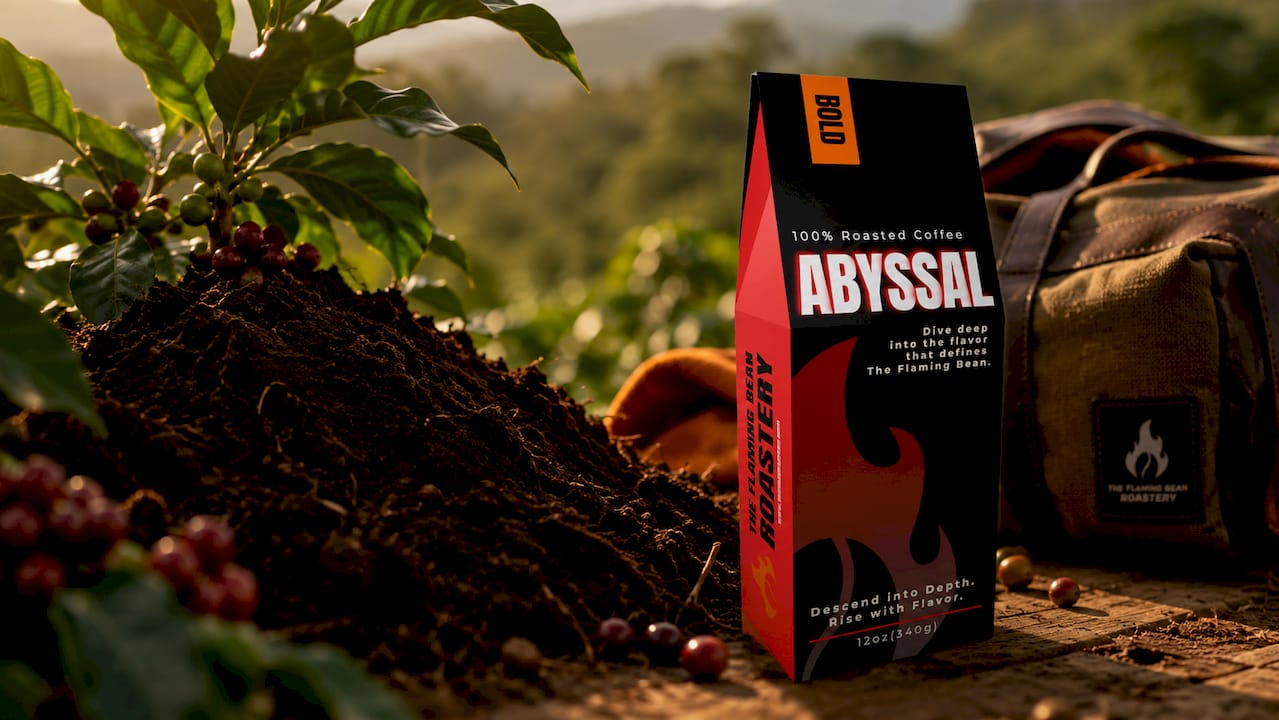
Abyssal is one of The Flaming Bean’s boldest offerings, selected for the kind of deep, complex flavor profile that only comes from exceptional growing conditions, including the soil beneath the plant. If you’ve read this far, you already know how to taste the difference. Abyssal gives you something worth tasting. Pick up a bag and put your new knowledge to work in the cup.
FAQ
What is the best soil type for growing coffee?
Volcanic soils with good drainage and a pH of 6.0–6.5 produce the highest-quality Arabica coffee. They deliver the mineral content and aeration that support bright acidity and complex flavor development.
How does soil pH affect coffee flavor?
Soil pH controls which minerals are available to coffee roots. At pH 6.0–6.5, plants absorb the iron, phosphorus, and manganese needed to build the acids and sugars that create flavor complexity in the bean.
Does soil organic matter really improve coffee quality?
Yes. Research shows that SOM levels of 4.1%–5.0% can double cherry yields and support the slow, even ripening that deepens flavor. Organic matter feeds soil biology and buffers the plant against stress.
How do microbial communities in soil affect coffee beans?
Soil bacteria and fungi cycle nutrients and extend root access to water and minerals. Healthy microbial populations reduce drought stress, which keeps the plant producing quality fruit rather than diverting energy into survival.
Is altitude or soil more important for coffee flavor?
Both matter, but they work together. Altitude slows ripening through cooler temperatures, while soil supplies the minerals and biological support that build flavor compounds. Neither factor delivers full quality without the other.
Recommended
- Types of Coffee Bean Origins: A Flavor Guide – The Flaming Bean Roastery
- How Roasting Shapes Coffee Flavor Development – The Flaming Bean Roastery
- How to Choose the Right Coffee Roast for Your Cup – The Flaming Bean Roastery
- Coffee Flavor Wheel Explained: Your Complete Tasting Guide – The Flaming Bean Roastery
Comments