
How to Choose the Right Coffee Roast for Your Cup

Choosing the right coffee roast means matching the roast level to your flavor preferences and brewing method. That single decision separates a great cup from a forgettable one. The Flaming Bean roasts everything from the smooth, approachable Evening Roast to bold blends like Abyssal and Angry Rooster, so the range of options is real. Understanding how roast levels work, and how coffee chemistry changes during roasting, gives you the confidence to pick well every single time.
What are coffee roast levels and their flavor profiles?
Coffee roast levels are defined by the internal bean temperature and the first and second crack phases during roasting. First crack occurs at 385–415°F. Second crack follows at 435–455°F. These two milestones mark the boundaries between light, medium, and dark roasts.
Each roast level produces a distinct flavor profile:
- Light roast: Bright, fruity, and floral. High acidity. Retains the most origin character from the growing region. Best for drinkers who want complexity and brightness.
- Medium roast: Balanced between origin flavor and roast sweetness. Caramel and nutty notes. Lower acidity than light. The most beginner-friendly choice.
- Medium-dark roast: Richer body, bittersweet chocolate notes, reduced brightness. A good middle ground for espresso drinkers.
- Dark roast: Bold, smoky, and low in acidity. Bitter finish. Origin flavors are largely replaced by roast character.
Roast level strongly affects perceived acidity and bitterness. Light roasts taste brighter and more acidic, while dark roasts taste bolder and more bitter. That shift is not a flaw. It is a feature, depending on what you enjoy.
| Roast Level | Flavor Notes | Acidity | Body | Best Brew Method |
|---|---|---|---|---|
| Light | Fruity, floral, bright | High | Light | Pour-over, drip |
| Medium | Caramel, nutty, balanced | Medium | Medium | Drip, AeroPress, French press |
| Medium-dark | Chocolate, bittersweet | Low-medium | Full | Espresso, French press |
| Dark | Smoky, bold, bitter | Low | Heavy | Espresso, milk-based drinks |
Pro Tip: Ignore the color of the bag. Roast labels vary wildly between roasters. Read the tasting notes and check the roast date instead.
How does coffee chemistry change with roasting?
Roasting transforms green coffee beans through a series of chemical reactions that directly shape flavor, aroma, and health properties. The most significant change involves chlorogenic acids, which are the primary antioxidants in coffee. Chlorogenic acids drop from roughly 25–28 g/kg in green coffee to just 7–12 g/kg in dark roast. That reduction means darker roasts deliver fewer antioxidants per cup.
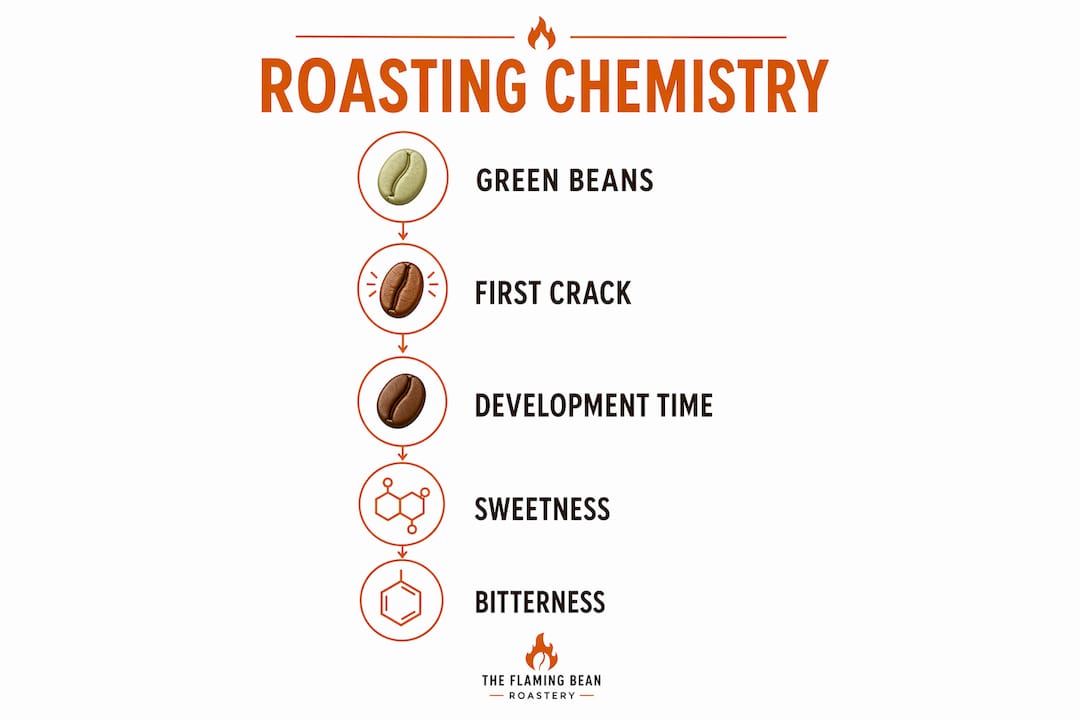
Caffeine, on the other hand, stays remarkably stable. Caffeine remains around 7.5–9.1 g/kg across all roast levels. The idea that dark roast has more caffeine is a myth. The difference is negligible regardless of roast level.
Here is what else changes during roasting:
- Maillard reactions create the caramel, nutty, and chocolatey flavors that define medium roasts.
- Aroma compounds peak during medium roast development and degrade with prolonged heat in dark roasts.
- Sweetness builds during the development phase after first crack and fades as roasting continues past second crack.
- Bitterness increases as roasting time extends, driven by the breakdown of sugars and acids.
The development time ratio after first crack, targeted at 18–25% of total roast time, determines how well sweetness integrates with roast character. Roasters who rush or extend this phase produce unbalanced cups, even at the same roast level. This is why two bags labeled “medium roast” can taste completely different.
How to choose the right roast based on your brewing method
Your brewing method is one of the strongest signals for which roast to pick. Medium roast is the most versatile choice for common home brewing methods, including drip machines, pour-over, AeroPress, and French press. It balances origin character with roast sweetness without demanding precise extraction technique.
Light roasts reward careful brewing. Pour-over methods like the Hario V60 or Chemex extract the bright, fruity notes that light roasts carry. These methods give you control over water temperature and flow rate, which matters because light roasts need slightly higher water temperatures and finer grind settings to extract fully.
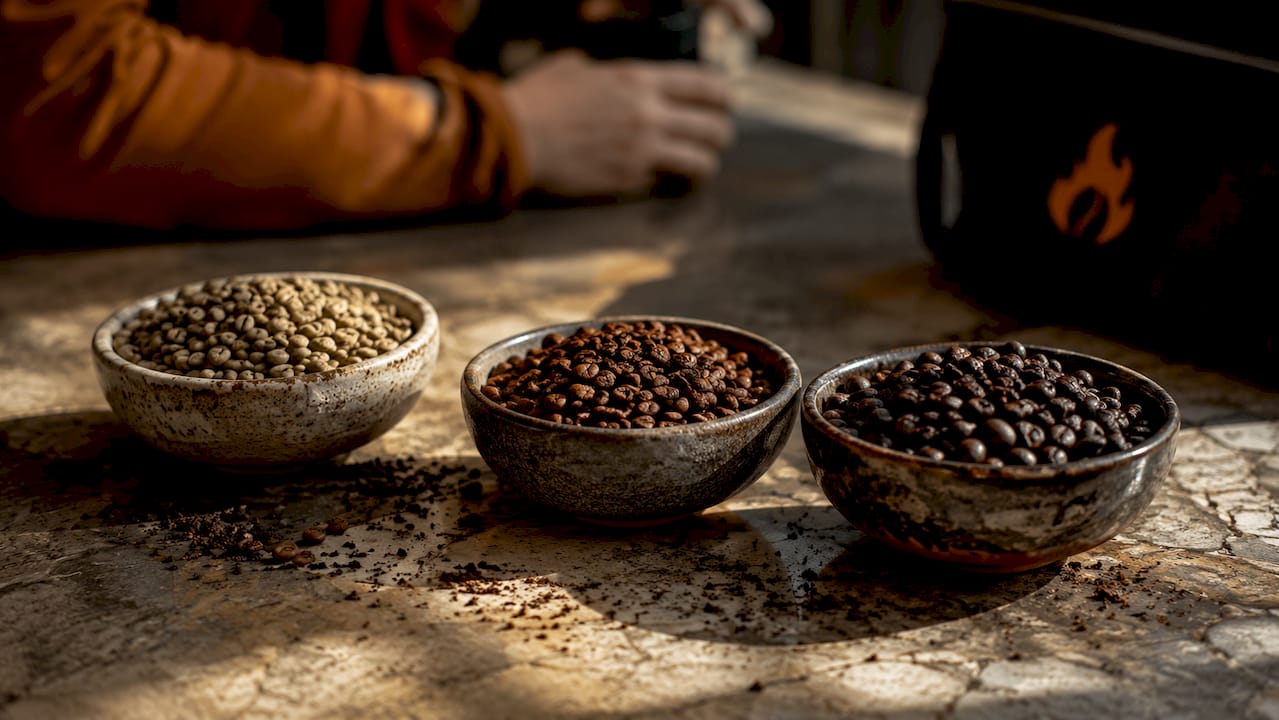
Medium-dark and dark roasts suit espresso and milk-based drinks. The richer body and bittersweet notes cut through milk in lattes and cappuccinos. A light roast espresso can taste sour and thin when pulled under pressure. A dark roast espresso tastes bold and smooth.
| Brew Method | Recommended Roast | Why It Works |
|---|---|---|
| Pour-over (V60, Chemex) | Light to medium | Highlights brightness and origin complexity |
| Drip machine | Medium | Consistent extraction suits balanced roasts |
| AeroPress | Medium to medium-dark | Flexible method handles a wide roast range |
| French press | Medium to dark | Full immersion suits heavier body roasts |
| Espresso | Medium-dark to dark | Pressure extraction amplifies bold, sweet notes |
| Milk-based drinks | Dark | Roast character stands up to milk |
Pro Tip: If your espresso tastes sour, try a slightly darker roast before adjusting your grinder. If it tastes bitter, go lighter or coarsen your grind first.
For readers who want to go deeper on espresso roast selection, The Flaming Bean has a dedicated guide covering flavor, brew technique, and buying tips.
How to refine your coffee roast choice step by step
Refining your roast preference takes a few deliberate steps. Start with the right equipment: fresh whole beans, a burr grinder, and a brewing method you already know how to use. Pre-ground coffee and stale beans introduce too many variables to isolate roast as the factor.
Follow this sequence:
- Start with medium roast. It is forgiving, balanced, and works across most brew methods. Use it as your baseline.
- Try a light roast next. Brew it the same way. Notice what changes. If you enjoy the brightness and complexity, light roast suits your palate.
- Try a medium-dark or dark roast. If the light roast felt thin or sour, move darker. Richer body and lower acidity may be what you are after.
- Adjust grind and water temperature before switching roasts. A sour cup often means under-extraction, not the wrong roast. A bitter cup often means over-extraction.
- Check the roast date. Beans are best used 7–21 days after roasting. Stale beans taste flat regardless of roast level.
Sour or burnt taste perceptions are often caused by brew and extraction mismatches, not the roast itself. Home drinkers who adjust grind size, water temperature, and extraction time before switching roasts solve most flavor problems without buying new coffee.
A few things to keep in mind as you experiment:
- Make one change at a time. Changing roast and grind simultaneously makes it impossible to know what fixed the problem.
- Buy from roasters who print the roast date on the bag. Freshness matters more than the roast label color.
- Roast labels on bags are inconsistent across roasters. A “medium” from one roaster may taste like another roaster’s “dark.” Tasting notes and roast dates are more reliable guides.
Understanding what balance means in coffee helps you describe what you are tasting and make smarter adjustments each time you brew.
Key takeaways
Matching roast level to your brewing method and flavor preference is the single most reliable way to improve your daily cup.
| Point | Details |
|---|---|
| Medium roast is the best starting point | It works across drip, pour-over, AeroPress, and French press with minimal technique required. |
| Caffeine stays stable across roast levels | Dark roast does not have more caffeine. The difference between light and dark is negligible. |
| Chlorogenic acids drop with darker roasting | Light roasts deliver more antioxidants per cup than dark roasts. |
| Sour or bitter cups are usually extraction errors | Adjust grind size and water temperature before switching to a different roast. |
| Roast date beats roast label | Fresh beans brewed within 7–21 days of roasting outperform stale beans at any roast level. |
What I have learned from years of chasing the right roast
The biggest mistake I see drinkers make is blaming the roast when the real problem is extraction. A sour cup almost always means the coffee was under-extracted. A bitter cup usually means over-extracted. I spent months switching between light and dark roasts trying to fix a problem that a simple grind adjustment would have solved in five minutes.
The second thing I learned is that brewing method matters more than most people admit. I used to drink light roast through a drip machine and wonder why it tasted flat. The moment I switched to a pour-over, the same beans opened up completely. The roast did not change. The method did.
My honest advice: stop reading the bag color and start reading the tasting notes and roast date. A well-roasted medium from a quality roaster, brewed fresh within two weeks of roasting, will outperform a stale “specialty” light roast every time. The best roast is the one you enjoy consistently, not the one that sounds most impressive.
— Tony
The Flaming Bean has a roast for every cup you love
The Flaming Bean makes it easy to find a roast that fits your taste and your brewing setup.
The Evening Roast is a great place to start if you want something smooth, balanced, and approachable for everyday brewing. If you prefer something bolder with a cause behind it, Safe Ground delivers rich flavor while supporting organizations that protect vulnerable communities. Pair your roast with the right gear from The Flaming Bean’s coffee grinders and coffee makers collections to get the most out of every bag. Fresh beans plus the right equipment make a real difference in the cup.
FAQ
What roast level is best for beginners?
Medium roast is the best starting point for most drinkers. It works across drip, pour-over, AeroPress, and French press without requiring precise technique.
Does dark roast have more caffeine than light roast?
No. Caffeine stays stable across all roast levels, remaining around 7.5–9.1 g/kg regardless of how dark the beans are roasted.
Why does my coffee taste sour?
A sour cup is almost always caused by under-extraction. Adjust your grind finer or increase water temperature before switching to a different roast.
How do I know if my coffee is fresh enough to brew?
Check the roast date on the bag. Beans are best brewed 7–21 days after roasting. Avoid bags without a printed roast date.
What roast works best for espresso?
Medium-dark to dark roasts work best for espresso. Their richer body and bittersweet notes extract well under pressure and hold up in milk-based drinks.
Comments