
How to Evaluate Coffee Roaster Quality Like a Pro

Evaluating coffee roaster quality means measuring roast consistency, sensory outcomes, batch traceability, and operational transparency across multiple orders. Most coffee enthusiasts judge a roaster by a single bag. That approach misses the full picture. The best roasters deliver the same flavor profile, freshness window, and bean uniformity batch after batch. Tools like SCA cupping protocols, roast color analysis, and structured 2–4 week trials give you a repeatable, objective way to assess any roaster before committing to them long term.
What are the key metrics to evaluate coffee roaster quality?
Roast consistency is the single most measurable indicator of a roaster’s skill. A roaster who nails one batch but varies wildly on the next is not a quality roaster. You need to check coffee roaster performance across multiple dimensions, not just flavor on day one.
The core metrics to assess are:
- Roast color: Color analysis tools like spectrophotometers assign numerical values to roast level. Higher values indicate lighter roasts; lower values indicate darker roasts. The problem is that no universal color standard exists across devices, so cross-roaster comparisons using color alone are unreliable.
- Development time ratio (DTR): DTR measures the percentage of total roast time spent after first crack. A well-controlled DTR signals that the roaster understands how to develop flavor without scorching or underdeveloping the bean.
- Batch uniformity: Look at the beans physically. Uneven coloring, visible tipping (scorched tips), or a mix of light and dark beans in the same batch signals poor drum control or inconsistent airflow.
- Roast curve: A logged time-temperature curve shows how heat was applied throughout the roast. Roasters who share these logs demonstrate process discipline.
- Defect rate: Count visually defective beans per 100 grams. Quakers (underdeveloped beans that stay pale), scorched beans, and shells all indicate quality control gaps.
Roasting at up to 250°C triggers complex chemical reactions that define flavor. Small deviations in heat application produce noticeably different cups. That is why color and temperature data matter, but neither replaces tasting.
Pro Tip: Use a spectrophotometer reading as a production control check, not a final quality verdict. Always confirm color data with a cupping session before drawing conclusions about a roaster’s skill.
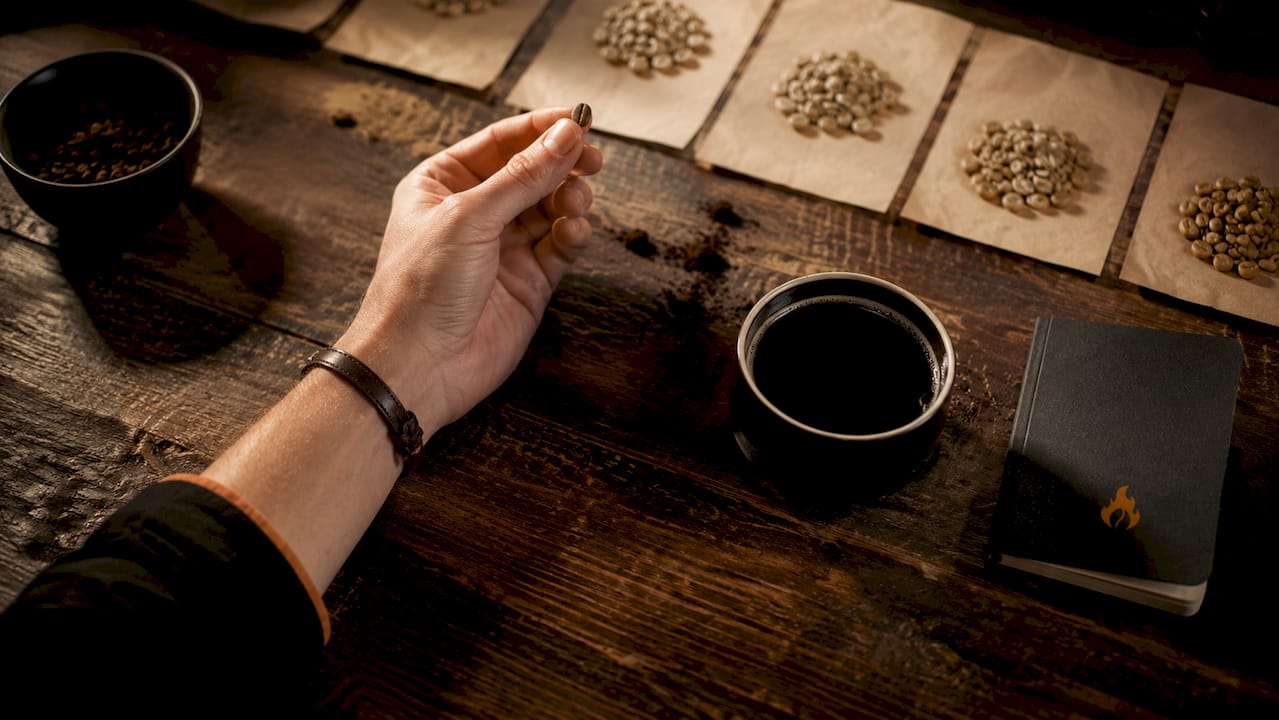
Color measurement is a useful trend indicator, but cup-based results are the final arbiter of roast quality. Sensory evaluation fills the gaps that instruments cannot.
How do cupping standards help you judge roaster quality?
Sensory cupping is the most reliable method to assess coffee roasting standards. It removes guesswork and replaces it with a structured, repeatable scoring process. The two most widely accepted frameworks are the SCA (Specialty Coffee Association) and CQI (Coffee Quality Institute) cupping protocols.
Both frameworks evaluate the same core attributes in a standardized way:
- Fragrance and aroma: Assessed dry and wet, these reveal roast level and origin character. A flat or ashy aroma often signals over-roasting.
- Flavor: The overall taste impression. Roast defects like underdevelopment produce grassy or peanut-like notes. Scorching produces harsh, acrid flavors.
- Acidity: Quality roasters preserve brightness without making the cup sharp or unpleasant. Flat acidity often means the roast went too dark.
- Body: Mouthfeel weight. Over-roasted coffees often feel thin despite appearing dark.
- Aftertaste: A clean, lingering finish indicates good development. A short or bitter finish suggests roast faults.
- Balance: The relationship between all attributes. Flavor balance is the clearest sign of a roaster who understands their beans.
SCA and CQI cupping protocols provide a shared language for evaluating aroma, flavor, acidity, body, balance, and defects. That shared language makes it possible to compare roasters objectively, even across different origins and roasting styles.
Roasting defects like underdevelopment, scorching, and tipping produce distinct sensory flaws that cupping catches immediately. Visual inspection alone misses most of them. Cup at least three separate batches from any roaster you are seriously considering. One great cup proves nothing. Three consistent cups prove a process.
What transparency practices reveal a high-quality roaster?
Operational transparency is a non-sensory quality indicator that predicts long-term consistency. A roaster who labels every bag with a roast date, provides batch traceability, and communicates proactively about quality issues is a roaster with disciplined processes.
Key transparency behaviors to look for:
- Roast date labeling: Specialty coffee tastes best between 5 and 21 days after roast date depending on roast level and brew method. A roast date tells you exactly where you are in that window. A best-by date tells you almost nothing useful.
- Batch traceability: Every order should be traceable to a specific roast batch. This matters when a quality issue arises. A roaster who cannot tell you which batch a bag came from cannot isolate or fix the problem.
- Consistent order timing: Quality roasters ship within a predictable window after roasting. Erratic shipping schedules often mean erratic roasting schedules.
- Proactive communication: Does the roaster notify you when a green coffee lot changes? Do they flag when a roast profile is adjusted? These behaviors signal that they treat quality as an ongoing commitment, not a one-time claim.
Batch traceability and roast dates on every order are proxies for whether the roaster has strong processes and can isolate quality issues quickly. Roasters who skip this information are not hiding incompetence necessarily, but they are making it impossible for you to monitor their consistency. That is a red flag regardless of how good the coffee tastes on day one.
Learning how to work with a coffee roaster remotely also depends heavily on this transparency. Without roast dates and batch records, remote quality monitoring becomes guesswork.
How to run a structured trial to check roaster performance
A structured 2–4 week evaluation trial is the most reliable way to confirm roaster quality under real conditions. Showroom samples and one-off bags do not reveal how a roaster performs over time.
Stage 1: Calibration (Days 1–7)
- Order the same SKU twice from the roaster, ideally from different roast dates.
- Cup both samples using SCA protocol on the same day, at the same grind setting and water temperature.
- Record scores for each attribute. Note any differences between the two batches.
Stage 2: Consistency check (Days 8–21)
- Order two more batches of the same coffee.
- Repeat the cupping process with the same setup.
- Compare scores across all four batches. A quality roaster shows tight score clustering, not wide variation.
Stage 3: Operational reality (Days 22–28)
- Assess delivery timing, packaging integrity, and roast date accuracy.
- Contact the roaster with a specific question about their process. Evaluate response time and depth.
- Make your final decision based on combined sensory and operational scores.
| Evaluation phase | What you are measuring | Tools needed |
|---|---|---|
| Calibration | Batch-to-batch flavor consistency | Cupping kit, grinder, scale |
| Consistency check | Score variance across four batches | SCA scoresheet, tasting notes |
| Operational reality | Transparency, communication, freshness | Roast date log, email record |
Pro Tip: Document every cupping session with photos of the beans and written tasting notes. Patterns become obvious only when you have a written record to compare. Memory is not a reliable evaluation tool.
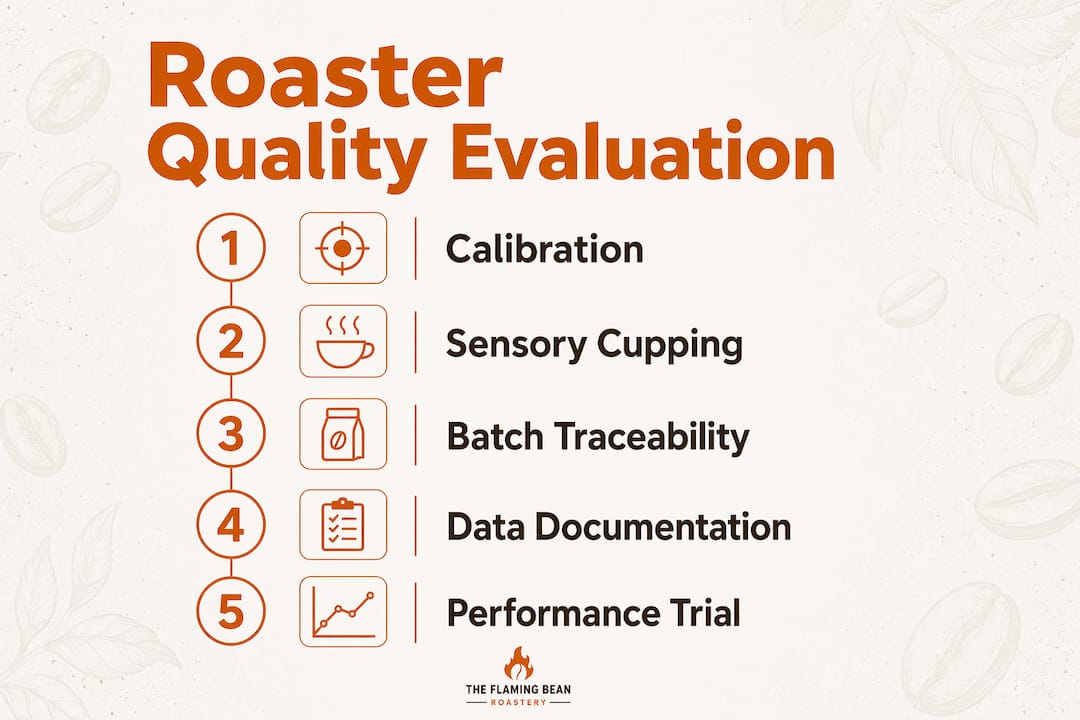
Systematic documentation helps isolate variables affecting roast quality during evaluation. Without it, you cannot tell whether a flavor change came from the roaster or from your own brewing setup. Understanding coffee roast levels before you start also sharpens your ability to spot deviations during the trial.
Key Takeaways
Evaluating coffee roaster quality requires combining sensory cupping, roast consistency metrics, batch traceability, and a structured multi-week trial to reach a reliable conclusion.
| Point | Details |
|---|---|
| Roast consistency is measurable | Check color data, DTR, and batch uniformity across multiple orders, not just one bag. |
| Cupping is the final standard | SCA and CQI protocols give you objective, repeatable scores that color analysis alone cannot provide. |
| Roast dates beat best-by dates | Specialty coffee peaks between 5 and 21 days post-roast; roast date labeling is a basic quality indicator. |
| Transparency reveals discipline | Batch traceability and proactive communication show whether a roaster can isolate and fix quality issues. |
| Run a 2–4 week trial | Structured trials with documented cupping sessions across four batches confirm real-world consistency. |
What I have learned from evaluating roasters the hard way
The biggest mistake I see coffee enthusiasts make is falling in love with a sample bag. Samples are curated. They are the roaster’s best work, selected specifically to impress. The real test is what arrives on your third or fourth order, six weeks after the initial excitement fades.
I have run evaluations where a roaster scored beautifully on the first two batches and then delivered a noticeably flatter, darker cup on the third. Without documentation, I would have second-guessed my own palate. With written cupping scores, the deviation was undeniable.
Home enthusiasts can absolutely apply professional evaluation methods. You do not need a full cupping lab. A consistent grinder, a kitchen scale, clean water at 200°F, and an SCA scoresheet downloaded for free are enough to run a credible trial. The discipline matters more than the equipment.
One thing I will say plainly: do not skip the transparency check. A roaster who cannot tell you the roast date of your last order is a roaster who cannot guarantee your next order will taste the same. That is not a minor inconvenience. It is a fundamental quality gap.
— Tony
The Flaming Bean’s approach to roast quality and freshness
At The Flaming Bean, roast consistency and freshness transparency are not optional extras. Every batch is roasted with care, labeled with a roast date, and crafted to deliver the same flavor experience from the first bag to the tenth.
If you want to put these evaluation criteria to work right now, start with the Evening Roast. It is a smooth, approachable roast that makes batch-to-batch consistency easy to track. For enthusiasts who want to explore a wider range of roast profiles and sensory benchmarks, the full Signature Blends collection gives you a curated set of coffees roasted to consistent, repeatable standards. Great coffee should be predictable in the best possible way.
FAQ
What is the most reliable way to judge roaster quality?
Cupping using SCA or CQI protocols is the most reliable method. It provides objective, repeatable scores across flavor, acidity, body, and balance that visual inspection cannot replicate.
How many batches should I test before choosing a roaster?
Test at least four batches across a 2–4 week trial. Experienced evaluators use this window to separate genuine consistency from lucky single-batch performance.
Why does roast date matter more than best-by date?
Specialty coffee tastes best between 5 and 21 days after roasting. A roast date tells you exactly where you are in that freshness window; a best-by date does not.
Can roast color analysis replace sensory evaluation?
No. Color measurement is a useful production control tool, but cup-based results are the final arbiter of roast quality due to the lack of universal color standards across devices.
What does batch traceability tell you about a roaster?
Batch traceability shows whether a roaster has the operational discipline to isolate and fix quality issues. Roasters who cannot trace a specific bag to a specific roast batch cannot guarantee consistency over time.
Recommended
- Coffee Roast Levels Explained: Your Flavor Guide – The Flaming Bean Roastery
- What Is Espresso Roast? Flavor, Brew & Buying Tips – The Flaming Bean Roastery
- Coffee Certification Explained: A Complete 2026 Guide – The Flaming Bean Roastery
- How to Work with a Coffee Roaster Remotely – The Flaming Bean Roastery
Comments