
How to Work with a Coffee Roaster Remotely

Working with a coffee roaster remotely means coordinating roast profiles, quality control, and production planning through specialized software and virtual collaboration methods. This model of remote coffee roasting collaboration is the industry term for what many small business owners and enthusiasts are now doing across time zones. Platforms like Cropster have made it possible to review roast data, run digital cupping sessions, and align on flavor goals without ever setting foot in the roastery. You do not need to be physically present to build a high-quality, consistent coffee program.
What does it mean to work with a coffee roaster remotely?
Remote collaboration with a coffee roaster focuses on planning, quality control, and data review, not the physical act of roasting. The roasting itself always happens onsite. What you can manage from anywhere is the roast profile approval process, sensory feedback, production scheduling, and communication with your roaster partner.
This distinction matters. Many small business owners assume remote involvement means watching a live roast feed or adjusting a machine from afar. The real value is in the workflow around the roast. You define the flavor targets, review the data after each batch, and provide structured feedback that guides the next roast. That loop, repeated consistently, is what produces great coffee at scale.
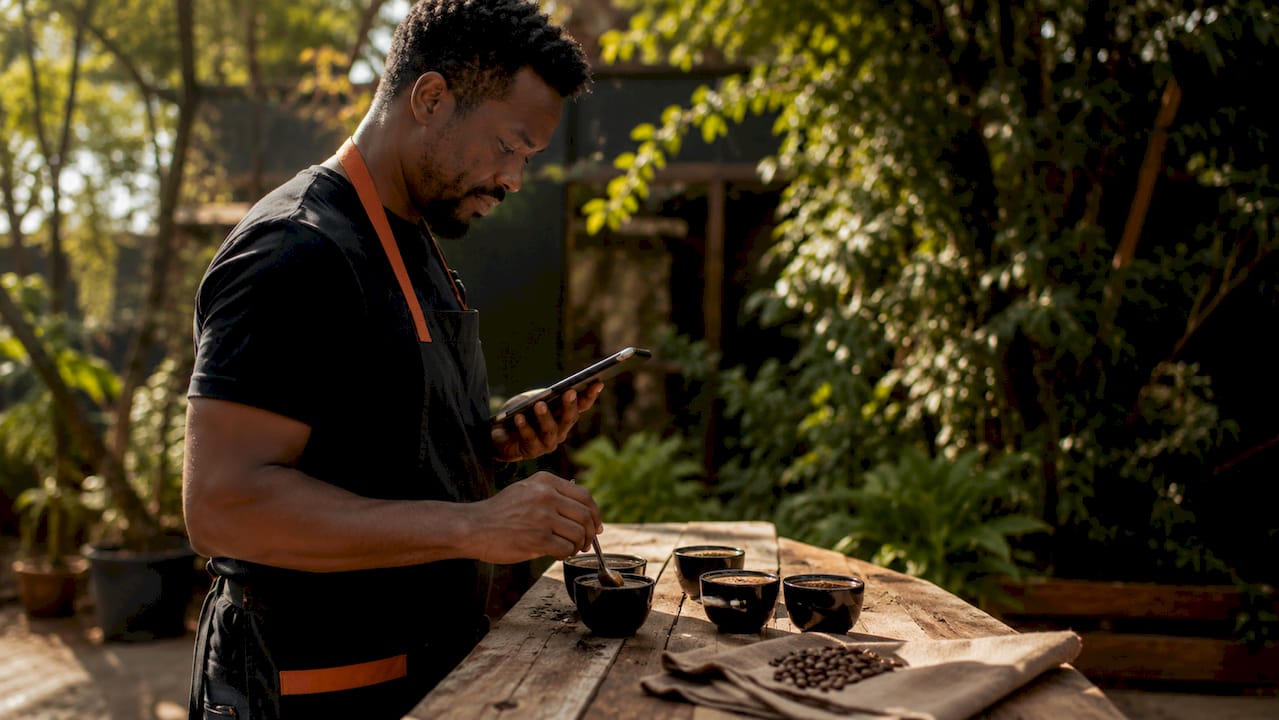
Cropster is the most widely used platform for this kind of remote roast management. It captures roast curves, tracks green coffee inventory, and stores profiles that both you and your roaster can access from any location. That shared data layer is the foundation of any productive virtual coffee roasting partnership.
What tools support remote coffee roasting collaboration?
The right software stack makes or breaks a remote roasting relationship. Three categories of tools cover the core needs: roast management, sensory evaluation, and team communication.
Roast management platforms
Cropster’s Roast AI is used by 71% of Cropster roasters to achieve consistent, high-quality results with predictive alerts and defined roast goals. That adoption rate reflects how central data-driven roasting has become. When you work remotely, Roast AI gives you a shared language with your roaster. Instead of saying “it tasted a bit flat,” you can point to a specific curve deviation and discuss the fix.
Digital cupping and sample evaluation
Cropster’s Digital Cupping feature allows remote cupping sessions by integrating results directly into digital sheets. This turns sensory evaluation into a repeatable, documented process. You cup a sample at your location, enter scores and notes into the shared sheet, and your roaster sees the feedback in real time. No more emailing PDFs or describing flavors over the phone.
Pro Tip: Ship yourself a calibration sample before your first remote cupping session. Cupping the same coffee your roaster is evaluating removes variables and aligns your palate with theirs from day one.
Team communication tools
Three Keys Coffee uses Band alongside Cropster for team communication and roast profiling. Band functions like a private social network for your roastery team, keeping production notes, updates, and decisions in one searchable thread. Pairing a dedicated communication tool with a roast data platform covers both the human and technical sides of remote coordination.
| Tool | Primary Function | Remote Benefit |
|---|---|---|
| Cropster Roast AI | Roast profile management | Shared data access across locations |
| Cropster Digital Cupping | Sensory evaluation | Documented remote feedback loops |
| Cropster Order Fulfillment | Production scheduling | Automated demand-to-roast conversion |
| Band | Team communication | Centralized messaging and updates |
| Pomelo Coffee Consulting | Coaching and diagnostics | Structured expert feedback remotely |
How do you set up a remote roaster partnership step by step?
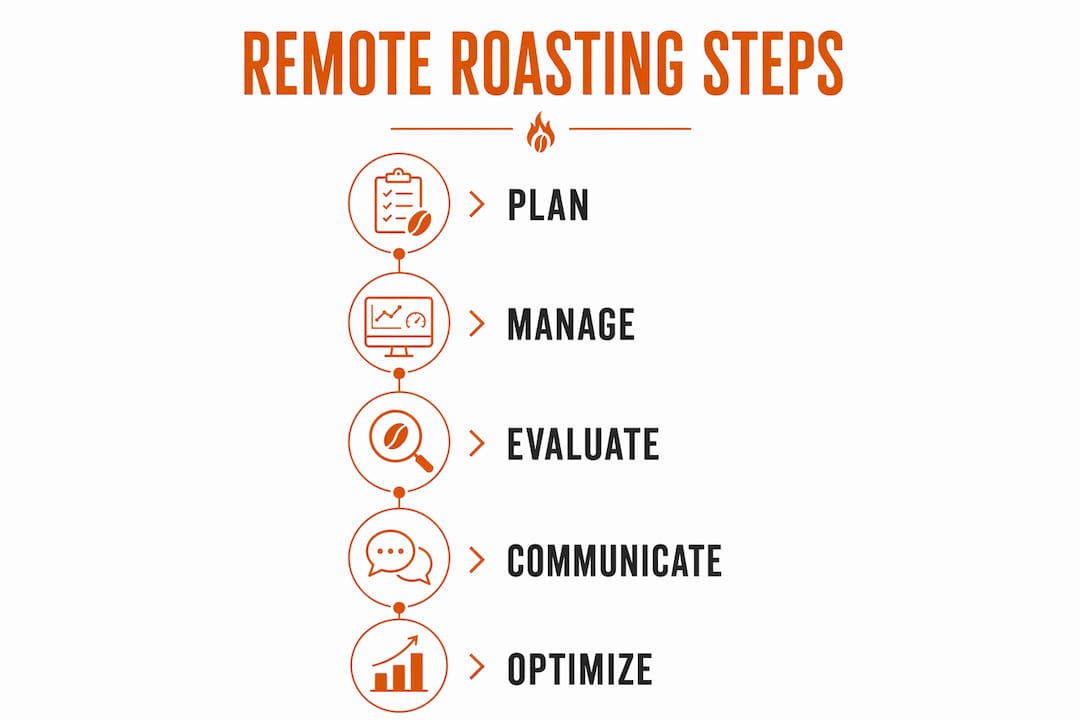
A remote partnership does not run itself. It needs a defined structure from the start. Here is the process that works.
- Define your roast goals in writing. Specify target flavor profiles, roast levels, and acceptable cupping score ranges before the first batch. Vague goals produce vague results.
- Agree on a cupping protocol. Decide which cupping standard you will use (SCA protocol is the most common), how often you will cup, and who scores each sample.
- Set up shared access to your roasting platform. Both parties need login credentials to Cropster or your chosen platform so data is visible to everyone involved.
- Establish a sample shipment schedule. Physical samples still need to travel. Build a regular cadence, weekly or bi-weekly, so feedback loops stay tight.
- Use order fulfillment software to automate production scheduling. Cropster’s order management converts demand inputs into roast schedules automatically, reducing coordination delays and errors across time zones.
- Run your first remote cupping session together. Use a video call alongside your digital cupping sheet. Walk through scores together and agree on adjustments before the next batch.
- Document every decision. Keep a shared log of profile changes, feedback outcomes, and approved batches. This record becomes your quality reference over time.
A few prerequisites make this process work smoothly:
- Reliable shipping accounts for sample logistics
- A shared calendar for cupping sessions and production deadlines
- Clear escalation contacts at the roastery for urgent issues
- Written agreements on turnaround times for feedback and approvals
Comprehensive inventory traceability of coffee lots and batch outcomes is also non-negotiable. Without it, replicating a successful profile becomes guesswork.
What are the biggest mistakes in remote roasting partnerships?
The most common mistake is expecting remote work to replace the physical roasting process. Remote roles in coffee roasting are largely planning, quality control, and marketing functions. The roasting machine still needs a skilled operator onsite. Accepting this boundary early prevents frustration and misaligned expectations.
The second biggest mistake is unstructured communication. Without a defined feedback format, conversations drift into subjective taste descriptions that mean different things to different people. “More brightness” is not a roast instruction. A cupping score with specific attribute notes is.
“A spec-to-sample feedback loop ties roast goals directly to measurable sample results, avoiding vague taste discussions that stall progress.” — Cropster Roasting & QC
Pro Tip: Build your spec-to-sample loop before you need it. Write down your flavor targets, assign numeric score thresholds, and agree on what triggers a re-roast. Having this in place before the first batch ships saves weeks of back-and-forth.
Other pitfalls to watch for:
- Skipping sample shipments to save time, which breaks the feedback loop entirely
- Relying on a single point of contact at the roastery without a backup
- Ignoring inventory traceability, which makes it impossible to trace a quality issue back to a specific green lot
- Letting production schedules drift without a centralized system, causing stockouts or over-roasting
Centralizing planning via Cropster automates production schedules and reduces cross-time zone coordination problems. This is the single most effective fix for the scheduling chaos that derails many remote partnerships.
Where can you find coaching and community support for remote collaboration?
Expert guidance accelerates everything. You do not have to figure out remote roasting workflows alone.
Pomelo Coffee Consulting offers one-on-one coaching and virtual offsites designed specifically for roasters and their partners. These programs provide structured diagnostic feedback, help you identify gaps in your quality control process, and give you a roadmap for improvement. Virtual offsites are particularly useful for teams that want to align on strategy without traveling.
Remote support formats available in the industry include:
- One-on-one coaching sessions for troubleshooting specific roast or communication challenges
- Virtual offsites for strategic planning and team alignment across locations
- Community forums and industry groups like the Specialty Coffee Association (SCA) network for peer feedback
- Online cupping events hosted by roasteries and consulting firms to calibrate palates remotely
- Digital resource libraries from platforms like Cropster with guides on roast profiling and QC workflows
Coaching integrates directly with your digital tools. A consultant reviewing your Cropster data can spot profile inconsistencies you might miss and recommend specific adjustments. That combination of human expertise and platform data is more powerful than either alone. If you are serious about coffee roaster freelance work or building a long-term virtual partnership, investing in coaching early pays off in fewer wasted batches and faster quality improvement.
Key takeaways
Successful remote coffee roasting collaboration depends on structured workflows, shared data platforms, and consistent sensory feedback loops rather than physical proximity.
| Point | Details |
|---|---|
| Remote roles are support-focused | Planning, quality control, and data review are the core remote functions, not physical roasting. |
| Cropster is the central platform | Roast AI, Digital Cupping, and Order Fulfillment cover the main remote workflow needs in one system. |
| Spec-to-sample loops prevent drift | Define numeric roast goals and cupping thresholds before the first batch to avoid vague feedback cycles. |
| Coaching accelerates results | Pomelo Coffee Consulting and similar services provide structured remote diagnostics that speed up quality improvement. |
| Communication tools complete the stack | Pairing Band or a similar platform with Cropster covers both data sharing and team coordination. |
Why the data side of remote roasting changed everything for me
I spent years thinking that great coffee required being in the room. You had to smell the first crack, watch the color shift, and make calls in real time. That belief kept a lot of people locked out of meaningful roasting partnerships simply because of geography.
What changed my thinking was seeing how much of the quality decision-making actually happens before and after the roast, not during it. The green coffee selection, the profile design, the cupping evaluation, the feedback loop back to the roaster. All of that is plannable, documentable, and shareable. Cropster made that visible in a way that was not possible ten years ago.
The part that still requires discipline is the sensory side. Data tells you what happened. It does not always tell you why it tasted flat or why the acidity dropped. That is where structured cupping protocols and honest written feedback become your most valuable tools. I have seen remote partnerships fall apart not because of bad roasting, but because the feedback was too polite to be useful.
My honest advice: treat your remote roaster like a creative collaborator, not a vendor. Share your customer feedback. Tell them what sold and what sat on the shelf. The more context they have, the better the next roast will be. Trust builds through transparency, and transparency requires a system. Build the system first, then let the relationship grow around it.
— Tony
Explore what Theflamingbean has to offer
If you are ready to experience what a well-managed roasting partnership produces, Theflamingbean is a great place to start. Every blend in our lineup reflects the kind of careful, collaborative roasting process this article describes.
From bold signatures like Abyssal and Angry Rooster to the smooth, approachable Evening Roast, each coffee is roasted to highlight the unique character of its origin. Our signature blends collection is the best place to explore the range. If you are a cafe owner or retailer looking to build a wholesale relationship, our wholesale program is designed for exactly that kind of partnership. Great coffee starts with great collaboration. We would love to be part of yours.
FAQ
What does it mean to work with a coffee roaster remotely?
Working with a coffee roaster remotely means managing roast profiles, quality control, and production planning through digital platforms like Cropster, without being physically present at the roastery. The physical roasting still happens onsite, but all planning and feedback functions can be handled from any location.
What software do i need for remote coffee roasting collaboration?
Cropster covers roast profile management, digital cupping, and order fulfillment in one platform. Pairing it with a communication tool like Band gives you both the data layer and the team coordination layer needed for a productive remote partnership.
Can i get a remote coffee roasting job that involves actual roasting?
Most remote coffee roasting roles involve planning, quality control, or digital marketing rather than operating a roaster. Physical roasting requires onsite presence, so coffee roaster freelance work in a fully remote format typically means consulting, profile review, or production coordination.
How do i give useful feedback to a remote roaster?
Use a structured cupping protocol like the SCA standard and record scores for specific attributes such as acidity, body, and sweetness. A spec-to-sample feedback loop with defined numeric thresholds gives your roaster clear, actionable direction rather than subjective impressions.
Where can i find coaching for a virtual coffee roasting partnership?
Pomelo Coffee Consulting offers one-on-one coaching and virtual offsites tailored to roasters and their partners. The Specialty Coffee Association also provides community resources and online events that support remote collaboration and palate calibration.
Comments