
Does Low Acid Coffee Actually Help Your Stomach?

Verified low-acid coffee is real, and it often reduces coffee-triggered heartburn for people whose stomachs flinch at a regular cup. The catch: a lot of “low-acid” labeling is marketing, not chemistry, unless a roaster can show independent pH testing behind it.
If your stomach reacts to coffee, two places to start are The Flaming Bean’s Evening Roast, built for a gentler evening cup, or Abyssal, a bolder option processed to ease irritation without going flat on flavor. If symptoms stick around after switching roasts, the fix is usually brewing technique, not the bag of beans.
Quick facts before you buy:
- Regular coffee typically measures a moderate acidity level; genuine low-acid coffee has a higher pH that indicates lower acidity.
- Dark roast and decaf do not consistently reduce coffee acidity on their own.
- Brewing changes (temperature, grind, steep time) can shift perceived acidity faster than switching brands.
Key Takeaways
Verified low-acid coffee, backed by real pH testing, combined with smarter brewing habits gives sensitive stomachs the most reliable path to a comfortable cup.
| Point | Details |
|---|---|
| Demand a real pH number | Regular coffee sits near pH 4.7 to 5.0; genuine low-acid coffee tests at 5.5 or higher. |
| Don’t trust roast level alone | Dark roast and decaf don’t reliably lower acidity without independent verification. |
| Treat coffee as one reflux factor | Cleveland Clinic lists coffee as a common trigger, not a guaranteed cause, in GERD management. |
| Brew smarter first | Lower temperature, coarser grind, and shorter steep time cut perceived acidity fast and free. |
| Start with a publisher-tested roast | The Flaming Bean’s Evening Roast and Abyssal are built for lower irritation without sacrificing flavor. |
Table of Contents
- What Does “Low Acid Coffee” Actually Mean?
- Does Low Acid Coffee Really Help With Reflux?
- How Roasters Lower Acidity, and What’s Verifiable
- A Buyer’s Checklist for Choosing Low-Acid Coffee
- Brewing Tweaks That Cut Perceived Acidity at Home
- Why This Guidance Comes From Real Roasting Experience
- Beyond Reflux: Other Health Tradeoffs Worth Knowing
- How Low-Acid Coffee Tastes Compared to Regular Coffee
- Storing Low-Acid Coffee to Keep It Fresh and Gentle
- What the Evidence Actually Supports
- Try a Publisher-Backed Low-Acid Roast Today
- Sources
What Does “Low Acid Coffee” Actually Mean?
“Low acid” is a chemistry claim before it’s a marketing phrase, and that distinction matters more than most product pages let on. Regular brewed coffee has a moderate acidity similar to many common acidic foods and beverages. Genuinely low acid coffee is characterized by a pH above a certain scientifically recognized threshold, verified through independent lab testing.
Roast level alone doesn’t get you there. Dark roasting reduces some acids, but the change in overall acidity as measured by pH is usually small and variable between bean types. Decaffeination affects caffeine levels but does not significantly alter the acids that may trigger reflux symptoms. Bean origin can influence coffee flavor but does not reliably determine its acidity level as measured by pH.
Myths worth retiring:
- “Dark roast is automatically low acid” — not without lab verification.
- “Decaf is gentler on the stomach” — caffeine and acid are separate issues.
- “Cold brew is always low acid” — steeping method changes extraction, not always pH, by much.
The only number that tells you the truth is a published pH reading, ideally from a source outside the company selling the beans.
Does Low Acid Coffee Really Help With Reflux?
The clinical picture is more measured than most coffee marketing suggests, and that’s worth knowing before you spend money chasing a fix. Research into coffee chemistry has documented that specific compounds in coffee affect digestive function and can influence symptom response, which gives some scientific backing to the idea that not all coffee behaves the same way in a sensitive stomach, according to a peer-reviewed study on coffee chemistry.
Cleveland Clinic’s lifestyle guidance for GERD lists coffee among common dietary triggers and recommends adjusting diet as a first-line step, before or alongside medication, for people managing reflux symptoms.
That guidance treats coffee as one lever among several, not a guaranteed villain. Cleveland Clinic’s own patient-facing advice on the topic notes that switching to lower-acid options can help some people who report coffee-related stomach discomfort, while stopping short of promising it works for everyone.
That’s the honest limit here: symptom response varies by person, placebo effects are well documented in dietary interventions, and pH is only one variable among caffeine sensitivity, meal timing, and total volume consumed. A coffee testing at pH 5.6 won’t necessarily outperform one at pH 5.2 for every drinker. It shifts the odds. It doesn’t guarantee anything.
How Roasters Lower Acidity, and What’s Verifiable
Three production approaches show up repeatedly when roasters talk about reducing acid, and each works through a different mechanism.
- Slow, low-temperature roasting. Extending roast time at lower heat breaks down chlorogenic acids more gradually than a fast, hot roast does.
- Steam or wash processing. Treating green beans with steam before roasting can strip out some acid-forming compounds before heat ever touches them.
- Convection roasting. Even, indirect heat reduces the scorched, uneven acid spikes you get from direct-flame roasting.
None of that means anything without a number behind it. Legitimate verification looks like a published lab pH reading, a university food-science test, or a certification tied to an organization like LACCSA (the Latin American coffee testing body some low-acid roasters cite). If a brand’s page talks about “gentle roasting” or “stomach-friendly beans” without a pH figure attached, treat it as unverified.
Pro Tip: Email the roaster and ask directly: “What’s the tested pH of this batch, and who ran the test?” A brand with real data will answer in one sentence. A brand without it will send you a paragraph about their roasting philosophy instead.
A Buyer’s Checklist for Choosing Low-Acid Coffee
Work through these six checks before you commit to a bag or a subscription:
- Look for a published pH number. A specific figure (5.5, 5.8) beats vague language like “smooth” or “gentle” every time.
- Ask who tested it. Independent labs or university food-science departments carry more weight than in-house claims.
- Read the process description. Slow-roasted, steam-processed, or convection-roasted are legitimate mechanisms; “specially selected beans” is not.
- Check for sample sizes. Roasters confident in their product usually offer a small bag or a return policy, since sensitive stomachs need real-world testing, not marketing copy.
- Set realistic flavor expectations. Lower-acid coffee often reads as rounder and less bright, closer to chocolate or nut notes than citrus.
- Confirm caffeine options. If caffeine itself bothers your stomach, look for both caffeinated and decaf versions of the same low-acid line.
Red flag: any product page that leans entirely on the word “smooth” without a single number to back it up.
Brewing Tweaks That Cut Perceived Acidity at Home
You can lower how sharp a coffee feels in your stomach without buying a single new bag, and these adjustments work whether you’re already drinking a verified low-acid roast or a regular one.
- Drop your brew temperature. Brew around 195°F instead of near boiling; extraction pulls fewer acidic compounds at lower heat.
- Go coarser on the grind. A coarser grind slows extraction, which reduces the sharp, sour notes tied to over-extracted fines.
- Shorten steep time. For pour-over or French press, cut steep time by 30 seconds and taste the difference.
- Try cold brew, with a caveat. Cold brew often tastes smoother, but pH change is modest, so don’t expect a dramatic clinical shift.
- Add milk or a pinch of baking soda. Both raise the effective pH of the finished cup, calming perceived sharpness.
- Filter your water. Mineral-heavy tap water can amplify sourness; filtered water gives a cleaner baseline.
Track symptoms for two weeks after any single change, not several at once, so you know what actually worked. For a full walkthrough of grind, temperature, and ratio adjustments, The Flaming Bean’s guide on brewing better coffee at home covers the mechanics step by step.
Pro Tip: If you only change one thing this week, change your grind size. It’s the fastest, cheapest variable to test, and it doesn’t require new equipment.
Why This Guidance Comes From Real Roasting Experience
The Flaming Bean’s Tony writes the brand’s practical brewing content, including a 12-fix guide to reducing bitterness that overlaps directly with lowering perceived acidity, since bitterness and sourness often travel together in an over-extracted cup.
The Flaming Bean roasts with three things in mind: craftsmanship, variety across the flavor spectrum, and blends tied to real causes. Evening Roast was built specifically for a smoother, later-day cup, and Abyssal was developed to hold bold flavor while easing the harshness that keeps sensitive drinkers away from darker profiles.
Roasting for comfort doesn’t mean roasting without character. The goal is a cup you can finish without regretting it an hour later.
- Small-batch roasting with attention to bean origin and process
- A roast lineup built for different times of day and different stomachs
- Mission-driven blends that support causes beyond the coffee itself
Beyond Reflux: Other Health Tradeoffs Worth Knowing
Lower-acid coffee isn’t just a stomach fix. It can shift the nutritional profile of your cup in ways that go past reflux relief.
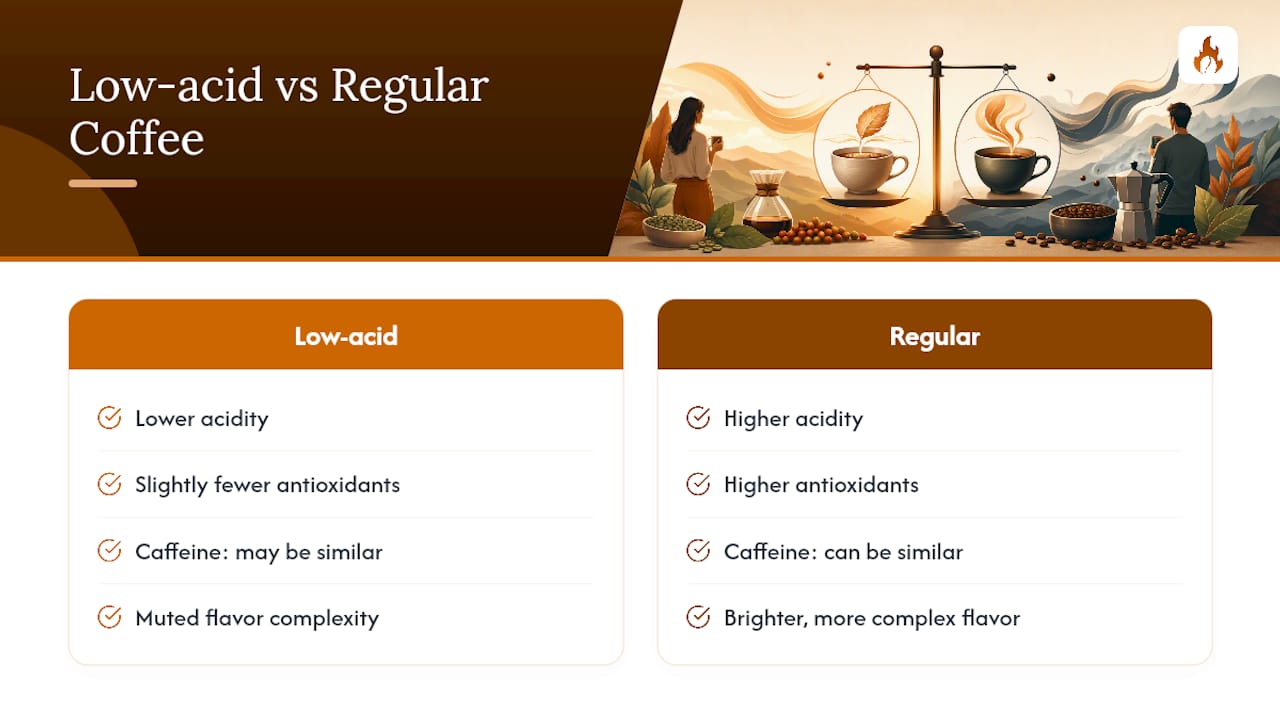
Chlorogenic acids, the compounds most affected by slow roasting and steam processing, are also a major source of coffee’s antioxidant activity. Reducing them to ease acidity means some low-acid coffees carry slightly fewer antioxidants than a bright, lightly roasted cup. That’s a real tradeoff, not a dealbreaker: coffee remains one of the more antioxidant-dense beverages in a typical diet even after processing for lower acid.
Caffeine content is a separate variable entirely. Some drinkers assume low-acid automatically means low-caffeine, but the two aren’t linked. A low-acid dark roast can carry a similar caffeine load to a high-acid light roast, so if caffeine sensitivity is part of your stomach trouble, check that separately from the pH number.
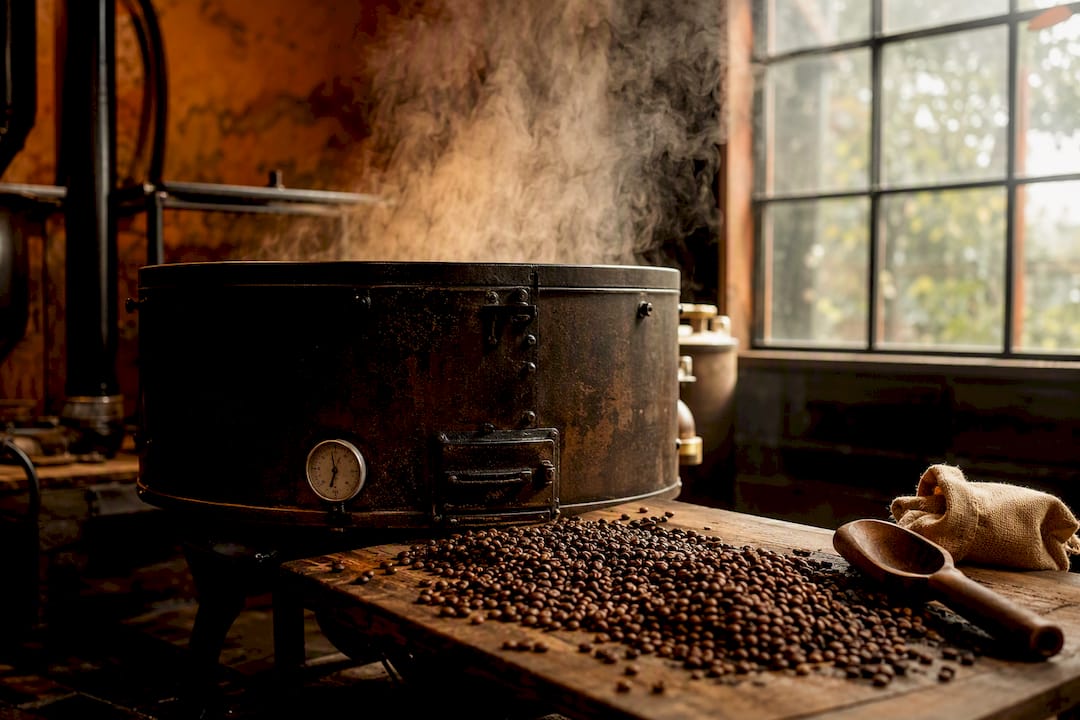
There’s also a flavor-compound tradeoff. Slower, lower-temperature roasting can mute some of the more volatile aromatic compounds that give specialty coffee its brighter, more complex notes. You’re trading some intensity for tolerability, which is a fair trade for a lot of sensitive drinkers, but it’s worth naming rather than glossing over.
None of this argues against choosing low-acid coffee. It argues for treating it as one adjustment among several rather than a cure-all. Pair a verified low-acid roast with the brewing tweaks covered earlier, and you’re addressing both the chemistry and the preparation side of the problem at once.
How Low-Acid Coffee Tastes Compared to Regular Coffee
Flavor is where a lot of low-acid claims quietly fall apart, and it’s also where taste-testing coverage has been genuinely useful for consumers. A coffee can taste smooth and still test high in acid, since smoothness is a mouthfeel impression shaped by oils, body, and bitterness, not a direct measurement of pH, according to taste testing from Epicurious.
That said, genuinely low-acid coffee does tend to land in a recognizable flavor zone. Expect more chocolate, nut, and caramel notes, and less of the bright citrus, berry, or floral character you find in high-acid light roasts from regions like Ethiopia or Kenya. Body tends to feel heavier and rounder, sometimes described as “syrupy” compared to the crisper mouthfeel of a high-acid cup.
The flavor tradeoff runs in a fairly predictable direction: what you gain in gentleness, you often lose in top-note complexity. That’s not a flaw. It’s a different flavor category entirely, closer to a rich after-dinner cup than a bright morning wake-up call. Evening Roast leans into that profile deliberately, aiming for depth over brightness. Abyssal takes a different path, holding onto bolder, more assertive flavor while still processed to ease harshness, which makes it a better fit for drinkers who find low-acid coffee too mellow.
Taste before you commit to a subscription. A sample bag tells you more in one cup than any product description will.
Storing Low-Acid Coffee to Keep It Fresh and Gentle
Storage matters more for low-acid coffee than people expect, because the same oxidation that dulls flavor can also let new acidic compounds form as beans age and go stale. Stale coffee, even coffee that tested low-acid fresh out of the roaster, often tastes sharper and more sour than a fresh batch, which can undo the benefit you paid for.
Keep beans in an airtight, opaque container away from light, heat, and moisture. A cabinet away from the stove works better than a spot on the counter near a sunny window. Skip the refrigerator and freezer for your everyday supply. Moisture cycling in and out of cold storage accelerates staling rather than slowing it, despite the common assumption that cold equals fresh.
Buy in smaller quantities more often rather than stocking up on a large bag that sits open for weeks. Whole beans hold their chemistry longer than pre-ground coffee, so grinding just before brewing preserves both flavor and the lower-acid profile you’re trying to protect. Most roasted coffee holds its best flavor and chemistry for two to four weeks past the roast date, which is worth checking on the bag before you buy, especially with a specialty roast you’re relying on for stomach comfort.
What the Evidence Actually Supports
The honest takeaway from all this research is less dramatic than most coffee marketing wants it to be, and that’s a good thing. Low-acid coffee helps a real subset of reflux sufferers, but it’s not a universal fix, and the industry’s biggest failure is letting “smooth” and “gentle” stand in for actual lab data.
Conventional advice tends to push people toward switching brands first and brewing technique second. That’s backward. A grind adjustment or a lower brew temperature costs nothing and often shows results within a week, while chasing a new “low-acid” bag without verification can leave you exactly where you started, just poorer.
What should you prioritize first? Ask for the pH number before you ask about flavor notes. Once you’ve confirmed a coffee is genuinely low-acid, then adjust brewing, then judge it on taste. Skip the number, and you’re just buying a nicer label.
— Tony
Try a Publisher-Backed Low-Acid Roast Today
The Flaming Bean roasts specifically for drinkers who’ve been burned, literally, by coffee that fights back. Instead of guessing whether a “gentle” label means anything, you get two roasts built around real comfort: Evening Roast for a mellow, rounder cup, and Abyssal for bold flavor without the harsh edge.
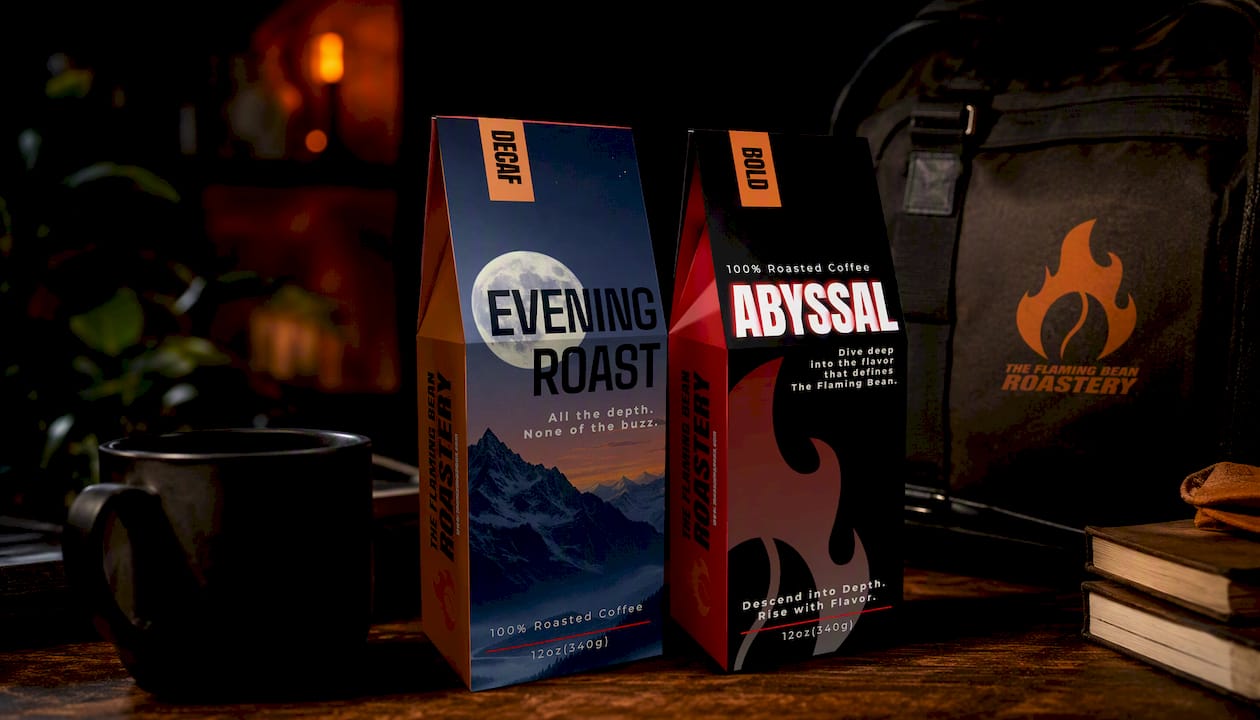
Both roasts come from small-batch production with attention to origin and process, the same variables that actually move pH rather than just marketing language. If your stomach has been vetoing your coffee habit, start with a bag of Evening Roast or Abyssal, track how you feel over two weeks, and adjust brewing from there using the temperature and grind tips covered above. Order a bag today and see whether the fix was ever the coffee, or just how you’d been brewing it.
This article is general information, not a substitute for advice from a qualified doctor. Consult a qualified healthcare professional about your own circumstances before acting on anything here.
Sources
- PubMed entry for a study (ID 28391515)
- Coffee giving you tummy trouble? Try these low-acid options | Cleveland Clinic Health
- The Best Low-Acid Coffee | Epicurious
Recommended
- Why Coffee Causes Jitters: Science-Backed Fixes – The Flaming Bean Roastery
- How to Make Coffee Less Bitter: 12 Easy Fixes – The Flaming Bean Roastery
- What Smooth Coffee Means and How to Brew a Better Cup – The Flaming Bean Roastery
- Why Coffee Roast Date Matters for Peak Flavor – The Flaming Bean Roastery
Comments