
How to Read Coffee Labels Like a Roaster

Check three things before anything else: the roast date, a one-way valve on the bag, and a clearly named origin or varietal. Roast date tells you the freshness window, the valve confirms the bag was built to protect a freshly roasted product, and a real origin (not just “blend”) tells you the roaster has nothing to hide. Everything else on the bag, from tasting notes to artwork, is secondary once those three boxes are checked. We built The Flaming Bean’s labels around exactly this hierarchy.
TL;DR:
- Always check for a roast date and a one-way valve, as these indicate freshness and proper packaging to preserve flavor.
- Origin details like country, region, farm, and elevation reveal transparency and influence flavor profiles; missing info suggests generic beans.
- Processing methods (washed, natural, honey, anaerobic) drastically change flavor, and varietal distinctions affect tasting notes, especially when comparing different processing.
- Whole bean coffee generally maintains freshness longer than pre-ground, and labeling accuracy on roast date is more reliable than best-by dates.
- Prioritize freshness indicators before examining origin and processing details, since these affect cup quality more than marketing terms or certifications.
Table of Contents
- Learning to Read Coffee Labels Starts With the Front of the Bag
- What Does Roast Date Mean, and Why the Valve Matters More Than You’d Think
- Understand Coffee Packaging Origin Details: Country, Region, Farm, and Elevation
- Decipher Coffee Ingredients: Processing Method and Varietal Explained
- Reading Grind, Net Weight, and Packaging Tech
- Your Prioritized Coffee Label Reading Checklist
- The Flaming Bean’s Approach to Honest Labeling
- What Actually Matters When You’re Standing in the Coffee Aisle
- Match Your Checklist to a Bag Worth Buying
- Sources
Learning to Read Coffee Labels Starts With the Front of the Bag
The front panel is marketing, but it’s honest marketing if you know how to interpret coffee labels correctly. The name of the coffee, whether it’s a blend or single-origin, and the tasting notes all tell you something real, once you know what to ignore.
Single-origin means the coffee comes from one country, and often one specific farm or cooperative. Estate or micro-lot narrows that further, usually a single farm and a single harvest, sometimes even one section of one field. A blend mixes beans from multiple origins to hit a consistent flavor target year after year, which is exactly why blends like Angry Rooster or Evening Roast can taste the same in July as they do in January while single-origins shift with each harvest.
Tasting notes are where marketing fluff creeps in fastest. Here’s how to sort the reliable ones from the noise:
- Fruit and berry descriptors (blueberry, cherry, citrus) usually track real acidity and often point to washed African coffees.
- Chocolate, nutty, and caramel notes typically show up in coffees roasted darker or grown at lower elevation.
- Floral and tea-like notes are common in high-elevation washed coffees and light roasts.
- Vague words like “smooth” or “balanced” describe mouthfeel, not flavor, and tell you almost nothing about the actual cup.
The roast level, whether printed as light, medium, or dark, or shown as a number, interacts directly with those notes. A naturally fruity coffee roasted dark will taste more like the roast development itself than the bean’s origin character, so matching roast level to your taste preference matters as much as the tasting notes themselves.
What Does Roast Date Mean, and Why the Valve Matters More Than You’d Think
Roast date is not the same as best-by date, and mixing the two up is the single most common label mistake. A best-by date can sit 12 months out and tells you nothing about peak flavor. Roast date tells you exactly when the beans left the roaster, and most specialty coffee tastes best between five and 21 days after roasting.
Pro Tip: If a bag only shows a best-by date, assume it’s been sitting on a shelf for months. Freshly roasted specialty coffee always leads with the roast date, front and center.
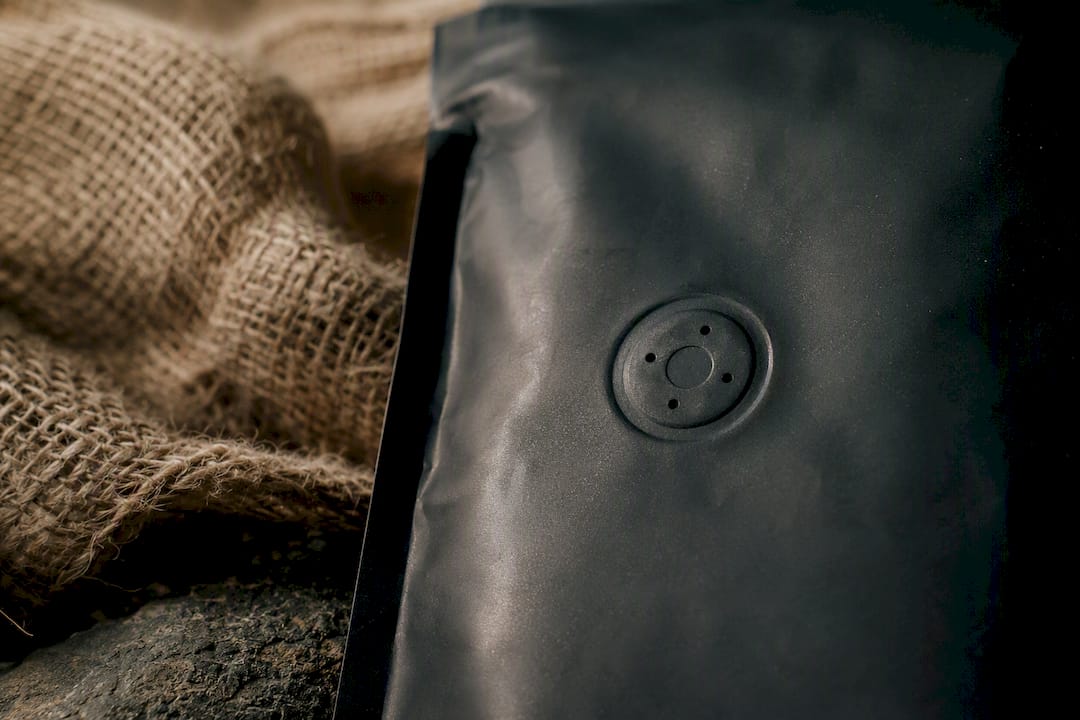
CO2 degassing happens fastest in the initial period after roasting, according to the Specialty Coffee Association, which is why a resting bag needs that one-way valve to release gas without letting oxygen in. No valve on a bag that claims to be fresh-roasted is a red flag. No roast date at all means you’re buying blind, so grind and brew sooner rather than later, and lean toward whole bean over preground whenever freshness actually matters to you.
Understand Coffee Packaging Origin Details: Country, Region, Farm, and Elevation
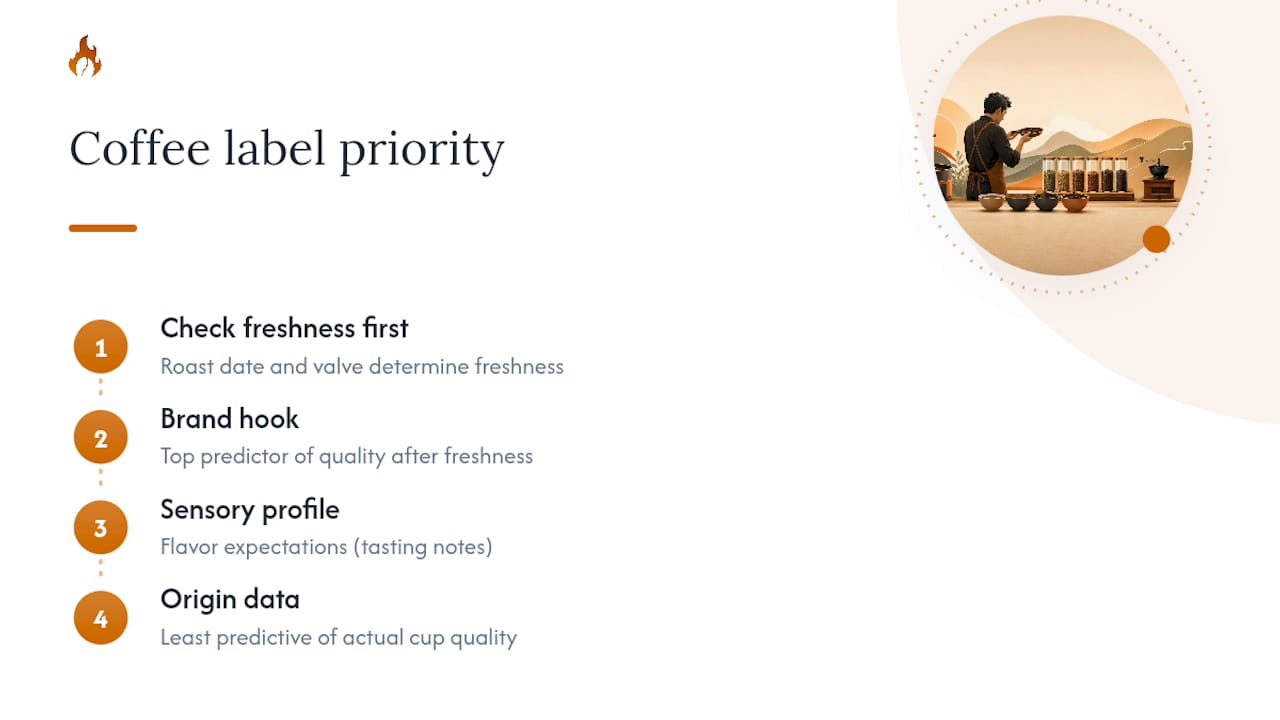
Origin information is where a label either proves its transparency or exposes the lack of it. A three-tier label hierarchy moves from brand identity, to sensory profile, down to the granular “nerd data” that actual traceability requires. If that bottom tier is missing entirely, the roaster likely bought commodity-grade beans with no direct farm relationship.
What to look for as you scan that bottom tier:
- Country and region are the baseline. Ethiopia’s Yirgacheffe and Colombia’s Huila are regions, not marketing terms, and each carries distinct flavor tendencies.
- Farm or producer name signals the roaster has a direct relationship with the grower, which matters both for quality control and for fair pricing further up the chain.
- Elevation (usually in meters) correlates with acidity and density; coffees grown above 1,500 meters tend to develop brighter, more complex acidity than lower-grown lots.
- Lot number or harvest year, sometimes paired with a QR code, lets you verify the specific batch rather than trusting a generic origin claim.
Roasters who print farm and lot details are showing you their supply chain, not just their branding.
Decipher Coffee Ingredients: Processing Method and Varietal Explained
Processing method changes flavor more than almost any other single variable on the label, and it’s worth learning the four main terms:
- Washed (wet process): Fruit is removed before drying, producing cleaner, brighter, more acidic cups. Most African and Central American specialty coffee uses this method.
- Natural (dry process): Cherries dry whole with the fruit intact, producing heavier body and bold, sometimes wine-like or fermented fruit notes.
- Honey/pulped natural: A middle ground where some mucilage stays on the bean during drying, splitting the difference between washed clarity and natural sweetness.
- Anaerobic: Cherries ferment in sealed, oxygen-free tanks before processing, often producing intense, funky, tropical-fruit flavors that stand out from anything else on the shelf.
Varietal is different from species. Species (nearly all specialty coffee is arabica) is the broad category; varietal (Bourbon, Typica, Gesha, Caturra) is closer to a grape variety in wine, and World Coffee Research’s varieties database documents dozens of them with distinct flavor tendencies. Gesha tends toward floral and tea-like; Bourbon leans sweet and full-bodied. Try the same origin in a washed and a natural processing side by side, and you’ll taste the difference immediately.
Reading Grind, Net Weight, and Packaging Tech
A few practical scans finish the job:
- Grind size, when listed, tells you the intended brew method. Whole bean is always the safer buy if you own a grinder, since ground coffee loses aromatics within minutes of grinding.
- Net weight in the U.S. typically runs 12 ounces for retail bags, though specialty roasters increasingly print 10 or 11 ounces as bean costs rise, so check weight against price per ounce.
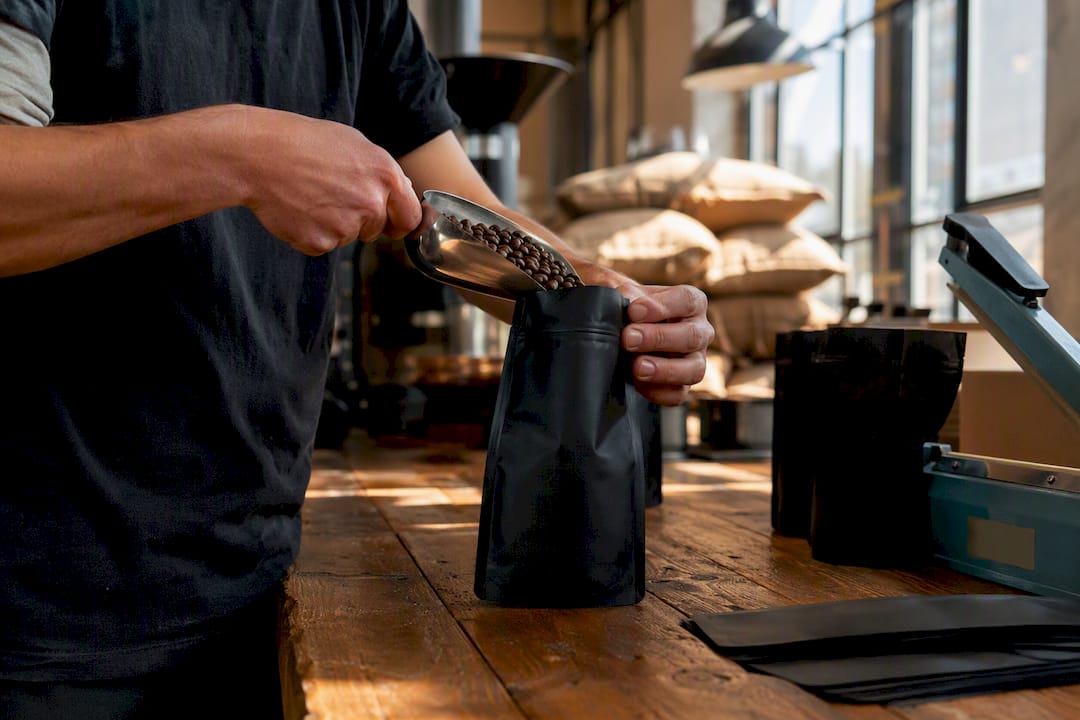
- One-way valve, resealable zipper, and nitrogen flush are packaging technology, not decoration. A proper barrier film and valve combination is what lets a bag hold peak flavor for weeks instead of days.
- Compostable bags sound appealing but often trade away barrier performance, so a roaster moving slower-selling coffee may deliberately skip them for the sake of shelf life.
Your Prioritized Coffee Label Reading Checklist
When you’re standing in an aisle or scrolling a product page, run through this order:
- Roast date (reject anything with only a “best-by” date)
- One-way valve on the bag
- Origin detail beyond just the country name
- Processing method
- Varietal, if listed
- Grind size matched to your brew method
- Net weight versus price
- Roaster contact information or address
Pro Tip: Shopping online? Search the listing page for “roasted on” or filter by newest arrivals. Reputable roasters post roast date right in the product title or description, not buried three clicks deep.
The Flaming Bean’s Approach to Honest Labeling
We treat roast date, farm-level sourcing, and packaging as non-negotiable, not upsells. Every bag carries a roast date, a valve built for the fill weight, and origin detail down to the lot when the harvest allows it. Read more on roast level terminology or how certifications work if you want the deeper dive.
What Actually Matters When You’re Standing in the Coffee Aisle
Most advice on reading coffee labels treats every field as equally important, and that’s backwards. A shopper who memorizes ten label terms but skips checking the roast date has learned the wrong lesson entirely. The three-tier hierarchy, brand hook, sensory profile, then origin data, exists because that’s the order those fields actually predict quality.
Certifications get overrated. Fair Trade and Rainforest Alliance labels tell you something about the supply chain, but they say nothing about what’s in your cup, and a coffee with zero certifications from a roaster with full traceability often outperforms a certified bag with no farm name at all. If you want to understand what a certification claim is actually promising, understanding food quality standards more broadly helps separate marketing claims from real quality signals.
What deserves your attention first is simple: roast date and valve integrity, because those two facts determine whether the coffee in the bag still resembles what the roaster intended. Everything past that, origin, processing, varietal, is where the fun starts once freshness is confirmed.
— Tony
Match Your Checklist to a Bag Worth Buying
Once you know what to scan for, put it to the test. Evening Roast prints its roast date front and center with full origin detail, exactly the kind of transparency this checklist rewards. Abyssal shows off a bold, traceable single-origin profile for readers who want the “nerd data” tier fully spelled out. Angry Rooster pairs a punchy flavor profile with clear roast and origin labeling, and Safe Ground carries the same labeling standards while directing part of every purchase toward anti-trafficking causes.
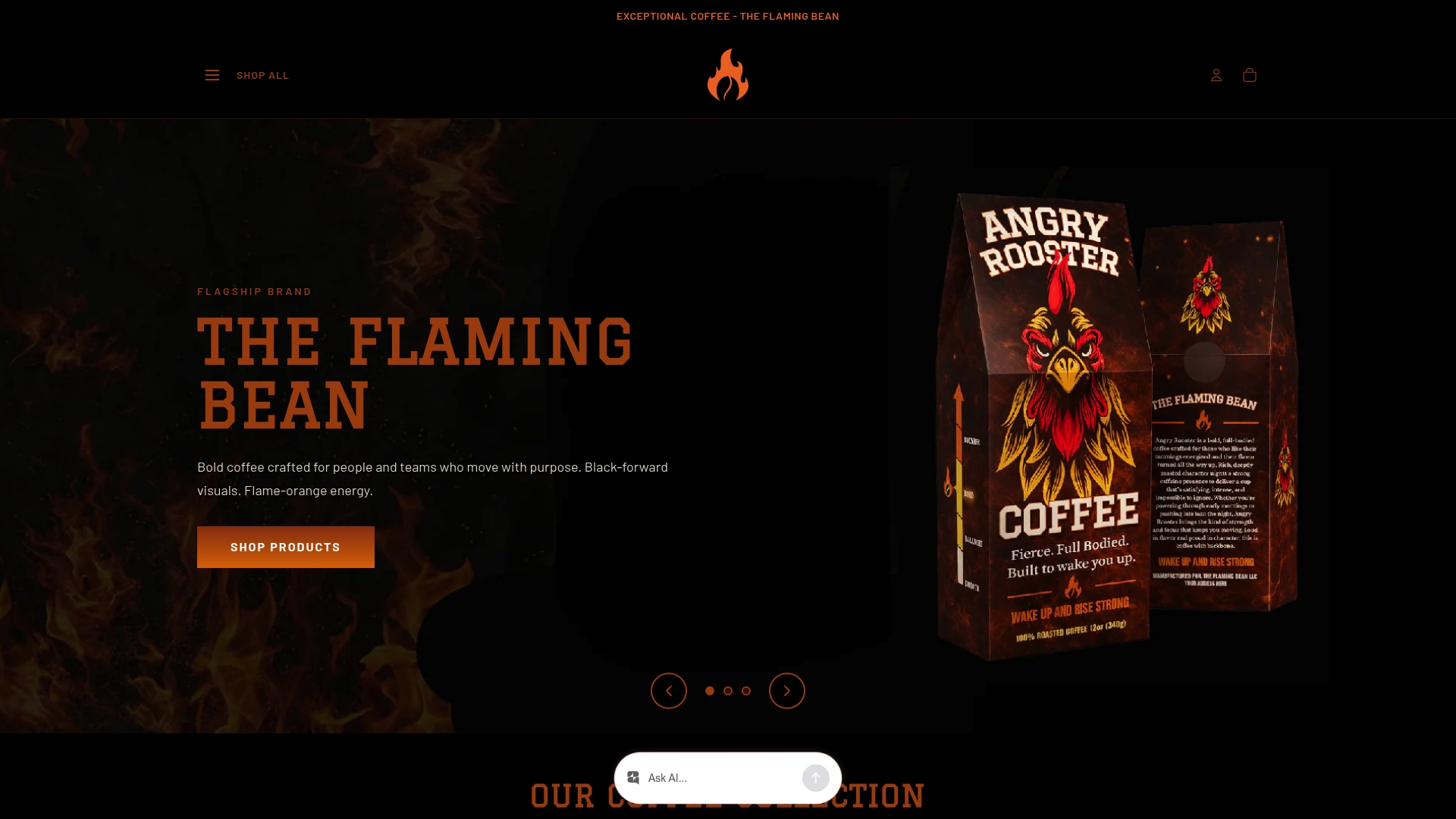
If you want to compare a few sides by side, browse the full lineup of signature blends and pick a couple to sample. Every bag ships with a roast date you can actually trust and a label built to answer the questions this article just walked you through. Grab a bag of Evening Roast or Abyssal today and see the difference a transparent label makes in the cup.
Sources
- Coffee Decoded: What is “freshly roasted” coffee? — Specialty Coffee Association
- Coffee freshness explained: what roast date actually means | Trade Coffee
- Coffee Packaging Design: Bag, Label & Freshness Decoded
- Coffee Packaging Complete Guide: Bags, Materials, Valves, and Sizes - JMEI Packing
Recommended
- How to Evaluate Coffee Roaster Quality Like a Pro – The Flaming Bean Roastery
- Design Coffee Brand Packaging: A Roaster’s 2026 Guide – The Flaming Bean Roastery
- Coffee Roast Levels Explained: Your Flavor Guide – The Flaming Bean Roastery
- How to Choose the Right Coffee Roast for Your Cup – The Flaming Bean Roastery
Comments