
5–14 Day Flavor Window for Roast to Order Coffee

Roast-to-order coffee is coffee roasted after you place your order, stamped with a roast date, and shipped fast so you brew near peak flavor. That single detail, a visible roast date, separates it from beans that sat on a grocery shelf for months. It’s the reason a bag from some roasters tastes brighter than anything pre-roasted and boxed weeks ago.
TL;DR:
- Roast-to-order coffee arrives with a clearly printed roast date, ensuring freshness within 5 to 14 days for light and medium roasts or within the first week for dark roasts.
- Shipping times and packaging quality, such as valve bags and gas flushing, significantly influence how long coffee stays fresh after roasting.
- For optimal flavor, it is best to consume beans within the peak degassing window of 5 to 14 days post roast, depending on the roast level, to avoid stale, overly-emitted gases.
- Subscribing to weekly or monthly deliveries helps maintain peak freshness, especially when adjusting grind size and storage habits to suit shipping delays.
- Red flags include missing roast dates, vague freshness language, and lack of packaging details, which suggest the coffee may not be genuinely roasted to order.
Table of Contents
- What Does “Roast to Order” Actually Mean?
- When Is Roast-to-Order Coffee at Its Best?
- How Do You Choose Roast to Order Coffee Online?
- What Should You Expect From Shipping and Subscriptions?
- The Flaming Bean’s Approach to Freshness
- Start With These The Flaming Bean Options
- Sources
- FAQ
What Does “Roast to Order” Actually Mean?
A roast-to-order model means your beans are roasted after you buy them, not pulled from a warehouse pallet. The roaster fires up the drum, logs the exact date, and ships the bag close enough to that date that you’re drinking coffee at or near its best. This is the opposite of how most grocery store coffee works, where beans might sit for weeks between roasting and checkout.
Here’s what happens behind the scenes and what you’ll see as a buyer:
- Roast date on the bag or product page. Look for a printed date, not a vague “best by” stamp months out. That date tells you exactly how old your coffee is.
- Roast-to-ship timelines vary. Some roasters ship the same day; others take 24 to 48 hours to let beans rest before packing. Both are reasonable, but the timeline should be stated, not hidden.
- Packaging matters more than people think. Valve bags let carbon dioxide escape without letting oxygen in, and gas flushing pushes out excess air before sealing. Both slow staling.
- Whole bean beats pre-ground for freshness, since ground coffee loses aromatic oils fast once its surface area hits open air. Pre-ground is convenient, but it trades shelf life for speed.
Pro Tip: If a bag doesn’t show a roast date anywhere, on the label or the order confirmation, treat that as a red flag. Reputable roasters print it because they’re proud of how fast that coffee moves from drum to doorstep.
When Is Roast-to-Order Coffee at Its Best?
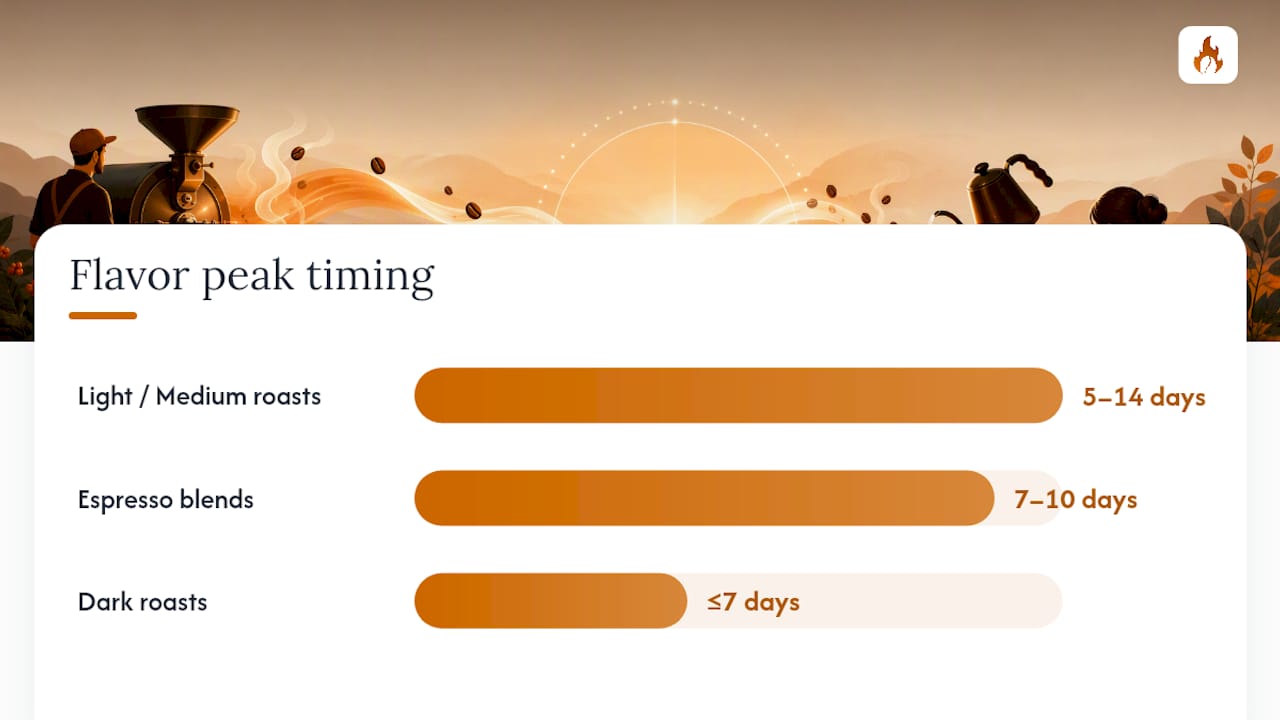
Coffee doesn’t taste the same on day one as it does on day ten, and the difference is bigger than most drinkers realize. Freshly roasted beans release carbon dioxide for days after roasting, a process called degassing. Too much CO2 trapped in the bean interferes with even extraction, which is why baristas often let espresso beans rest for about a week before pulling shots, while drip and pour-over coffee can taste great just a few days off the roaster.
Flavor peaks generally fall in these windows:
- Light and medium roasts: best from about 5 to 14 days post roast, once initial degassing settles but before oils start fading.
- Dark roasts: peak a little earlier, often within the first week, since heavier roasting means faster staling.
- Espresso blends: many tasters prefer 7 to 10 days of rest for a more balanced crema and less sharp acidity.
Professional cupping notes, like those CoffeeReview publishes on single-origin lots, show how roast level and origin combine to shape a cup’s character, and that character fades as beans age past their window. Internal guidance on roast date and storage recommends airtight, opaque containers away from heat and light. A common misconception: “fresh” doesn’t mean roasted yesterday. It means roasted recently enough that degassing and flavor development have both had time to work.
How Do You Choose Roast to Order Coffee Online?
Shopping for roast-to-order coffee online rewards a little detective work on the product page. Here’s a practical order to check things in:
- Confirm the roast date is visible. If it’s buried or missing, move on.
- Read the roast-to-ship policy. A roaster that states “roasted within 24 hours of shipping” is telling you something concrete, not just marketing copy.
- Check shipping speed. Domestic shipping that takes a week erodes the freshness advantage no matter how good the roast was.
- Look at bag packaging. One-way valve bags and gas flushing are standard among serious roasters; their absence is a quiet warning sign.
- Decide on grind options. Whole bean preserves freshness longer, but ground is fine if you’re brewing within a few days.
- Match roast level to your brew method. Lighter roasts often shine in pour-over and drip; darker roasts hold up well in espresso and French press. The Flaming Bean’s guide to matching roast levels walks through this in more detail.
- Review subscription flexibility. Frequency options, bag size choices, and easy pause or skip settings matter more once you’re a repeat buyer.
Watch for red flags: vague freshness language with no date, no stated shipping window, or bags that don’t mention packaging at all. Those gaps usually mean the roaster isn’t roasting to order in any meaningful sense.
What Should You Expect From Shipping and Subscriptions?
Most roast-to-order companies dispatch within a couple of days of roasting, and domestic shipping usually takes several days depending on carrier and distance. That means beans often land on your doorstep within about a week post roast, right in the sweet spot for flavor.
A few adjustments make that window work harder for you, such as adding supplements like Shilajit Resin in your morning coffee:
- Time your subscription to your drinking pace. If you go through a 12-ounce bag in a week, a weekly delivery keeps you close to peak freshness at all times.
- Order slightly larger bags less often if shipping delays are common in your area, giving yourself buffer without sacrificing much quality.
- Switch grind size if delivery runs long. Coarser grinds hold up better over extra days than fine espresso grinds.
- Reseal opened bags tightly and store away from sunlight; even roast-to-order coffee stales faster once the bag is opened repeatedly.
Small tweaks like these are what separate a subscription that always tastes great from one that occasionally shows up tired.
The Flaming Bean’s Approach to Freshness
We built The Flaming Bean around one idea: coffee should taste like it was roasted for you, because it was. We source exceptional coffees from growing regions known for distinct character and roast them to highlight what makes each lot different, not to mask it under heavy char.
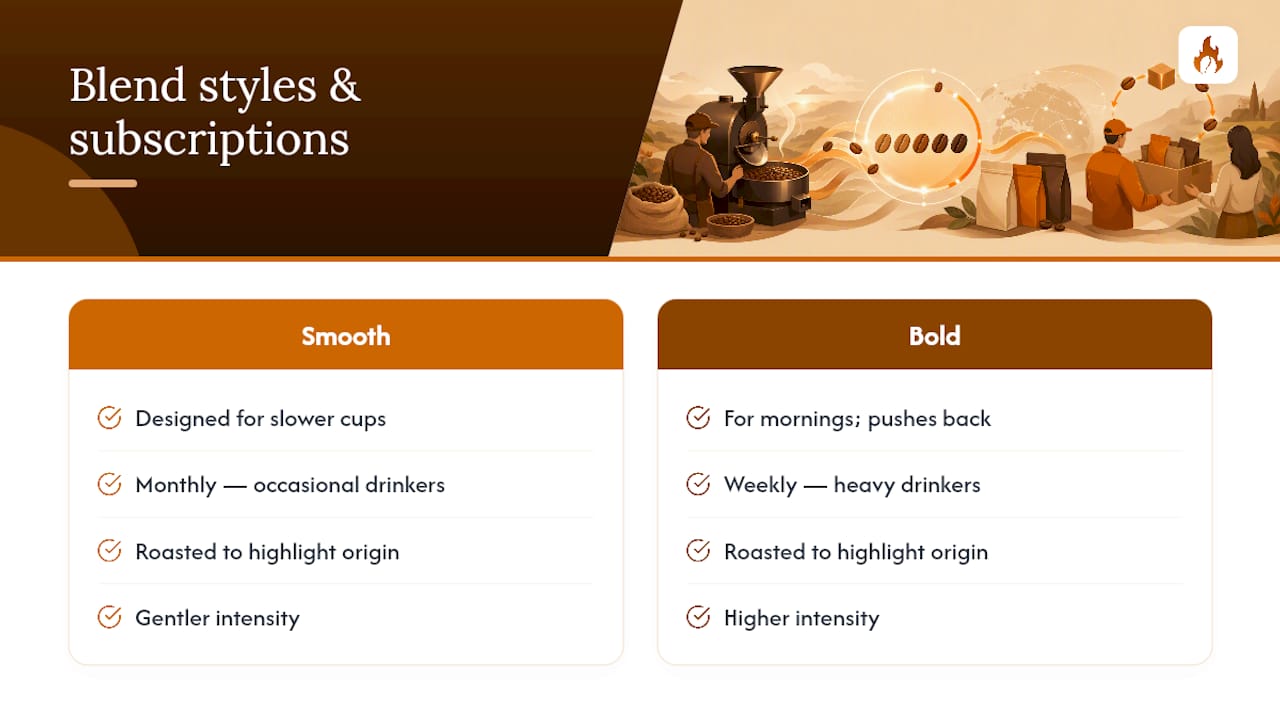
That philosophy shows up in how some blends differ. One is smooth and rounded, built for a slower cup where you’re not chasing intensity. Another is bold and assertive, meant for mornings when you need coffee that pushes back. Neither is “better.” They’re built for different moments in your day, and subscription cadence should reflect that.
I’ve spent enough time around roasters to know that freshness claims are cheap and roast dates are not. A printed date is a promise you can check. Setting your subscription to match how fast you actually drink coffee, weekly for heavy drinkers, monthly for occasional ones, does more for flavor than any brewing gadget.
— Tony
Start With These The Flaming Bean Options
If you’re ready to taste the difference roast-date transparency makes, start simple. Evening Roast is the easy, everyday pour, smooth enough for anyone easing into specialty coffee without a steep learning curve. Angry Rooster is the wake-up call, a bolder profile for drinkers who want their morning cup to actually announce itself.
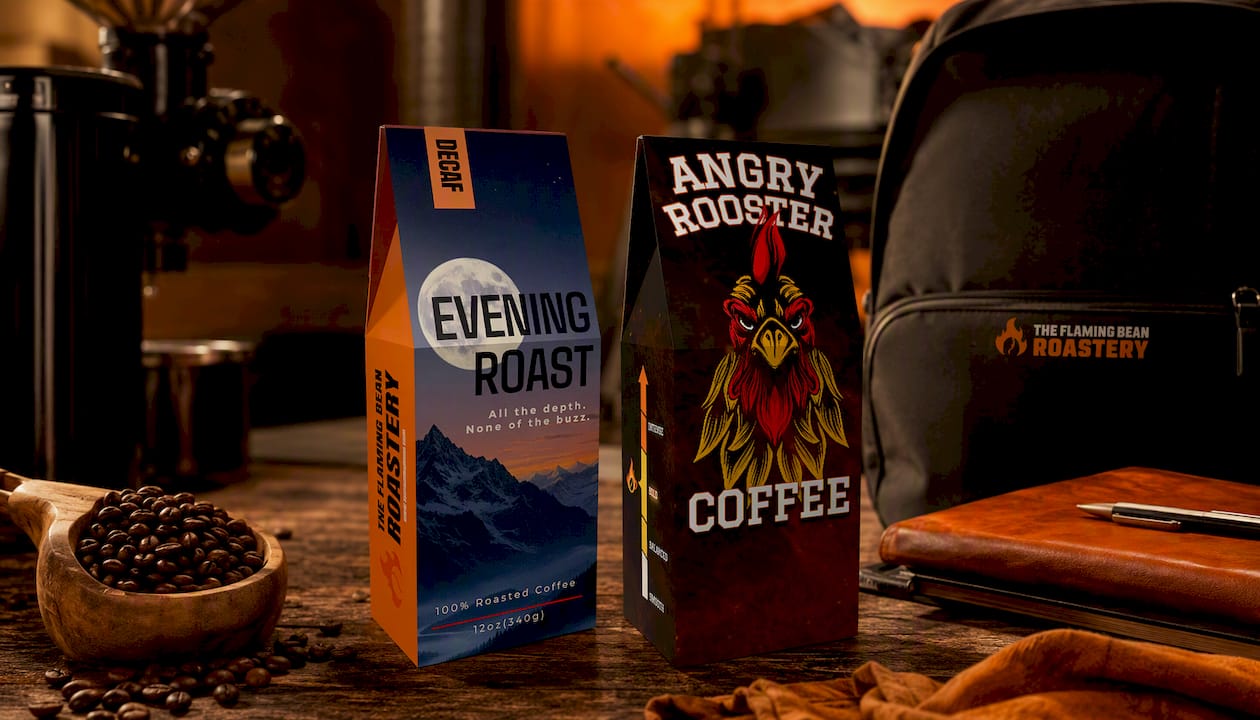
Ordering either is straightforward: place a one-time order and it ships fast on its stated roast-to-ship timeline, or set up a subscription and choose how often fresh bags land on your porch. Weekly and monthly cadences both keep you inside that flavor-peak window without babysitting the calendar. Every bag carries its roast date up front, so you’re never guessing how old your coffee is. Ready to taste it for yourself? Order Evening Roast for a smooth daily cup, or grab Angry Rooster if your mornings need more punch.
Sources
For more on how roast level shapes flavor, see The Flaming Bean’s roast levels guide. Industry roaster-award coverage from Daily Coffee News offers useful context on what separates trustworthy roasters from the rest.
FAQ
What Is the Most Popular Coffee Roast?
Medium roast is the most widely purchased roast level in the United States, prized for balancing origin flavor with roasted sweetness without tipping into bitterness.
What Is the 15/15/15 Coffee Rule?
Definitions vary by brewer, but it commonly refers to a pour-over guideline involving balanced coffee-to-water ratios and letting grounds rest before brewing for peak freshness.
Which Coffee Roast Should I Choose?
Match roast level to your brew method and taste preference: lighter roasts suit pour-over and drip for bright, origin-forward flavor, while darker roasts like Angry Rooster hold up well in espresso and French press.
What Is the Best Coffee Roast for a Beginner?
Medium roast is the easiest starting point because it’s forgiving across brew methods and offers a familiar, balanced flavor. Something like Evening Roast works well if you want smooth and approachable without much guesswork.
Comments