
40% Canopy: Buy Real Shade Grown Coffee (Bird Friendly®)

Shade grown coffee is coffee cultivated under a canopy of trees rather than in cleared, full-sun rows, and it changes both the ecosystem around the farm and the cup in your hand. Farms with real tree cover host far more bird and animal species than sun-grown monocultures, and slower cherry maturation under shade often builds denser beans with more complex flavor. The catch: “shade-grown” isn’t a regulated term, so Bird Friendly® certification is the most reliable way to confirm a bag actually delivers on the claim.
TL;DR:
- Bird Friendly® certification is the most reliable standard for verifying genuine shade-grown coffee, requiring specific canopy cover and species-diversity criteria.
- Dense, multi-strata shade systems support higher biodiversity, improve soil health, and increase carbon storage compared to low-diversity, monoculture shade setups.
- While shade-grown coffee generally yields less short-term production, it produces denser beans with more complex flavor due to slower ripening under microclimate moderation.
- Certification and origin transparency from roasters are essential for ensuring a coffee’s ecological claims, since the term “shade grown” is unregulated and often used as marketing.
- Choosing shade-grown coffee wisely involves prioritizing third-party verified seals over vague claims and favoring single-origin, certified products with disclosed origin details.
Table of Contents
- What Shade Grown Coffee Actually Means in Practice
- The Ecological Case: Birds, Soil, Water, and Carbon
- Quality, Yield, and the Farmer’s Trade-Off
- Four Types of Shade Systems and How They’re Managed
- Bird Friendly® Certification and Why It’s the Standard That Matters
- How to Buy Shade Grown Coffee and What to Expect in the Cup
- The Conservation-and-Cup-Quality Case Nobody Fully Makes
- Try Shade-Friendly, Mission-Driven Coffee From This Roaster
- Primary Sources and Further Reading
- Sources
- FAQ
What Shade Grown Coffee Actually Means in Practice
Coffee is naturally an understory shrub. Left to its own habits, it grows beneath taller trees in forest gaps, not in open fields under direct sun. Shade grown systems recreate that original arrangement on purpose, planting or preserving a tree canopy above the coffee rows instead of clearing it away for maximum sun exposure.
That canopy usually has structure to it, not just a scattering of random trees. Agronomists talk about vertical strata: a lower layer of coffee shrubs, a middle layer of smaller shade trees (often nitrogen-fixing legumes like Inga species), and sometimes an upper layer of taller hardwoods or fruit trees. Each layer does different work. The upper canopy blocks harsh midday sun. The middle layer drops leaf litter that decomposes into organic matter. Root systems at different depths pull nutrients and moisture from different soil layers instead of competing for the same narrow band.
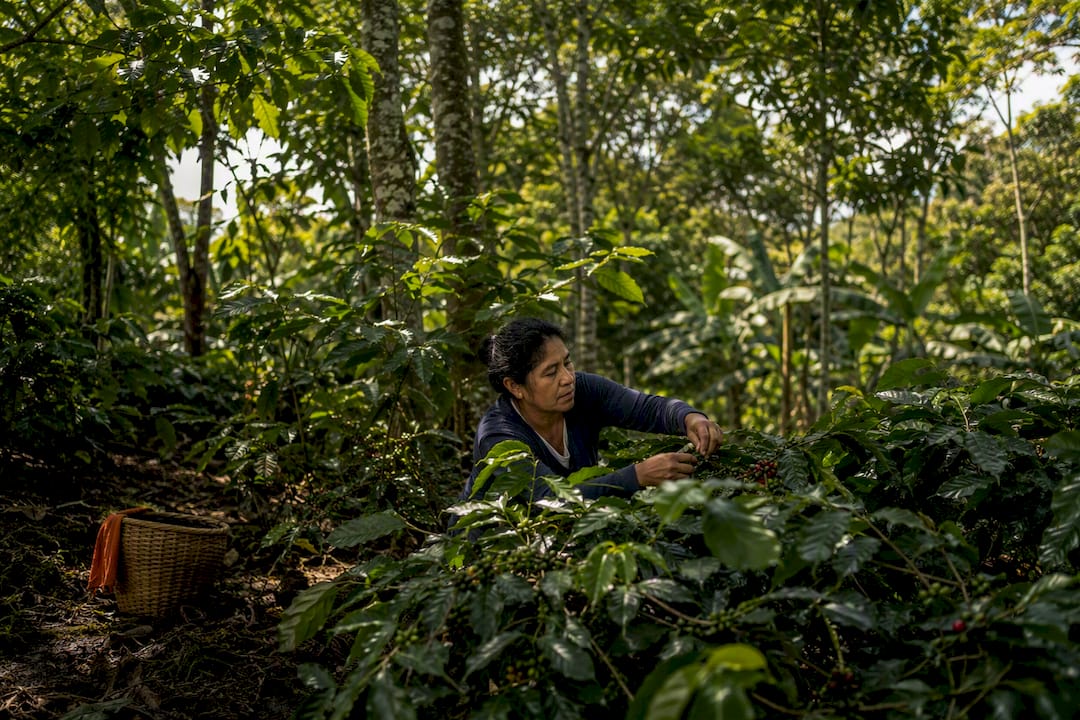
The microclimate effect is where things get interesting for anyone who has ever wondered why some coffee farms feel like a forest and others feel like a vineyard. Canopy cover moderates daytime highs, keeps nighttime temperatures from swinging too low, and holds humidity closer to the ground. Fallen leaves build up as mulch, feeding soil microbes and reducing the need for synthetic inputs. That’s a big part of why shade-grown systems typically require fewer fertilizers and pesticides than sun-exposed plantations. The tree canopy is doing pest control and soil-building work that would otherwise come out of a bag or a spray tank.
A few structural basics show up across nearly every shade system:
- Canopy cover: the percentage of ground shaded by trees, usually measured after seasonal pruning.
- Strata: the number of distinct height layers in the planting, from coffee shrub to overstory tree.
- Backbone species: the dominant shade trees that define the farm’s structure, often chosen for nitrogen fixation or fast growth.
- Litter layer: decomposing leaves and organic debris that build soil fertility over time.
This structure is also why shade systems pair naturally with organic and low-input farming. When a farm already has functioning nutrient cycling and some built-in pest suppression from bird and insect predators living in the canopy, the case for skipping synthetic chemicals gets a lot easier to make.
The Ecological Case: Birds, Soil, Water, and Carbon
The single most quoted fact about shade grown coffee comes from bird research, and it holds up under scrutiny. A review of more than 60 studies by the Smithsonian’s National Zoo and Conservation Biology Institute found that shade coffee farms consistently support dramatically higher bird diversity than sun-grown monocultures, in some comparisons multiple times over. That matters beyond birdwatching. Many of those species are Neotropical migrants that spend their summers in North American backyards and their winters in Latin American coffee country, meaning the shade canopy on a farm in Colombia or Guatemala can directly affect the migratory birds you see at your own feeder.
By the numbers: Smithsonian-reviewed research shows shade coffee farms hosting substantially richer bird and overall species counts than sun-exposed plantations, a gap wide enough that ornithologists treat shade cover as one of the strongest single predictors of tropical bird diversity on working farmland.
Birds aren’t the only beneficiaries. Diverse shade canopies support:
- Native bees and pollinating insects that struggle in cleared, monoculture rows.
- Amphibians and reptiles that need humid microhabitats to survive.
- Bats that provide free pest control at night.
- Small mammals that use the canopy as a movement corridor between forest fragments.
Soil health tells a similar story, and it’s less romantic than birdsong but arguably more important for the farm’s long-term survival. Bare, sun-exposed coffee rows are more exposed to erosion during heavy rain, especially on the sloped terrain where a lot of coffee gets grown. Tree roots and leaf litter under a shade canopy hold soil in place and slow water runoff, letting more moisture soak in rather than sheet off the surface. That translates into better drought resilience during dry spells, since soil that retains water acts like a buffer against the increasingly erratic rainfall patterns climate change is bringing to coffee-growing regions.
Carbon storage rounds out the ecological picture, and it’s the piece most easily overlooked. A monoculture coffee field stores very little carbon beyond the crop itself. A shade system with mature trees, decades of accumulated leaf litter, and root biomass functions more like a working forest. Field comparisons cited by the Smithsonian show shaded coffee systems building meaningfully higher soil carbon and aboveground biomass than their sun-grown counterparts, in some cases approaching levels seen in natural forest patches nearby. That’s not a small footnote. It means a well-managed shade farm is doing double duty: producing a crop and functioning as a partial substitute for the forest that might otherwise have been cleared for it.
None of this happens automatically just because a farm has a few trees scattered around. The ecological payoff scales directly with canopy density, species diversity, and how much of the original forest structure the farm actually preserves, which is exactly why verification standards matter so much later in this guide.
Quality, Yield, and the Farmer’s Trade-Off
Shade grown coffee usually produces less coffee per acre than sun-grown systems in the short term, and pretending otherwise does a disservice to the farmers actually making this decision. Full sun exposure pushes coffee cherries to ripen faster and in greater volume, which is exactly why the “Green Revolution” push of the 1970s and 1980s encouraged so many farmers across Latin America to clear their shade canopy and switch to high-yield sun varieties.
But that yield advantage comes with real costs that don’t always show up in a single harvest season. Sun-grown coffee plants burn out faster, often needing replacement after roughly 15 years, while trees under shade can remain productive for more than 30 years in many documented cases. Sun systems also lean harder on fertilizer and pesticide inputs to compensate for the ecological work a canopy would otherwise do for free, and those input costs add up year after year in a way that erodes the apparent yield advantage.
Here’s the part that matters most to anyone drinking the coffee rather than growing it: slower cherry maturation under shade tends to build denser, more sugar-rich beans. Cooler microclimate temperatures stretch out the ripening period, giving the coffee cherry more time to accumulate the sugars and acids that eventually translate into flavor complexity in the cup. That’s a mechanical, not mystical, explanation for why so many prized specialty lots come from shaded, higher-elevation farms rather than flat, sun-blasted plantations. Harvest timing plays directly into this, and readers who want the deeper mechanics behind maturation and cup quality can find more detail in The Flaming Bean’s guide to harvest timing.
The economic calculus for a farmer weighing shade against sun typically comes down to a few factors:
- Short-term yield favors sun-grown systems, sometimes significantly.
- Long-term tree lifespan and reduced replanting costs favor shade.
- Input costs for fertilizer and pesticides are usually lower under shade.
- Certification premiums, when a farm qualifies for Bird Friendly® or organic status, can offset the yield gap.
- Climate resilience tends to favor shade, since canopy cover buffers against the temperature extremes and drought stress that are becoming more common in coffee-growing regions.
That resilience piece is worth dwelling on for a moment. A Frontiers in Sustainable Food Systems review found shade agroforestry buffers microclimate extremes and can make marginal, climate-stressed areas viable for coffee production that would otherwise struggle under full sun. That’s not a guaranteed outcome everywhere, since shade also shifts pest and disease dynamics in ways that require locally adapted management, which is the honest trade-off nobody selling a simplified “shade is always better” narrative wants to mention.
Four Types of Shade Systems and How They’re Managed
Not all shade coffee looks the same, and the differences matter for both ecological impact and cup quality. Agronomists generally sort shade systems into four categories, ranked roughly from most forest-like to least.
-
Rustic systems preserve the original forest canopy almost entirely, with coffee planted as an understory crop beneath native trees. These deliver the highest biodiversity value but usually the lowest yields, since farmers have minimal control over shade density or species composition.
-
Traditional polyculture replaces some native canopy with a deliberately diverse mix of shade trees, often including fruit and timber species alongside natives. This is the sweet spot many certification programs target: real ecological diversity paired with better yield control than a fully rustic system.
-
Commercial polyculture narrows the shade tree selection to a smaller number of species, usually chosen for fast growth or nitrogen fixation rather than biodiversity value. It still provides meaningful canopy benefits but supports far fewer wildlife species than traditional polyculture.
-
Shaded monoculture uses a single shade tree species, planted in rows, functioning more like an agricultural input than a forest analog. It offers some microclimate buffering but very little of the species diversity that makes shade coffee ecologically valuable in the first place.
Management choices matter as much as which category a farm falls into. A Frontiers review of shade agroforestry research points to a few practices that consistently protect both ecology and quality: maintaining a genuinely diverse shade-tree mix rather than leaning on one dominant species, keeping canopy density at a level that still lets enough light through for healthy fruit development, managing pruning schedules so litter keeps building soil fertility, and establishing buffer zones of trees along streams and slopes to control erosion.
The most common pitfall is relying on a single backbone species for shade, usually because it’s fast growing and cheap. That approach delivers some microclimate benefit but almost none of the biodiversity payoff, since most wildlife needs structural and species variety, not just any tree cover. Overpruning is the other frequent mistake: farmers chasing higher short-term yield sometimes thin the canopy below the density that delivers real ecological or flavor benefits, ending up with a system that’s shade-grown in name only.
Pro Tip: If a bag of coffee describes the farm as “shade grown” but says nothing about tree species diversity or canopy percentage, treat that as a marketing description rather than a verified agricultural claim. The strongest shade systems are specific about what’s actually growing above the coffee.
Bird Friendly® Certification and Why It’s the Standard That Matters
“Shade-grown” carries no legal or regulatory definition anywhere in the coffee industry, which means any roaster can print it on a bag regardless of how much canopy the source farm actually has. That’s exactly why the Bird Friendly® certification exists, and why it’s worth understanding what it actually requires rather than taking the label on faith.
Bird Friendly®, developed by the Smithsonian Migratory Bird Center, starts with a prerequisite most shoppers don’t realize: the farm must already hold organic certification before it can even apply. From there, the standard adds specific agricultural requirements on top, including a minimum canopy cover threshold measured after seasonal pruning, requirements for multiple vertical strata rather than a single tree layer, minimum species-diversity counts for the shade trees themselves, and rules limiting how much any single species can dominate the canopy.
The numbers that matter: Bird Friendly® norms set a minimum 40% canopy cover after pruning, along with strata and species-diversity requirements designed to prevent farms from technically qualifying with a thin, low-diversity canopy.
The certification also governs what happens after harvest. Bird Friendly® lots must go through separate handling and processing to prevent mixing with non-certified coffee, which closes a loophole that undermines a lot of self-declared “shade-grown” marketing. Without that lot-separation requirement, a roaster could blend a small amount of genuinely shade-grown coffee with conventional sun-grown beans and still make a shade claim on the label.
Compare that to other common labels. Organic certification says nothing directly about shade at all. A farm can be fully organic and still be a cleared, sun-exposed monoculture. Rainforest Alliance certification does address shade, but its threshold accepts considerably lower canopy percentages than Bird Friendly® requires, which means a Rainforest Alliance seal alone doesn’t guarantee the kind of dense, multi-strata canopy that delivers the biodiversity and carbon benefits described earlier in this guide.
For consumers, a short checklist cuts through most of the confusion:
- Look for the actual Bird Friendly® seal, not just the words “shade-grown” on the packaging.
- Ask the roaster whether the coffee is also organic certified, since Bird Friendly® requires it as a baseline.
- Check whether the bag names a specific farm or cooperative rather than a vague regional blend.
- If a claim seems soft, ask the roaster directly what canopy percentage or certification backs it up. A roaster with a real answer usually has one ready.
Readers who want a deeper breakdown of how certifications stack up against each other can find more detail in The Flaming Bean’s guide to coffee certification.
How to Buy Shade Grown Coffee and What to Expect in the Cup
Shopping for genuinely shade-grown coffee comes down to a short sequence of checks rather than guesswork.
- Start with the seal. Bird Friendly® paired with organic certification is the strongest combination available, since it guarantees both the canopy requirements and the input standards behind the coffee.
- Check for origin transparency. A bag that names the specific farm, cooperative, or region gives you something to verify. Vague country-of-origin labeling with no further detail is a weaker signal.
- Look for a harvest year. Coffee is a seasonal crop, and roasters who publish harvest dates are usually more transparent about sourcing overall.
- Ask about lot separation. If a roaster can explain how certified lots are kept apart from conventional coffee during processing, that’s a good sign the certification claim is being taken seriously.
- Favor single-origin roasts when verifying a new source. Blends can obscure sourcing details that a single-origin lot makes easier to trace.
Roaster transparency is doing a lot of the verification work here, since shade-grown lacks any legal definition and roasters are the ones who actually know their supply chain. A roaster willing to name farms, share certification documents, and answer direct questions is a stronger signal than any single word printed on a bag.
As for the cup itself, don’t expect a single dramatic flavor signature. What shows up more consistently is complexity: brighter, more defined acidity, fuller body, and layered flavor notes that come from the slower, cooler ripening process described earlier. Readers who want to connect the dots between farming practices and what actually lands in the cup can find more on that link in The Flaming Bean’s guide to reading coffee labels.
The Conservation-and-Cup-Quality Case Nobody Fully Makes
Most coffee content treats shade-grown as either a pure conservation story or a pure flavor story, and that split misses the point entirely. The research doesn’t support picking one lens over the other. Bird diversity and soil carbon numbers are real, but so is the mechanical link between slower cherry maturation and denser, more flavorful beans. These aren’t two separate arguments for the same purchase decision. They’re the same argument, described from two angles.
Where conventional advice falls short is treating “shade-grown” on a label as meaningful information. It isn’t, on its own. The word carries no enforceable standard, and only certification, ideally Bird Friendly®, closes that gap. If you take one thing from this guide, prioritize the seal over the slogan. A canopy dense enough to matter for birds is also usually the canopy that’s doing real work on the coffee cherry ripening inside it.
— Tony
Try Shade-Friendly, Mission-Driven Coffee From This Roaster
This roaster provides a way to act on everything covered above without hunting down a farm-by-farm sourcing spreadsheet yourself. Blends come with origin and certification details listed on product pages, so you’re never guessing what’s behind the bag.
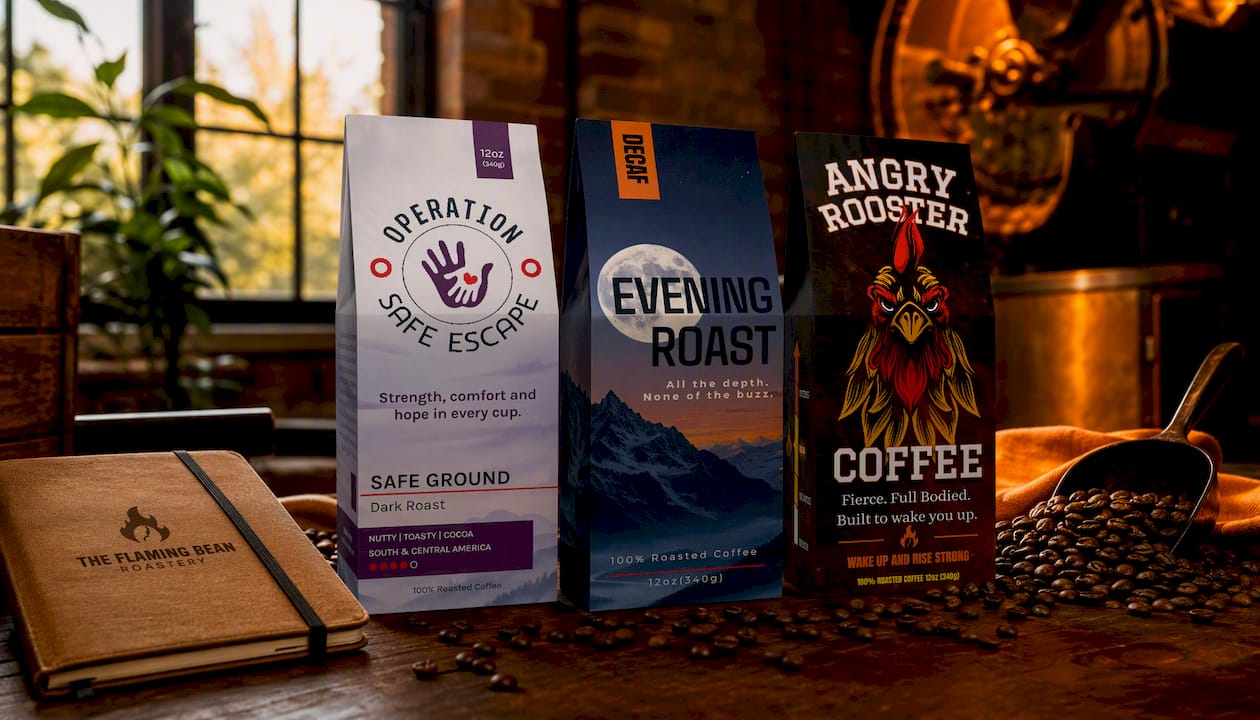
Safe Ground pairs its sourcing story with a mission beyond the cup, supporting organizations focused on protecting vulnerable people. Evening Roast offers a smoother, more approachable profile for those easing into specialty coffee who want sourcing transparency behind the blend. Angry Rooster brings a bolder, more intense cup for readers wanting a roast with robust character.
Check each product page for the specific origin and certification notes before you order, since sourcing details vary by lot and harvest. Ready to taste the difference a well-managed canopy makes? Order a bag of Safe Ground, browse Evening Roast, or grab Angry Rooster and start your subscription today.
Primary Sources and Further Reading
For readers who want to go straight to the standards and studies behind this guide, the Smithsonian’s Bird Friendly certification norms lay out the exact canopy and species requirements roasters must meet. The Smithsonian’s ecological benefits overview summarizes the bird and biodiversity research in plain language. The Columbia Climate School’s reporting covers shade coffee’s climate resilience angle, and the Frontiers in Sustainable Food Systems review offers the most comprehensive academic synthesis of shade versus sun research available.
Sources
The Flaming Bean sources exceptional coffees from renowned growing regions around the world and roasts each one to highlight the character and story behind the bean, and that story increasingly includes how the coffee was grown. Coffee roasts with varying flavor profiles sit alongside each other, and the sourcing conversation behind each blend asks the same questions: where did this coffee come from, and what did the farm look like.
Purpose-driven blends are part of what makes the company more than a coffee provider. Through some offerings, the company supports organizations working on causes ranging from digital safety to community protection, which means a purchase may do double duty beyond the cup itself.
When it comes to shade-friendly and ethically sourced coffee, origin details and certification notes are evaluated on a coffee-by-coffee basis and are listed on product pages rather than making blanket claims across the whole lineup. That approach keeps the sourcing conversation honest: some lots carry stronger certification backing than others, and the product page is where that detail lives.
Readers with questions about a specific origin or certification are encouraged to check the details listed on individual product pages before ordering.
- Ecological Benefits of Shade-grown Coffee — Smithsonian’s National Zoo & Conservation Biology Institute
- Shade-grown coffee is a sustainable alternative — Columbia Climate School
- Shade-grown coffee and agroforestry review — Frontiers in Sustainable Food Systems (2022)
FAQ
What coffee is shade-grown?
Shade-grown coffee is any coffee cultivated under a canopy of trees rather than in cleared, full-sun fields, though the exact canopy density and tree diversity vary widely by farm and region.
Is shade-grown coffee better?
It’s better ecologically in nearly every measurable way, supporting far higher bird and species diversity along with stronger soil and carbon outcomes, and it often produces denser, more complex-tasting beans due to slower cherry maturation.
Is The Flaming Bean’s coffee shade-grown?
The Flaming Bean lists origin and certification details on individual product pages, since sourcing varies by coffee, so check the specific listing for any blend to confirm its growing conditions.
What does “shade grown” mean?
It means the coffee was cultivated beneath a tree canopy that provides shade, moderates temperature, and supports biodiversity, though the term itself isn’t regulated, which is why certifications like Bird Friendly® exist to verify the claim.
How can I tell if a “shade-grown” claim is genuine?
Look for third-party certification, ideally Bird Friendly® paired with organic status, and check whether the roaster names the specific farm or cooperative rather than relying on the term alone.
Comments