
Store Coffee Beans for Peak Flavor in 1–2 Weeks for Home Drinkers

Keep whole coffee beans in an airtight, opaque container in a cool, dark, dry spot, away from your stove and windows. Leave beans in the original bag if it has a one-way valve, or transfer them if it doesn’t. Buy only what you’ll drink within a short time frame, and grind right before you brew.
TL;DR:
- Using bags with one-way degassing valves and transferring beans to airtight, opaque containers extends freshness and reduces oxygen exposure.
- Avoid storing beans near heat sources, in the fridge, or in transparent jars, as light, heat, and moisture accelerate spoilage and flavor loss.
- Freezing small portions of beans in vacuum-sealed bags can preserve flavor for months, but single-week amounts stored in the pantry are usually sufficient.
- Grinding beans immediately before brewing significantly maintains flavor, especially if purchasing smaller amounts more frequently.
- Most beans reach peak freshness within two weeks of roasting, with aroma fading after three weeks at room temperature, but proper storage can extend flavor beyond that.
Table of Contents
- How to Store Coffee Beans: A Quick Freshness Checklist
- Should You Leave Beans in the Bag or Use a Container?
- Should You Freeze Coffee Beans or Keep Them in the Fridge?
- How Long Do Coffee Beans Stay Fresh?
- Build a Grinding Routine That Matches Your Storage
- Expert Tips and Practical Notes
- Why Small Habits Beat Expensive Storage Gadgets
- Fresh Coffee Starts With the Right Bag Size
- Where This Advice Comes From
- Sources
- FAQ
How to Store Coffee Beans: A Quick Freshness Checklist
Coffee has five enemies, and each one attacks flavor differently. Oxygen oxidizes the oils in the bean, dulling aroma within days. Heat speeds up that oxidation, which is why the spot next to your stove or coffee maker is the worst place for a bag of beans. Light breaks down flavor compounds too, so a clear glass jar on the counter looks nice but works against you. Moisture invites staleness and even mold. Coffee is also hygroscopic, meaning it soaks up smells from whatever sits nearby, so keeping it away from strong odors matters as much as keeping it dry.
The fix is simple. Store beans in a cupboard or pantry, not on top of the refrigerator or beside the oven. Reseal the bag tightly after every use, pressing out excess air before folding or clipping it shut. Keep beans far from the grinder hopper, since hoppers expose beans to light and air all day long.
- Store in a cupboard away from heat sources and appliances that generate warmth.
- Reseal bags immediately after scooping out coffee.
- Skip the clear jar. Opaque containers block light exposure.
- Never store beans near onions, spices, or other strong-smelling foods.
- Buy whole beans over pre-ground whenever possible. They hold flavor far longer.
Pro Tip: If your kitchen runs warm, a cool interior cabinet away from sunlight beats a countertop canister every time, even an attractive one.
Should You Leave Beans in the Bag or Use a Container?
A quality roaster bag with a one-way degassing valve is often your best bet for short-term storage. That valve lets carbon dioxide escape as the beans continue to release gas after roasting, without letting oxygen sneak back in. Coffee experts consistently point to this as one of the most effective storage methods available to home drinkers, largely because it does the job automatically with zero extra equipment.
Transfer beans to a separate container when the original bag has no valve, gets torn or crushed, or when you know you’ll keep the coffee longer than two weeks. In those cases, a dedicated canister earns its keep.
Look for these features when choosing one:
- An opaque or metal body that blocks light completely.
- A genuinely airtight seal, not just a snap-on lid.
- Minimal headspace, since less air trapped inside means slower oxidation.
- A way to push air out, such as a vacuum pump lid or a built-in valve.
Vacuum canisters with degassing capability can stretch freshness further for anyone who buys in bulk, but the gains are marginal if you’re already buying fresh and finishing bags within a few weeks.
Should You Freeze Coffee Beans or Keep Them in the Fridge?
Skip the refrigerator. It’s damp, and every time you open the door, the coffee absorbs moisture and picks up smells from last night’s leftovers. That combination degrades flavor faster than room-temperature storage in a good container.
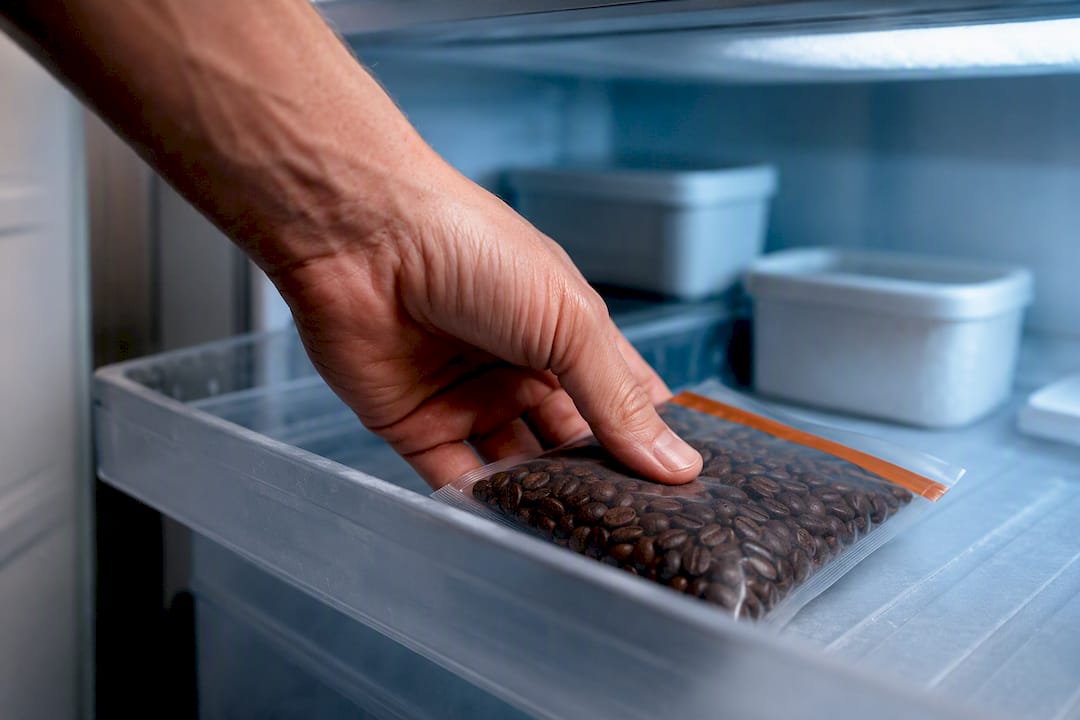
The freezer, on the other hand, can genuinely extend freshness for a number of months when you do it right. Here’s the protocol:
- Portion beans into single or smaller amounts before freezing, not one giant bag.
- Use vacuum-sealed bags or a FoodSaver for each portion to block air and moisture.
- Tape over the one-way valve if you’re freezing the original bag, since valves aren’t built for freezer humidity.
- Store portions toward the back of the freezer, where temperature stays most consistent.
- Thaw a sealed portion completely before opening it, and never refreeze leftovers.
This approach makes sense for bulk purchases or a rare specialty coffee you want to stretch out. It’s overkill for your everyday bag. If you’re buying amounts you’ll finish within a week or two, just leave it in the pantry.
Pro Tip: Label each frozen portion with the roast date before it goes in the freezer. You’ll thank yourself later when you can’t remember which bag came first.
How Long Do Coffee Beans Stay Fresh?
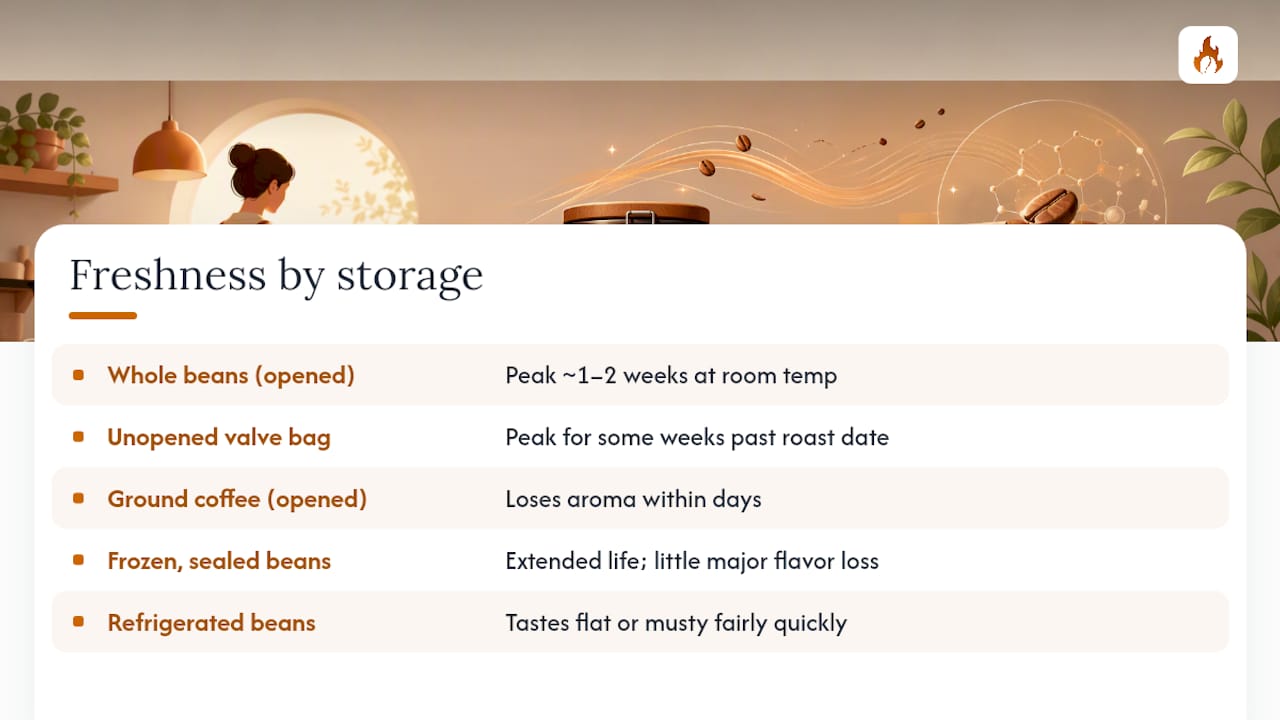
Most of the aroma compounds that make coffee taste vibrant dissipate within two to three weeks at room temperature, which is exactly why a one to two week household target works so well for daily drinkers.
An unopened bag with a good valve can hold its peak freshness for some weeks past the roast date. Once opened, that freshness window shrinks. Ground coffee loses aroma dramatically quicker than whole beans, sometimes within days, because grinding exposes far more surface area to oxygen. Frozen, properly sealed beans can last for an extended period without major flavor loss, while beans left in the fridge tend to taste flat and sometimes musty fairly quickly.
Trust your senses over the calendar. Stale coffee smells faint instead of fragrant, tastes muted or flat, and sometimes carries a cardboard-like note where bright acidity used to be. If your morning cup suddenly seems dull for no obvious reason, check the roast date before you blame your brewing method.
Build a Grinding Routine That Matches Your Storage
Grinding right before you brew is the single biggest lever you control. Ground coffee’s exposed surface area means it stales far faster than whole beans stored properly, so a grinder on your counter is worth more than almost any storage gadget.
Build your routine around smaller purchases. Buy bags sized for a week or two, weigh out portions with a kitchen scale, and vacuum-seal any extra into weekly packs for the freezer if you’ve bought more than you’ll use soon.
- Buy smaller bags more often instead of one large bag that sits half-used for a month.
- Weigh beans daily so you grind exactly what you need, nothing more.
- Empty your grinder hopper nightly if you keep beans in it, since oils build up and turn rancid.
- Clean the hopper and burrs regularly to prevent old coffee oil from tainting fresh beans.
Expert Tips and Practical Notes
A few habits separate people who chase flat coffee from people who don’t. Tape the valve before freezing, always label the roast date on anything you store long term, and never use your grinder’s hopper as a storage container.
- Read why coffee beans turn oily over time and what that means for your grinder maintenance.
- Learn how bag size affects your flavor window so you stop overbuying.
- See how degassing valves work on retail bags and why they matter more than a fancy jar.
- Understand why roast date matters more than any expiration date printed on a bag.
Why Small Habits Beat Expensive Storage Gadgets
The biggest upgrade most people can make isn’t a $60 canister. It’s buying smaller amounts more often and grinding right before brewing. Fix the buying habit first, and the storage container becomes a minor detail rather than the whole solution. That’s the philosophy behind small-batch roasting: quality shows up in the routine, not just the bag.
— Tony
Fresh Coffee Starts With the Right Bag Size
Some roasters produce coffee in small batches sized for how people actually drink coffee at home, not for how long a bag can sit in a cupboard. If the one to two week window is your target, Evening Roast is built for exactly that kind of steady, everyday use, smooth enough to reach for daily without wearing out its welcome.
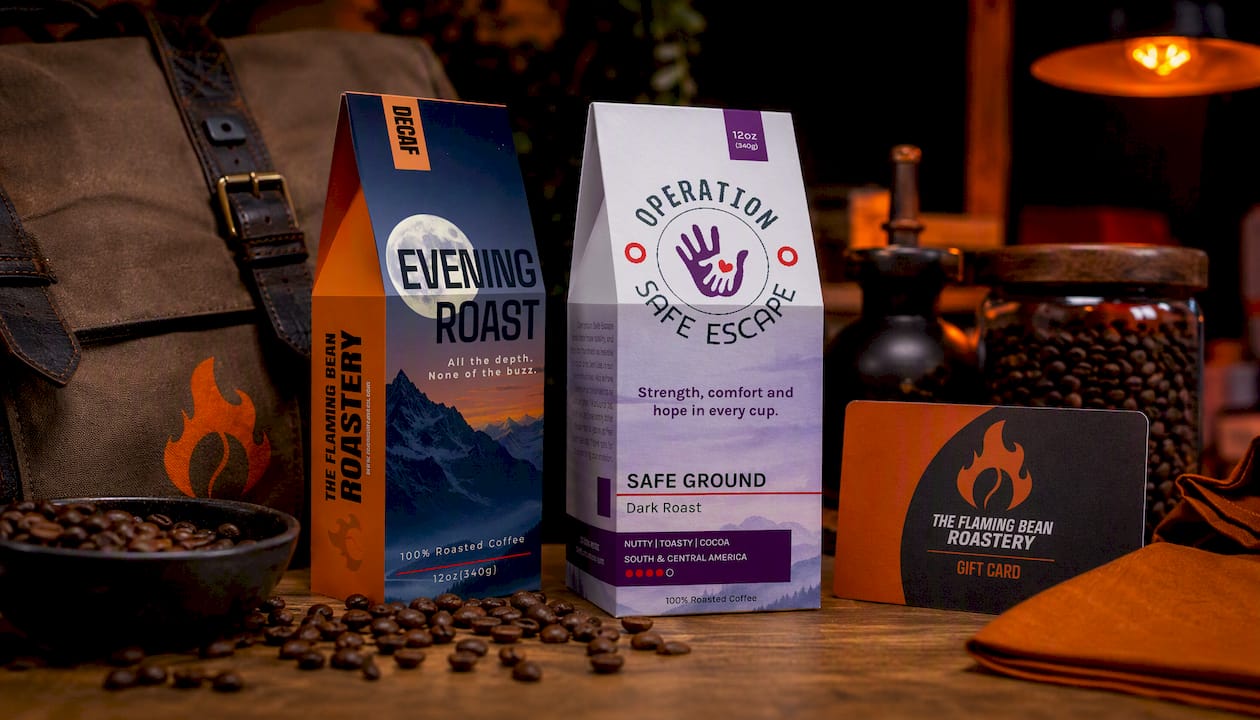
If you’re drawn to coffee that supports something bigger, Safe Ground channels part of every purchase toward organizations fighting exploitation, so your morning cup does double duty. Not sure what a coffee lover on your list actually wants? A Flaming Bean Coffee Gift Card, priced from $10 to $100, lets them pick their own roast and buy it fresh instead of guessing. Browse the full lineup of Flaming Bean roasts and order a bag sized for how you actually drink coffee, not how much shelf space you have.
Where This Advice Comes From
This guide draws on storage guidance from the National Coffee Association, reporting from Serious Eats and Epicurious, plus practical tips from The Kitchn and Real Simple.
Sources
- Storage and shelf life - NCA - About Coffee
- I Asked Coffee Experts How to Keep Beans Fresh—They All Said the Same Thing
- Storing Coffee Beans for the Freshest Tasting Brews is Easier Than You Think | Epicurious
- How to Store Coffee Beans for Maximum Freshness
- How to Store Coffee Beans & Keep Them Fresher Longer
FAQ
What is the best way to store coffee beans?
Keep whole beans in an airtight, opaque container or their original valve bag, stored in a cool, dark, dry spot away from your stove and windows.
Is it okay to store coffee beans in a Ziploc bag?
A standard Ziploc bag isn’t ideal since it lacks a true airtight seal and won’t block light, though it’s better than leaving beans fully exposed to air for a day or two in a pinch.
Is it better to keep coffee in the bag or in a jar?
The original bag wins if it has a one-way degassing valve and reseals well; switch to an opaque, airtight jar only if the bag is damaged, valve-free, or you’re storing beans longer than two weeks.
How long can you store coffee beans before they go bad?
Whole beans hit their peak flavor within a couple of weeks of the roast date, with most aroma fading over the following two to three weeks at room temperature, while properly frozen beans can last months without major loss.
Comments