
SCA Backed Logistics for HR Team Coffee Tasting with The Flaming Bean

A team coffee tasting is a guided sensory workshop where a group tastes and discusses several coffees side by side, usually a facilitator, four to six samples, and a shared vocabulary for describing flavor. Teams can run it onsite with cupping bowls, virtually with shipped kits, or as a hybrid mix of both. Coffee tasting can be conducted onsite, virtually, or as a hybrid mix, using real blends that teams can taste, talk about, and take home.
TL;DR:
- Tasting sessions should include two to four contrasting coffees to avoid sensory fatigue and build confidence, especially for beginners.
- Shipping virtual kits at least three days before the event ensures timely arrival and sufficient preparation time.
- A well-facilitated tasting encourages descriptive language over subjective preferences and flattens hierarchy among participants.
- Book logistics 10 to 21 days in advance, with larger groups needing breakout rooms and a facilitator-to-participant ratio of one per 15 to 20.
- Choosing a vendor with clear facilitator experience, transparent roast dates, and defined session structure reduces risks and enhances the experience.
Table of Contents
- What Happens During a Guided Team Tasting?
- Onsite, Virtual, or Hybrid: Which Format Fits Your Team?
- How Does a Coffee Cupping Session Actually Work?
- Planning Checklist: Lead Times, Group Sizes, and Costs
- What Team-Building Results Should You Expect?
- How Do You Choose the Right Coffee Tasting Vendor?
- Why The Flaming Bean Fits Corporate Coffee Tastings
- A Facilitator’s Note on What Actually Sticks
- How To Book A Team Tasting With The Flaming Bean
- Sources
What Happens During a Guided Team Tasting?
A typical session opens with a quick intro to how coffee flavor works, moves into two or three tasting rounds, and closes with group discussion comparing notes. Most sessions run 45 to 90 minutes, depending on how many coffees are on the table and how much the group wants to dig in.
The facilitator sets the pace, explains each coffee’s origin and roast before pouring, and keeps the conversation moving between rounds. A good facilitator asks questions rather than lecturing. “What do you notice first?” gets better engagement than a monologue about processing methods.
- Welcome and orientation: 5 to 10 minutes covering how tasting works and what to expect
- Tasting flights: two to five coffees per session, poured in small comparative rounds
- Group discussion: open conversation after each flight, guided by simple prompts
- Wrap-up: recap favorite notes and takeaways
Flights of two to five coffees hit a sweet spot. Fewer than two removes the comparison that makes tasting interesting, and professional panels cap sessions around four to six samples to avoid sensory fatigue. For a first-timer group, two contrasting coffees, like a light roast and a dark one, creates an obvious difference that builds confidence before adding complexity.
Onsite, Virtual, or Hybrid: Which Format Fits Your Team?
Each delivery format solves a different logistics problem, and the right one depends on where your people actually are.
Onsite tastings need a table, hot water access, cupping bowls or cups, and decent ventilation since brewing several coffees at once creates real aroma in a small room. Sanitation is simple: rinse spoons between coffees and give each participant their own cup.
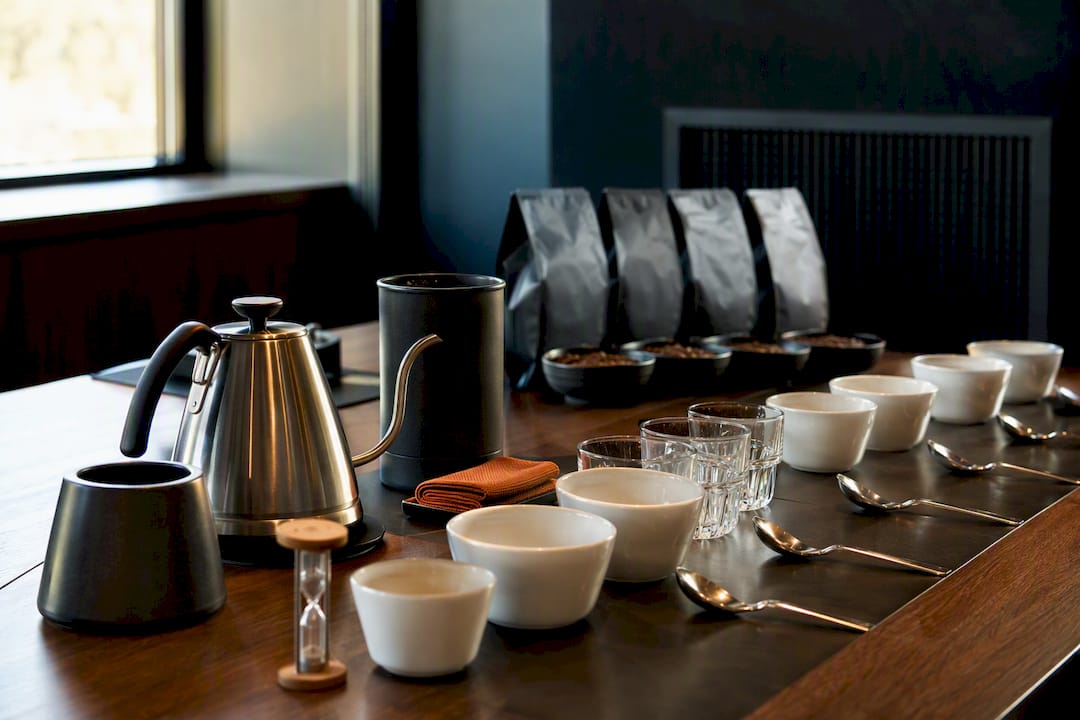
Virtual tastings rely on kits shipped ahead of time, plus a video platform with breakout rooms if the group is large. Kraftylab notes that kitted virtual experiences typically need 10 to 21 days of shipping lead time, with kits arriving at least three days before the event to leave room for shipping delays.
Hybrid sessions are the trickiest, since remote participants can feel like an afterthought. Assign a co-host to monitor chat and breakout rooms, and mail kits to remote staff on the same timeline as a fully virtual event.
- Onsite: lowest cost per person, no shipping risk, requires physical space
- Virtual: highest flexibility for distributed teams, adds kit and shipping costs
- Hybrid: best for mixed teams, needs a dedicated remote-side moderator
Pro Tip: Assign one person, not the main facilitator, to watch the chat window during hybrid sessions. Remote participants disengage fast when nobody responds to their comments.
How Does a Coffee Cupping Session Actually Work?
Team tastings borrow their structure from professional cupping, a standardized method that removes guesswork from how you evaluate coffee. The sequence is short, repeatable, and easy to teach in five minutes.
- Dose and grind the coffee just before pouring, so aroma compounds haven’t faded.
- Pour hot water over the grounds and let them sit undisturbed for four minutes while the crust forms on top.
- Break the crust at the four-minute mark by pushing your spoon through the surface and inhaling deeply. This is where the aroma hits hardest.
- Skim the grounds off the top so they don’t interfere with tasting.
- Slurp loudly from a spoon. The slurp aerates the coffee across your palate, which pulls out more flavor than a normal sip.
- Cool and repeat. Taste the same sample again as it drops in temperature.
That last step matters more than most people realize. Coffee reveals different characteristics at different temperatures because volatile flavor compounds present differently as the liquid cools, which is why cuppers deliberately retaste the same coffee at roughly 75°C, 65°C, and 50°C to catch notes that vanish once it’s hot.
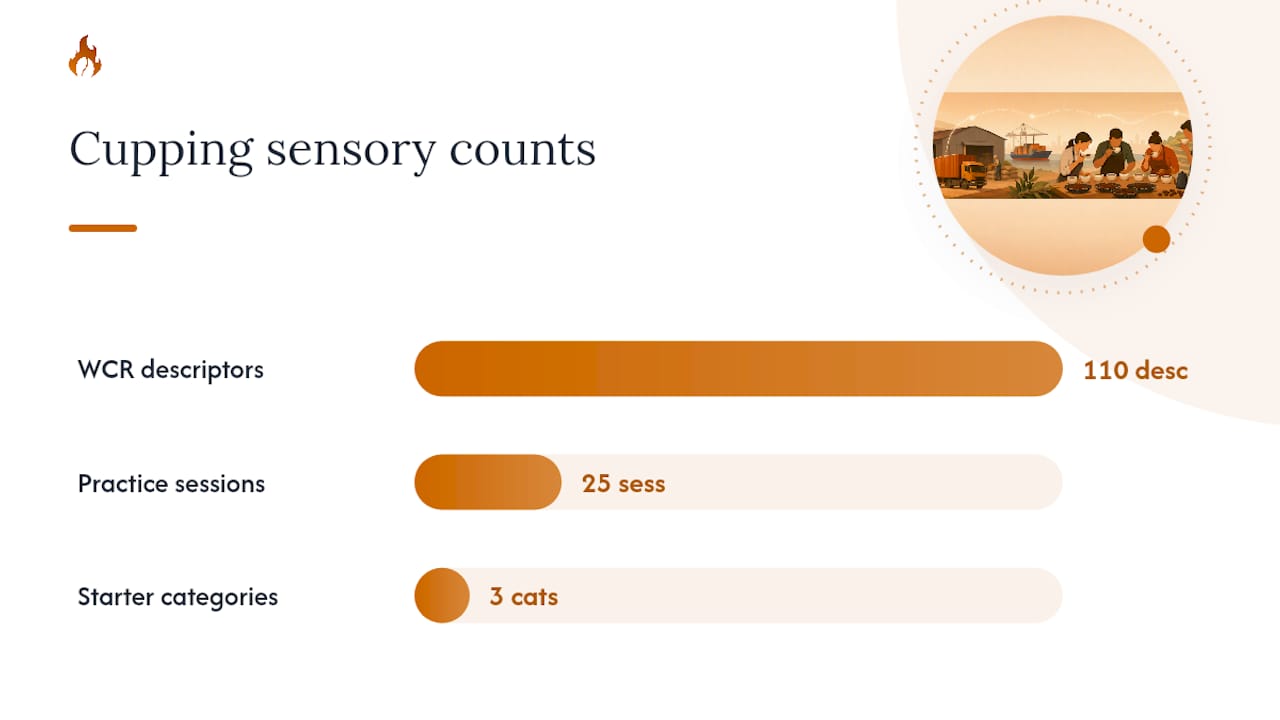
Side-by-side tasting also trains the palate faster than drinking coffee alone ever will, and consistent practice over 20 to 30 sessions helps most people reliably identify broad flavor categories like fruity, nutty, or floral. To describe what you’re tasting with any precision, teams lean on the SCA Coffee Taster’s Flavor Wheel, which organizes descriptors into categories like fruity, sweet, and roasted, or the World Coffee Research Sensory Lexicon, which defines 110 flavor descriptors with reference standards used to calibrate professional panels. You don’t need all 110. Three categories, fruity, nutty, and floral, are usually enough for a team’s first session. For a deeper walkthrough, our cupping guide for beginners breaks down each step with more detail.
Planning Checklist: Lead Times, Group Sizes, and Costs
Booking a team tasting goes smoother when you lock logistics early rather than scrambling the week before.
- Lead time: confirm shipping addresses and order kits 10 to 21 days out for virtual formats
- Group size: 6 to 30 participants works well; larger groups need breakout tables or rooms
- Facilitator ratio: one facilitator per 15 to 20 participants keeps discussion manageable
- Kit contents: sample coffees, tasting sheets, cups or bowls, spoons, and a simple scoring card
- Budget drivers: coffee volume, kit shipping, and facilitator time are the three biggest cost factors
For teams on a tighter budget, a low-cost alternative to full kits is a single-shared brew station with pre-ground samples in labeled containers. It sacrifices some polish but keeps the comparative tasting intact.
Pro Tip: Collect shipping addresses in the same email that confirms attendance. Chasing down addresses a week before the event is the single most common cause of late kits.
What Team-Building Results Should You Expect?
The clearest shift happens in how people talk. Instead of “I like this one,” teams start saying “this one has more citrus” or “this tastes nuttier than the last cup.” That’s not a small change. Moving from subjective preference to shared, objective descriptors changes the entire tone of the conversation, and it invites curiosity instead of debate.
The format also flattens hierarchy for the length of the session. Nobody’s job title tells them what fruity or floral tastes like, so junior staff and senior leaders end up comparing notes as equals.
Measuring impact doesn’t need to be complicated:
- A short post-event survey asking what participants noticed and enjoyed most
- Breakout group reports summarizing each table’s favorite flavor descriptors
- A follow-up “guess the coffee” challenge weeks later to see what stuck
How Do You Choose the Right Coffee Tasting Vendor?
Not every tasting experience is built the same, and a few pointed questions separate a well-run session from a scripted sales pitch.
- Ask about facilitator background. Has this person run group tastings before, or are they reading from a script?
- Ask when the coffee was roasted. Freshness affects flavor clarity, and a vague answer is a warning sign.
- Ask how interactive the session is. Look for breakout discussion, tasting sheets, and open Q&A, not a one-way presentation.
- Ask what’s included in the kit. Cups, spoons, scoring sheets, and sample quantities should be spelled out before you book.
- Ask about shipping timelines. A vendor who can’t give you a firm delivery window is a risk for virtual events.
Red flags include vague answers about roast dates, no clear session itinerary, and facilitators who talk at the group instead of drawing out discussion. A quick email template covering these five questions, sent to any vendor before booking, saves you from discovering the gaps on event day.
Why The Flaming Bean Fits Corporate Coffee Tastings
Some vendors supply roasted coffee for teams that want tasting experiences built around real, distinct blends rather than generic samples. Available coffee lineups can span approachable to bold, which makes assembling a contrasting flight simple instead of guesswork.
- Wholesale and private-label programs for organizations ordering in volume
- Blends spanning smooth to bold, suited to comparative flights
- Mission-driven options that tie a tasting to a charitable cause
- Educational resources covering flavor wheel basics and roast level differences
A Facilitator’s Note on What Actually Sticks
The most memorable tastings I’ve seen described weren’t the ones with the fanciest kits. They were the ones where a quiet team member suddenly had the most to say about a coffee’s finish, and the room actually listened. If you take one thing from this guide, make it this: pick two genuinely different coffees for round one. The contrast does more work than any script ever will.
— Tony
How To Book A Team Tasting With The Flaming Bean
Booking works around whichever format fits your team. Virtual kits ship with sample coffees and tasting sheets, onsite events use your own space with our beans, and wholesale orders cover larger recurring programs.
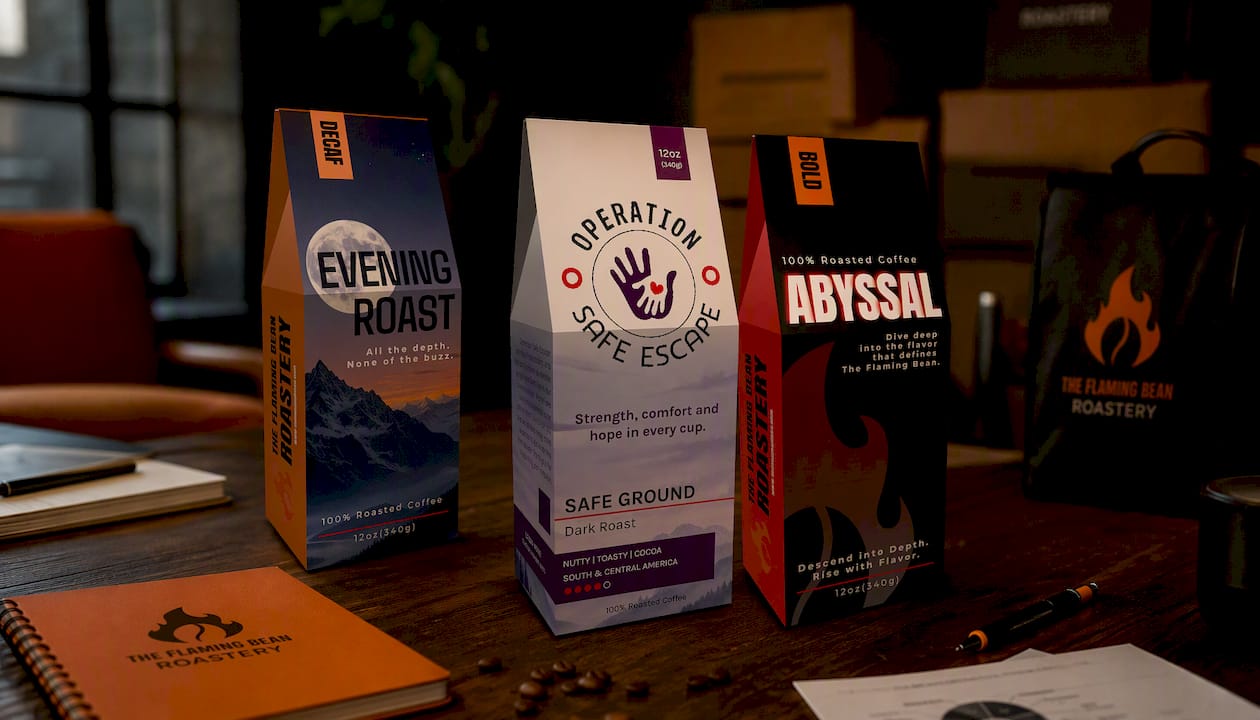
For a contrasting flight, pair a smooth cup like Evening Roast with something bolder like Angry Rooster or the intense Abyssal. Teams looking to tie their event to a cause can build a flight around Safe Ground, a blend that supports charitable partners alongside its flavor. If you’re planning a larger branded gathering around the tasting, this guide to corporate event branding is worth a look for tying the coffee moment into the bigger event. Browse the full Signature Blends collection and request a quote to get shipping timelines locked in for your next team date.
Sources
- World Coffee Research Sensory Lexicon (2016)
- Coffee tasting guide — United Baristas
- Virtual coffee tasting experience: Live class + kit — Kraftylab
Comments