
Types of Coffee Flavor Profiles: A Taster's Guide

Coffee flavor profiles are defined as the full range of sensory characteristics a coffee expresses through taste, aroma, and mouthfeel. The Specialty Coffee Association (SCA) organizes these characteristics into 9 primary flavor categories, giving coffee enthusiasts a shared language for what they experience in the cup. Understanding types of coffee flavor profiles turns a daily habit into a genuinely rewarding practice. Whether you brew at home or order at a specialty café, knowing what to look for makes every sip more interesting. The SCA Flavor Wheel, developed in collaboration with World Coffee Research, is the most widely used tool for this purpose.
1. What are the 9 types of coffee flavor profiles?
Coffee has 9 primary flavor categories with 110 distinct attributes, according to the World Coffee Research Sensory Lexicon and the SCA Flavor Wheel. These categories cover every sensory direction a coffee can take, from bright fruit to deep roast. Here is what each one means in practice:
- Fruity: Berry, citrus, stone fruit, and tropical notes. Common in Ethiopian and Kenyan coffees.
- Floral: Jasmine, rose, and hibiscus aromas. Often found in light-roasted African beans.
- Sweet: Caramel, honey, vanilla, and brown sugar. A crowd-pleasing category that shows up across many origins.
- Nutty/Cocoa: Almond, hazelnut, dark chocolate, and milk chocolate. Typical of Brazilian and Colombian coffees.
- Spices: Cinnamon, clove, pepper, and anise. More common in Indonesian and Indian coffees.
- Roasted: Smoky, tobacco, cedar, and charred notes. Dominant in dark roasts.
- Green/Vegetative: Grass, hay, raw grain, and herb. Usually a sign of underdevelopment in the roast.
- Sour/Fermented: Vinegar, winey, and fermented fruit. Can be a positive complexity note or a processing defect.
- Other/Defect: Rubber, petroleum, musty, or medicinal. These indicate processing or storage problems.
Roasted coffee contains over 1,000 naturally occurring compounds related to fruits, nuts, and spices. That means the flavors on the wheel are not added ingredients. They are the natural result of chemistry happening inside the bean.
Pro Tip: Smell your dry grounds before brewing. The dry fragrance often reveals the clearest signal of which flavor category dominates that coffee.
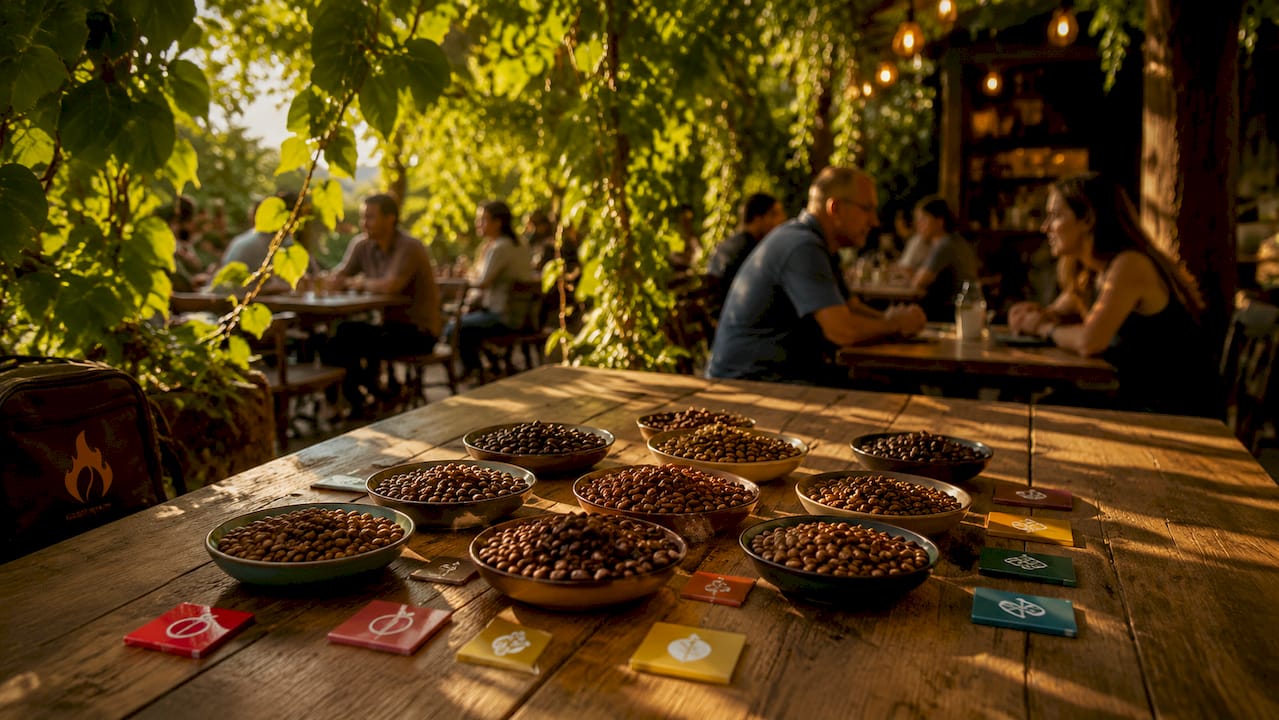
2. How roast level shapes coffee flavor notes
Roast level is the most reliable predictor of coffee flavor profile expression. The same bean roasted three different ways will taste like three different coffees. Understanding this relationship is one of the fastest ways to predict what you will taste before you even brew.
| Roast Level | Typical Flavor Notes | Body & Acidity |
|---|---|---|
| Light | Fruity, floral, tea-like, bright citrus | Light body, high acidity |
| Medium | Caramel, nuts, milk chocolate, balanced | Medium body, moderate acidity |
| Dark | Smoky, bitter, roasted, tobacco | Full body, low acidity |
Light roasts preserve the original character of the bean. A light-roasted Ethiopian coffee will show its blueberry and jasmine notes clearly because the roasting process has not overwritten them. Medium roasts balance acidity and sweetness, which is why they appeal to the widest range of drinkers. Dark roasts push the flavor profile toward the Roasted category, often masking origin-specific notes entirely.
The Flaming Bean’s Evening Roast is a good example of how a well-executed roast level creates a smooth, approachable cup without sacrificing character.
Pro Tip: If you want to taste origin-driven flavors like fruit or florals, choose a light roast. If you prefer chocolate and nuts, go medium. If you love bold and smoky, dark roast is your category.
For a deeper breakdown of how roasting transforms flavor, The Flaming Bean’s guide on coffee roast levels covers the full picture.
3. How geography and processing shape coffee tasting profiles
Origin geography strongly influences the typical flavor profile of a coffee. African beans tend to be brighter and fruitier. Asian beans lean earthier and spicier. South American beans sit in the sweet and nutty range. This is not marketing language. It reflects real differences in soil, altitude, and climate.
Here are the hallmark flavor traits by region:
- Ethiopia: Blueberry, jasmine, lemon, bright acidity
- Kenya: Blackcurrant, tomato, grapefruit, wine-like
- Colombia: Caramel, nuts, milk chocolate, balanced sweetness
- Brazil: Peanut, dark chocolate, low acidity, heavy body
- Indonesia: Earthy, cedar, tobacco, spice, full body
- Guatemala: Brown sugar, apple, cocoa, medium acidity
Processing method adds another layer. Washed coffees (where the fruit is removed before drying) tend to taste cleaner and brighter, highlighting acidity and floral notes. Natural process coffees (dried with the fruit intact) develop more sweetness and fermented fruit complexity. Honey process coffees fall between the two, offering sweetness with some brightness.
Ethiopian coffees feature blueberry, jasmine, and lemon, while Colombian coffees show caramel, nuts, and milk chocolate. These are not random. They reflect the combined effect of altitude, soil mineral content, and how the farmer processed the cherry after harvest.
Altitude matters too. Higher-grown coffees develop more slowly, which concentrates sugars and acids. This is why high-altitude Ethiopian and Guatemalan coffees often show more complexity than lower-altitude beans from the same region.
4. How to identify coffee flavors using the SCA Flavor Wheel
The SCA Flavor Wheel is designed to move tasters from broad impressions to specific flavor descriptions by starting at the center and working outward. This structure prevents the common mistake of reaching for a specific note before you have established the general category. Coffee flavor perception depends primarily on aroma, which is why the process starts before you even take a sip.
Follow these steps to build your tasting practice:
- Smell the dry grounds. Note the fragrance before water touches the coffee.
- Smell the wet grounds. After brewing, the aroma shifts and often becomes more expressive.
- Sip and hold. Let the coffee sit on your tongue for two seconds before swallowing.
- Start with sensory basics. Ask: Is this sweet, sour, or bitter? Salty or savory?
- Move to the center of the wheel. Identify the broad category first. Fruity? Roasted? Nutty?
- Work outward. Narrow from the broad category to a specific note. Fruity becomes citrus, then lemon.
- Note the finish. What lingers after you swallow? That aftertaste often reveals the truest flavor signal.
Starting with raw sensory perceptions before assigning flavor labels reduces bias and leads to more accurate tasting notes. Saying “this is tart” before reaching for “grapefruit” keeps you honest about what you actually taste.
Tasting notes are not a promise that you will detect every listed flavor in every cup. A brewed coffee may show one or two dominant notes, and that is completely normal. Think of the notes on a bag as directional pointers to a flavor family, not a checklist to complete.
Pro Tip: Keep a small notebook next to your coffee setup. Write down three words after each cup. After a month, you will notice real improvement in how quickly you identify flavor categories.
5. What makes coffee flavor notes different from added flavors
Coffee tasting notes describe natural aromatic compounds, not added ingredients. This is one of the most misunderstood facts about specialty coffee. When a bag says “notes of blueberry and jasmine,” the roaster is not adding blueberry or jasmine to the beans. Those flavors emerge from the bean’s own chemistry during roasting.
Roasted coffee contains over 1,000 naturally occurring compounds. Many of these compounds are chemically similar to those found in fruits, flowers, and spices. That is why a well-grown Ethiopian coffee can genuinely smell like blueberries without a single piece of fruit involved in the process.
Flavored coffees are a separate category and are clearly labeled as such. They involve adding flavor oils or syrups to the roasted bean. If a bag does not say “flavored coffee,” the notes listed are entirely natural. This distinction matters because it changes how you approach tasting. You are not hunting for an added ingredient. You are recognizing a natural chemical signature.
Tasting notes are roasters’ attempts to help consumers relate to coffee’s natural chemistry-driven flavors. They are a communication tool, not a recipe. Understanding this makes the whole tasting process feel less intimidating and more like genuine discovery.
6. How to read coffee flavor notes on a bag
Reading coffee flavor notes is a skill that improves quickly once you know what the labels actually mean. Roasters list tasting notes to communicate the dominant flavor family of a coffee, not to guarantee a specific taste experience. The notes reflect what trained tasters detected under controlled conditions.
Start by checking the roast level. That single piece of information predicts more about what you will taste than anything else on the label. Then look at the origin. An Ethiopian natural process coffee labeled with “blueberry and dark chocolate” is telling you it sits in the Fruity and Sweet categories with some fermented complexity.
When you see multiple notes listed, they are usually ranked by dominance. The first note is typically the most prominent. A bag listing “caramel, hazelnut, and orange zest” is primarily a sweet and nutty coffee with a bright finish. Use the SCA Flavor Wheel categories as your mental map when reading any label.
Understanding flavor notes also helps you understand balance in coffee. A well-balanced coffee does not have one note that overpowers everything else. It moves through sweetness, acidity, and body in a way that feels complete.
Key takeaways
Understanding coffee flavor profiles starts with the 9 SCA categories, which map every sensory characteristic from fruity and floral to roasted and spiced.
| Point | Details |
|---|---|
| 9 primary flavor categories | The SCA Flavor Wheel organizes all coffee flavors into Fruity, Floral, Sweet, Nutty/Cocoa, Spices, Roasted, Green/Vegetative, Sour/Fermented, and Other/Defect. |
| Roast level predicts flavor | Light roasts show fruity and floral notes; dark roasts emphasize smoky and bitter characteristics. |
| Origin shapes the profile | Ethiopian coffees lean fruity and floral; Brazilian and Colombian coffees favor nutty and sweet notes. |
| Notes are natural, not added | Over 1,000 natural compounds in roasted coffee create fruit, nut, and spice flavors without any additives. |
| Start broad, then narrow | Use the SCA Flavor Wheel from center to edge to move from general sensory impressions to specific flavor names. |
My take on tasting coffee for the first time
The biggest mistake I see new tasters make is expecting to identify every note on the bag in the first sip. That expectation turns a fun experience into a frustrating one. Coffee tasting is a practice, not a test.
Start with the categories you already know. Sweet and nutty are familiar to almost everyone. A Brazilian medium roast is a great first coffee to taste intentionally because it sits squarely in those comfortable zones. Once you can reliably recognize sweetness and nuttiness, move to something with more acidity, like a Colombian or a light-roasted Guatemalan.
The SCA Flavor Wheel is a tool, not a rulebook. I use it the way a musician uses a chord chart. It gives me a reference point, but the real learning happens by listening. In coffee terms, that means slowing down, smelling before sipping, and writing down what you actually notice rather than what you expect to notice.
One thing that genuinely surprised me early on: the finish tells you more than the first sip. The flavors that linger after you swallow are often the truest expression of the coffee’s character. Pay attention to what stays with you. That is where the real profile lives.
— Tony
Explore coffee flavor profiles with The Flaming Bean
Ready to put your tasting knowledge to work? The Flaming Bean roasts coffees that span the full range of flavor categories, from bold and roasted to smooth and sweet.
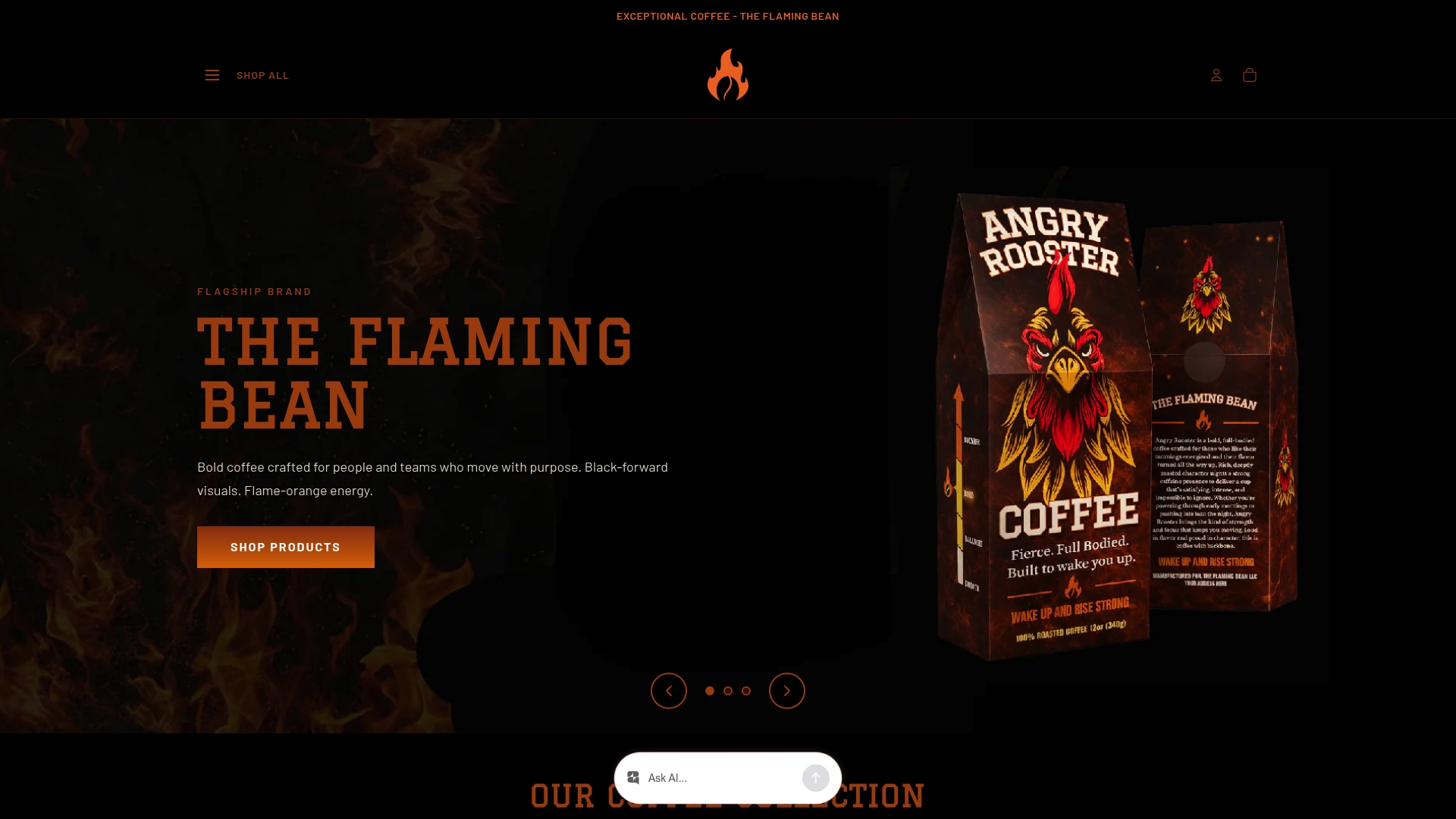
The Flaming Bean’s signature blends are a great starting point for exploring different profiles side by side. Abyssal and Angry Rooster sit in the bold, roasted end of the spectrum. Evening Roast offers a smooth, approachable cup for those who prefer the sweet and nutty range. To get the most out of any coffee, brewing equipment matters too. The right coffee grinder preserves the aromatic compounds that carry most of the flavor. Freshly ground beans make a real difference in how clearly you can detect tasting notes. Start tasting with intention, and the flavors will follow.
FAQ
What are the main types of coffee flavor profiles?
The SCA Flavor Wheel defines 9 primary categories: Fruity, Floral, Sweet, Nutty/Cocoa, Spices, Roasted, Green/Vegetative, Sour/Fermented, and Other/Defect. These categories cover the full range of sensory characteristics found in roasted coffee.
How do I identify coffee flavors in my cup?
Start by smelling the dry grounds, then the brewed coffee, then sip and hold briefly before swallowing. Use the SCA Flavor Wheel by identifying the broad category first, then narrowing to a specific note.
Do coffee tasting notes mean flavors were added to the beans?
No. Tasting notes describe naturally occurring aromatic compounds produced during roasting. Roasted coffee contains over 1,000 natural compounds that create fruit, nut, and spice characteristics without any added ingredients.
Which coffee origins have the most distinct flavor profiles?
Ethiopian coffees are known for blueberry, jasmine, and lemon. Colombian coffees show caramel, nuts, and milk chocolate. Indonesian coffees lean earthy and spicy. Origin, altitude, and processing method all shape these differences.
Does roast level change the flavor profile?
Yes. Light roasts preserve fruity and floral notes from the original bean. Dark roasts shift the profile toward smoky, bitter, and roasted characteristics. Roast level is the single most reliable predictor of what a coffee will taste like.
Comments