
Home Brewers: Nail 195°F–205°F Water Temperature Without a Thermometer

The Specialty Coffee Association puts the sweet spot at 195°F to 205°F (90°C to 96°C) for most hot brewing methods. The fastest way there without a thermometer: bring water to a full boil, then let it sit off the heat for 30 to 45 seconds. That gets you close enough for great coffee. Method and roast level shift where in that range you should actually land, and that’s where the real flavor tuning happens.
TL;DR:
- Water temperature should be fine-tuned after optimizing grind size, brew ratio, contact time, and water quality, which influence flavor more than temperature alone.
- Pour-over and drip brewing require water between 195°F and 205°F, while French press and AeroPress often benefit from slightly lower temps, depending on steep time and roast.
- To hit the right brewing temperature without a thermometer, bring water to a boil and let it sit for 30 to 45 seconds, adjusting for altitude or kettle type.
- Brew light roasts at higher temperatures around 203°F to 205°F to enhance brightness, while dark roasts perform better at lower temps near 195°F to 198°F.
- Consistent tasting at the same serving temperature and gradual adjustments help refine your water temperature for optimal flavor.
Table of Contents
- Why Water Temperature Coffee Extraction Depends On So Much
- What’s the Best Water Temperature for Each Brew Method?
- Should You Brew Light Roasts Hotter Than Dark Roasts?
- How Do You Hit the Right Temperature Without a Thermometer?
- What Tony From The Flaming Bean Says About Dialing In Your Brew
- Why Most Brewing Advice Skips the Part That Actually Matters
- Try These Blends to Practice Your Temperature Adjustments
- Sources
- FAQ
Why Water Temperature Coffee Extraction Depends On So Much
Heat is energy, and energy moves things. In a coffee bed, that means hotter water pulls sugars, acids, and bitter compounds out of the grounds faster than cooler water does. That’s the whole mechanism behind water temperature coffee extraction, and it’s why a few degrees can change a cup more than most beginners expect.
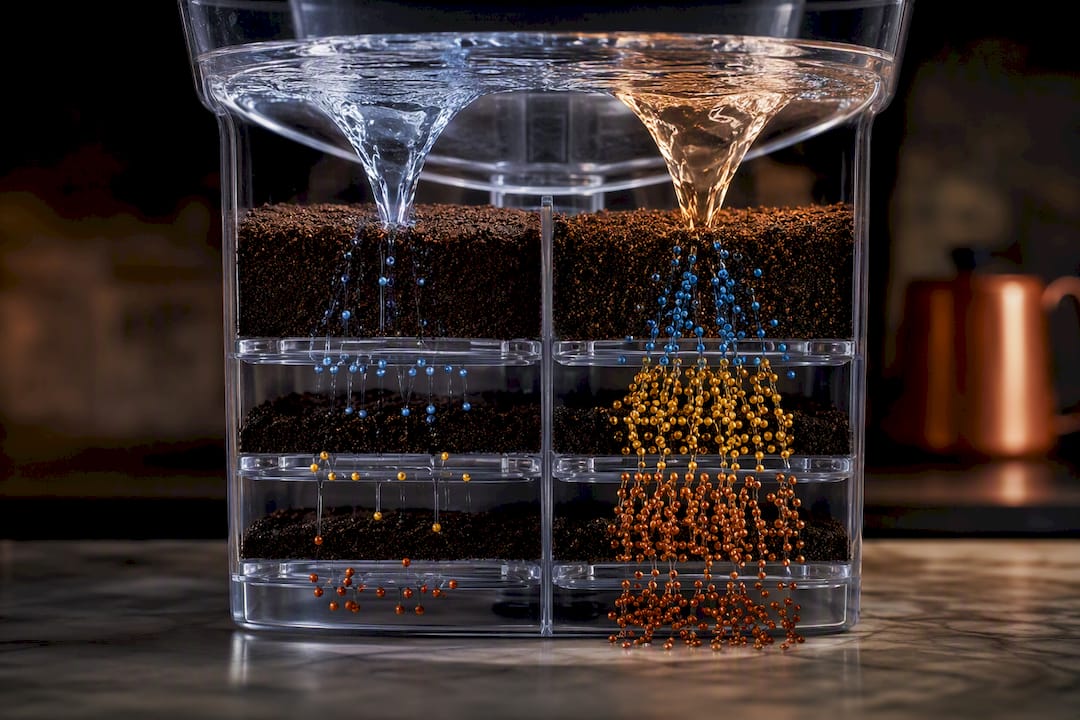
Push the temperature too high and you extract too much too fast. The result tastes harsh, dry, or flatly bitter, with the sweetness buried under compounds that should have stayed in the filter. Go too cool and extraction stalls before the good stuff comes out. You get a sour, thin, weak cup that tastes like it’s missing something, because it is.
Here’s the part that trips people up: temperature is rarely the biggest lever in the room. Research on brewing science shows that when strength and extraction yield are held constant, temperature has a smaller sensory effect than grind size, brew ratio, or contact time. Before chasing a specific degree, check these first:
- Grind size — too coarse under-extracts, too fine over-extracts regardless of temperature.
- Brew ratio — a rough starting point is 1 gram of coffee to 15 to 17 grams of water.
- Contact time — how long the water and grounds actually touch.
- Water quality — alkalinity and mineral content change how temperature translates into flavor, so hard tap water and soft filtered water won’t behave the same at the same setpoint.
Get those dialed in, then use temperature as your fine-tuning knob. Understanding how extraction actually works makes every other adjustment you make easier to reason about.
What’s the Best Water Temperature for Each Brew Method?
Every brew method has its own comfort zone inside the SCA’s broader range, and the differences come down to contact time and how much surface area the water touches. Pour-over and drip both sit in the full 195°F to 205°F window because the water passes through quickly and needs the extra heat to compensate. French press runs a touch cooler since the grounds steep for four minutes, giving lower temperatures more time to work.
Espresso needs less heat because pressure does part of the extraction job for you. AeroPress is the wildcard: recipes for it range from 175°F to 205°F depending on the roast and steep time you’re chasing.
| Method | Kettle Setpoint | Notes |
|---|---|---|
| Pour-over / drip | 195°F–205°F | Fast contact time needs the higher end |
| French press | 195°F–200°F | Long steep tolerates slightly cooler water |
| Espresso | 190°F–196°F | Pressure adds extraction force, so heat can drop |
| AeroPress | 175°F–205°F | Wide range; adjust with steep time and roast |
| Cold brew | Room temp or colder | 12 to 24 hour steep replaces heat entirely |
A few practical notes worth remembering:
- Preheat your dripper, carafe, and cups before brewing. A cold vessel steals heat from your water the moment it makes contact.
- The number on your kettle display isn’t the same as the temperature hitting the coffee bed. Equipment mass, pour height, and room temperature all pull the slurry down from the kettle’s displayed setpoint.
- Cold brew ignores all of this. It skips heat entirely and lets time do the extracting instead.
If your gear runs cooler than expected, a solid home brewing routine accounts for that heat loss with technique, not just a hotter kettle.
Should You Brew Light Roasts Hotter Than Dark Roasts?
Yes, and the reasoning is straightforward: light roasts are denser and hold onto their sugars and acids more stubbornly, so they need more heat to give them up. Dark roasts have already broken down more of their cell structure during roasting, which means high heat pulls out bitterness faster than flavor.
Here’s a simple starting framework:
- Light roasts — brew near the top of the range, around 203°F to 205°F, to unlock brightness and sweetness that lower heat leaves behind.
- Medium roasts — start in the middle, around 200°F, and nudge up or down by 2°F to 5°F depending on whether the cup tastes flat or sharp.
- Dark roasts — pull back to 195°F to 198°F to soften the bitterness that darker beans are prone to at higher heat.
One practitioner-favored approach is to start at 199°F as a neutral baseline, get your grind and ratio locked in, then adjust in small steps of about 2°C (roughly 4°F) at a time. Change one variable, taste, then change again.
Pro Tip: Always taste your test cups at the same serving temperature. A cup that’s still steaming will taste different from one that’s cooled for two minutes, and that gap can fool you into blaming the wrong variable.
If you’re brewing beans close to their roast date, freshness itself affects how forgiving your temperature window is, so factor that in before you assume temperature is the problem.
How Do You Hit the Right Temperature Without a Thermometer?
The boil-and-wait method is the easiest trick in coffee, and it works in almost any kitchen. Bring water to a full rolling boil, take it off the heat, and let it rest for 30 to 45 seconds. That drop typically lands you inside the 195°F to 205°F range. Altitude and kettle material both shift the exact timing, so if you’re brewing at elevation or using a heavy cast iron kettle, add a few extra seconds and taste your way to the right rest time.
A few more habits that pay off immediately:
- Preheat your dripper, French press, or carafe with hot water before you brew. Skipping this step lets cold glass or ceramic drag your slurry temperature down fast.
- A basic instant-read thermometer costs very little and removes the guesswork entirely.
- If you brew daily, a temperature-controlled kettle is worth the investment. It holds your setpoint without you babysitting a timer every morning.
What Tony From The Flaming Bean Says About Dialing In Your Brew
Getting water temperature coffee ratios right isn’t about owning fancy gear. It’s about repeating the same steps until your palate tells you what’s working.
Try this: use water around 200°F to 203°F for a pour-over, a 1:16 ratio, and a three-minute total brew time. A smoother profile holds up well in that mid-to-high window, giving you a forgiving starting point while you practice adjusting in small increments. Once you can taste the difference a 3°F change makes, you’re ready to apply the same logic to any bag in your cabinet.
Why Most Brewing Advice Skips the Part That Actually Matters
Most guides treat water temperature coffee guidance like a single magic number, and that’s the wrong mental model. The SCA’s 195°F to 205°F range is a starting line, not a finish line. What separates a good home brewer from a great one is the willingness to test in small steps and actually taste the difference, rather than assuming a hotter kettle automatically means a better cup.
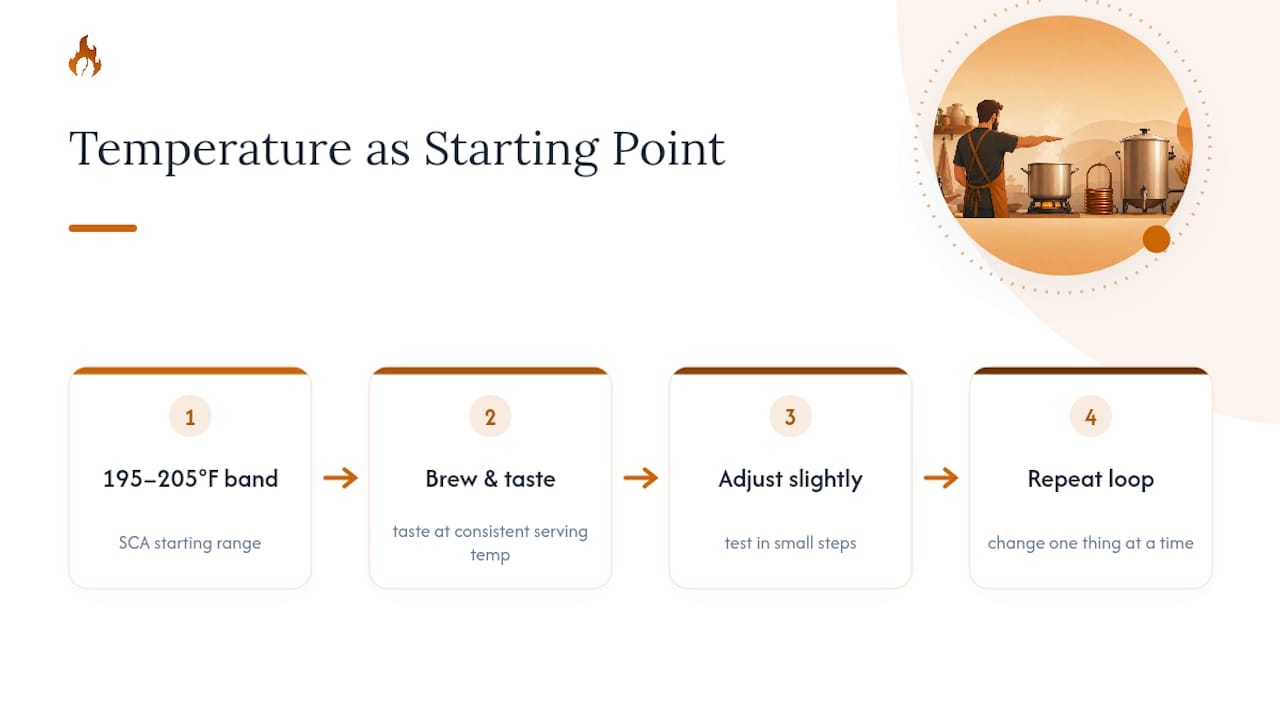
The conventional advice oversells precision and undersells consistency. A cheap thermometer used every single time beats an expensive kettle used carelessly. Water quality gets ignored constantly, even though mineral content changes how any given temperature performs in the cup. If your coffee tastes off, check your grind and ratio before you touch the kettle. Temperature is a real variable, but it’s rarely the first thing worth fixing.
Start in the middle of the range, taste at a consistent serving temperature, and change one thing at a time.
— Tony
Try These Blends to Practice Your Temperature Adjustments
The fastest way to learn how water temperature coffee ranges actually taste is to brew the same bag three different ways. A good lineup gives you a built in range to experiment across without buying three different bags from three different roasters.
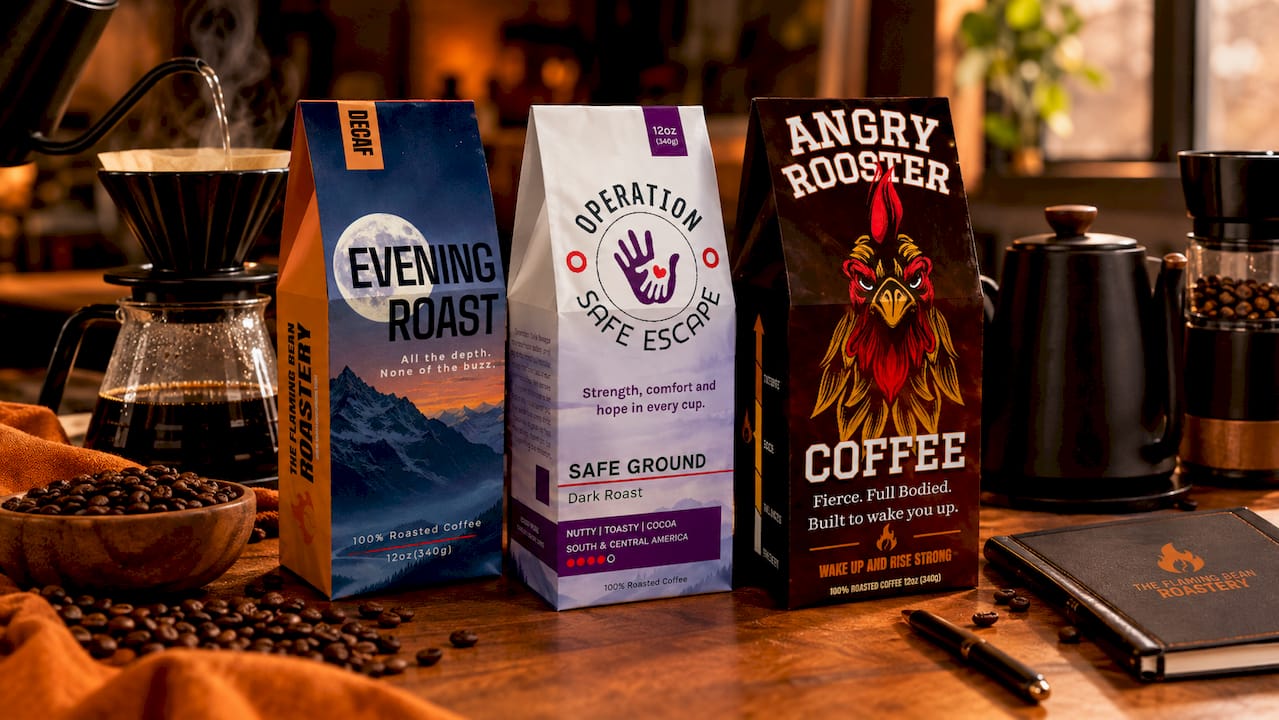
Evening Roast is smooth and approachable, and it performs best in the mid-to-high end of the range, around 200°F to 203°F. Safe Ground is balanced enough to sit comfortably in the middle of the SCA window, making it a forgiving choice while you’re still calibrating your kettle. Angry Rooster is bold, and it rewards a slightly cooler setpoint near 195°F to 198°F to keep its intensity from tipping into bitterness. Grab a single bag of any one of these to start, or set up a subscription so you always have fresh beans on hand for the next round of testing.
Sources
This guide draws on the SCA-aligned brewing temperature standard, method-specific ranges from Cosori’s brewing guide, extraction science from Coffee Studies, and water chemistry research from Scott Rao.
FAQ
What Is the 15-15-15 Rule for Coffee?
The 15-15-15 rule is a beginner shorthand: 15 grams of coffee, about a 15 to 1 water ratio, and roughly 15 seconds of bloom time before the rest of the pour. It’s a simple starting recipe, not a temperature rule, so pair it with the 195°F to 205°F range for a full setup.
Is 200°F Too Hot for Coffee?
No, 200°F sits comfortably inside the SCA-recommended range and works well for medium roasts brewed as pour-over or drip. It would run slightly hot for a dark roast, where 195°F to 198°F usually tastes cleaner.
What Temperature Does McDonald’s Serve Its Coffee At?
McDonald’s brews and serves coffee at a much hotter temperature than home brewing guidance recommends, largely for food-safety holding standards rather than flavor optimization. That serving temperature has no bearing on the 195°F to 205°F brewing range that produces the best flavor at home.
What Is the 80/20 Rule for Coffee?
There’s no single standardized rule like “80/20” in coffee brewing; this phrase gets used loosely to describe prioritizing the few variables, like grind, ratio, and time, that drive most of your flavor result. Definitions vary depending on the source, so treat it as a mindset rather than a fixed formula.
Does Cold Brew Need a Specific Water Temperature?
No. Cold brew uses cold or room-temperature water and relies on a 12 to 24 hour steep instead of heat to extract flavor, so the hot-brew temperature guidance in this guide doesn’t apply to it.
Comments