
What Does Balance Mean in Coffee? A Flavor Guide

Balance in coffee is defined as the harmonious integration of acidity, sweetness, bitterness, and body, where no single attribute overwhelms the others. This concept sits at the heart of what separates a forgettable cup from one you want to finish slowly. Understanding coffee flavor balance means learning how flavor components interact, how brewing variables shift that interaction, and how your own palate fits into the equation. The Specialty Coffee Association sets measurable targets for balanced extraction, but the sensory experience is just as important as the numbers.
What does balance mean in coffee flavor?
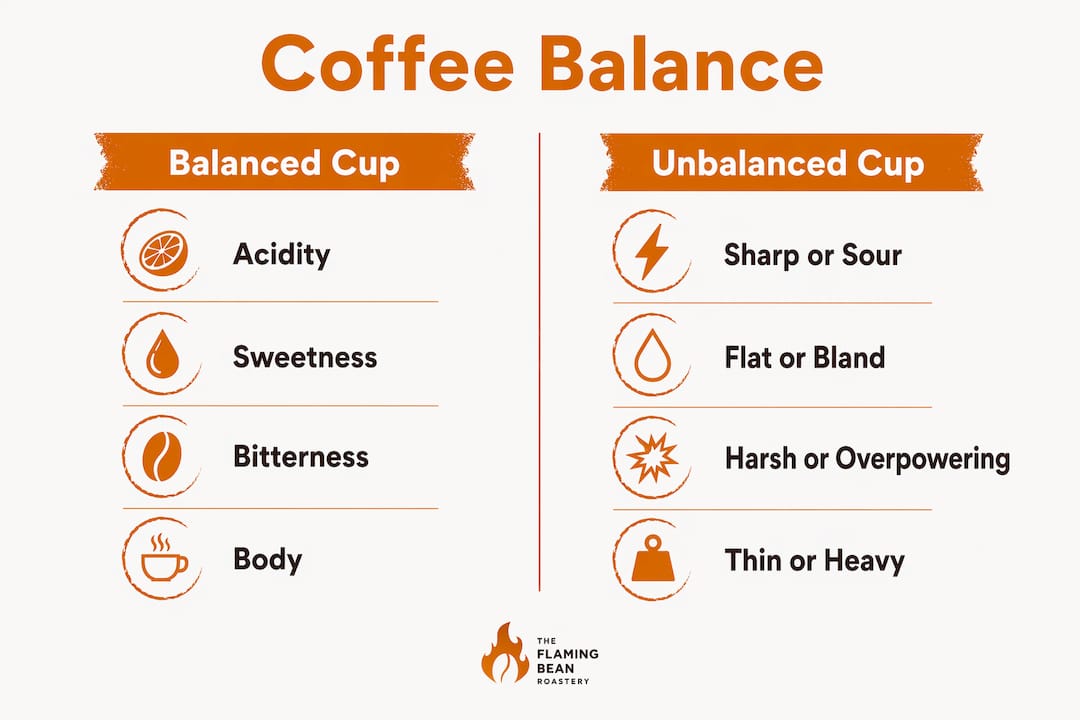
Balanced coffee flavor consists of a harmonious interaction among acidity, sweetness, bitterness, and body, where each attribute supports the others rather than competing. Think of it less like equal parts of everything and more like a well-mixed band where every instrument is audible but none drowns out the rest. Balance does not mean bland. A coffee can have bright, punchy acidity and still be balanced if the sweetness and body hold it in place.
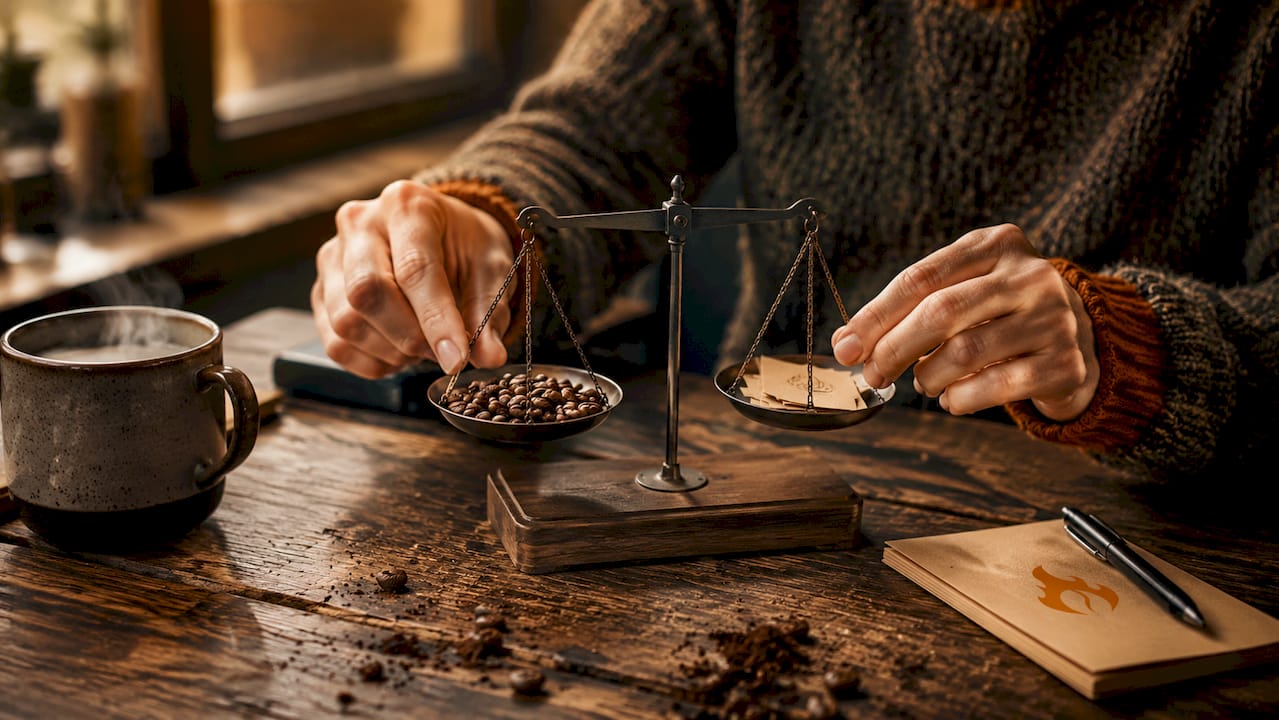
The key insight is this: balance visualized as a scale means flavor attributes support each other rather than cancel each other out. A balanced cup can have differing intensities across its components and still feel stable, clear, and satisfying.
The four core flavor components
Here is how each attribute functions in a balanced cup:
- Acidity: Delivers brightness and liveliness. Think of the clean snap in a well-brewed Ethiopian Yirgacheffe. Too much acidity and the cup tastes sharp or sour. Too little and it feels flat.
- Sweetness: Provides body and comfort. Natural sugars in the bean round out acidity and soften bitterness. Sweetness is often what makes a coffee feel “smooth.”
- Bitterness: Adds depth and structure. A controlled level of bitterness is desirable. Excessive bitterness signals over-extraction or a roast pushed too far.
- Body: Describes mouthfeel, from light and tea-like to creamy and full. Body gives the cup weight and presence on the palate.
| Attribute | Balanced Cup | Unbalanced Cup |
|---|---|---|
| Acidity | Bright, clean, present | Sharp, sour, or absent |
| Sweetness | Rounds out other flavors | Absent or cloying |
| Bitterness | Adds depth without harshness | Harsh, lingering, dominant |
| Body | Appropriate weight for the roast | Thin and watery or heavy and muddy |
How do brewing variables affect coffee balance?
Brewing variables are the direct controls you have over extraction. The Specialty Coffee Association defines balanced extraction as an extraction yield between 18–22% and a total dissolved solids (TDS) level of 1.15–1.35% for filter coffee. Extraction yield measures how much of the coffee’s soluble material ends up in your cup. TDS measures the concentration of that material.
The SCA Golden Ratio is approximately 55g of coffee per liter of water, roughly a 1:18 ratio by weight. This ratio controls strength but does not guarantee balanced extraction on its own. You can brew at the correct ratio and still pull a sour or bitter cup if other variables are off.
Grind size
Grind size is the primary lever for adjusting extraction yield. A finer grind increases extraction speed and yield. A coarser grind slows extraction and reduces yield. Most balance problems at home start here. If your cup tastes sour and thin, grind finer. If it tastes bitter and hollow, grind coarser.
Water temperature
Water temperature controls how quickly flavor compounds dissolve. Higher temperatures extract faster and can pull bitter compounds before sweetness has a chance to develop. Lower temperatures slow extraction and may leave acidity without enough sweetness to balance it. A range of 195°F–205°F covers most brewing methods well.
Brew ratio
Brew ratio affects strength, not extraction yield directly. Brewing stronger (more coffee, less water) makes the cup more intense but does not fix an extraction problem. Brewing weaker dilutes the cup but does not correct sourness or bitterness. Ratio and grind size work together.
| Variable | Effect on Balance | Common Mistake |
|---|---|---|
| Grind size | Primary extraction control | Changing ratio instead of grind |
| Water temperature | Affects dissolution speed | Brewing too hot, pulling bitterness |
| Brew ratio | Controls strength | Confusing strength with extraction |
| Brew time | Determines total extraction | Letting steep time run too long |
Pro Tip: Adjust one variable at a time. Changing grind size and temperature simultaneously makes it impossible to know which fix worked. Start with grind, then temperature, then ratio.
What sensory cues help identify a balanced coffee?
Sensory evaluation is how you confirm what the numbers suggest. A balanced cup feels complete. No single flavor grabs your attention and holds it hostage. The finish is clean and pleasant, not abrupt or lingering with harshness.
Under-extracted coffee tastes sour, sharp, and thin. The acidity is aggressive because the sugars and oils that would soften it never made it into the cup. Over-extracted coffee tastes bitter, dry, and hollow. The pleasant compounds extracted early, and the harsh ones followed.
Taste perception changes with temperature, and heat can dull flavors while exaggerating harshness. This is why evaluating your coffee at multiple temperatures matters. A cup that tastes fine at 180°F may reveal sourness or bitterness as it cools to 130°F.
- Taste your coffee immediately after brewing, then again at 10 minutes, and again as it approaches room temperature.
- A truly balanced cup improves or holds steady as it cools. A problematic cup gets worse.
- Side-by-side comparisons between two brew attempts train your palate faster than tasting in isolation.
One underappreciated issue is channeling. Channeling causes uneven extraction where water finds the path of least resistance through the coffee puck, leaving some grounds under-extracted and others over-extracted simultaneously. The result is a cup that tastes both sour and bitter at once. This is not a ratio problem. It is a distribution and puck preparation problem.
Pro Tip: If your espresso tastes sour and bitter at the same time, suspect channeling before adjusting your grind. Redistribute your grounds evenly and tamp with consistent pressure.
How do roast level and origin influence balance?
Roast level and bean origin are the two variables you cannot control at home. They determine the starting point for balance before brewing begins.
- Light roasts preserve origin characteristics and highlight acidity. Ethiopian and Kenyan coffees brewed light often show floral and citrus notes with high brightness. Balance in a light roast depends on sweetness and body holding that acidity in check.
- Medium roasts are where most people find balance most accessible. Acidity softens, sweetness develops, and bitterness stays low. Colombian and Brazilian beans at medium roast are classic examples of approachable balance.
- Dark roasts shift the balance toward bitterness and body. Acidity is largely roasted out. The challenge is keeping bitterness from dominating. A well-executed dark roast like The Flaming Bean’s Abyssal achieves depth without harshness.
Balanced coffee allows origin, roast, and craftsmanship to express without being masked by extremes. A roaster’s job is to find the roast profile that lets the bean’s best qualities come forward while keeping the flavor components in proportion. When you understand what a bean’s origin typically delivers, you can set realistic expectations for balance before you brew a single cup.
The extraction order matters here too. Acids and caffeine dissolve first, then sugars and oils, and finally the darker bitter compounds. A light roast has more acids to extract early. A dark roast has more bitter compounds waiting at the end. Knowing this helps you decide when to stop extraction for each roast level.
How can home brewers achieve better coffee balance?
Improving balance at home is a process of controlled experimentation. Here is a practical sequence to follow:
- Start with a fixed ratio. Use the SCA Golden Ratio of 1:18 by weight as your baseline. Weigh your coffee and water every time.
- Set your water temperature. Use 200°F as a starting point for most methods. Adjust down for light roasts if bitterness appears.
- Adjust grind size first. If the cup tastes sour, grind finer. If it tastes bitter, grind coarser. Make small adjustments, about one step at a time on your grinder.
- Keep brew notes. Write down your grind setting, dose, water weight, temperature, and brew time for every session. Patterns emerge quickly.
- Use fresh beans. Stale coffee loses its natural sweetness and body first, making balance harder to achieve regardless of technique. Whole bean coffee ground fresh before brewing preserves those compounds.
- Control your water quality. Filtered water with moderate mineral content extracts more evenly than distilled or heavily chlorinated tap water.
- Consider a refractometer. A basic refractometer measures TDS and gives you a real number to compare against the SCA’s 1.15–1.35% target. It removes guesswork.
Expert brewers recommend adjusting one variable at a time, starting with grind size, to fine-tune balance. This approach keeps your troubleshooting clear and your results repeatable. Pair your grind adjustments with a quality coffee grinder that delivers consistent particle size, since inconsistent grinding creates uneven extraction regardless of your settings.
Key takeaways
Balance in coffee is the result of harmonious flavor integration across acidity, sweetness, bitterness, and body, controlled through grind size, extraction yield, water temperature, and brew ratio.
| Point | Details |
|---|---|
| Balance is not blandness | A balanced cup can have strong, distinct flavors as long as no single attribute dominates. |
| Grind size is the primary control | Adjust grind before changing ratio or temperature to fix extraction problems. |
| SCA targets provide a baseline | Aim for 18–22% extraction yield and 1.15–1.35% TDS for filter coffee. |
| Temperature reveals true balance | Taste coffee at multiple temperatures; a balanced cup holds up as it cools. |
| Origin and roast set the starting point | Know your bean’s profile before brewing to set realistic balance expectations. |
Balance is personal, and that’s the point
I have brewed thousands of cups chasing what I thought balance was supposed to taste like. For a long time, I treated the SCA targets as a finish line. Hit 20% extraction yield, land in the TDS window, and call it done. That approach made me a more consistent brewer, but it did not make me a better taster.
The shift happened when I started letting the cup cool before judging it. Cooler tasting better reveals true flavor balance in ways that a hot sip never will. I started catching sourness I had been masking with heat and bitterness I had been ignoring because the cup smelled great. That single habit changed how I dial in every brew.
Balance is deeply subjective and tied to individual palate preference. The scientific targets are starting points, not verdicts. I have had technically perfect extractions that I found boring and slightly off-poured cups that were genuinely delicious. Your palate is the final judge. The numbers just help you get in the right neighborhood.
What I tell anyone learning to taste coffee is this: stop trying to identify specific flavor notes right away. Instead, ask yourself whether the cup feels complete. Does anything feel missing? Does anything feel like too much? That simple question gets you to balance faster than any flavor wheel.
— Tony
Find your balance with the flaming bean
If you want to put these principles into practice right away, The Flaming Bean makes it easy to start with great ingredients and the right tools.
The Flaming Bean’s signature blends are roasted to highlight balanced flavor profiles across a range of roast levels, from the smooth and approachable to the bold and complex. If you are looking for a great entry point, Safe Ground delivers a clean, smooth cup that demonstrates balance beautifully without demanding a perfectly dialed-in setup. Pair it with a consistent coffee maker from The Flaming Bean’s collection and you have everything you need to start brewing with intention. Great balance starts with great coffee.
FAQ
What does balance mean in coffee tasting?
Balance in coffee tasting means no single flavor attribute, whether acidity, sweetness, bitterness, or body, dominates the cup. A balanced coffee feels complete and pleasant from the first sip to the finish.
How do i know if my coffee is under-extracted or over-extracted?
Under-extracted coffee tastes sour and thin. Over-extracted coffee tastes bitter and dry. If your cup tastes both at once, channeling during brewing is likely the cause.
What is the SCA standard for balanced coffee?
The Specialty Coffee Association targets an extraction yield of 18–22% and a TDS of 1.15–1.35% for filter coffee. These ranges define the zone where most palates perceive balance.
Does roast level affect coffee balance?
Yes. Light roasts emphasize acidity and origin character, while dark roasts shift toward bitterness and body. Medium roasts are generally the most accessible starting point for balance. You can also explore how espresso roast profiles affect balance in concentrated brewing.
Is coffee balance the same as wine balance?
The concept is similar. Just as balance in wine describes the harmony between acidity, tannins, sweetness, and alcohol, coffee balance describes the harmony between its core flavor components. Both require no single element to overwhelm the others.
Comments