
What Does Craft Roasting Mean for Coffee Lovers?

Craft roasting means small-batch, sensory-driven roast profiling designed to highlight a coffee’s unique character, rather than mass-producing a uniform flavor. Roasters like The Flaming Bean rely on cues like “first crack” timing and stay transparent about roast dates. The core elements:
- Batch size: small enough for one roaster to monitor every pound closely
- Sensory adjustment: sight, sound, and smell guide changes mid-roast
- Roaster intent: the goal is flavor expression, not just consistency
Key Takeaways
Craft roasting means small-batch, sensory-driven roast profiling built to express each coffee’s individual character rather than mass-produced sameness.
| Point | Details |
|---|---|
| Definition matters | Craft roasting combines small batches, sensory judgment, and intent to highlight bean character. |
| Sensory cues drive decisions | Color, aroma, and crack timing guide real-time roast adjustments, not fixed formulas. |
| Craft differs from commercial | Commercial roasting prioritizes throughput and consistency over flavor nuance. |
| Roast level isn’t proof of craft | Light, medium, and dark roasts can all reflect genuine craft practice. |
| Check roast date and notes | Genuine craft coffee, like The Flaming Bean’s Evening Roast, discloses roast dates and specific tasting notes. |
Table of Contents
- What Is Craft Roasting? Core Principles Explained
- How Is Craft Roasting Done, Step by Step?
- How Does Craft Roasting Differ From Commercial Roasting?
- Why Choose Craft Roasting Over Mass-Produced Coffee?
- How Can You Recognize Genuine Craft-Roasted Coffee?
- What Are Common Misconceptions About Craft Roasting?
- A Pro Roaster’s View on What Craft Roasting Really Means
- Why Craft Roasting Matters to Coffee Lovers
- Try The Flaming Bean’s Approach to Craft Roasting
- Frequently Asked Questions
- Sources
What Is Craft Roasting? Core Principles Explained
Ask ten roasters what craft roasting means and you’ll get ten slightly different answers, but they circle the same ideas. Small-batch control comes first: a roaster can only respond to what’s happening inside the drum if the batch is small enough to watch closely. Sensory-driven decision making comes second. Origin expression comes third, the belief that a coffee from a specific farm in a specific harvest deserves a roast profile built for it, not a generic template.
There’s no industry certification for “craft” or “hand roasted,” and experts at Perfect Daily Grind note the term is often shorthand for human-led control rather than one fixed method. That’s exactly why the label alone doesn’t prove much. What separates genuine craft practice from a marketing sticker is roaster training and intent.
Look for these trust signals when you’re evaluating a bag:
- Roast date printed clearly, not just a vague “best by” window
- Single-origin or clearly traceable sourcing information
- Cupping or tasting notes specific to that lot
- Evidence of roaster credentials or sensory training
Pro Tip: If a roaster mentions “development time” or exact first-crack timing on their packaging or website, that’s a good sign they’re actually tracking and refining profiles, not just repeating a marketing phrase.
How Is Craft Roasting Done, Step by Step?
The process starts long before the drum heats up and runs through several distinct stages:
- Green bean evaluation — the roaster assesses moisture, density, and defect count for that specific lot
- Profile drafting — a target time and temperature curve gets built around that bean’s characteristics
- Roasting with sensory monitoring — the roaster watches, listens, and smells throughout the cycle
- Cupping and refinement — the roasted batch gets tasted, and the profile gets adjusted for the next run
Equipment matters, but it doesn’t replace judgment. Most craft operations use small-capacity drum roasters fitted with temperature probes and data-logging software. Roasters commonly log profiles for repeatability, then override them in real time based on aroma, color, and crack timing, according to research from SanFranRoaster.
The sensory cues that guide those overrides include:
- Bean color shifting from green to yellow to brown
- Aroma moving from grassy to bready to caramelized
- First crack (an audible pop signaling structural breakdown) and second crack timing
- Changes in smoke density and smell
If a roaster wants to emphasize acidity and brightness in a washed Ethiopian lot, they might pull the batch shortly after first crack. Chasing sweetness and body in a natural-processed Brazilian coffee often means extending development a bit longer.
How Does Craft Roasting Differ From Commercial Roasting?
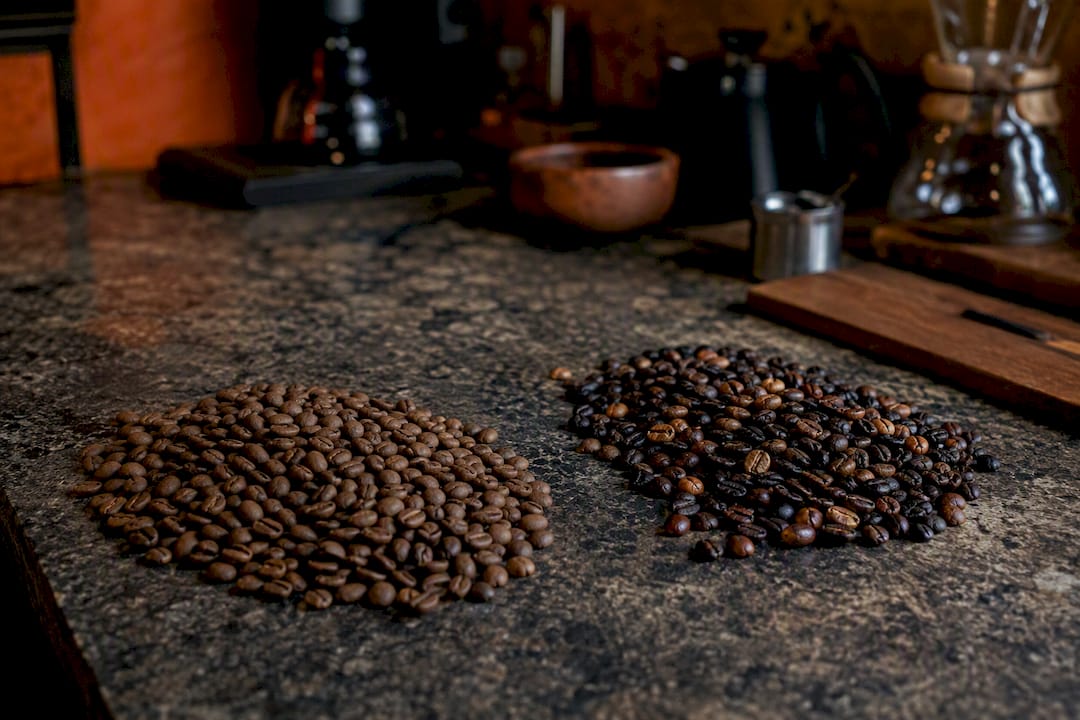
The two approaches chase different goals entirely. Craft roasting aims for flavor nuance and lets each bean’s character drive decisions. Commercial roasting aims for throughput, consistent color, and predictable cost per pound across enormous volumes. CoffeeReview describes this split as two schools: technical roasters who follow fixed time-and-temperature formulas, and craft roasters who adjust variables like airflow in real time based on what they’re sensing.
That difference shows up in the process itself:
- Small batches allow constant sensory adjustment; large batches run on fixed, automated profiles
- Craft roasters treat logged data as a starting point, not a final answer; industrial roasters treat the profile as the product
- Batch-to-batch variation is expected in craft roasting and largely eliminated in commercial roasting
Continuous, high-volume production changes the math. A commercial roaster running thousands of pounds a day can’t pause to smell a single batch. Craft roasting accepts more variability in exchange for coffee tuned to a specific lot rather than an entire season’s supply.
Why Choose Craft Roasting Over Mass-Produced Coffee?
The payoff is real, but so is the cost. Craft roasting tends to deliver more pronounced single-origin flavors, fresher roast dates since batches move faster from roaster to shelf, and tasting notes that actually reflect what’s in the bag rather than a generic blend description.
The tradeoffs are worth knowing before you buy:
- Higher price per pound, since small-batch runs cost more per unit than industrial production
- More batch-to-batch variation, meaning your favorite bag might taste slightly different next month
- A shorter window of peak flavor, which rewards buying smaller amounts more often
One thing worth clearing up: craft roasting doesn’t mean light roast. A craft roaster might choose a medium or dark roast level specifically because that profile brings out the best in a particular bean. The craft is in the decision-making, not in landing on one predetermined roast color.
How Can You Recognize Genuine Craft-Roasted Coffee?
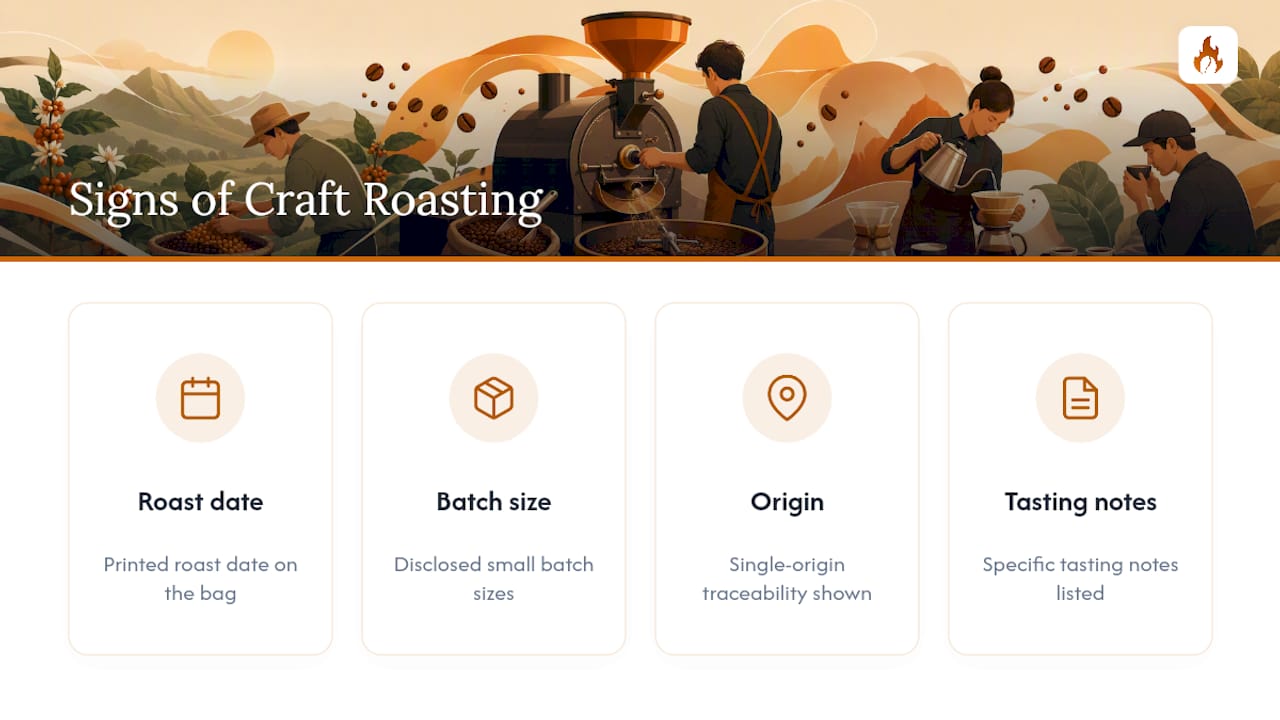
“Craft” printed on a bag proves nothing by itself. What proves something is the information surrounding it. Run through this checklist next time you’re standing in front of a shelf or scrolling a roaster’s site:
- Roast date visible on the packaging, not buried in a code you need decoding
- Batch size disclosed, even loosely (“roasted in 10-pound batches”)
- Single-origin or clear traceability back to a farm, cooperative, or region
- Specific tasting notes tied to that exact coffee, not a boilerplate description
- Some form of roaster education content, whether that’s a blog, a video, or a willingness to answer questions
Marketing language and packaging cues aren’t the same thing. A bag covered in rustic fonts and burlap textures can still be industrially roasted. Genuine transparency, as CoffeeReview points out, comes from a roaster’s willingness to explain their development choices, not from the aesthetic.
Pro Tip: Email or message the roaster and ask what batch size they use and how they track development. A serious craft roaster will answer specifically. A marketing-driven brand usually won’t.
What Are Common Misconceptions About Craft Roasting?
Is craft coffee always better? Not automatically. Small-batch doesn’t guarantee better flavor. It guarantees more control, and control only helps if the roaster knows how to use it.
Does craft mean hand-roasted over a fire? Rarely, for modern specialty roasters. It’s a philosophy of manual intervention using precision-engineered machines, not literal open-flame roasting.
Are roast levels the same as craft? No. Light, medium, and dark roasts are all compatible with craft practice; the roast level is a choice, not the proof.
A Pro Roaster’s View on What Craft Roasting Really Means
At The Flaming Bean, craft roasting means treating every green coffee lot as its own puzzle. Our roast team logs profiles for consistency, then leans on smell, sound, and color to make the final call, because no spreadsheet has ever tasted a cup.
Our Evening Roast is a good example: it’s profiled to bring out smooth, comforting depth rather than aggressive brightness, and every bag carries a roast date so you know exactly how fresh it is.
Listening for first crack is still the moment that matters most. Everything before it is preparation. Everything after it is a decision.
Why Craft Roasting Matters to Coffee Lovers
Craft roasting is how a bean’s origin actually gets to your cup instead of getting flattened into sameness. It rewards curiosity. Grab a small-batch bag like Evening Roast, check the roast date, and taste for yourself what deliberate roasting decisions actually do to flavor.
Try The Flaming Bean’s Approach to Craft Roasting
If you’ve made it this far, you already know that “craft” printed on a bag isn’t enough. What matters is whether a roaster shows their work. The Flaming Bean does exactly that: every bag lists its roast date, and blends like Evening Roast are profiled with real sensory attention, not just run through a fixed industrial curve.
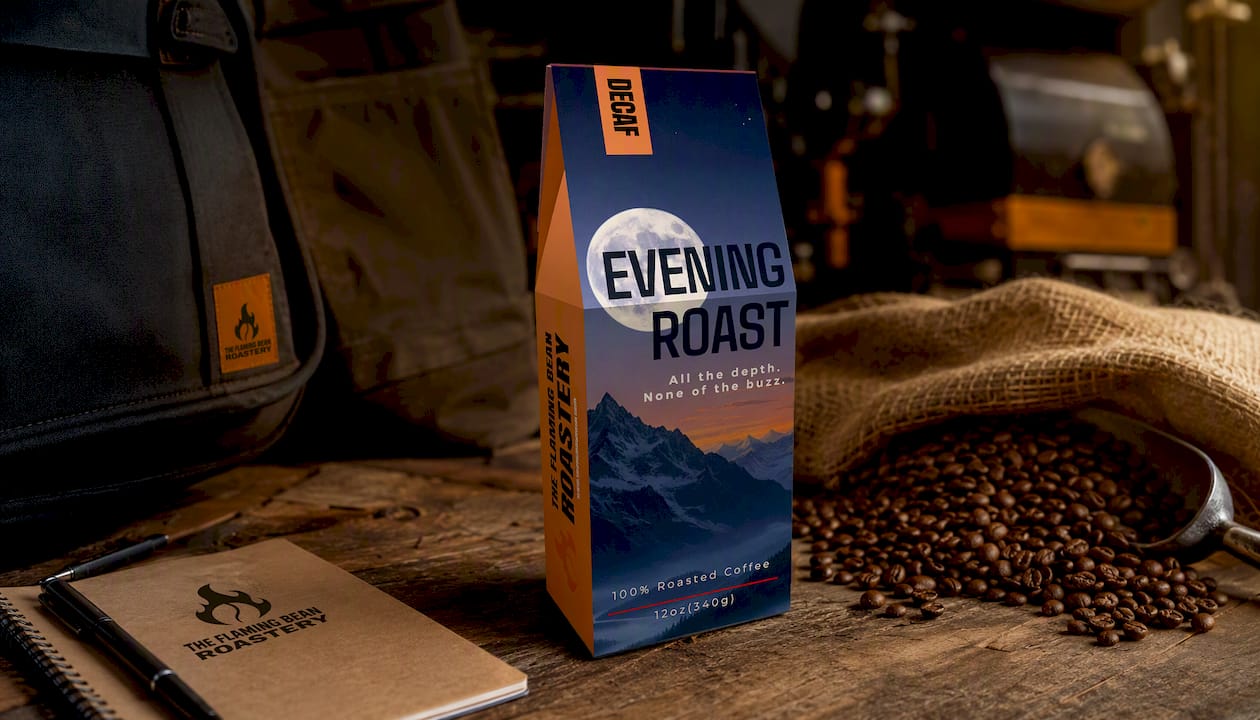
Whether you’re restocking your own shelf or setting up wholesale coffee for your office, The Flaming Bean gives you small-batch roasting without the guesswork of hunting through vague labels. You get traceable sourcing, tasting notes that mean something, and a team that can actually explain how a coffee was roasted. Ready to taste the difference? Order Evening Roast and see what deliberate roast profiling brings to your cup.
Frequently Asked Questions
What does craft roasting mean in simple terms? Craft roasting means roasting coffee in small batches while making sensory-based adjustments, sight, smell, and sound, to bring out a specific bean’s best qualities rather than following a fixed industrial formula.
Is craft roasting the same as small-batch roasting? Small batch size is one core element, but craft roasting also requires roaster skill and intent. A small batch roasted on autopilot isn’t automatically craft.
Does craft roasting always mean light roast coffee? No. Craft roasters choose whatever roast level, light, medium, or dark, best suits the specific bean, so roast level and craft practice aren’t the same thing.
How can I tell if a coffee brand actually practices craft roasting? Look for a printed roast date, disclosed batch sizes, single-origin traceability, and specific tasting notes. A roaster willing to explain their roast development process is a strong signal.
Why does craft-roasted coffee often cost more? Small batches cost more per pound to produce than large industrial runs, and the added labor of sensory monitoring and profile refinement adds to that cost.
Sources
- Coffee Roasting: Two Schools of Roasting | CoffeeReview
- What does it mean when coffee is ‘hand roasted’? - Perfect Daily Grind
- Using data collection to achieve consistency in roasting | SanFranRoaster
Recommended
- The Real Benefits of Artisan Coffee Roasters Explained – The Flaming Bean Roastery
- What Does Co-Roasting Mean for Coffee Brands? – The Flaming Bean Roastery
- How to Choose the Right Coffee Roast for Your Cup – The Flaming Bean Roastery
- What Is Espresso Roast? Flavor, Brew & Buying Tips – The Flaming Bean Roastery
Comments