
What Is a Cause Coffee Brand? Your Complete Guide

A cause coffee brand is a coffee company that embeds a social, environmental, or community mission directly into its business model, not as an afterthought, but as a core reason for existing. These brands go beyond selling great coffee. They channel a portion of their revenue or profits to specific causes, from disaster relief and clean water projects to animal rescue and digital safety. Cause Coffee in De Soto, KS, for example, donates 100% of revenue after expenses to local and global causes. That model shows what a cause coffee brand mission looks like at its most committed. The Flaming Bean operates in this same spirit, pairing exceptional roasts with real charitable partnerships.
What is a cause coffee brand and how does it work?
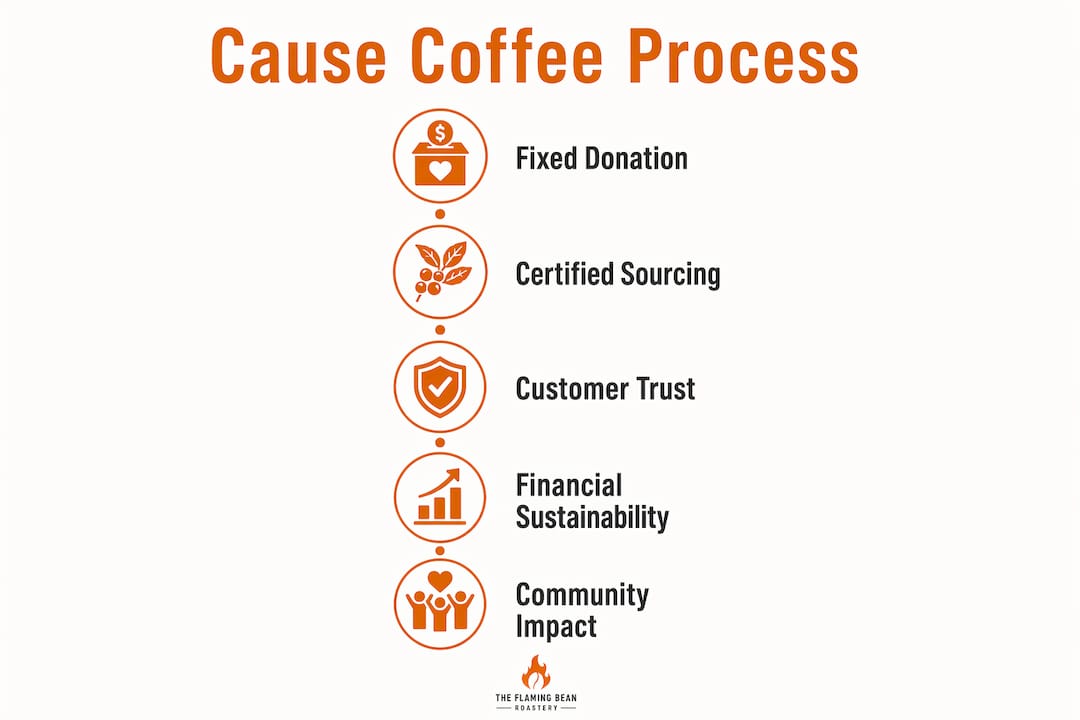
A cause coffee brand is defined by one thing: giving back is built into the product, not bolted on later. Traditional coffee companies may donate occasionally or run seasonal campaigns. Cause brands make giving a fixed part of every sale. The cause is not a marketing layer. It is the reason the brand exists.
These brands typically fall into two categories. The first is the nonprofit or near-nonprofit model, where nearly all revenue after operating costs goes to charitable work. The second is the hybrid for-profit model, where a set percentage of each sale funds a specific cause while the rest sustains the business. Both models can work well. The key difference is transparency. Customers deserve to know exactly how much of their purchase reaches the cause.

Ethical certifications like Fairtrade also play a role in defining what makes a coffee brand genuinely cause-driven. Fairtrade certification guarantees better prices for farmers, decent working conditions, and funds community projects like clean water and reforestation. That certification gives customers a verifiable signal that the brand’s ethical claims are real.
How do cause coffee brands operate?
Cause coffee brands use several distinct business models to sustain both their operations and their giving commitments. Understanding these models helps you evaluate whether a brand’s impact is real or just good marketing.
- The full-revenue model. Brands like Cause Coffee commit to donating everything left after expenses. This model maximizes impact but requires tight cost control and often relies on community support to stay viable.
- The fixed-dollar model. Wicked Kitty Coffee Co. pledges $1 per bag sold to specific rescue efforts. This approach is easy for customers to understand and builds trust because the giving commitment is concrete and verifiable.
- The percentage model. Many hybrid cause brands donate a set percentage of profits while scaling operations. This model balances growth with giving but can feel vague if the percentage is not clearly stated.
- The product-linked model. Specific products are tied to specific causes. The Flaming Bean uses this approach with blends like Safe Ground, Mission Fuel, and Liquid Liberation, each supporting a distinct charitable partner.
The fixed-dollar model tends to earn the most consumer trust. Customers can calculate their exact contribution at the point of purchase. Vague promises like “a portion of profits” leave too much room for interpretation and often erode confidence over time.
Pro Tip: When evaluating a cause coffee brand, look for a specific dollar amount or fixed percentage tied to each product. If the giving commitment is not clearly stated on the packaging or website, ask before you buy.
Financial sustainability matters too. A cause brand that goes out of business helps no one. The best brands blend profit and purpose in a way that keeps the lights on while maximizing charitable output. That balance is what separates lasting impact from a short-lived campaign.
What makes a coffee brand truly cause-driven?
Not every coffee brand that mentions sustainability or community qualifies as a cause coffee brand. The difference between a genuine cause brand and a brand with ethical window dressing comes down to three things: specificity, verification, and consistency.
Specificity means the brand names the cause, the organization, and the giving mechanism. “We support communities” is not specific. “We donate $1 per bag to the Innocent Lives Foundation” is specific. Verification means an independent body or published financial report confirms the giving. Consistency means the giving happens with every sale, not just during special campaigns.
Here is what to look for when evaluating a cause coffee brand:
- Named cause partners. The brand identifies the organization it supports by name.
- Verifiable giving. An independent certification, published report, or third-party confirmation backs the claim.
- Cause specificity. The mission targets a defined problem, not a broad category like “doing good.”
- Transparent impact reporting. The brand shares how much has been donated and what it funded.
- Consistent giving. Every purchase triggers a contribution, not just seasonal promotions.
Fairtrade certification is one of the strongest signals of genuine ethical sourcing. Fairtrade Premium funds renewable energy, organic fertilizers, and community economic improvements for farming communities. That is a concrete, audited outcome, not a vague promise.
Packaging storytelling is another powerful tool. Successful cause brands use bold, optimistic messaging on their packaging to communicate impact quickly without sounding preachy. The goal is to make customers feel good about their purchase, not guilty about the world’s problems.
Pro Tip: Check the brand’s website for a dedicated charities or impact page. Brands serious about their mission publish their giving history and partner organizations openly. If that page does not exist, the commitment may be more marketing than mission.
| Authentic cause brand | General ethical brand |
|---|---|
| Names specific cause partner | Vague reference to “community support” |
| Fixed dollar or percentage per sale | Occasional donations during campaigns |
| Independent certification or audit | Self-reported claims only |
| Dedicated impact reporting page | No published giving history |
Examples of cause coffee branding and community impact
Concrete examples show how cause coffee branding works in practice and what real community impact looks like.
Cause Coffee in De Soto, KS operates out of a historic 1910 home and directs its giving toward both local and global causes. Their model covers education, clean water wells, disaster relief, and orphan care in developing nations. Every bag sold connects a customer’s morning routine to a measurable outcome somewhere in the world.
Wicked Kitty Coffee Co. targets a specific animal welfare problem called Black Cat Syndrome, the pattern of black cats being overlooked and euthanized in shelters at higher rates than other cats. The brand donates directly to rescue efforts with each bag sold. That specificity is what makes the branding memorable and the mission credible.
The Flaming Bean takes a product-linked approach. Each specialty blend supports a distinct cause:
- Safe Ground supports organizations protecting vulnerable individuals from exploitation.
- Mission Fuel funds digital safety and community protection efforts.
- Liquid Liberation contributes to organizations combating trafficking and abuse.
This model lets customers choose the cause they care about most while still getting an exceptional cup of coffee. The charitable partnerships are published openly, so customers can verify exactly where their money goes.
Social Impact Coffee uses packaging as a communication tool, treating each bag as a billboard for the cause. That approach keeps the mission visible at every interaction, from the shelf to the kitchen counter. It also avoids the heavy-handed tone that can make cause marketing feel like a lecture.
What are the benefits of choosing cause coffee brands?
Choosing a cause coffee brand delivers benefits that go well beyond a good cup of coffee. The impact spreads across consumers, farming communities, and the organizations receiving support.
65% of consumers report that they prioritize purchasing from brands that actively demonstrate commitment to ethical and social causes. That number reflects a real shift in how people think about everyday purchases. Buying coffee is no longer just a personal preference. It is a small act of values alignment.
The community benefits are tangible. Cause coffee supports fair wages for farmers, sustainable farming practices, education programs, clean water access, and crisis relief. These are not abstract outcomes. They are funded by the cumulative effect of thousands of individual coffee purchases.
For consumers, the benefits include:
- Values alignment. Your daily purchase reflects what you care about.
- Verified impact. Certified brands provide audited proof of their giving.
- Brand loyalty. Consumer trust increases with independently certified brands that communicate clear impact.
- Community connection. You become part of a network of customers funding real change.
- Product quality. Cause brands that source ethically tend to prioritize quality at every stage of production.
The loyalty factor is significant. Customers who feel their purchase matters return more often and recommend the brand more actively. That creates a self-reinforcing cycle where better sales fund more giving, which attracts more customers.
Key Takeaways
A cause coffee brand succeeds when giving is specific, verifiable, and built into every sale rather than treated as an occasional add-on.
| Point | Details |
|---|---|
| Definition of cause coffee | A brand that embeds charitable giving directly into its business model with every purchase. |
| Best giving model | Fixed-dollar or fixed-percentage commitments per product build the most consumer trust. |
| Verification matters | Look for named cause partners, independent certifications, and published impact reports. |
| Consumer demand is real | 65% of consumers prioritize brands that demonstrate ethical and social commitment. |
| Product-linked giving works | Tying specific products to specific causes, as The Flaming Bean does, makes impact personal and clear. |
Why cause coffee is more than a trend
I have watched the cause coffee space grow from a niche corner of the specialty market into a genuine consumer expectation. What strikes me most is how quickly customers can tell the difference between a brand that lives its mission and one that just talks about it.
The brands that last are the ones that treat transparency as a feature, not a risk. Publishing your giving history, naming your partners, and putting a dollar amount on the bag takes courage. It invites scrutiny. But that scrutiny is exactly what builds the trust that keeps customers coming back.
The harder challenge is tone. Cause marketing can tip into guilt-tripping very fast, and that kills the joy of the purchase. The best brands I have seen keep the messaging warm and optimistic. They make you feel like a participant in something good, not a bystander being shamed into action. The Flaming Bean gets this right. The blends feel celebratory, not heavy. That balance is genuinely difficult to achieve, and it matters more than most brands realize.
The coffee itself still has to be excellent. A mediocre cup with a great cause attached will not hold a customer for long. Purpose and quality have to travel together. When they do, the result is a brand that earns real loyalty and funds real change, one bag at a time.
— Tony
The Flaming Bean: coffee that gives back with every cup
The Flaming Bean brings together exceptional coffee and meaningful causes in a way that feels natural, not forced. Each specialty blend in the charity collection is tied to a specific organization, so you always know where your support goes.
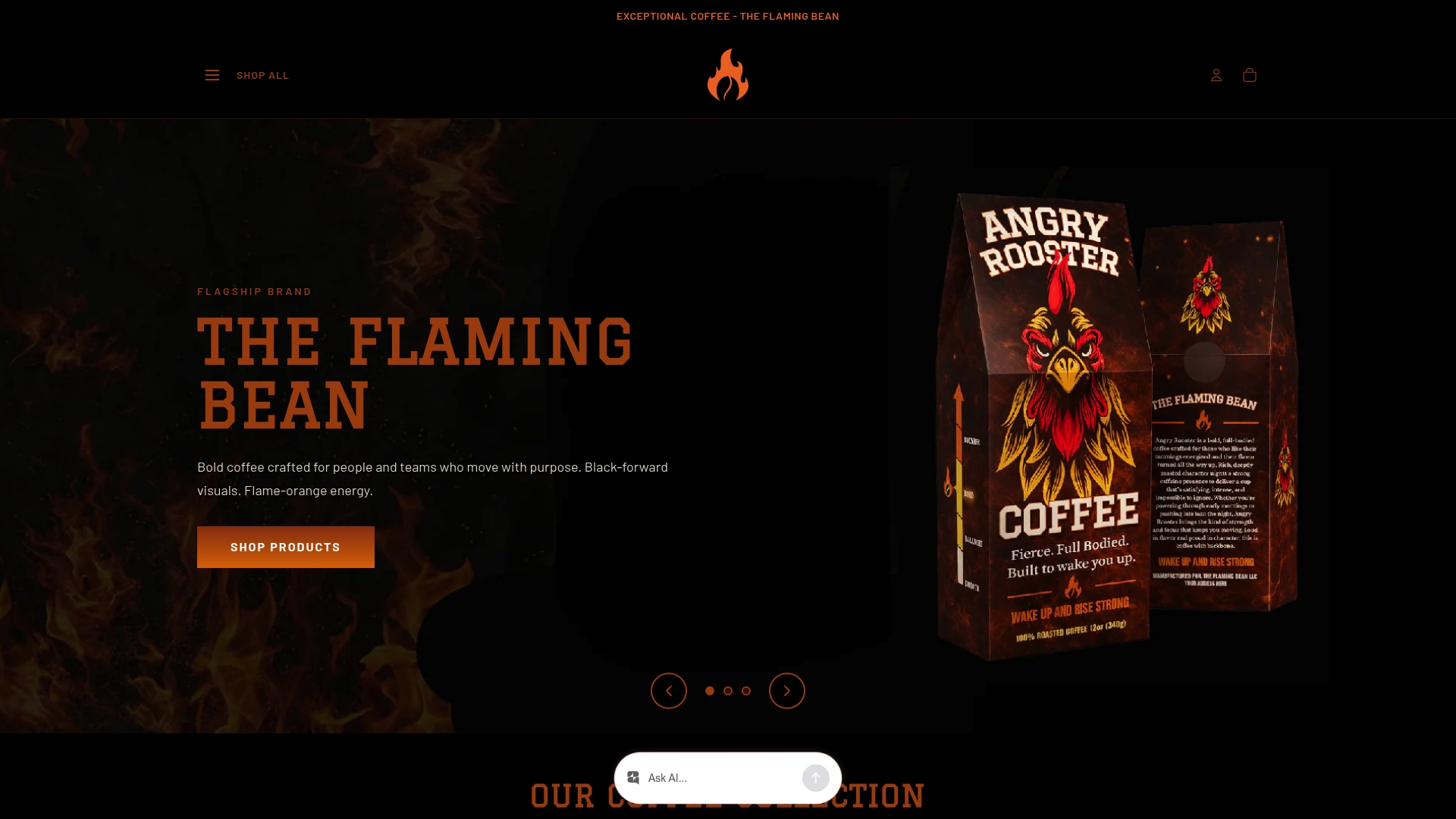
The Evening Roast is a great place to start. It is smooth, approachable, and part of a product line built around real community impact. Whether you are buying for yourself or sharing with someone who cares about making a difference, it delivers on both flavor and purpose. Browse The Flaming Bean’s full range and find the blend that matches the cause closest to your heart.
FAQ
What is a cause coffee brand?
A cause coffee brand is a coffee company that directs a portion of its revenue or profits to a specific social, environmental, or community cause as a core part of its business model, not as an occasional campaign.
How do I know if a cause coffee brand is legitimate?
Look for named cause partners, a fixed giving commitment per product, and independent certifications like Fairtrade. Brands with a published impact or charities page are the most transparent.
What are examples of cause-based coffee branding?
Cause Coffee in De Soto, KS donates 100% of revenue after expenses. Wicked Kitty Coffee Co. pledges $1 per bag to animal rescue. The Flaming Bean ties specific blends like Safe Ground and Mission Fuel to distinct charitable organizations.
What are the benefits of cause coffee for consumers?
Cause coffee lets consumers align their daily purchases with their values, support fair wages and sustainable farming, and contribute to verified charitable outcomes with every bag they buy.
Does buying cause coffee actually make a difference?
Yes. Fixed-dollar and fixed-percentage models create consistent, cumulative funding for charities. Brands that publish their giving history provide audited proof that purchases translate into real community and environmental outcomes.
Comments