
Coffee Microlot: Traceable, Rare Beans for Roasters

A coffee microlot is a small, intentionally separated batch from a single farm or plot, kept apart from the main harvest to preserve unbroken traceability and a distinct cup profile. That separation is the whole point. Roasters and enthusiasts pay attention to microlots because each one tells a specific story: a named producer, a precise elevation, a single processing method, and a flavor that reflects all of it.
When you spot a microlot on a bag, look for these signals:
- Farm or washing station name (not just a country or region)
- Lot name or ID assigned at origin
- Harvest date or crop year
- Variety, elevation, and processing method (washed, natural, honey)
Pro Tip: If a bag says “microlot” but lists only a country and a roast date, ask the roaster for the lot ID and producer name. Real microlots come with documentation, not just a label.
Table of Contents
- What is a coffee microlot, exactly?
- How big is a microlot? Size ranges and related terms
- How does a microlot differ from single-origin, blends, and nanolots?
- How are microlots produced and processed on-farm?
- Why do microlots command price premiums?
- How do roasters and importers evaluate microlots?
- How to identify and verify a real microlot before buying
- Who benefits from microlots, and what are the risks?
- When is a microlot worth the extra cost?
- Key Takeaways
- The real promise of microlots
- The Flaming Bean is a great place to start
- Useful sources for deeper reading
What is a coffee microlot, exactly?
Microlot means intentional separation at origin. The coffee is picked, fermented, dried, and stored apart from the farm’s main harvest, so every step of post-harvest handling applies to that one batch only. Buyers expect a specific set of traceability details: farm or wash station name, lot name or ID, harvest date, elevation, variety, and processing method. That’s the baseline.
What the term does not guarantee is a specific cup score. A microlot can be technically correct and still underperform if the processing was careless. The separation preserves the potential for a distinct, high-quality cup. It doesn’t create quality on its own.
The misuse of the term is real and widespread. Some roasters subdivide a large commercial lot into smaller bags and call each one a microlot. Others apply the label to any single-origin coffee with a farm name on the bag. Neither qualifies. The proper test, as industry experts put it, is process and traceability, not the word on the label. Sweet Maria’s Coffee Library describes a true microlot as the result of “some concerted effort to separate and carefully prepare a lot of coffee that will have special characteristics” — and explicitly notes that splitting a 250-bag lot into 25-bag portions is not a microlot.
How big is a microlot? Size ranges and related terms
Microlot sizes vary more than most buyers expect. Importers commonly describe ranges from a handful of bags up to roughly 50 bags, though the actual weight depends on the origin and the exporter’s practices. A standard 60-kg export bag from Ethiopia looks different from a 69-kg bag from Colombia, so confirming the exact lot weight before committing is always worth doing.
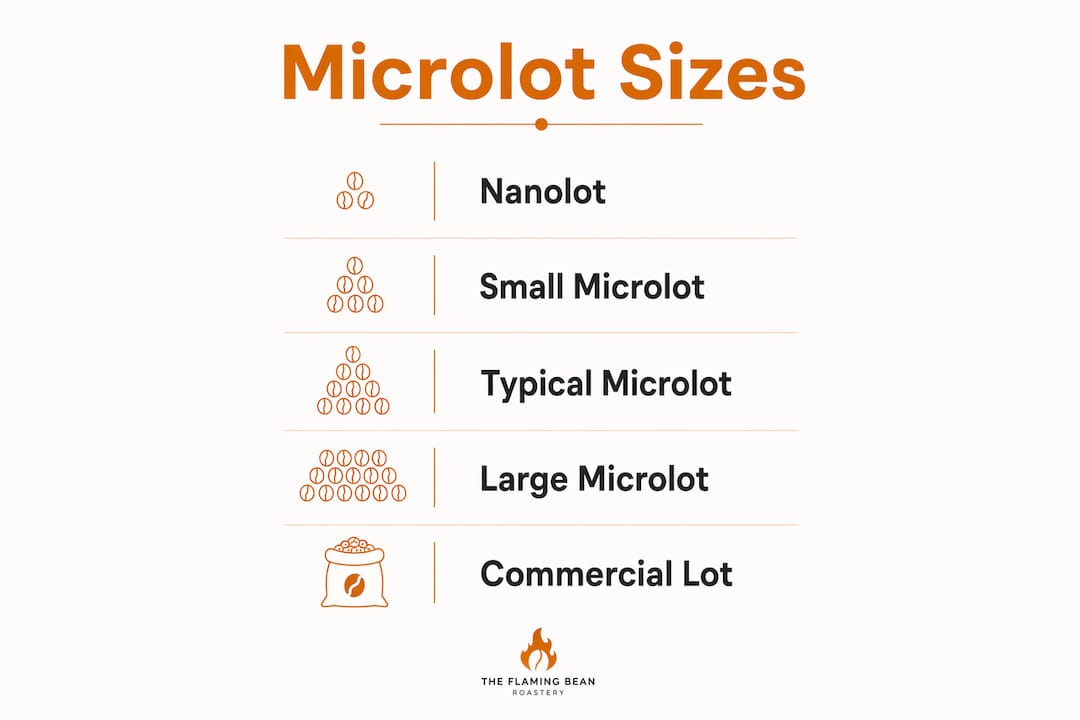
| Term | Typical Volume | Key Characteristic |
|---|---|---|
| Microlot | ~7–50 bags (60 kg each) | Intentionally separated, full traceability |
| Nanolot | Often under ~50 kg (1–2 bags) | Experimental or ultra-limited; rarest tier |
| Single-farm lot | Varies widely | Full farm output, not separated by plot or day |
The term “microlot” lacks a universal standard. Some origins define it by export regulations or local cooperative rules, which affects how lots are labeled and sold. A Kenyan trader may use “microlot” to mean any unbulked lot regardless of size, while an Ethiopian cooperative may reserve the term for a specific plot separated by harvest day. Buyers should ask the importer which definition applies.
Nanolots sit at the extreme end: sometimes one or two 60-kg bags, often experimental batches testing a new fermentation method or a rare variety. Their scarcity makes them valuable, but also makes consistent supply nearly impossible.
How does a microlot differ from single-origin, blends, and nanolots?
These terms sit in a hierarchy, and knowing where each one falls saves a lot of confusion:
- Single-origin is the broadest category: any coffee from a single country, region, or farm. A microlot is a curated subset within a single-origin farm, not a synonym for it.
- Microlot narrows further: a selected portion of a farm’s harvest, separated by plot, variety, harvest day, or processing method. It’s traceable to a specific batch, not just a location.
- Nanolot goes further still: exceptionally small, often under 50 kg, and frequently used for experimental processing. Rarity is the defining feature.
- Blend is the opposite direction entirely: coffee from multiple origins, farms, or even countries combined for consistency and cost control. Storytelling and cup uniqueness are not the goal; repeatability is.
The practical difference for a buyer: a single-origin Ethiopia Yirgacheffe tells you the region. A microlot from Worka Cooperative, Lot WK-22, natural process, 1,900 meters, tells you the batch.
How are microlots produced and processed on-farm?
Producing a microlot starts before harvest. Farmers identify a specific plot, variety, or harvest window that shows exceptional potential, then pick that section separately, often on a single day to keep ripeness consistent. From that point, the lot cannot mingle with the main harvest without losing its microlot status.
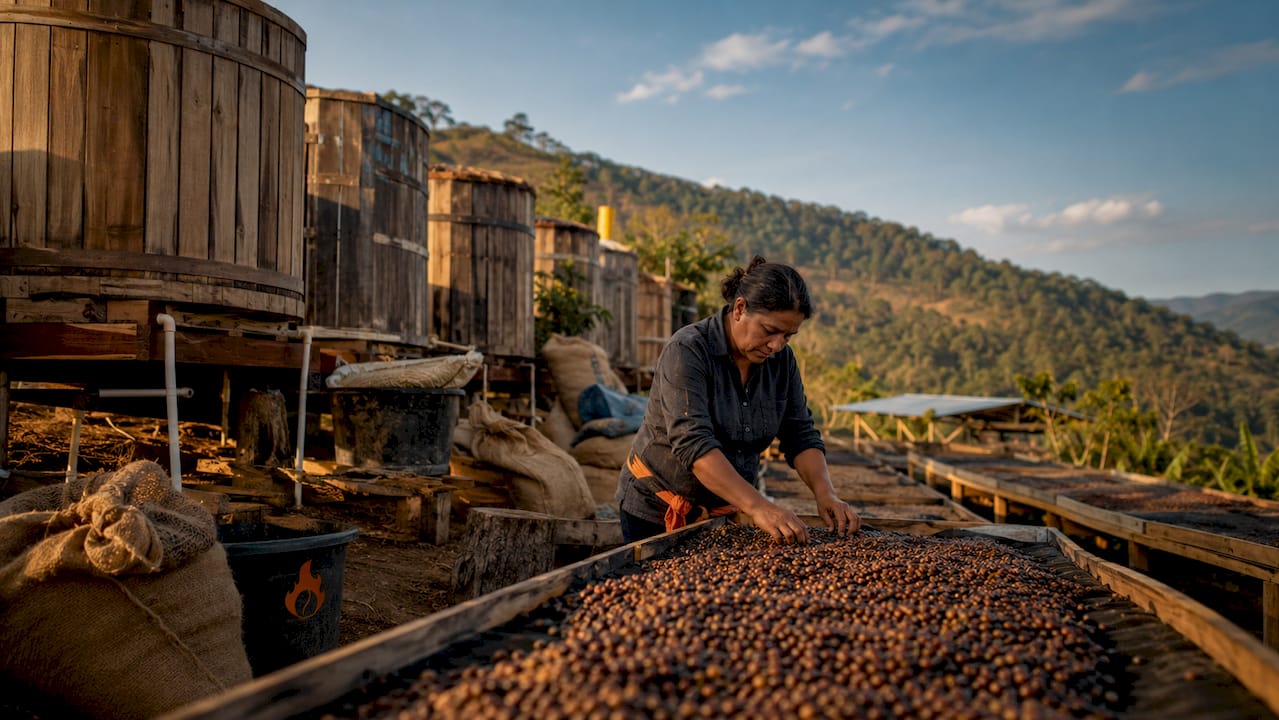
The post-harvest infrastructure is where the real cost shows up. Separate fermentation tanks, dedicated drying beds, and labeled storage are all required to maintain unbroken traceability. Mingling harvest days, plots, or processing methods nullifies the microlot claim entirely. Farms producing multiple microlots in a single season need enough physical capacity to keep each batch isolated throughout drying and milling.
Processing choices shape the cup directly. A washed microlot from a high-elevation plot in Kenya will read differently than a natural-process lot from the same farm: cleaner acidity and clarity in the washed version, more fruit-forward complexity in the natural. Producers run daily cuppings during drying and again before export to confirm the lot is holding its character. If it isn’t, a well-run program will downgrade the lot rather than ship it as a microlot.
Why do microlots command price premiums?
The short answer: extra labor, dedicated infrastructure, and smaller volumes spread fixed costs over fewer bags. A farm separating a 10-bag microlot from a 200-bag main harvest absorbs the same post-harvest facility costs across a fraction of the output. That math pushes the per-pound price up before any quality premium is added.
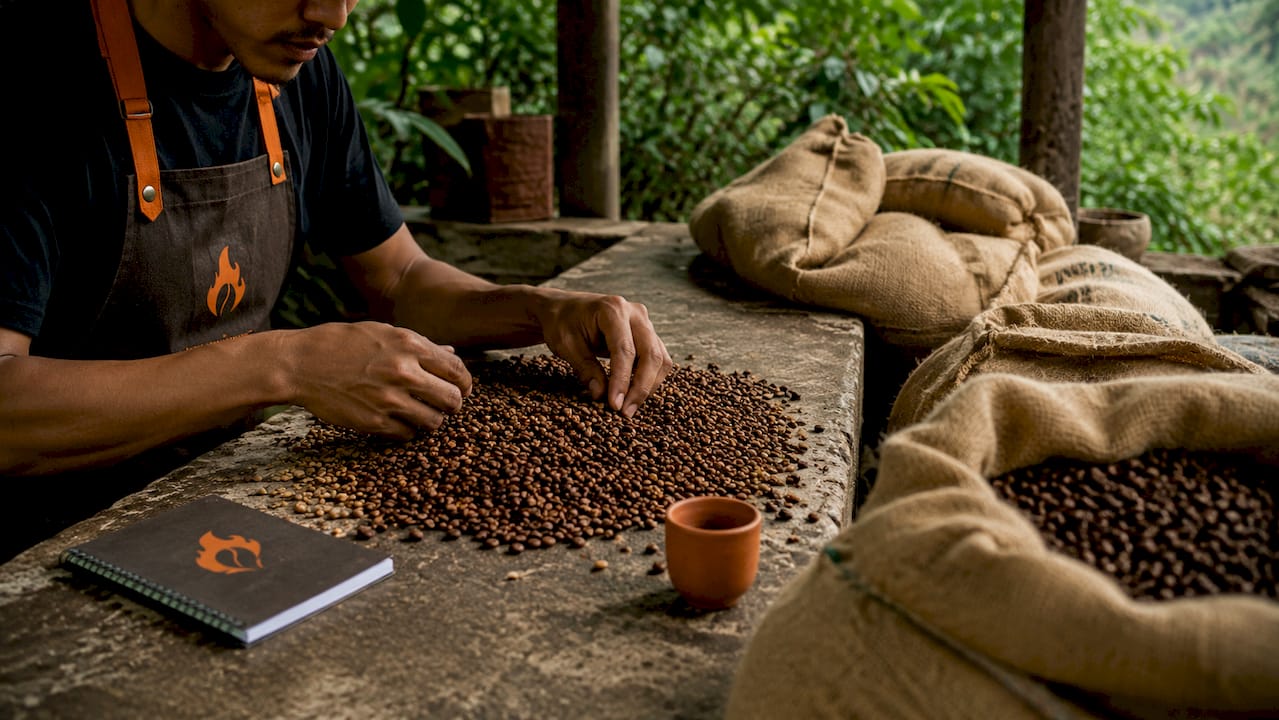
| Cost Driver | Why It Raises the Price |
|---|---|
| Selective picking | More labor hours per kg of cherry |
| Separate processing | Dedicated tanks, beds, and storage |
| Small lot size | Fixed logistics costs over fewer bags |
| Pre-export cupping | Quality confirmation adds time and cost |
| Documentation | Traceability records require staff time |
High-scoring microlots can sell for multiples of a farm’s commercial coffee price. The premium reflects both the cost structure and the scarcity value: a roaster who wants that specific lot has limited options and limited time before it sells. Specialty auctions like Cup of Excellence create a public market for top-scoring lots, but most microlot transactions happen through direct contracts or importer relationships built over multiple seasons.
Scarcity and storytelling reinforce each other. A roaster who can tell customers the producer’s name, the elevation, and the processing method can charge more at retail. That retail margin justifies paying more at origin, which gives the producer an incentive to invest in the separation work. The feedback loop works when everyone in the chain communicates clearly.
How do roasters and importers evaluate microlots?
The process starts with a pre-shipment sample, typically 100–300 grams of green coffee sent before the lot ships. Buyers cup it against the SCA (Specialty Coffee Association) protocol, looking for a score that justifies the price and confirms the lot matches what was described at origin.
What buyers look for beyond the score:
- Sample-to-lot consistency: the pre-shipment sample must match the actual shipped lot; discrepancies are a red flag
- Documentation completeness: farm name, lot ID, variety, elevation, harvest date, and processing notes should all be present
- Volume fit: the lot must be large enough to run a meaningful production batch but small enough to maintain the exclusivity the roaster is paying for
- Repeat availability: first-time buyers often get access to a lot; repeat buyers frequently get preferential first-pick options in subsequent seasons
Working directly with origin suppliers or established importers is the most reliable path to traceable microlots. Spot-market purchases through brokers who can’t provide full documentation are a gamble. Understanding how to evaluate roaster quality can help buyers ask the right questions at every stage of the chain.
How to identify and verify a real microlot before buying
This checklist applies whether you’re a small roaster placing a first order or a home enthusiast buying retail bags:
- Ask for the lot name or ID. A real microlot has one. “Ethiopia Natural” is not a lot ID.
- Confirm the farm or washing station. The specific producer name, not just the cooperative or region.
- Request the harvest date or crop year. Freshness matters, and this date tells you how old the green coffee is.
- Verify the variety and elevation. These are the terroir markers that explain the cup profile.
- Get the processing details. Washed, natural, honey, anaerobic — and ideally the fermentation time and drying method.
- Ask for cupping notes or a score. A reputable importer or roaster will have these on file.
- Check the bag count and total weight. Lot sizes vary widely, so confirm the exact volume before committing to a purchase.
- Request a roast sample if possible. Especially for first-time purchases, tasting before buying a full lot protects your investment.
Pro Tip: When buying retail, use The Flaming Bean’s flavor guide to match microlot tasting notes to your preferences before you commit to a bag.
For remote buyers coordinating with roasters across time zones, working with a roaster remotely covers the practical logistics of sample evaluation and feedback.
Who benefits from microlots, and what are the risks?
For producers, the upside is real: price premiums, direct buyer relationships, and specific feedback that can improve quality season over season. Microlot programs can improve producer incomes and strengthen buyer-producer ties. The risk is internal: if a cooperative selects microlot candidates without transparent criteria, members who don’t make the cut can feel the process is unfair. Clear communication about selection standards is not optional; it’s what keeps the program from creating conflict. Coffee’s role in supporting communities depends on that fairness being built in from the start.
For roasters and retailers, microlots offer differentiation, limited-run storytelling, and a reason for customers to pay more. The drawback is logistical: small lots mean higher per-unit shipping costs, tighter timelines, and the risk that a lot you loved last season won’t be available or won’t match this year.
For consumers, the benefit is a more interesting cup with a real story behind it. The risk is paying a premium for a bag that uses “microlot” as a marketing word rather than a production standard. Verification steps matter here more than anywhere else in the chain.
When is a microlot worth the extra cost?
Pay the premium when three conditions are met: the provenance is verified (lot ID, farm name, processing notes all present), the cup profile is confirmed through cupping notes or a roast sample, and the volume fits your needs without forcing you to overbuy. A 10-bag microlot is a poor fit for a roaster who needs 50 bags of consistent supply every month.
Skip it when the documentation is thin, the price exceeds your budget without a clear flavor or storytelling payoff, or when consistent supply matters more than uniqueness. A well-sourced specialty coffee blend or single-origin lot with full traceability can deliver excellent quality at lower cost and better availability. Microlots are not automatically better than other specialty coffees; they’re a specific tool for a specific goal.
The microlot feedback loop is the strongest argument for paying more: small volumes let roasters give precise processing feedback to producers, which accelerates quality improvements and builds long-term partnerships. That relationship value compounds over seasons in a way that spot-market buying never does.
Key Takeaways
A coffee microlot is defined by intentional separation and unbroken traceability, not by the word on the bag or the price on the tag.
| Point | Details |
|---|---|
| Definition | A microlot is a small, intentionally separated batch with full traceability to farm, lot, variety, and process. |
| Size ranges | Typical importer ranges run from roughly 7 to 50 bags; always confirm exact weight before buying. |
| Verification signals | Ask for lot ID, farm name, harvest date, variety, elevation, and processing notes before purchasing. |
| Price premium drivers | Extra labor, dedicated infrastructure, and small lot size all push per-pound costs higher than commercial coffee. |
| The Flaming Bean | Evening Roast and other offerings reflect The Flaming Bean’s commitment to sourcing with traceability and clear flavor stories. |
The real promise of microlots
Most articles on microlots spend their energy on the definition debate: is it 10 bags or 50? Does it need an SCA score? The debate is real, but it misses the more useful point.
The value of a microlot is not the label. It’s the relationship it creates. When a roaster buys a named lot from a named producer at a named elevation, both parties have something specific to talk about. The roaster can say “the fermentation on Lot WK-22 was a little long; can we try 36 hours next season?” The producer can respond with a sample. That conversation is what moves quality forward. A generic single-origin purchase doesn’t create that loop.
The risk is that “microlot” becomes what “natural” became in the food industry: a word that sounds meaningful but gets applied to anything. That’s already happening in parts of the market. The answer isn’t to stop buying microlots. It’s to ask better questions and hold suppliers to the documentation standard the term actually requires.
For enthusiasts, the practical takeaway is simple: a bag with a lot ID and a producer name is worth more of your attention than one without, regardless of what it calls itself.
The Flaming Bean is a great place to start
If this article has you thinking about what’s actually in your cup, we’d love to help you find something worth getting excited about. The Flaming Bean sources coffees with the kind of flavor stories and provenance details that make a real difference in the cup. Our Evening Roast is a great starting point: smooth, approachable, and crafted to highlight the character of every bean we select.

We’re also here for roasters, organizations, and teams looking for wholesale or private label options with the same commitment to quality and transparency. Whether you’re buying your first specialty bag or building a sourcing program, we’d love to be part of it. Head to The Flaming Bean and find your next favorite cup.
Useful sources for deeper reading
The sources below are the most reliable starting points for anyone who wants to go further on microlot definitions, production practices, and market dynamics.
- Perfect Daily Grind: What Is a Micro Lot in Specialty Coffee? — The most thorough industry survey of how different supply chain members define the term, with direct quotes from producers, importers, and roasters. Start here for the definition debate.
- Sweet Maria’s Coffee Library: Micro-Lot — A blunt, authoritative glossary entry that calls out misuse clearly and sets a practical production standard.
- CRS Coffeelands: The Social Impact of Microlots — The most detailed research on how microlot programs affect producer incomes and cooperative dynamics. Essential reading for anyone interested in the supply chain beyond the cup.
- Intelligence Coffee: Reviewing the Term Micro-Lot — A critical look at how the term is used and misused in current trade, with practical guidance for buyers who want to verify claims.
- The Flaming Bean: How Soil Shapes Coffee Flavor — Useful context on the terroir elements that make microlot provenance details meaningful, written for enthusiasts and professionals alike.
Comments