
What Is an Ecommerce Coffee Brand? Your 2026 Guide

An ecommerce coffee brand sells coffee direct-to-consumer online and owns every touchpoint along the way: discovery, purchase, subscription sign-up, and repeat orders. No middleman, no shelf-space negotiation, no waiting for a retailer to reorder. You control the pricing, the story, and the relationship. According to Salesforce, ecommerce covers the full cycle of buying and selling goods online, including discovery, checkout, payment, and digital marketing. For coffee, that cycle is especially powerful because the product is consumable, repeat-purchase, and deeply personal.
The three most common models are DTC bags (one-time purchases), subscriptions (recurring shipments on a cadence the customer sets), and wholesale partnerships (selling to cafes or offices through an online portal). Subscriptions are the real prize: they generate predictable revenue, lower your cost to re-acquire a customer, and give you data on taste preferences and churn signals. The early tradeoff most founders face is inventory risk versus speed. Dropshipping lets you validate demand with almost no upfront stock; private label gives you branding control at moderate cost; roast-to-order gives you maximum quality control but demands the most capital.
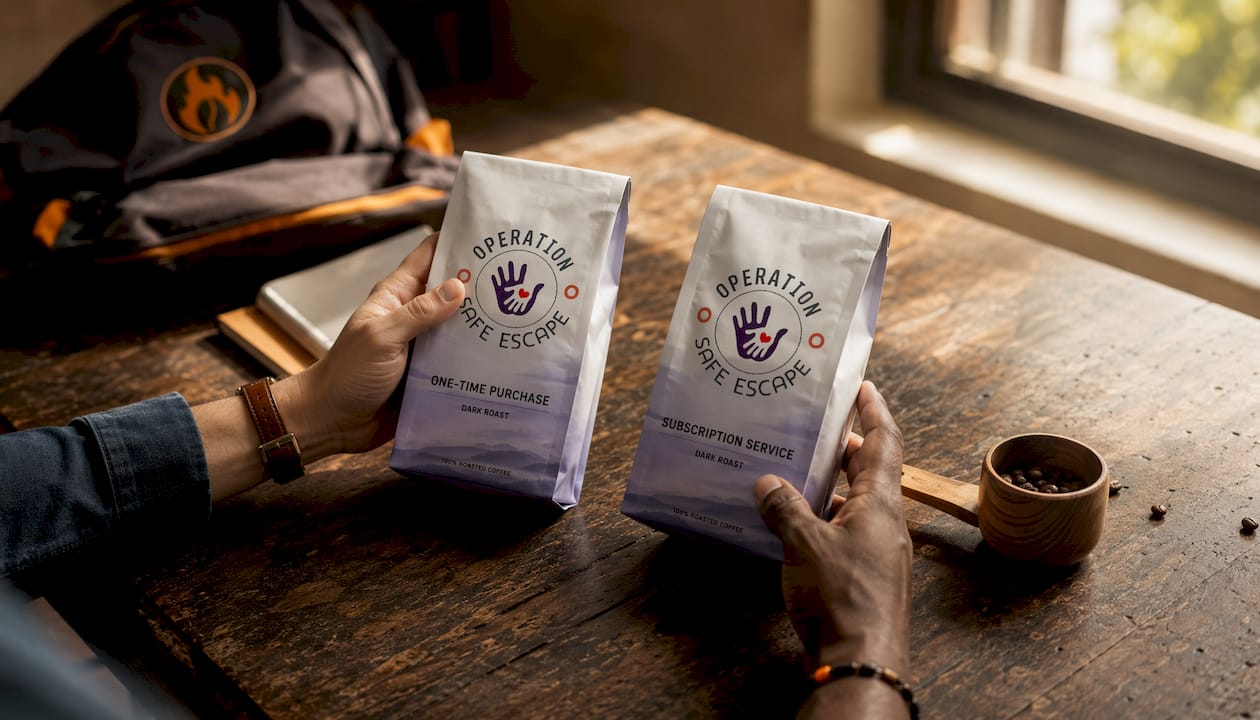
Your immediate next step: pick one model, choose a primary platform to prototype on, and get a product page live. Shopify is the fastest starting point for most founders. The FDA sets the labeling standards you need to meet before you ship. And if you want to see how a real brand organizes positioning and product naming, The Flaming Bean is a useful reference throughout this guide.
Table of Contents
- Why start an ecommerce coffee brand right now?
- Which ecommerce platform fits your coffee brand best?
- How does fulfillment actually work for an online coffee brand?
- What makes an ecommerce coffee brand’s customer experience convert?
- How do you price coffee and track unit economics?
- What are the legal and food-safety basics for U.S. coffee brands?
- Step-by-step startup checklist and realistic timeline
- How The Flaming Bean turns positioning into product names
- How do you keep customers coming back beyond subscriptions?
- Key Takeaways
- The mistake most new coffee founders make
- Useful sources to go deeper
- The Flaming Bean is ready when you are
Why start an ecommerce coffee brand right now?
The business case is straightforward. Selling coffee online gives you margins that wholesale and retail simply cannot match, because you capture the full retail price instead of splitting it with a distributor or grocery chain. You also own the customer data, which means you can run email campaigns, test offers, and build subscription lifecycles without asking anyone’s permission.

Subscription sales surged significantly following the 2020 shift to ecommerce, and coffee equipment purchases increased during the same period. That momentum has not reversed. Subscriptions now deliver higher gross margin compared to one-time orders, plus predictable revenue and a lower customer acquisition cost over time.
The four main models, and who each fits:
- Dropship / white-label: Low inventory risk, fastest to validate. Margins are thinner, but you can test demand before spending on packaging or a roaster.
- Private label: A contract roaster roasts and bags under your brand. Good balance of branding control and startup cost. Supplier selection and packaging are the most common failure points.
- Roast-to-order: You roast in-house and ship within days of roasting. Maximum quality control, highest capital requirement.
- Wholesale DTC portal: You sell bags or subscriptions to offices, cafes, or gift buyers through your own site. Complements any of the above.
Watch out for these pitfalls: competing on price before you have a brand story, choosing a supplier based on cost alone, launching with too many SKUs, and underestimating shipping costs on heavy bags. The most disciplined launches start with one product, one size, and one packaging SKU.
Which ecommerce platform fits your coffee brand best?
Choosing the right platform shapes your launch speed, your subscription capability, and your monthly overhead. Here is a quick comparison by platform category:
| Platform category | Setup speed | Subscription support | Technical effort | Typical monthly cost |
|---|---|---|---|---|
| Hosted commerce (e.g., Shopify) | Fast | Native apps available | Low | — |
| Self-hosted + plugins (e.g., WooCommerce) | Moderate | Plugin-dependent | Medium–High | Hosting + plugin fees |
| Site-builder commerce (e.g., Squarespace, Square Online, Weebly) | Very fast | Limited | Very low | — |
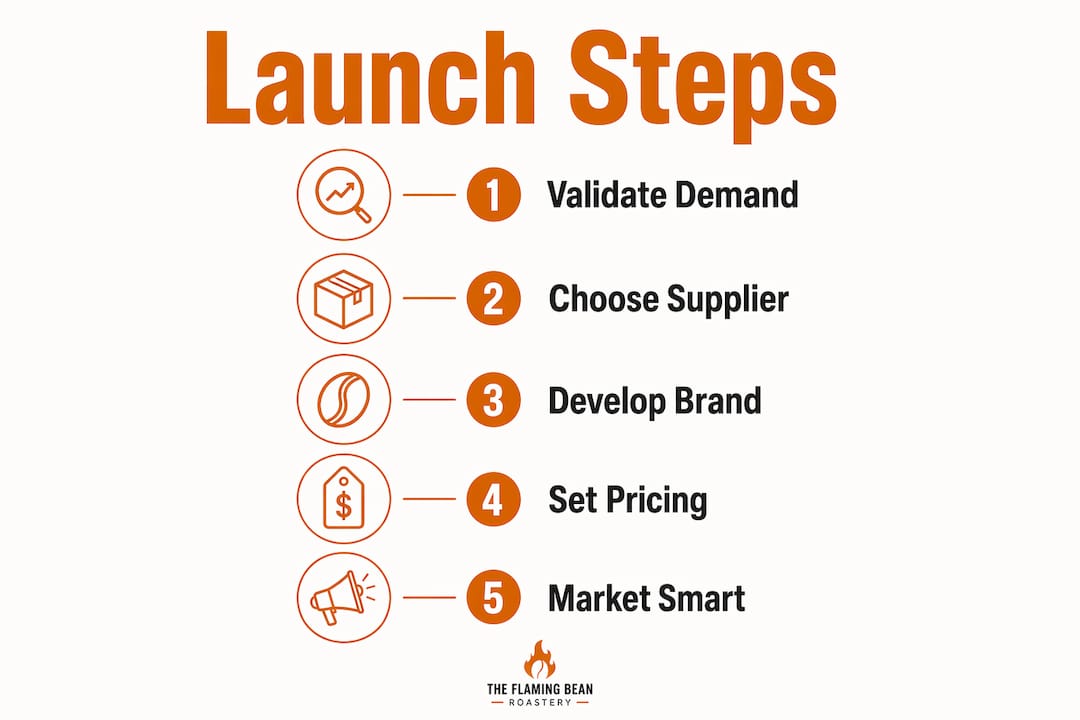
Shopify is the most recommended platform for coffee brands launching DTC. Its app ecosystem includes subscription tools, fulfillment integrations, and marketing automation that most founders need on day one. Setup is fast, transaction fees are predictable, and you can add a subscription flow without custom development. For a founder who wants to move quickly, Shopify is the default choice.
WooCommerce suits operators who want more control over their tech stack or who already run a WordPress site. The flexibility is real, but so is the maintenance burden. You will manage hosting, plugin updates, and compatibility yourself. It is a good fit if you have technical resources or a developer on call.
Squarespace, Square Online, and Weebly are worth considering if your primary goal is a beautiful, low-maintenance storefront and your subscription volume is modest. Their subscription support is more limited, so if recurring orders are central to your model, you will hit the ceiling faster on these platforms.
On the payments side, Shopify Payments handles most needs out of the box. For subscription billing specifically, apps like Recharge or Bold Subscriptions plug into Shopify and handle cadence management, dunning, and customer self-service. These integrations are worth the added monthly cost because failed payments and churn from billing friction are two of the biggest subscription killers. You can also develop a coffee subscription service with a structured setup that covers retention and churn management from the start.
How does fulfillment actually work for an online coffee brand?
Fulfillment is where most early-stage coffee brands lose money quietly. Here is the standard workflow once an order is placed:
- Order received: Platform triggers a fulfillment notification to your roaster, co-packer, or 3PL.
- Roast or pull from inventory: Roast-to-order brands roast within 24–48 hours of the order. Private-label brands pull pre-roasted, pre-packaged stock.
- Rest the coffee: Coffee reaches peak flavor several days after roasting. Educating customers about roast date and resting reduces complaints and builds trust.
- Pack and label: Apply FDA-compliant labels, add any inserts (brewing guides, brand cards), and seal the bag.
- Outbound shipping: Hand off to your carrier. USPS Priority Mail and UPS Ground are the most common for bags under 5 lbs.
- Tracking and notifications: Send an automated tracking email. This is a retention touchpoint, not just logistics.
- Returns and replacements: Define your policy upfront. Coffee is perishable, so most brands offer a replacement or credit rather than a physical return.
Supplier selection and packaging choices are the two areas where early budgets most often get wasted. Negotiate minimum order quantities before committing, and get samples from at least three suppliers before signing anything.
Pro Tip: Set your free-shipping threshold at 15–20% above your average order value. If your AOV is $28, a $33 free-shipping threshold nudges customers to add a second bag without cutting deeply into your margin on smaller orders.
What makes an ecommerce coffee brand’s customer experience convert?
Visitors who land on your product page have already done some research. What converts them is not a discount. It is confidence: confidence that the coffee is fresh, that the story behind it is real, and that the subscription is easy to manage.
The core conversion levers are a strong hero story (where the beans come from, why you roast them this way), clear roast and tasting notes, brewing guidance, and a subscription sign-up flow that does not require a phone call to cancel. Transparency on roast date is especially powerful because most grocery-shelf coffee offers none.
Best practices for product pages:
- One clear call to action per page (subscribe and save, or add to cart).
- Roast date or “roasted fresh to order” prominently displayed.
- Suggested use cases (morning espresso, cold brew, office drip) to help customers self-select.
- Social proof: reviews with specific flavor notes, not just star ratings.
- A short origin paragraph that names the farm, region, or cooperative.
For the subscription UX, make cadence selection obvious (every 2 weeks, monthly), show the savings clearly, and send a pre-shipment email so customers feel in control rather than surprised. Post-purchase emails covering brewing tips and roasting updates keep the brand present between orders. Packaging and unboxing matter too. A well-designed bag with a readable label and a small insert card turns a commodity shipment into a brand moment. For concrete examples of how branding and packaging come together, custom coffee branding examples show what execution looks like in practice.
How do you price coffee and track unit economics?
Pricing without tracking unit economics is guessing. Here are the cost line items to calculate per bag or per order:
- Green bean cost (per pound, adjusted for roast loss, typically 15–20%)
- Packaging (bag, valve, label, insert card)
- Labor (roasting, packing, quality check)
- Fulfillment and shipping
- Transaction fees (typically 2.5–3% of order value)
- Returns allowance
- Marketing CAC allocation (your customer acquisition cost divided across expected orders)
A simple price-position reference by brand type:
| Brand positioning | Typical retail price per 12 oz bag | Subscription discount |
|---|---|---|
| Everyday / commodity | $12–$15 | 10–15% |
| Single-origin premium | $20–$28 | 10–20% |
| Subscription-first / specialty | — | 15–20% |
The KPIs that matter most: contribution margin per order (revenue minus variable costs), Customer Acquisition Cost (CAC), Lifetime Value (LTV), subscription churn rate, and Average Order Value (AOV). A healthy subscription business targets an LTV-to-CAC ratio of at least 3:1.
For subscription pricing, a common approach is to set the subscription price at 10–15% below the one-time price. That gap needs to be wide enough to feel like a real incentive but not so wide that it cannibalizes one-time margin. Free-shipping thresholds follow the same logic: set them above your current AOV to pull customers toward larger orders without giving away margin on small ones.
What are the legal and food-safety basics for U.S. coffee brands?
Packaged coffee sold online in the United States is a food product, and that comes with real compliance requirements. Here is the checklist:
- Business registration: Register your LLC or corporation with your state. Get an EIN from the IRS.
- Sales tax: Register in states where you have nexus. Economic nexus thresholds vary by state, so check each state’s rules as your revenue grows.
- FDA labeling: Packaged coffee must carry a statement of identity, net weight, ingredient list (if applicable), and your business name and address. The FDA sets these standards.
- State food-safety rules: Some states require a cottage food license or commercial kitchen registration for food businesses. Check with your state health department before you ship.
- Organic / fair trade claims: “Organic” requires USDA certification. “Fair trade” requires certification from a recognized body like Fair Trade USA. Honest provenance storytelling (“sourced from a family farm in Oaxaca”) does not require certification, but it must be accurate.
- U.S. Small Business Administration (SBA): A good starting point for business setup, licensing checklists, and state-specific guidance.
For a step-by-step look at what a retail coffee brand launch involves from a compliance standpoint, the retail coffee brand launch guide covers the key checkpoints.
This article is general information, not legal or tax advice. Confirm current requirements with the FDA, your state health department, and a qualified attorney or accountant for your specific situation.
Step-by-step startup checklist and realistic timeline
Validation before inventory. That is the rule that separates founders who launch cleanly from those who spend $8,000 on packaging before selling a single bag.
- Weeks 1–2 (Validate): Build a simple landing page. Run $100–$200 in paid social ads or post to relevant communities. Measure click-through and sign-up rates before ordering anything.
- Weeks 3–4 (Supplier and model): Contact at least three suppliers or contract roasters. Get samples. Negotiate MOQs. Choose your fulfillment model based on your budget.
- Weeks 5–6 (Build): Set up your Shopify store (or chosen platform). Add your product page, subscription flow, and payment processing. Write your origin story and tasting notes.
- Weeks 7–8 (Pilot): Ship to 20–50 customers. This could be friends, early sign-ups, or a small ad campaign. Collect feedback on flavor, packaging, and the unboxing experience.
- Weeks 9–10 (Refine): Adjust packaging, messaging, or roast profile based on pilot feedback. Finalize your label for FDA compliance.
- Week 11–12 (Soft launch): Open the store publicly. Start email list building and social content. Set a modest first-month revenue target.
- Months 3–6 (Scale marketing): Add influencer partnerships, SEO content, and a referral program once your unit economics are confirmed.
Budget buckets to plan for: technology (platform, apps, domain), inventory (green beans or finished bags), packaging (bags, labels, inserts), and marketing (ads, content, email tools). Dropshipping minimizes the inventory bucket almost entirely, which is why it is the fastest validation path. Private label and in-house roasting shift more budget into inventory and equipment.
Pre-launch validation through small test orders and supplier negotiation prevents the most common early losses.
How The Flaming Bean turns positioning into product names
The Flaming Bean is a useful case study because its positioning is specific enough to drive real product decisions. The three pillars are craftsmanship, community, and purpose. Those are not abstract values. They show up directly in product names, messaging, and the causes the brand supports.
The product lineup reflects this clearly. Blends like Abyssal and Angry Rooster signal boldness and personality. Evening Roast signals approachability. And then there is Safe Ground, a specialty blend tied directly to a cause: supporting organizations that protect vulnerable individuals and advance digital safety. That cause-linked product is not just a feel-good add-on. It gives the brand a marketing hook, a community to partner with, and a reason for customers to share the product beyond “it tastes good.”
Takeaways you can apply directly:
- Launch with one hero product. The Flaming Bean’s approach shows that a single, well-named blend with a clear story outperforms a crowded SKU list at launch.
- Put your origin story on the product page, not buried in an About section.
- Use subscription-first messaging from day one, even if most early orders are one-time.
- Cause-linked products create natural marketing partnerships with nonprofits and communities who share your mission.
For more on how purpose-driven coffee supports both brand differentiation and community impact, The Flaming Bean’s own writing covers the topic in depth.
How do you keep customers coming back beyond subscriptions?
Subscriptions handle retention mechanically. But the brands that build real loyalty do more than auto-ship bags. They make customers feel like part of something.
Loyalty programs are the most direct tool. A points-based system (earn points per purchase, redeem for free bags or discounts) gives customers a reason to consolidate their coffee buying with you instead of splitting orders across brands. Keep the redemption threshold low enough that customers reach it within two or three orders.
Email marketing is where most coffee brands leave money on the table. A welcome sequence that covers your origin story, a brewing guide, and a roast-date explainer does three things: it educates, it builds trust, and it reduces the “this coffee tastes weird” complaints that come from customers who brew stale beans. After the welcome sequence, a monthly email with a new roast highlight or a behind-the-scenes sourcing story keeps the brand present without feeling like a sales blast.
Customer feedback integration closes the loop. A short post-purchase survey (one or two questions about flavor and packaging) gives you data to improve the product and signals to the customer that their opinion matters. Brands that act on feedback publicly, mentioning in an email that they adjusted a roast profile based on customer input, build a level of trust that no discount can replicate. Building a coffee brand community that lasts requires exactly this kind of ongoing conversation, not just a loyalty points dashboard.
Key Takeaways
An ecommerce coffee brand succeeds when it pairs a clear DTC model with subscription-first pricing, FDA-compliant operations, and a brand story specific enough to drive repeat purchases without competing on price.
| Point | Details |
|---|---|
| Start with one model and validate | Dropship or private label first; validate demand with a landing page before buying inventory. |
| Subscription sales drive margin | Subscriptions now deliver higher gross margin compared to one-time orders, plus predictable revenue and a lower customer acquisition cost over time. |
| Platform choice shapes launch speed | Shopify is the fastest path for most founders; WooCommerce suits technical operators wanting more control. |
| Legal basics are non-negotiable | Register your business, get an EIN, comply with FDA labeling, and check state sales tax nexus rules before you ship. |
| The Flaming Bean model | Craftsmanship, community, and purpose-driven products like Safe Ground show how positioning turns into product names and marketing hooks. |
The mistake most new coffee founders make
The conventional wisdom says “find a great coffee and build a brand around it.” That gets the order wrong. The founders who struggle are the ones who source an excellent bean, spend months on packaging, and then discover they have no clear answer to “why should I buy from you instead of the dozen other specialty roasters I already follow?”
Brand position comes first. Not the logo, not the bag design, not the roast profile. The question to answer before anything else is: who is this coffee for, and what does buying it say about them? The Flaming Bean answered that early. Bold coffee for people who want their purchase to mean something. That clarity made every subsequent decision easier, from product naming to which causes to support.
The other mistake is over-ordering SKUs before validating demand. One product, one size, one packaging option. Test it. Then expand.
Useful sources to go deeper
- Bellwether Coffee’s ecommerce setup guide: The most thorough practical guide to launching an online coffee store, covering platforms, fulfillment, and subscription setup.
- Shopify’s guide to selling coffee online: Platform-specific advice on setup, subscription apps, and scaling, directly from the platform most coffee brands use.
- MyOwnCoffeeBrand private-label guides: Detailed supplier negotiation, MOQ guidance, and startup mistake warnings for private-label founders.
- SummerStirs coffee brand startup overview: A practical overview of launch marketing, visual branding, and social content for new coffee brands.
- The Flaming Bean subscription guide: Deep dive on subscription setup, churn management, and retention tactics.
- The Flaming Bean brand differentiation guide: Detailed approaches to positioning and standing out in a crowded market.
The Flaming Bean is ready when you are
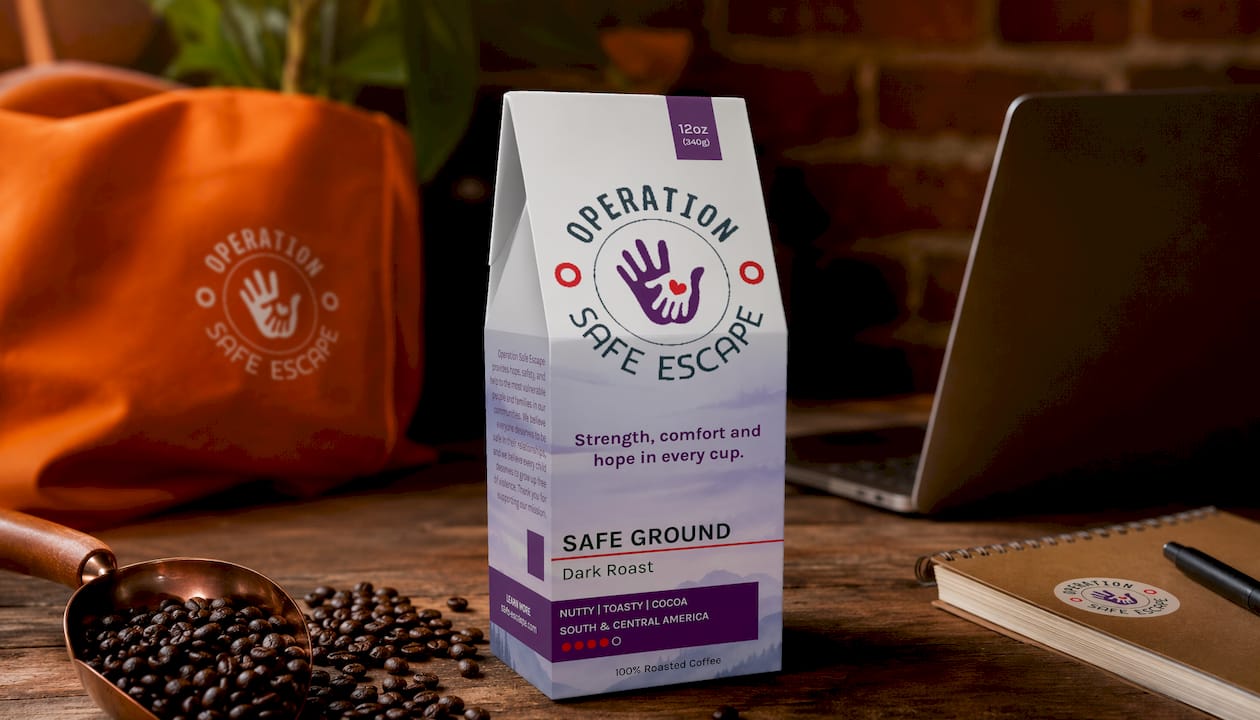
Starting an ecommerce coffee brand takes a clear model, the right platform, and a story worth telling. The Flaming Bean has done exactly that, and the result is a lineup of coffees that are bold, purposeful, and built for people who care about what is in their cup and where it comes from. Whether you are looking for a reference point on how to position a coffee brand, or you simply want to experience what a well-executed DTC coffee brand feels like as a customer, The Flaming Bean is a great place to start.
Browse the full lineup, including purpose-driven blends like Safe Ground that support real causes with every bag. And if you are building your own brand, the bold coffee collection shows what premium product pages and clear positioning look like in practice. Visit theflamingbean.com to explore, order, or get inspired.
Recommended
- What Is a Retail Coffee Brand Launch? Your 2026 Guide – The Flaming Bean Roastery
- Examples of Custom Coffee Branding for Entrepreneurs – The Flaming Bean Roastery
- What Is a Cause Coffee Brand? Your Complete Guide – The Flaming Bean Roastery
- Types of Community Coffee Brands: A Flavor Guide – The Flaming Bean Roastery
Comments