
What Is Espresso Roast? Flavor, Brew & Buying Tips

Espresso roast is defined as a roasting style that tailors coffee beans to perform at their best under the high pressure and short extraction time of an espresso machine. The National Coffee Association confirms that “espresso roast” carries no standardized roast level. Roasters like Peet’s Coffee and Starbucks each label their espresso roasts differently, yet both produce bold, full-bodied shots with thick crema. The key thing to understand about what is espresso roast is this: it describes intent and performance, not a fixed point on the roast spectrum.
What is espresso roast vs. other coffee roasts?
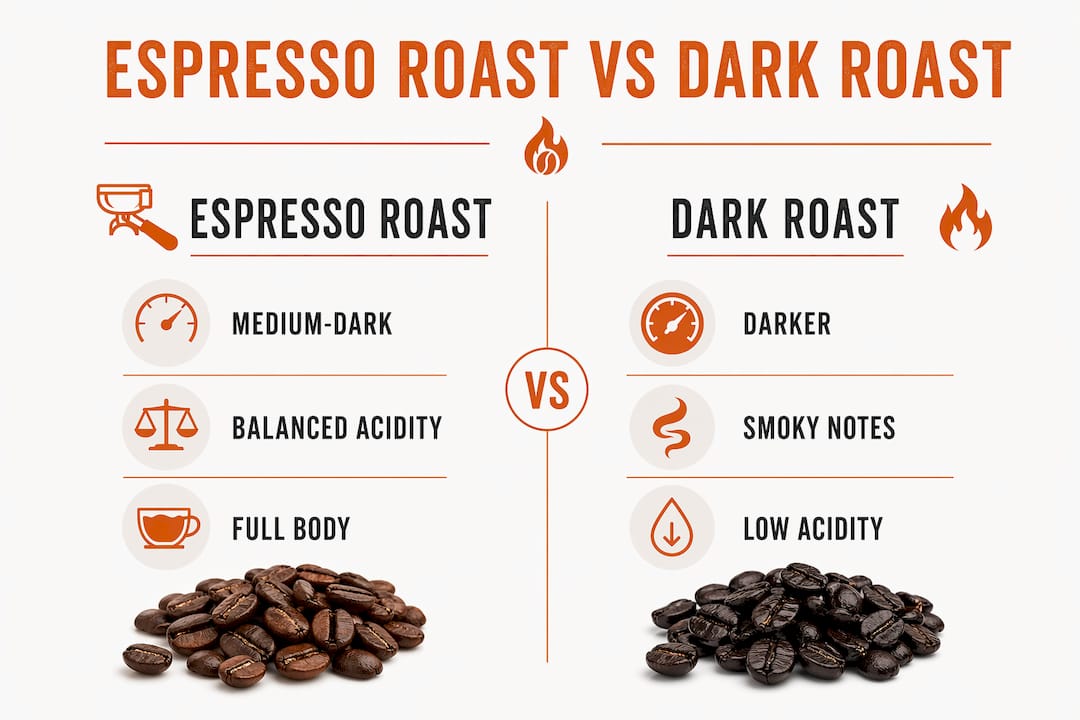
Espresso roast is not the same as dark roast, even though the two overlap frequently. Peet’s and the NCA both affirm that an espresso roast can legitimately range from medium to dark depending on the roaster’s goals. The confusion is understandable. Most commercial espresso roasts land in the medium-dark range because that level balances boldness, sweetness, and extraction consistency under pressure.
Here is how espresso roast compares to the standard roast categories:
| Roast Level | Temperature Range | Flavor Notes | Acidity | Body | Espresso Suitability |
|---|---|---|---|---|---|
| Light Roast | 356–401°F | Floral, fruity, bright | High | Light | Low |
| Medium Roast | 410–428°F | Nutty, caramel, balanced | Medium | Medium | Moderate |
| Medium-Dark Roast | 437–446°F | Chocolate, toasty, bold | Low-Medium | Full | High |
| Dark Roast | Above 464°F | Smoky, bitter, oily | Low | Heavy | High |
| Espresso Roast | Varies (usually medium-dark) | Bold, chocolatey, rich crema | Low-Medium | Full | Optimized |
Dark roast beans reach temperatures above 464°F, producing oily surfaces and smoky, bitter notes with very low acidity. Espresso roast, by contrast, is defined by purpose rather than temperature alone. A roaster crafting an espresso roast targets solubility and flavor balance, not just color or surface sheen.
The practical difference matters when you are shopping. A bag labeled “dark roast” tells you about roast level. A bag labeled “espresso roast” tells you the roaster optimized those beans for espresso extraction. Those are two different pieces of information, and you want both.
What does espresso roast taste like?
Espresso roast delivers a flavor profile built around boldness, body, and balance. The typical tasting notes include:
- Chocolate and cocoa: The most common descriptor across commercial espresso roasts, from milk chocolate sweetness to dark cocoa bitterness.
- Caramel and brown sugar: Medium-dark roasting caramelizes the bean’s natural sugars, adding a sweet, rounded finish.
- Nutty undertones: Hazelnut and almond notes appear frequently, especially in blends using Brazilian or Colombian beans.
- Subtle smokiness: Present in darker espresso roasts, though a well-crafted roast keeps this from overwhelming the cup.
- Low acidity: Espresso roast sits well below light and medium roasts on the acidity scale, making it gentler on the stomach.
The body of an espresso roast is full and coating. That weight is what allows the shot to hold up under milk in a latte or cappuccino without disappearing. Crema formation is a direct result of the roast profile and extraction properties. Crema is the creamy, reddish-brown layer that floats on a properly pulled shot. It signals good extraction and contributes to the mouthfeel and flavor balance that espresso drinkers expect.
Pro Tip: If your espresso shot tastes flat and produces little crema, the beans may be too old. Espresso roast performs best between 7 and 21 days after the roast date. Check the bag for a roast date, not just a “best by” date.
Roasters like Theflamingbean design bold coffee blends specifically to hit these flavor targets. Their Abyssal and Angry Rooster blends, for example, are crafted to deliver that rich, full-bodied character espresso drinkers want in every shot.
How does espresso roast perform under brewing?
Espresso roast performs under 9-bar pressure and short extraction windows of 25–30 seconds because the roasting process increases bean solubility. More soluble beans dissolve faster and more evenly under pressure, producing a concentrated, balanced shot rather than a sour or bitter one.
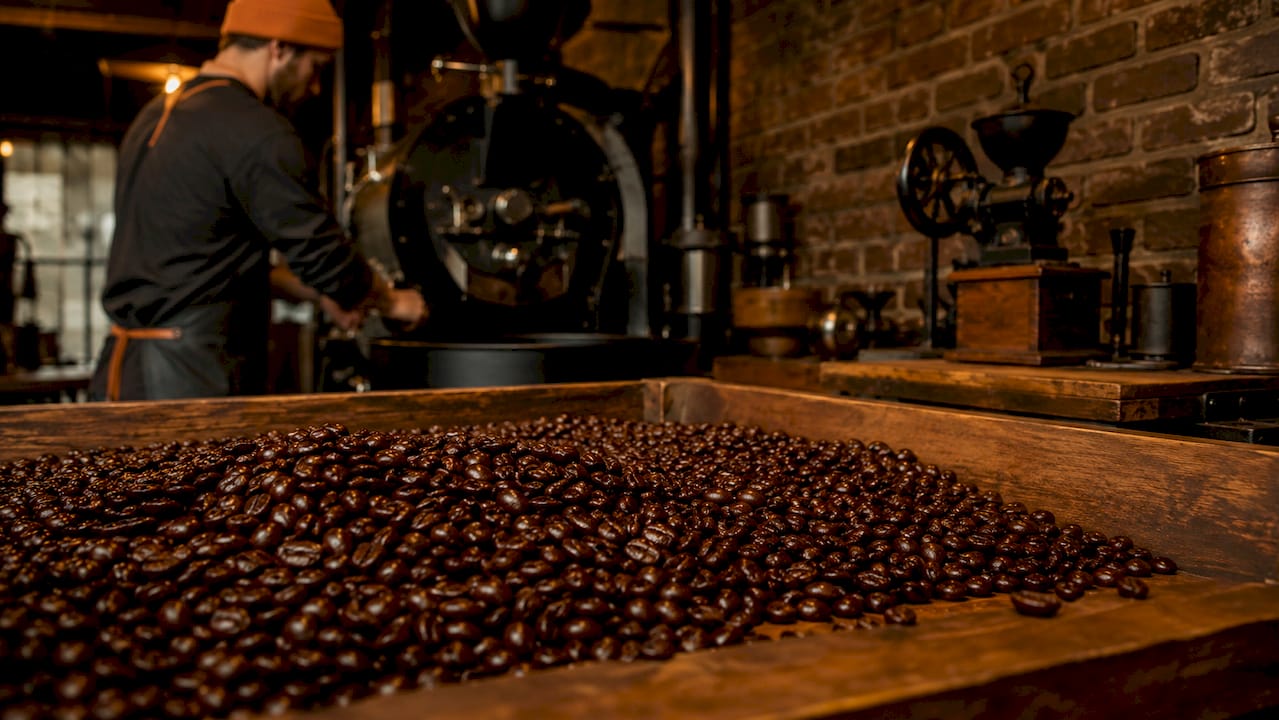
Medium-dark development makes espresso roast forgiving. Shots pulled with medium-dark beans are less sensitive to small grind or dose variations than shots pulled with light roast beans. That consistency is why commercial cafés and home baristas both favor espresso roast for daily use.
Here is a step-by-step approach to dialing in an espresso roast:
- Start with a fresh roast date. Beans roasted 7–21 days ago extract most reliably. Freshly roasted beans off-gas CO2, which disrupts extraction. Stale beans produce flat, lifeless shots.
- Grind fine, but not too fine. Espresso requires a fine grind, but over-grinding causes over-extraction and bitterness. A quality burr grinder from a collection like Theflamingbean’s coffee grinders gives you the precision to dial in correctly.
- Dose consistently. A standard double shot uses 18–20 grams of ground coffee. Weigh your dose every time until you find your sweet spot.
- Target a 1:2 ratio. Pull 36–40 grams of espresso from an 18-gram dose in 25–30 seconds. This ratio produces a balanced, full-flavored shot with good crema.
- Taste and adjust. Sour shots need a finer grind or longer extraction. Bitter shots need a coarser grind or shorter extraction.
Pro Tip: Espresso roast beans work well in a French press or pour-over too. The flavor will be less concentrated and more chocolatey than a bright, acidic light roast. Adjust your grind coarser for French press and expect a rich, full-bodied cup.
Espresso roast is versatile beyond the espresso machine. The same beans that pull a great shot can produce a satisfying drip coffee or cold brew. The flavor expression shifts, but the bold, low-acid character carries through.
How roasters craft espresso roast and what to buy
Roasters use specific temperature curves and timing to build the boldness and solubility that espresso roast requires. The goal is to develop the bean fully without pushing into the harsh, ashy territory of an over-roasted dark. This balance is what separates a great espresso roast from a bag that just says “dark” on the label.
When you are buying espresso roast, look for these things:
- A visible roast date. Freshness is the single biggest factor in shot quality. Avoid bags with only a “best by” date.
- Bean origin information. Single-origin espresso roasts from Ethiopia or Colombia taste very different from Brazilian or Guatemalan blends. Neither is wrong, but knowing the origin helps you predict the flavor.
- Roast level transparency. The best roasters tell you whether their espresso roast is medium-dark or dark. Vague labels are a red flag.
- Whole bean format. Pre-ground espresso coffee goes stale within days. Buy whole beans and grind fresh before each session.
- Reputable roasters. Brands like Theflamingbean build their signature blends around specific flavor targets, so you know what you are getting before you open the bag.
Storage matters as much as freshness. Keep beans in an airtight container away from light, heat, and moisture. Do not store them in the freezer unless you are buying in bulk and sealing portions individually. Roasting strategies for commercial espresso also prioritize robustness under repeated extraction cycles, which is why café-grade espresso roasts tend to be slightly darker than specialty single-origin offerings.
The equipment you use shapes the result just as much as the beans. A quality burr grinder and a well-maintained espresso machine are not optional upgrades. They are the foundation that lets a good espresso roast actually perform.
Key takeaways
Espresso roast is a roasting style optimized for espresso extraction, typically medium-dark in development, producing bold flavor, full body, and thick crema regardless of what the label says about roast level.
| Point | Details |
|---|---|
| Not a fixed roast level | Espresso roast describes brewing intent, not a standardized temperature or color. |
| Medium-dark is the sweet spot | Most espresso roasts land in the medium-dark range for balanced flavor and consistent extraction. |
| Crema signals good roast and extraction | Thick crema indicates proper roast development and a well-pulled shot. |
| Freshness drives shot quality | Use beans roasted 7–21 days ago for the most reliable extraction and flavor. |
| Versatile beyond espresso machines | Espresso roast beans work in French press and drip brewing with adjustments to grind and ratio. |
Why the label tells you less than you think
I have tasted dozens of bags labeled “espresso roast” that tasted nothing alike. One was bright and almost fruity, closer to a medium roast. Another was so dark it tasted like charcoal. Both said “espresso roast” on the front. That experience taught me something I now consider non-negotiable: the label is a starting point, not a guarantee.
The espresso roast definition is genuinely flexible, and that flexibility is both the beauty and the frustration of buying espresso coffee. What actually matters is the roaster’s skill, the bean’s origin, and your equipment. A medium-dark Ethiopian natural processed through a well-calibrated grinder will outperform a “premium espresso roast” from a mass-market brand every single time.
I also think beginners over-focus on roast level and under-focus on grind consistency. The best espresso roast in the world will taste terrible if your grinder produces uneven particle sizes. Before you spend money on premium beans, spend it on a decent burr grinder. That investment pays off in every single cup.
The other thing I keep coming back to is experimentation. Try Theflamingbean’s Evening Roast as a comparison point against a traditional dark espresso roast. The contrast teaches you more about roast development in one tasting session than any article can.
— Tony
Brew better espresso with the right gear
Getting the most out of an espresso roast starts with the right equipment. Great beans deserve a great machine and a grinder that can actually hit the fine, consistent particle size espresso requires.
Theflamingbean carries a full range of coffee makers and coffee grinders selected to work with bold, full-bodied espresso roasts. Whether you are pulling your first shot at home or dialing in a café-quality setup, the right tools make the difference between a good cup and a great one. Explore the collection and find the setup that matches your brewing style.
FAQ
What is espresso roast coffee exactly?
Espresso roast is a roasting style that optimizes coffee beans for espresso brewing, typically producing a medium-dark to dark roast with bold flavor, low acidity, and full body. The National Coffee Association confirms it is not a standardized roast level but a roaster’s intentional choice.
Is espresso roast the same as dark roast?
No. Espresso roast describes brewing intent and performance, while dark roast describes a specific roast level. An espresso roast can be medium-dark or dark, but not all dark roasts are formulated for espresso extraction.
What beans work best for espresso roast?
Brazilian, Colombian, and Guatemalan beans are common choices for espresso roasts because they produce chocolate, nutty, and caramel notes that hold up well under pressure. Ethiopian beans add fruity complexity when used in blends.
Can i use espresso roast beans for drip coffee?
Yes. Espresso roast beans adapt to drip, French press, and pour-over brewing with grind adjustments. Expect a bolder, lower-acid cup compared to a light or medium roast brewed the same way.
How do i know if my espresso roast is fresh enough?
Check the roast date on the bag. Beans roasted 7–21 days ago produce the most consistent extraction and best crema. Avoid bags that only list a “best by” date without a roast date.
Comments