
What Is Evening Roast Coffee? A Flavor Guide

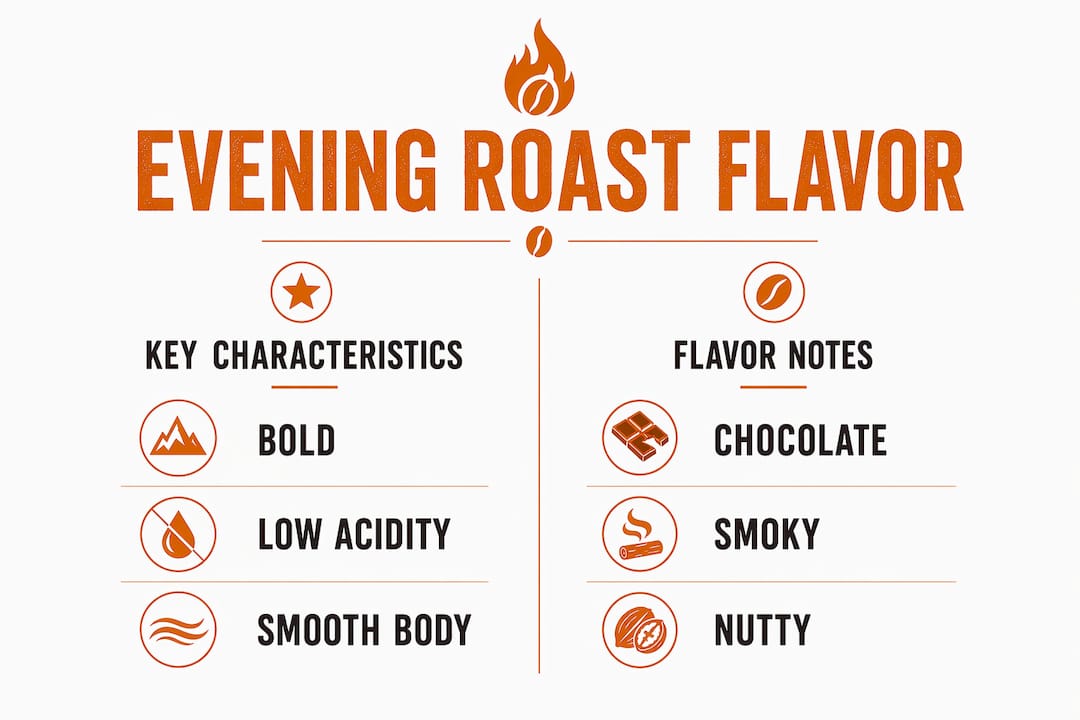
Evening roast coffee is defined as a dark-roasted coffee crafted to deliver bold flavor, low acidity, and a smooth body suited for late-day drinking. Unlike a standard dark roast, an evening roast is specifically selected and roasted to minimize harshness while preserving rich, comforting notes. The Flaming Bean’s Evening Roast is a strong example of this style done right. It sits at the intersection of full-bodied intensity and drinkable smoothness, making it a favorite for coffee lovers who want a satisfying cup after dinner without paying for it at bedtime.
What is evening roast coffee and how does roasting create it?
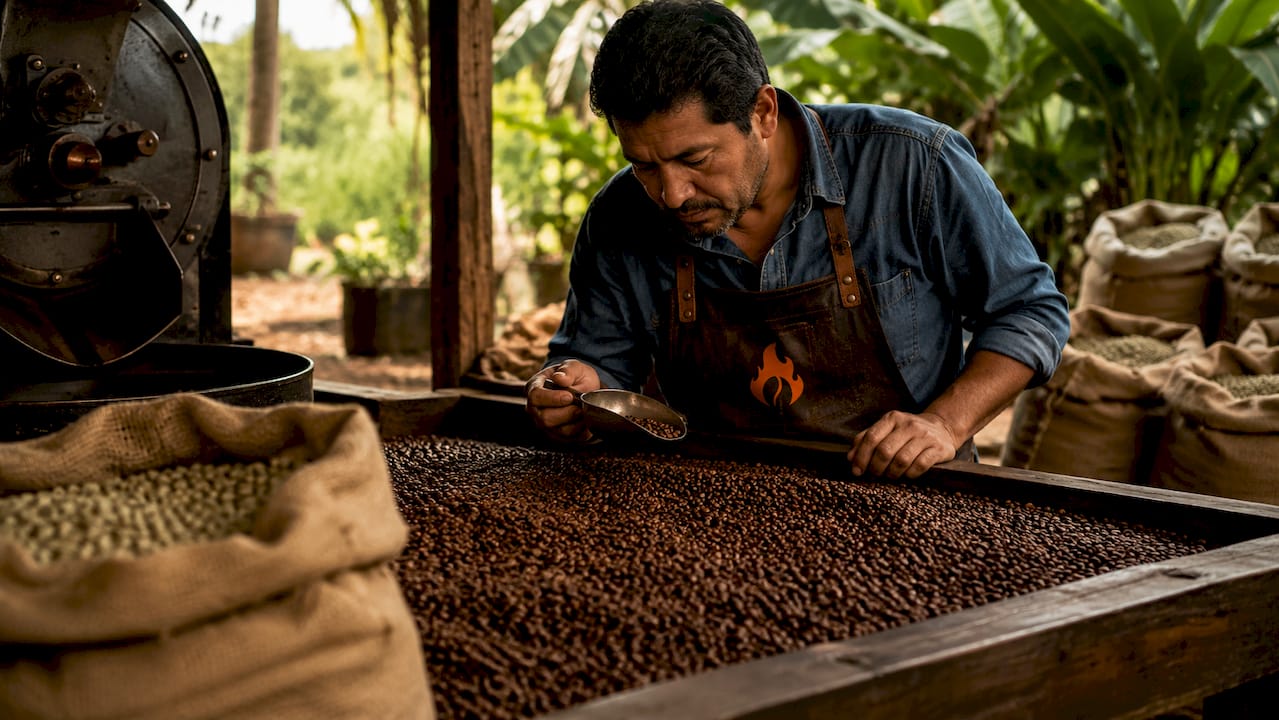
Evening roast coffee is a dark roast taken to a high roasting temperature, typically between 220°C and 250°C, well past the point known as the second crack. The second crack occurs at around 224°C in dark roasts, and pushing beyond it is what gives evening roasts their signature character. At that stage, the bean’s cell structure breaks down further, oils migrate to the surface, and the flavor shifts decisively toward smoky, chocolaty, and nutty territory.
The chemistry behind this is straightforward. Maillard reactions and caramelization drive flavor and color development as heat is applied to green beans. These reactions consume the acids and delicate aromatic compounds that give lighter roasts their brightness. By the time a bean reaches evening roast territory, most of those fruity or floral notes are gone. What remains is a deep, roast-forward flavor built almost entirely by heat rather than origin.
The table below shows how roast temperature changes the key characteristics of the coffee.
| Roast stage | Temperature range | Flavor character | Acidity | Body |
|---|---|---|---|---|
| Light roast | 180°C–205°C | Fruity, floral, bright | High | Light |
| Medium roast | 210°C–220°C | Balanced, nutty, caramel | Medium | Medium |
| Medium-dark roast | 220°C–230°C | Chocolaty, toasty, mild smoke | Low-medium | Full |
| Dark/evening roast | 230°C–250°C | Smoky, bold, bittersweet | Low | Heavy |
Roasting time for dark roasts typically runs 15 to 30 minutes. That window matters because even a few extra minutes at peak temperature can push a smooth evening roast into harsh, ashy territory. Skilled roasters pull the beans at exactly the right moment to preserve balance.
Pro Tip: Buy your evening roast from a roaster who lists the roast date on the bag. Freshness affects flavor dramatically, and dark roasts are best enjoyed within two to four weeks of roasting.
What does evening roast coffee taste like?
The flavor profile of evening roast coffee is rich, full-bodied, and low in acidity. Dark roast coffee delivers bold chocolaty, smoky, and nutty flavors with a smooth, creamy mouthfeel that lighter roasts simply cannot match. The oils that coat the surface of a well-roasted dark bean are a big reason for that thick, satisfying texture in the cup.
One thing that surprises many coffee lovers is how much the roasting level shapes what you taste. High-temperature roasting effectively burns away nuanced floral or fruity origin flavors, replacing them with roast-driven notes. This means an Ethiopian bean and a Colombian bean roasted to evening roast level will taste far more similar to each other than they would at a light roast. The roast is the dominant voice.
Common flavor descriptors for a quality evening roast include:
- Dark chocolate and cocoa
- Toasted nuts, especially walnut and hazelnut
- Mild smokiness or char
- Brown sugar or molasses sweetness
- Low brightness with a long, warm finish
- Creamy, heavy body with minimal sharpness
This profile makes evening roast coffee ideal for coffee lovers who find lighter roasts too tart or acidic. The low acidity is also gentler on the stomach, which matters when you are drinking later in the day.
Pro Tip: If your evening roast tastes bitter rather than bold, the problem is almost always over-extraction. Try a coarser grind before blaming the beans.
How do you brew evening roast coffee for the best flavor?
Brewing evening roast coffee well requires a few adjustments compared to lighter roasts. Dark roast beans are more porous and brittle, which means they extract much faster than lighter roasts. That speed is a double-edged sword. Get it right and you get a rich, balanced cup. Get it wrong and you get bitter, ashy coffee.
The most forgiving brewing methods for evening roasts are espresso, French press, and cold brew. Espresso concentrates the bold flavors beautifully. French press lets the oils stay in the cup, amplifying body and richness. Cold brew is worth mentioning separately because the cold water extraction process pulls sweetness and chocolate notes while leaving bitterness behind, making it one of the smoothest ways to enjoy a dark roast in the evening.
Follow these steps to get the most out of your evening roast:
- Grind coarser than you think you need. Dark roast beans are brittle and release compounds quickly. A coarser grind slows extraction and prevents bitterness.
- Use water between 195°F and 200°F. Cooler water in this range avoids over-extraction and keeps the cup smooth rather than harsh.
- Keep brew time shorter for immersion methods. For French press, aim for three to four minutes rather than five. Dark roasts do not need the extra time.
- Measure your coffee. A ratio of 1:15 (coffee to water by weight) is a reliable starting point for most dark roast brewing methods.
- Taste and adjust one variable at a time. Change grind size first, then water temperature, then brew time. Changing everything at once makes it impossible to know what worked.
You can find quality coffee grinders suited for dark roasts that let you dial in the coarser grind settings these beans need. The right grinder makes a noticeable difference in cup quality.
Is evening coffee good for you? Health and timing considerations
The health picture for evening coffee is nuanced. Coffee itself carries well-documented benefits, but timing matters significantly. Morning coffee consumption is associated with cardiovascular health benefits, while evening intake can interfere with hormonal cycles tied to sleep and metabolism. That does not mean you have to give up your evening cup. It means you should be thoughtful about when you drink it.
Caffeine is the main concern. Its half-life varies widely from person to person, ranging from 2 to 10 hours depending on individual metabolism, age, and genetics. Someone who clears caffeine quickly can enjoy a cup at 7:00 PM with no sleep impact. Someone with a slower metabolism may still feel the effects at midnight from a cup consumed at 4:00 PM.
Caffeine consumed in the evening reduces nocturnal melatonin secretion by 30%, which can disrupt circadian rhythm and impair metabolic gene expression in liver and muscle tissue. Even a standard cup containing around 100 mg of caffeine can delay sleep onset by about 9 minutes and reduce total sleep duration by 45 minutes.
The practical takeaway from this research is clear. Finish your last caffeinated cup at least nine hours before bedtime to protect sleep quality. For most people who go to bed around 10:00 PM or 11:00 PM, that means stopping caffeinated coffee by early afternoon.
Decaf evening roast is a genuine solution for late-night coffee lovers. The flavor profile of a well-made decaf dark roast is nearly identical to its caffeinated counterpart. The bold, chocolaty, smoky notes survive the decaffeination process. The catch is that even decaf contains trace amounts of caffeine, so highly sensitive individuals should still be mindful of timing.
Key Takeaways
Evening roast coffee delivers the boldest flavor with the lowest acidity, but smart timing and brewing technique determine whether it enhances or disrupts your evening.
| Point | Details |
|---|---|
| Definition of evening roast | A dark roast coffee roasted past the second crack for bold, low-acid flavor suited to late-day drinking. |
| Flavor profile | Expect smoky, chocolaty, and nutty notes with a heavy, creamy body and minimal brightness. |
| Best brewing approach | Use a coarser grind and water at 195°F–200°F to prevent over-extraction and bitterness. |
| Caffeine and sleep | Stop caffeinated coffee at least nine hours before bed; evening caffeine reduces melatonin by 30%. |
| Decaf as an option | Quality decaf dark roasts preserve bold flavor while minimizing sleep disruption for sensitive drinkers. |
Why I think evening roast coffee deserves more respect
I have spent years watching coffee culture obsess over light roasts and single-origin pour-overs, and I get it. The complexity of a well-sourced Ethiopian natural roast is genuinely exciting. But evening roast coffee fills a role that no light roast can touch, and it does not get nearly enough credit for it.
What I have found through personal experience is that the quality gap between a mediocre dark roast and a well-crafted evening roast is enormous. A poorly roasted dark coffee tastes like burnt rubber. A carefully roasted evening roast, pulled at exactly the right moment, tastes like dark chocolate and toasted hazelnuts with a finish that lingers warmly. The difference comes down entirely to the roaster’s skill and the roasting process itself.
My honest advice on timing is this: do not fight your biology. If you are sensitive to caffeine, switch to a quality decaf evening roast after 2:00 PM and you will not miss anything in the cup. If you metabolize caffeine quickly, a cup at 6:00 PM is probably fine. The key is knowing yourself and adjusting accordingly rather than following a one-size-fits-all rule.
The brewing adjustments matter more than most people realize. I have seen coffee lovers dismiss evening roast as “too bitter” when the real problem was a grind that was too fine or water that was too hot. Dial in the coarser grind and drop the water temperature to 195°F, and the same beans that tasted harsh will suddenly taste smooth and satisfying. Experiment with your method before you write off the roast.
— Tony
The Flaming Bean’s Evening Roast is worth trying tonight
The Flaming Bean crafted its Evening Roast specifically for coffee lovers who want a bold, satisfying cup without the sharp acidity that makes some dark roasts hard to enjoy later in the day. It is smooth, full-bodied, and roasted to bring out the best chocolaty and nutty notes that a well-executed dark roast can deliver.
Pair it with the right brewing gear and you will get the most out of every bag. The Flaming Bean also carries a full range of coffee makers suited for dark roast brewing, from French press to espresso setups. Whether you are new to evening roast coffee or looking to upgrade your current setup, The Flaming Bean has you covered. Visit the product page to grab a bag and see what a quality evening roast actually tastes like.
FAQ
What is the difference between evening roast and dark roast?
Evening roast is a type of dark roast, but the term signals a specific intention: low acidity, smooth body, and flavor suited for late-day drinking. Not every dark roast is crafted with that goal in mind.
Does evening roast coffee have less caffeine than regular coffee?
Dark roasts contain slightly less caffeine by weight than light roasts because the roasting process breaks down some caffeine molecules. The difference is small, so timing your last cup at least nine hours before bed still matters.
What brewing method works best for evening roast coffee?
French press, espresso, and cold brew all work well. Use a coarser grind and water at 195°F–200°F to avoid over-extraction and keep the cup smooth rather than bitter.
Can I drink decaf evening roast and still get the full flavor?
A quality decaf dark roast preserves the smoky, chocolaty, and nutty notes of a caffeinated evening roast. Decaf still contains trace caffeine, so very sensitive individuals should still watch their timing.
What flavors should I expect from a good evening roast?
Expect dark chocolate, toasted nuts, mild smokiness, and a heavy, creamy body with very low acidity. The flavor comes primarily from the roasting process rather than the bean’s origin.
Comments