
What Is Medium Roast Coffee? Flavor, Brew and Tips

Medium roast coffee is defined as coffee roasted between the first and second crack, reaching internal bean temperatures of 210–220°C (410–428°F). It is the most popular roast level worldwide, often called “American roast” due to its long history in U.S. diners and households. The result is a cup with moderate acidity, a fuller body than light roast, and warm notes of caramel, chocolate, and nuts. If you find light roasts too sharp and dark roasts too bitter, medium roast is the sweet spot you have been looking for.
What is medium roast coffee and how does roasting shape it?
Medium roast sits in a specific temperature window that defines everything about the final cup. Roasters bring beans to around 210–220°C, stopping after the first crack but before the second crack begins. That timing is not arbitrary. It is the point where the bean has developed enough to produce sweetness and body without burning off the origin character.
During roasting, several physical changes happen at once:
- Color: Beans turn a medium brown, dry on the surface with no visible oil.
- Density: Beans expand and lose moisture, becoming lighter in weight.
- Surface: No oily sheen appears, unlike dark roast beans.
The chemistry inside the bean shifts just as dramatically. Sugars caramelize, creating sweetness. Chlorogenic acids break down, which softens the sharp acidity you get from light roasts. Maillard reactions produce the nutty and chocolatey compounds that define the medium roast coffee flavor most people recognize.
Medium roast preserves a meaningful amount of origin character. A Colombian bean still tastes like a Colombian bean. A Kenyan still carries its brightness. The roast adds a layer of sweetness and body without erasing what the farm and region contributed.
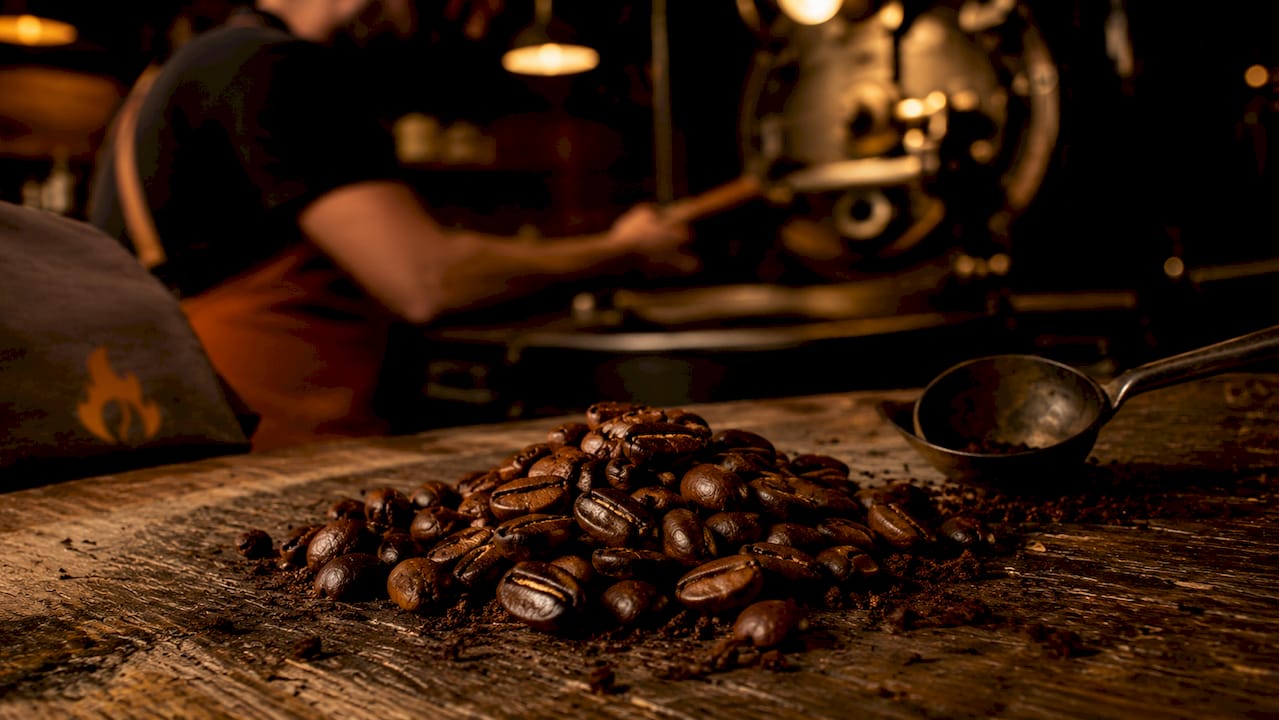
Pro Tip: Ask your roaster for the roast date, not just the roast level. Roast labeling is subjective, so what one roaster calls medium may be another’s dark. A roast date within two to four weeks of purchase tells you far more about freshness than the label alone.
How does medium roast compare to light and dark roast?
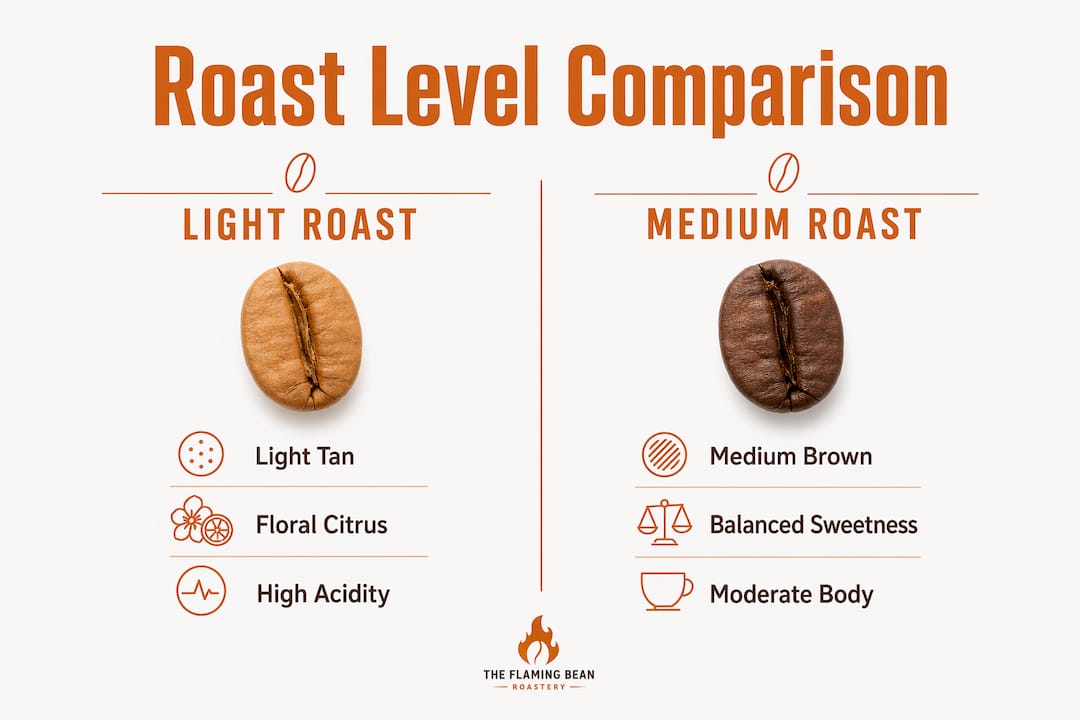
The differences between roast levels are real and measurable, not just marketing language. Color, body, acidity, and caffeine all shift as beans spend more time in the drum.
| Attribute | Light roast | Medium roast | Dark roast |
|---|---|---|---|
| Bean color | Light tan | Medium brown | Dark brown to near black |
| Surface oil | None | None | Visible and glossy |
| Acidity | High | Moderate | Low |
| Body | Light | Medium to full | Heavy |
| Sweetness | Subtle | Caramel, chocolate | Bitter, smoky |
| Origin flavor | Prominent | Balanced | Mostly roast flavor |
| Caffeine | Slightly higher | Moderate | Slightly lower |
Caffeine is worth addressing directly because the myth persists. Medium roast has moderate caffeine, generally lower than light roast but higher than dark roast by bean weight. The catch is that brewing method, dose, and grind size affect your final cup more than roast level alone. A double shot of dark espresso can easily outpace a lightly brewed pour-over.
Light roast suits coffee drinkers who want to taste the bean’s origin clearly, including floral, citrus, and tea-like notes. Dark roast suits those who want bold, smoky intensity and low acidity. Medium roast satisfies the widest audience because it balances both worlds without committing fully to either extreme.
For a deeper look at how roast levels differ visually and by flavor, The Flaming Bean’s roast levels guide breaks it down clearly.
What does medium roast coffee taste like?
Medium roast coffee flavor is smooth, balanced, and well-rounded, with noticeable origin characteristics that survive the roasting process. The most common tasting notes include:
- Caramel and brown sugar: From caramelized sugars during roasting.
- Milk chocolate and cocoa: From Maillard reaction compounds.
- Toasted nuts: Hazelnut and almond notes appear frequently.
- Mild fruit acidity: Softer than light roast, often showing as a gentle citrus or berry finish.
- Warm spice: Some medium roasts from Central America carry a hint of cinnamon or clove.
The body of a medium roast sits between light and dark. It feels substantial in the mouth without the heavy, syrupy weight of a French roast. The aroma is inviting and familiar, which is part of why medium roast is the default choice for so many households.
Bean origin shifts the flavor noticeably within the medium roast category. Ethiopian beans roasted to medium still carry floral and berry notes. Brazilian beans produce a nuttier, chocolatier cup. Guatemalan beans often bring a bright caramel sweetness. The roast level sets the framework, but the origin fills it in.
Balance in coffee is what medium roast does best. No single flavor dominates. Acidity, sweetness, and bitterness coexist in a way that makes the cup easy to drink at any time of day.
Pro Tip: Try the same medium roast as a drip brew and as a pour-over on the same morning. The pour-over will highlight fruit and floral notes more clearly. The drip will emphasize body and chocolate. Same beans, different experience.
How to brew medium roast coffee for the best flavor
Medium roast is forgiving and broadly compatible with most brewing methods, which is one reason it is so popular. Getting the basics right makes a real difference.
-
Grind to a medium coarseness. Target a texture that resembles coarse sand. Grinding too fine causes bitterness; too coarse produces a weak, sour brew. A burr grinder gives you consistent particle size every time, which a blade grinder cannot match.
-
Use water just off the boil. Around 200°F is the target. Boiling water at 212°F scorches the grounds and pulls bitter compounds. Water below 195°F under-extracts and leaves the cup flat and sour.
-
Measure your ratio. A 1:15 to 1:17 coffee-to-water ratio works well for most methods. Start at 1:16 (1 gram of coffee per 16 grams of water) and adjust from there based on taste.
-
Choose your brew method. Medium roast performs well across drip machines, pour-over setups like the Hario V60 or Chemex, French press, and even espresso blends. Each method pulls different notes from the same beans. Drip emphasizes body; pour-over highlights clarity and brightness; French press adds texture and richness.
-
Keep your gear clean. Coffee oils go stale and turn bitter. Rinse your brewer after every use and do a full clean weekly. Stale oil residue is one of the most common reasons a good medium roast tastes off.
A quality burr grinder makes a bigger difference than most people expect. The Flaming Bean’s coffee grinders collection includes options suited to medium grind sizes for home brewing.
Pro Tip: For espresso, medium roast works best when you dial in a slightly coarser grind than you would use for dark roast. Medium roast espresso is brighter and sweeter, which pairs well with milk-based drinks. Check out espresso roast tips if you want to go deeper on that.
Key Takeaways
Medium roast coffee delivers the best balance of origin flavor, sweetness, and body when beans are roasted to 210–220°C and brewed with a medium grind at 200°F using a 1:15 to 1:17 ratio.
| Point | Details |
|---|---|
| Roast temperature defines medium roast | Beans reach 210–220°C, stopping between first and second crack for balanced flavor. |
| Flavor is smooth and balanced | Expect caramel, chocolate, and mild fruit notes with moderate acidity and full body. |
| Caffeine varies by brew method | Medium roast has moderate caffeine, but dose and grind size affect the cup more than roast level. |
| Grind and water temp matter most | Use a medium coarse grind and water at 200°F to avoid bitterness or weak extraction. |
| Roast labels are not standardized | Rely on roast dates and first/second crack indicators rather than label names alone. |
Why medium roast is the roast I keep coming back to
I have brewed a lot of coffee over the years, from single-origin light roasts that taste like a cup of fruit tea to dark roasts that hit like a freight train. Medium roast is where I land most mornings, and not because it is the safe choice. It is because it is the most honest expression of what a well-sourced bean can do.
What I find most interesting is how much variation exists within the medium roast category. Two bags labeled “medium roast” from different roasters can taste completely different. One might lean toward the lighter end, bright and floral. Another might push toward the darker edge, rich and chocolatey. Roast labeling is not standardized, which means you have to pay attention to roast dates and roaster notes rather than trusting the label alone.
My personal routine is a pour-over with a medium coarse grind, water at 200°F, and a 1:16 ratio. It takes about four minutes and produces a cup that is clear, sweet, and satisfying. I change the origin every few weeks to keep things interesting. Right now I am working through a Central American blend that has a caramel sweetness I keep coming back to.
The best advice I can give is to stop treating medium roast as the default and start treating it as a category worth exploring. Try beans from different origins, different roasters, and different brew methods. You will be surprised how much range exists within what most people consider the “normal” cup of coffee.
— Tony
Great medium roast coffee worth trying from The Flaming Bean
The Flaming Bean has a range of medium roast options worth exploring, whether you are new to specialty coffee or looking to add something new to your rotation.
Safe Ground is a specialty medium roast blend with a smooth, balanced profile and a purpose behind every bag. It supports organizations dedicated to protecting vulnerable individuals, so your morning cup does real good. The Evening Roast is another approachable medium roast option, crafted for a relaxed, comforting brew. If you want to browse the full range of curated blends, The Flaming Bean’s signature blends collection is a great place to start. You can also grab a coffee gift card if you want to share the experience with someone who deserves a great cup.
FAQ
What is the roasting temperature for medium roast coffee?
Medium roast coffee beans reach an internal temperature of around 210–220°C (410–428°F). This range falls between the first and second crack stages of the roasting process.
Does medium roast have more caffeine than dark roast?
Medium roast has slightly more caffeine than dark roast by bean weight, but brewing method and dose affect the final cup more than roast level alone. A larger dose of dark roast can easily produce more caffeine than a small medium roast brew.
What are the best brewing methods for medium roast coffee?
Medium roast works well with drip machines, pour-over methods like the Hario V60 or Chemex, French press, and espresso blends. It is one of the most versatile roast levels because its balanced flavor holds up across all these methods.
Why is medium roast called American roast?
Medium roast earned the name “American roast” because of its long popularity in U.S. diners and households. It became the standard roast level for everyday coffee drinking across the country.
How do I know if a coffee is truly medium roast?
Look for a medium brown color with no surface oil on the beans. Because roast labeling varies between roasters, check the roast date and ask whether the beans were stopped before second crack for the most reliable indicator.
Comments