
White Label Coffee Onboarding: A Step-by-Step Process

Onboarding a private-label coffee program means moving through sampling, spec sheet creation, packaging approval, a pilot run, and fulfillment setup before your branded coffee ships. A white-label launch using an existing house blend usually takes 4 to 6 weeks; a fully custom private-label formulation runs over a couple of months. Here’s what to expect at each stage:
- Discovery call and volume brief
- Sample requests and cupping approval
- Spec sheet lock (roast curve, Agtron, moisture, grind)
- Packaging and label compliance review
- Pilot lot production and sign-off
- Full production and fulfillment
Key Takeaways
A smooth white-label onboarding process depends on locking sample approval, spec sheets, and packaging compliance before production scheduling begins.
| Point | Details |
|---|---|
| Timeline expectations | White-label launches run 4 to 6 weeks; custom private-label formulations take 8 to 10+ weeks. |
| Spec sheet first | Lock roast curve, Agtron reading, and moisture percentage in writing before the pilot lot ships. |
| Packaging drives cost | Bag format and certification claims raise MOQ and per-unit price, so decide these early. |
| Contract protections | Require replacement, holdback, and remediation timelines in writing before signing. |
| The Flaming Bean’s role | Offers cupping-based sample approval and SKUs like Evening Roast, Angry Rooster, Abyssal, and Safe Ground for private-label conversion. |
Table of Contents
- What Is the White Label Onboarding Process, Step by Step?
- Who Handles What During Onboarding, and How Long Does It Take?
- What Packaging and Labeling Checks Happen During Onboarding?
- What Do Order Minimums and Pricing Typically Look Like?
- How Should You Plan Fulfillment and Inventory During Onboarding?
- What Quality Control Steps Should You Require?
- How Do You Choose a Roastery for a Smooth Onboarding?
- How Does The Flaming Bean Run Onboarding?
- How Should You Train Staff on the New Product Line?
- How Do You Keep Marketing and Branding Aligned With the Product?
- Who Owns the Brand Assets and Guidelines?
- How Should Communication Work During Onboarding?
- What Onboarding Pitfalls Should You Watch For?
- Ready to Start Onboarding With The Flaming Bean?
- Frequently Asked Questions
- Sources
What Is the White Label Onboarding Process, Step by Step?
Every solid onboarding sequence follows the same backbone: brief, samples, specs, approval, production, delivery. That structure comes straight from how private-label suppliers describe their own workflow, and it holds true whether you’re launching one SKU or six.
- Discovery brief. You’ll define volumes, package formats, sales channel (retail, subscription, wholesale), and your target cup profile. This is also where a clear buyer persona pays off. Roasters who know who’s drinking your coffee can recommend a better starting blend.
- Sample requests and cupping. Most roasters send 2 to 4 sample options for formal cupping. Acceptance criteria should be written down, not just verbal, covering acidity, body, and roast level. Sign-off here locks in the direction for everything downstream.
- Spec sheet creation. The roaster documents the roast curve, Agtron color reading, moisture percentage, grind specification, and packaging requirements. This spec sheet becomes the contract for consistency on every future batch.
- Artwork and labeling review. You submit label artwork, and the roaster checks it against packaging dimensions, barcode placement, and compliance requirements before printing.
- Pilot lot and sign-off. A small production run gets roasted to the locked spec, tasted by a sensory panel, and documented before the full order goes to production.
Pro Tip: Request your spec sheet in writing before the pilot lot ships. Verbal agreements on roast level are the number one cause of “this doesn’t taste like the sample” complaints later.
Who Handles What During Onboarding, and How Long Does It Take?
The roaster owns sampling, pilot production, and QA documentation. You own artwork, final approvals, and payment terms. Splitting responsibilities cleanly up front prevents the finger-pointing that stalls launches.
- Roaster responsibilities: sample generation, spec sheet drafting, pilot lot roasting, sensory sign-off, compliance documentation
- Brand responsibilities: artwork files, label content approval, purchase order confirmation, payment schedule
Timeline expectations differ sharply by path. White-label programs using an existing house blend typically close in 4 to 6 weeks. A custom private-label formulation, built from scratch to your target profile, usually needs 8 to 10 weeks or longer. Some roasters offer a hybrid: launch fast on a house blend while a custom profile gets developed in parallel, which lets you hit a launch date without waiting on formulation work.
The most common delays come from artwork revisions, packaging material backorders, and customs holdups on imported bags or foil. Locking artwork before the pilot lot ships avoids the biggest one.
What Packaging and Labeling Checks Happen During Onboarding?
Bag format decisions happen early because they affect both shelf life and unit cost. Flat-bottom bags with a one-way degassing valve preserve freshness longest but cost more than standard side-gusset bags; foil-lined stand-up pouches split the difference for most retail and subscription programs.
Label content needs to include net weight, roast date or “best by” date, ingredient statement (if applicable), and any certification claims like organic or fair trade, which require documentation to back the claim, not just the logo. Confirm barcode placement and format with your fulfillment partner before print files get finalized.
- Confirm bag format and barrier properties against your sales channel
- Verify label content meets net weight and dating requirements
- Get written proof for any certification claim before printing
- Confirm FDA facility registration status directly with your roaster during kickoff, not after production
Vendors who handle label printing in-house tend to move faster here, since packaging engineering and print approval happen under one roof instead of bouncing between three vendors.
What Do Order Minimums and Pricing Typically Look Like?
Minimum order quantities vary by packaging complexity and certification requirements. A basic house blend in standard bags carries a lower MOQ than a custom formulation in a specialty pouch with organic certification, since certified ingredients and specialty packaging both raise per-unit cost.
Expect upfront fees for sample sets, artwork setup, and the pilot production run. These are the line items most open to negotiation, especially if you’re committing to a multi-quarter order schedule.
- Ask for MOQ tiers tied to packaging format, not just total volume
- Negotiate sample and artwork setup fees against a first-order commitment
- Request lead time guarantees and penalty clauses in the contract, not just verbal assurances
Pro Tip: Structure pricing around your actual sales model. A subscription program needs predictable reorder pricing locked for 6 to 12 months; a one-time event order can negotiate harder on price since there’s no repeat volume at stake.
How Should You Plan Fulfillment and Inventory During Onboarding?
Shipping terms matter more than most buyers realize going in. DDP (delivered duty paid) puts customs and delivery responsibility on the roaster; FOB (free on board) shifts it to you once goods leave the origin port. Managed suppliers increasingly offer DDP shipping straight to US warehouses, which removes a customs headache for brands without import experience.
- Confirm whether pricing is FOB, DDP, or LTL palletized freight
- Subscription models need 4 to 6 weeks of buffer inventory; retail can run leaner with faster reorder cycles
- Provide your 3PL or fulfillment partner’s SKU requirements, box dimensions, and receiving hours during onboarding, not after the first pallet arrives
Getting fulfillment data locked before production starts prevents a finished pallet from sitting in a warehouse with nowhere to go.
What Quality Control Steps Should You Require?
The pilot lot is your real quality checkpoint, not the final production run. Insist on sensory panel sign-off and full spec-lock documentation (roast curve, Agtron reading, moisture percentage) before authorizing the full order.
- Require batch-level roast logs for every production run, not just the pilot
- Ask about shelf-life testing methodology and expected freshness window
- Get replacement and holdback terms written into the contract before the first order ships
The gap between a good roaster and a great one shows up after the pilot lot, not before it. Anyone can nail one batch. The real test is whether batch forty tastes like batch one.
Complaint handling deserves its own clause. What happens if a batch fails spec after it’s already in your customers’ hands? A roaster with a documented remediation timeline, not a vague “we’ll look into it,” is the one worth signing with.
How Do You Choose a Roastery for a Smooth Onboarding?
Not every roaster runs onboarding the same way, and the gaps show up fast once volume ramps. Use these questions before you sign anything:
- What’s your typical sample turnaround, and how many rounds are included before I’m charged extra?
- Can you show me a spec sheet template before I commit to a pilot lot?
- What certifications can you document, and what’s your process for verifying claims like organic or fair trade?
- What fulfillment options exist beyond shipping a pallet to my door, including 3PL integration?
- What happens contractually if a production batch fails to match the approved pilot?
Red flags include vague lead time answers, no written spec sheet process, and reluctance to share QC documentation before you ask twice. A roaster that treats these questions as reasonable, rather than an inconvenience, is signaling how the rest of the relationship will go. For a deeper breakdown of vendor evaluation criteria, see how to choose a white label coffee roaster.
How Does The Flaming Bean Run Onboarding?
The Flaming Bean’s onboarding follows the same disciplined sequence covered above: discovery brief, sample cupping, spec sheet lock, packaging review, pilot lot, and production scheduling, with a sensory panel signing off before any full order ships.
For brands that want to move fast, Evening Roast offers a smooth, approachable house blend ready for white-label conversion with minimal formulation time. Brands wanting something bolder can build around Angry Rooster or Abyssal, both distinctive enough to anchor a private-label identity from the first bag. Mission-driven organizations can pair their program with Safe Ground, a cause-aligned blend that ties coffee sales to a specific charitable outcome.
- Full spec documentation, including roast curve and Agtron readings, provided before pilot approval
- Packaging and label compliance support built into the onboarding sequence
- Fulfillment flexibility for retail, subscription, or event-based order volumes
| Onboarding Element | What The Flaming Bean Provides |
|---|---|
| Sample process | Cupping-based approval with documented acceptance criteria |
| Spec lock | Written roast curve, Agtron, and moisture documentation |
| SKU options | Evening Roast, Angry Rooster, Abyssal, Safe Ground, and custom formulations |
How Should You Train Staff on the New Product Line?
Your team needs to speak fluently about the coffee before customers or clients ever taste it. That starts with the basics: roast level, flavor notes, brew recommendations, and the story behind the blend if it’s cause-driven.
Build a one-page cheat sheet during onboarding, not after launch. Include the cup profile in plain language (not tasting-note jargon your sales team won’t remember), brewing instructions for the equipment your customers actually use, and two or three talking points that differentiate this coffee from a generic grocery-shelf bag.
Sales staff selling to other businesses need different training than retail-facing staff. A wholesale account manager needs to understand margin structure, reorder cadence, and how to answer questions about sourcing and roast consistency. A retail or event staffer needs quick, confident answers about flavor and brewing, delivered in under thirty seconds.
Ask your roaster whether they provide cupping notes or tasting guides as part of onboarding. Many do, and using their language as the foundation for your own materials saves you from writing tasting descriptions from scratch. If your program includes a charitable blend like Safe Ground, make sure staff understand which organization benefits and how, since that story often closes a sale faster than flavor notes do.
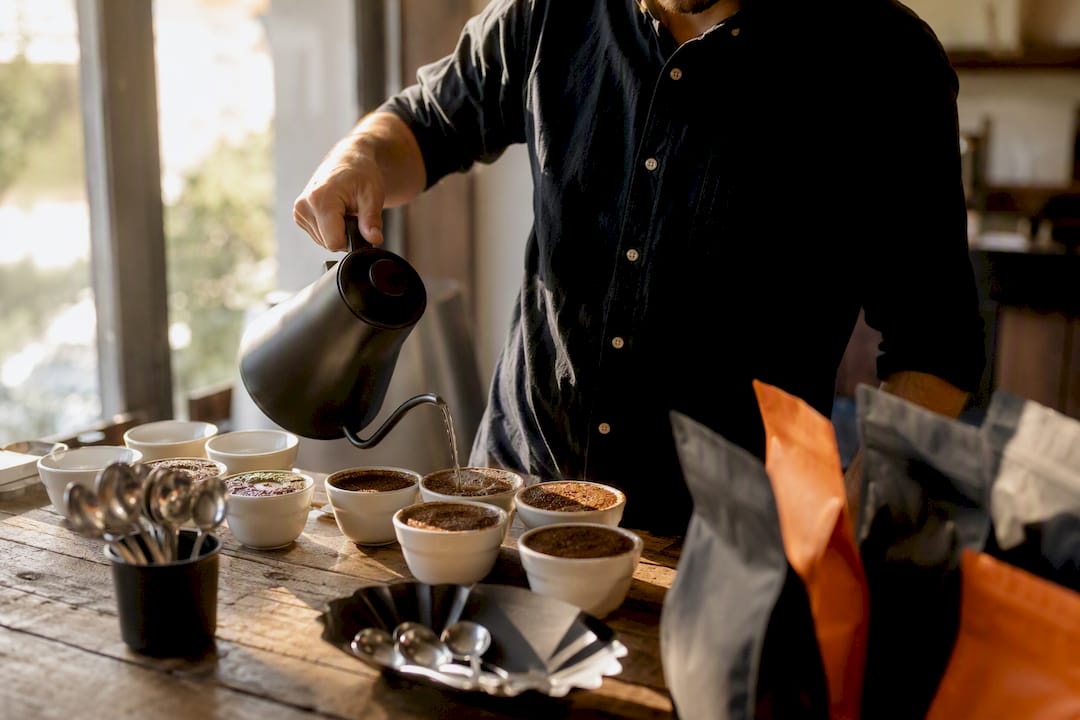
Run a short internal cupping session before launch. Ten minutes of hands-on tasting builds more product confidence in your team than a written spec sheet ever will, and it gives staff a real answer when a customer asks, “What does it actually taste like?”
How Do You Keep Marketing and Branding Aligned With the Product?
Your label design, your marketing copy, and the coffee inside the bag all need to tell the same story, and that alignment gets decided during onboarding, not after the first order ships.
If your brand positioning is bold and adventurous, a smooth, low-acid blend undercuts the message the moment someone opens the bag. Match your cup profile selection to your brand voice before you lock the spec sheet, not after the label is already printed. A blend like Abyssal, for instance, backs up aggressive branding with genuine intensity in the cup.
Marketing teams should sit in on the sampling and cupping stage, not just the artwork approval. Tasting the coffee alongside the packaging concept reveals mismatches early. It’s far cheaper to adjust a roast profile during the pilot stage than to explain to customers why the “bold” coffee they bought tastes mild.
Coordinate launch timing with production scheduling. Marketing teams sometimes plan a launch date around a campaign calendar without checking whether the pilot lot has cleared sensory sign-off. Build your go-to-market timeline backward from your roaster’s realistic pilot and production schedule, not forward from a marketing deadline that ignores it.
For brands using custom branding examples as inspiration, pull reference points before the artwork stage of onboarding, not during it. Revisions after files are submitted for label review cost time you don’t get back.
Who Owns the Brand Assets and Guidelines?
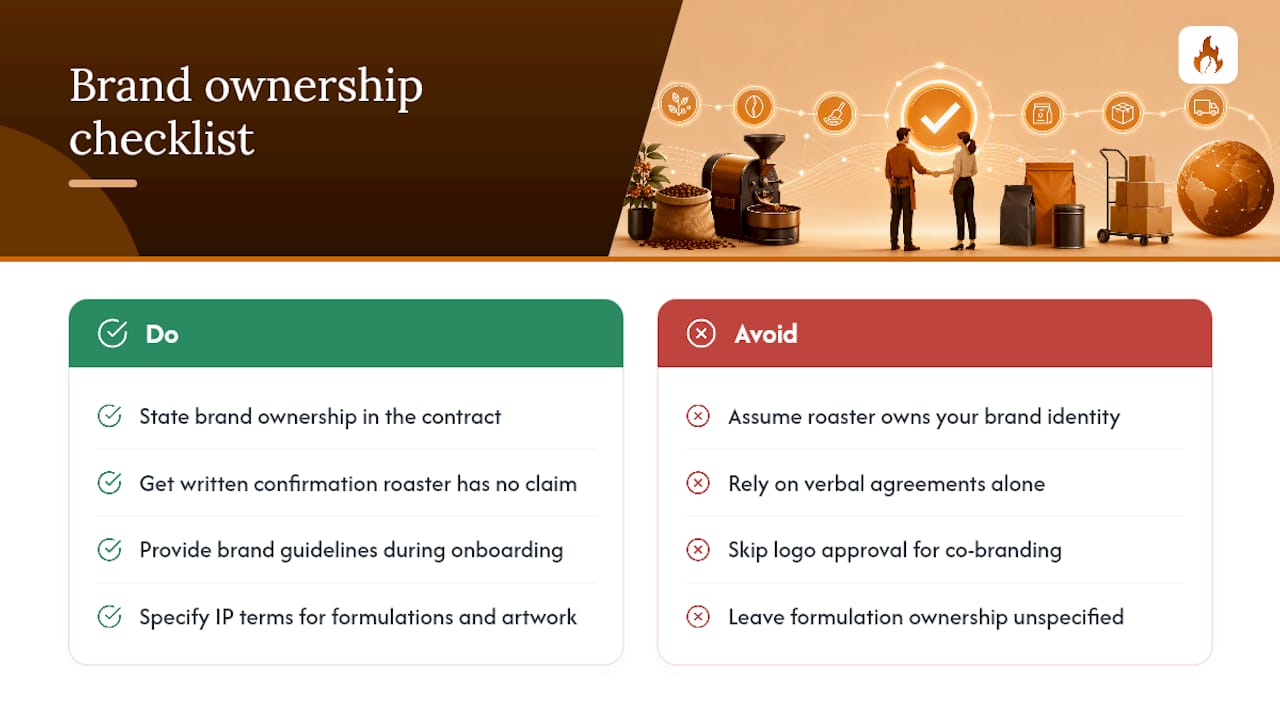
You retain ownership of your brand name, logo, and label artwork throughout the relationship. That should be stated plainly in your contract, not assumed. Confirm in writing that your roaster has no claim to your brand identity even though they’re producing the physical product carrying it.
The roaster, in turn, typically retains ownership of its proprietary roast profiles and formulations, even when developed specifically for your brand. This matters if you ever switch vendors: a custom blend built exclusively for your account may not transfer to a new roaster without redevelopment, unless your contract specifically addresses formulation ownership.
Get a written brand guideline document into your roaster’s hands during onboarding, covering approved colors, logo usage rules, and any legally required disclaimers for certification claims. This prevents packaging drift over time, where small deviations creep in on reprints because nobody flagged the original guidelines.
If your program includes co-branding with a nonprofit, as with a cause-driven blend, confirm both parties’ logo usage rights and any required approval steps before artwork goes to print. Nonprofits often have their own brand guidelines that need sign-off separate from your roaster’s packaging process.
Address intellectual property terms in the initial contract, not as an afterthought. Specify what happens to custom formulations, artwork files, and brand assets if either party ends the relationship. A short IP clause upfront prevents an expensive dispute later.
How Should Communication Work During Onboarding?
Set a single point of contact on both sides before the discovery brief even happens. Onboarding stalls when approval requests bounce between three people on your team and nobody owns the final sign-off.
Weekly check-ins during the active onboarding window catch problems early, whether that’s a delayed packaging shipment or a sample that needs a second round of cupping. A brief email update covering what’s done, what’s pending, and what’s needed from your side keeps both parties accountable without requiring a formal meeting every time.
Establish a feedback loop for the pilot lot specifically. Who tastes it? How many people need to sign off? What’s the process if the panel disagrees? Write this down before the pilot lot arrives, not while everyone’s staring at a cupping table trying to figure out who has final say.
After launch, keep a standing channel open for batch feedback. If a reorder tastes slightly different from the original approved spec, you need a clear, fast way to flag it and get a resolution timeline, not a vague promise to “check with the roaster.” The onboarding phase is when you establish whether that communication channel actually works, so test it before you’re relying on it for a real problem.
What Onboarding Pitfalls Should You Watch For?
Brands often obsess over label design while treating the roasting relationship like a transaction instead of a partnership. That’s backward. A roaster who understands your business model, not just your logo, catches problems before they become expensive.
Treat sample approval and spec-lock conversations as strategic planning sessions, not paperwork. The brands that launch smoothly are the ones who showed up to those conversations with real answers about volume, channel, and customer expectations.
Ready to Start Onboarding With The Flaming Bean?
The Flaming Bean runs onboarding the way it’s described throughout this guide: cupping-based sample approval, documented spec sheets, and a pilot lot before any full order ships. No guessing, no vague verbal agreements on roast level.
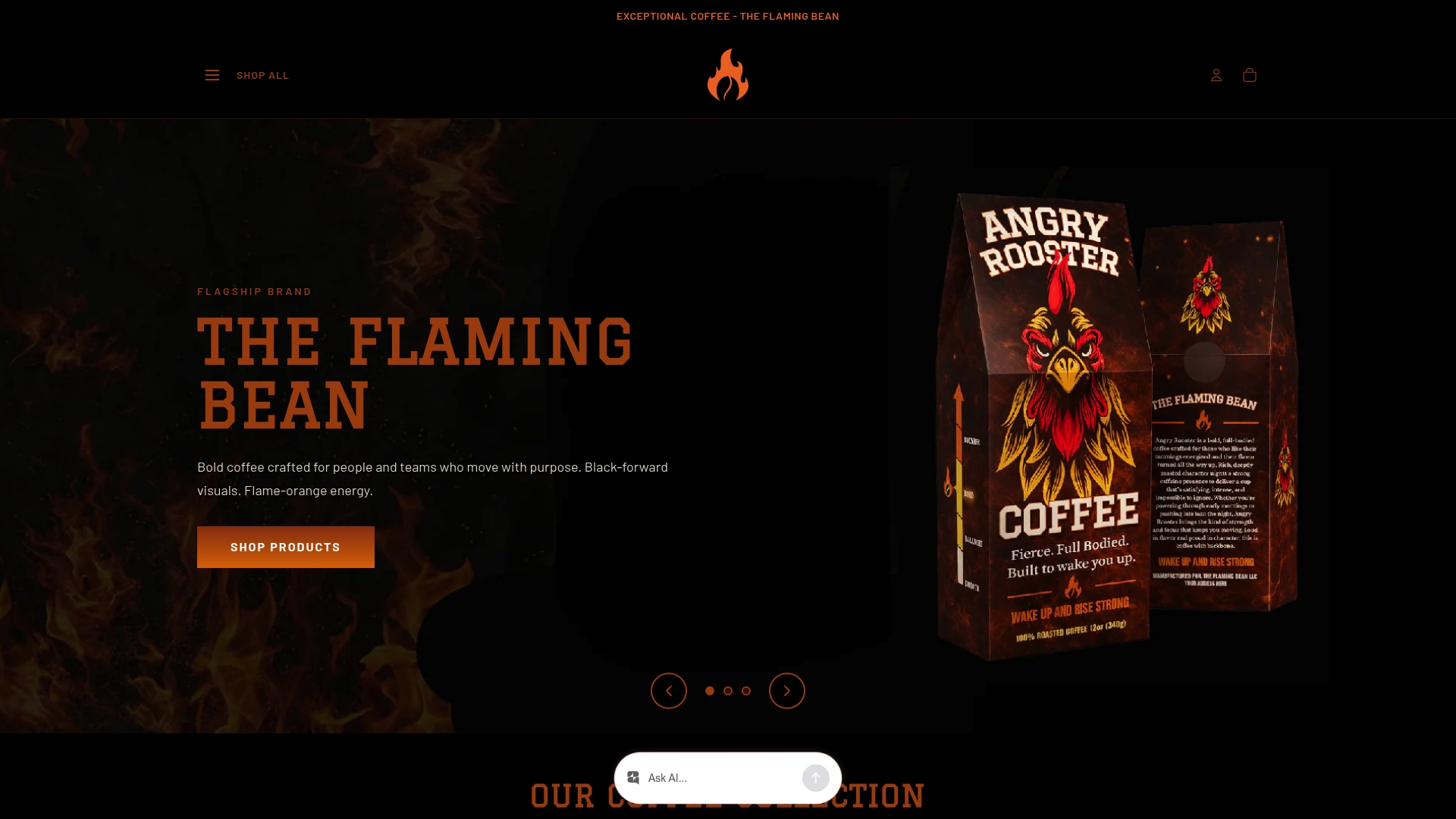
Requesting samples starts with a straightforward inquiry through the wholesale program, and most sample sets ship within days of your discovery brief. Whether you’re building a private-label identity around something bold like Angry Rooster, easing customers in with Evening Roast, or pairing your program with a cause through Safe Ground, the same disciplined process applies. Browse the full range of available options in the Signature Blends collection, or reach out directly to request samples and start your spec sheet conversation today.
Frequently Asked Questions
How long does the white label onboarding process take? A white-label launch using an existing house blend typically takes 4 to 6 weeks. A custom private-label formulation usually takes 8 to 10 weeks or longer, depending on how many sampling rounds are needed.
What’s the difference between white-label and private-label coffee? White-label uses an existing house blend with your branding applied. Private-label involves developing a custom cup profile specifically for your brand, which takes longer but produces a more distinctive product.
What should be included in a spec sheet before production? A complete spec sheet documents the roast curve, Agtron color reading, moisture percentage, grind specification, and packaging requirements. This becomes the reference standard for every future batch.
Do I need FDA facility registration for a private-label coffee program? Facility registration requirements depend on your specific business structure and role in the supply chain. Confirm your roaster’s FDA facility registration status directly during onboarding, and consult a compliance professional if you’re uncertain about your own obligations.
Can I launch fast and still develop a custom blend later? Yes. A hybrid launch path lets you start selling a house blend under your label while a custom formulation gets developed in parallel, so you don’t have to choose between speed and a unique profile.
Sources
- A Beginner’s Guide to Private & White Label Coffee - Those Coffee People
- Private Label Manufacturer · Transxpo private-label
Recommended
- How to Choose a White Label Coffee Roaster in 2026 – The Flaming Bean Roastery
- White Label vs. Private Label: A Small Brand Guide – The Flaming Bean Roastery
- Design Coffee Brand Packaging: A Roaster’s 2026 Guide – The Flaming Bean Roastery
- How to Differentiate Your Private Label Coffee Brand – The Flaming Bean Roastery
Comments