
US Buyers: Turn Wholesale Coffee Pricing into True Landed Cost

Wholesale roasted coffee typically runs $8 to $25 per pound depending on grade and volume, while green coffee bought FOB lands lower before roasting, freight, and packaging get added. Those quoted numbers are never your real cost. Convert every quote to a landed price per pound before you compare suppliers or sign anything.
TL;DR:
- Wholesale roasted coffee prices typically range from $8 to $25 per pound, but the actual landed cost depends on freight, packaging, and processing.
- Price premiums are driven by origin, quality scores, lot size, certifications, processing methods, and roast profile, influencing the final quote.
- Volume discounts decrease per-pound costs but come with storage risks and diminishing savings beyond full container loads.
- The market price benchmark averages around 287 US cents per pound, but roasters often pay earlier contracted green coffee prices, causing delays in passing market shifts.
- Consistent pricing and clear contract terms outweigh small unit cost savings when orders are volatile or unpredictable.
Table of Contents
- What Are Typical Wholesale Coffee Pricing Ranges?
- What Drives the Price of Wholesale Coffee?
- How Do Volume Discounts Scale on Bulk Coffee Orders?
- How Do You Calculate Your Real Landed Cost Per Pound?
- Why Do Wholesale Coffee Prices Lag Behind the Market?
- How The Flaming Bean Structures Wholesale Coffee Programs
- What Buyers Should Prioritize When Prices Are Volatile
- Get a Wholesale Quote From The Flaming Bean
- Sources
- FAQ
What Are Typical Wholesale Coffee Pricing Ranges?
A wholesale price quote depends heavily on what “wholesale” means to the seller quoting it. Roasted arabica in the SCA 80+ specialty tier averages around $12 per pound at typical wholesale volumes, with the full range stretching from $8 for commercial grade up to $25 for rare or single-origin lots. Green coffee, still unroasted and sold FOB from the origin country, prices lower, but the FOB median shifts by quality band and lot size, so a small parchment lot can cost more per pound than a full container of commercial grade.
The math changes fast depending on the format you’re buying:
- A 5 lb bag of roasted wholesale coffee commonly lists between $63 and $95 depending on origin and roast, or roughly $13 to $19 per pound.
- A 25 lb case usually knocks a dollar or two off the per-pound rate compared to 5 lb bags, mostly from lower packaging and handling cost per unit.
- A 132 lb sack, the standard green coffee unit, prices closest to the raw commodity rate before roasting adds its own cost layer.
- Full container loads (roughly 40,000 lbs of green) get the steepest per-pound discount but require serious storage capacity and cash flow.
A small café buying 25 lb a month pays a very different rate than an office program on a standing subscription, or a mid-size roaster buying by the sack. Retail specialty bags, for comparison, cluster between $15 and $25 with a median near $18, which is useful context when a supplier tries to sell you a “wholesale discount” that barely beats retail.
What Drives the Price of Wholesale Coffee?
Two bags of coffee can carry wildly different price tags even at the same volume tier, and the gap almost always traces back to five variables.
- Origin and cupping score. Coffee scored on the Specialty Coffee Association’s 100-point scale commands a premium once it clears 80 points, and every few points above that tends to add real cost.
- Lot size. Microlots, small batches traced to a single farm or even a single field, carry their own pricing tier well above bulk commercial coffee, because supply is limited by definition.
- Certifications. Organic, Fair Trade, and Rainforest Alliance labels add cost at the farm and import level, and they only pay off commercially if your customers actually value the label.
- Processing method. Washed, natural, and honey processed lots each carry different labor and drying costs at origin, which shows up in the FOB price.
- Roast profile and freshness cycle. Light roasts generally price higher than dark roasts on the retail index, partly because they demand tighter roasting control and faster turnover.
Pro Tip: Ask every supplier for the SCA cupping score and processing method on the same line as the price. A quote with no score attached is usually commercial-grade coffee wearing a specialty label.
How Do Volume Discounts Scale on Bulk Coffee Orders?
Buying more coffee at once lowers your per-pound cost, but the relationship isn’t linear, and the savings taper off faster than most first-time buyers expect.
- 5 lb to 25 lb. This is where you’ll see the steepest early discount, often a dollar or more off per pound, because packaging and per-order handling cost drop sharply.
- 25 lb to a full 132 lb sack. The discount here is real but smaller, since you’re now closer to the roaster’s actual cost floor rather than paying a retail-adjacent markup.
- 132 lb sack to container volume. Savings exist but require you to absorb the freight, storage, and cash-flow burden of a much larger single purchase.
Bigger orders also mean more coffee sitting in storage losing freshness, and that trade-off is one buyer routinely underprice when they focus only on the per-pound number. If a supplier won’t move on unit price, ask about extended payment terms, scheduled deliveries that spread out storage risk, or consignment arrangements instead.
How Do You Calculate Your Real Landed Cost Per Pound?
The quoted price on any wholesale invoice is the starting number, not the ending one. Here’s what to add before you compare two suppliers side by side:
- Start with the base price, whether it’s FOB green or a delivered roasted rate.
- Add freight. FOB means you own the shipping cost; CIF or delivered pricing folds it in, so confirm which one you’re looking at.
- Add roasting cost if you’re buying green, plus a shrinkage allowance since green coffee loses roughly 15% to 20% of its weight during roasting.
- Add packaging, whether that’s bags, valves, or private-label printing.
- Add a waste factor for spoilage, sampling, and inevitable order errors.
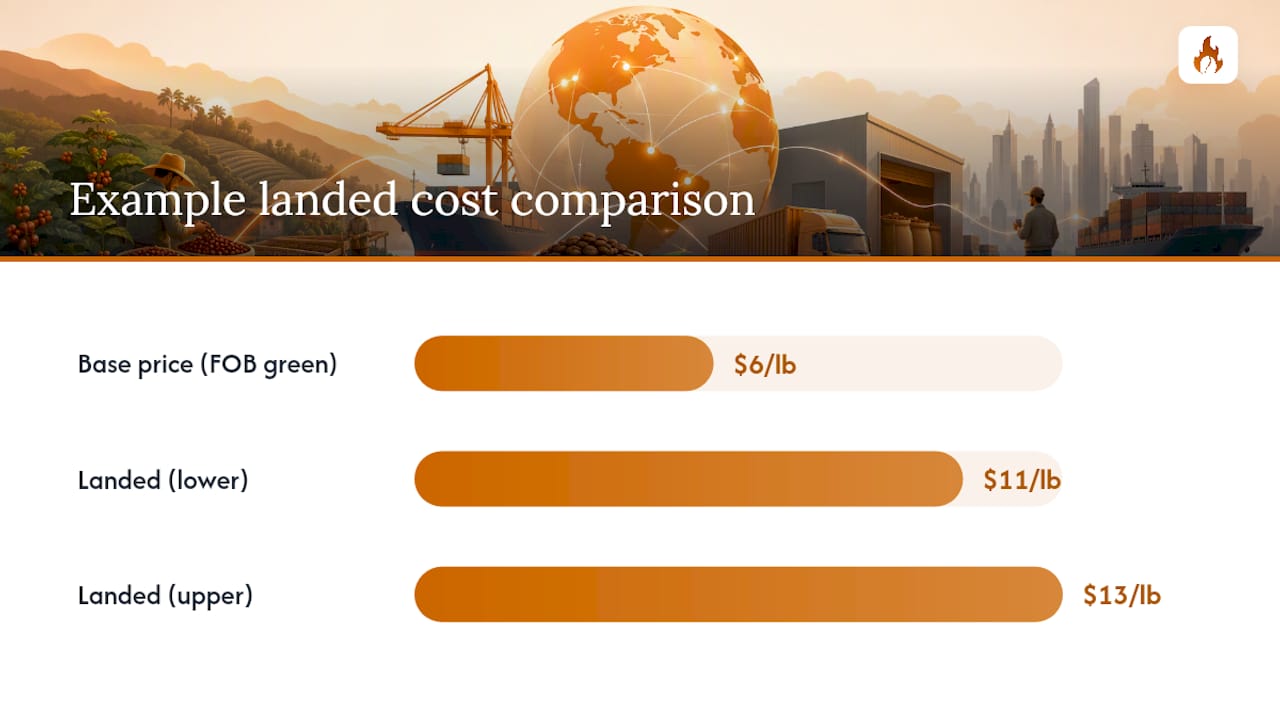
A $6/lb FOB green quote can easily land at $11 to $13/lb once roasted, packaged, and delivered.
Pro Tip: Before you sign anything, request the sample policy and shelf-life terms in writing. A supplier checklist covering these terms protects you from surprise costs after the first delivery.
Why Do Wholesale Coffee Prices Lag Behind the Market?
The commodity number you see in headlines and the invoice your roaster sends you rarely move together. Coffee futures trade on the ICE “C” market, and the ICO Composite Indicator Price averaged 287.29 US cents per pound in August 2026, with short-term swings driven by weather forecasts and inventory reports out of major growing regions.
Roasters, though, don’t pay that day’s price. Most are working through green coffee they contracted weeks or months earlier, so a spike or drop in the commodity market takes time to show up in your wholesale invoice.
A survey of 13 U.S. roasters found wholesale price increases in 2026 ranged from 0% to 40%, with a median around 15%, even though fully restoring pre-spike margins would have required increases of 75% to 100%.
That gap tells you something important: most roasters are absorbing part of the hit rather than passing it all through. If you’re locking in a multi-month contract, ask whether pricing is indexed to a commodity benchmark or fixed, and get that clause in writing.
How The Flaming Bean Structures Wholesale Coffee Programs
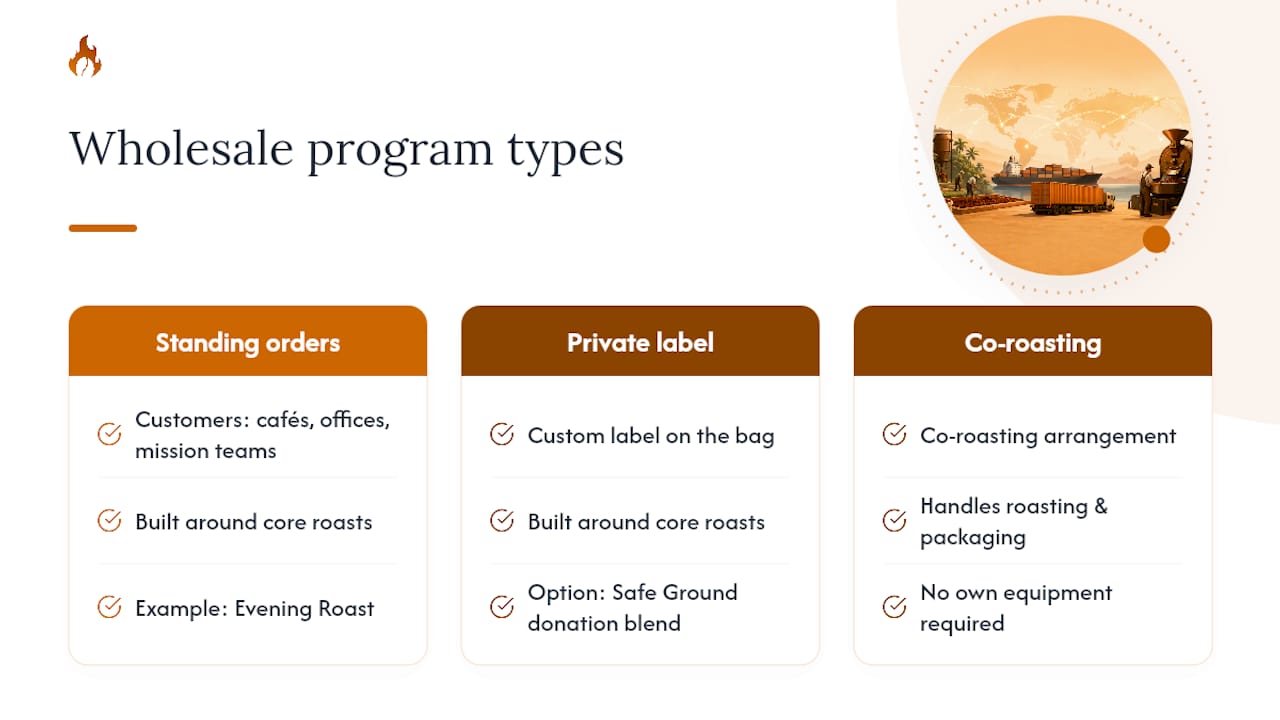
The Flaming Bean works with cafés, offices, and mission-driven teams through standing wholesale orders and private-label programs built around its core roasts, including the smooth, approachable Evening Roast. Buyers can also build a program around Safe Ground, a donation-linked blend that supports charitable causes. For brands wanting their own label on the bag, co-roasting arrangements handle the roasting and packaging end without requiring your own equipment.
What Buyers Should Prioritize When Prices Are Volatile
Accurate per-account pricing matters more than chasing the lowest quoted rate. Automate your reorder capture so pricing errors don’t quietly erode margin on repeat orders. Predictable supply and clear contract terms beat a marginally better unit price, and it’s usually smarter to absorb a small cost bump than to renegotiate every time the market twitches.
— Tony
Get a Wholesale Quote From The Flaming Bean
The Flaming Bean’s wholesale programs skip the guesswork that comes with commodity-indexed contracts and vague supplier terms. You get consistent roasts, transparent pricing built around your actual volume, and the option to add a mission-driven blend like Safe Ground to a standing order.
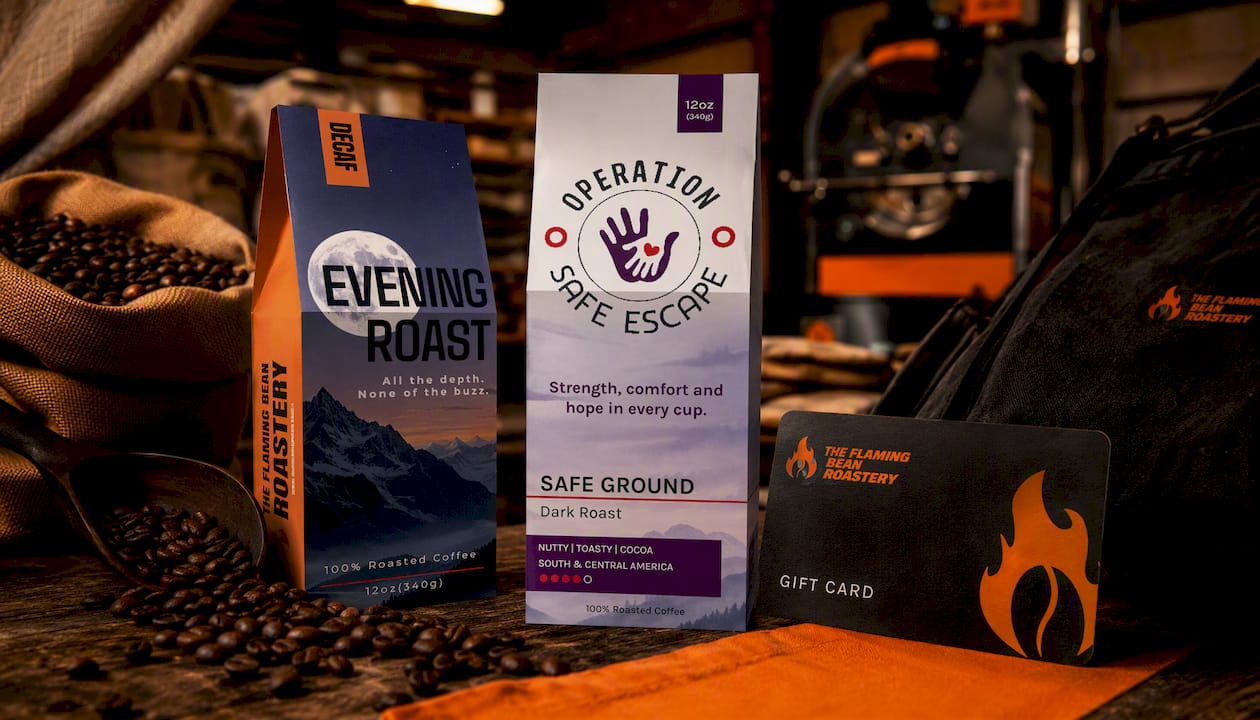
Requesting pricing is simple: reach out through The Flaming Bean with your expected monthly volume, preferred roast style, and any packaging needs (bulk bags, private label, or standard retail bags for resale). Want to sample before committing to a standing order? Start with a bag of Evening Roast or send a Flaming Bean Coffee Gift Card to your team while your wholesale quote comes together.
Sources
- Wholesale relationships are strained under increasing green-coffee costs — 13 roasters told us how they’re adapting
- ICO Coffee Market Report – August 2026
FAQ
How Much Does Wholesale Coffee Cost?
Roasted wholesale coffee generally runs $8 to $25 per pound, with specialty-grade arabica averaging around $12 per pound at typical volumes. The exact price depends on origin, cupping score, lot size, and whether freight and packaging are already included in the quote.
What Is the 15-15-15 Coffee Rule?
This isn’t a standardized industry pricing rule, and definitions vary depending on who you ask. If a supplier references it, ask them to define exactly what each “15” refers to before applying it to your own cost calculations.
What Is the Current Market Price of Coffee?
The ICO Composite Indicator Price averaged 287.29 US cents per pound in August 2026, reflecting the commodity benchmark rather than what any individual roaster charges. Your actual wholesale invoice will differ because roasters work through previously contracted green coffee before new market prices take effect.
Are Coffee Prices Rising or Falling?
Coffee prices have been volatile, with the ICO composite showing short-term rallies tied to weather and inventory signals rather than a steady direction. A Fresh Cup survey of U.S.
Does The Flaming Bean Offer Wholesale Pricing?
The Flaming Bean offers wholesale and private-label programs built around its core roasts, including core roasts, with pricing available on request based on your volume and packaging needs. Reach out through The Flaming Bean to get a quote tailored to your order size.
Comments