
Why Coffee Beans Are Oily: A Home Brewer's Guide

Coffee beans are naturally oily because they contain lipids that make up 10–15% of their weight, and the visible shine you see on dark roast beans is those lipids migrating to the surface during roasting. Not all beans look oily, but every bean holds oil inside its cell walls from the moment it’s harvested. Understanding why coffee beans are oily helps you read your beans better, brew smarter, and keep your equipment in good shape. The Flaming Bean roasts across a full spectrum of roast levels, so knowing what that sheen means gives you a real edge at home.
What is the chemical makeup of coffee bean oil?
Coffee bean lipids are mostly triglycerides, the same fat molecules found in cooking oils. These triglycerides are not just filler. Coffee oils carry volatile molecules that form the aroma and flavor compounds you smell when you open a fresh bag. Without those oils, coffee would taste flat and thin.
The full chemical picture of a green coffee bean breaks down roughly like this:
| Component | Approximate Share of Bean Weight |
|---|---|
| Carbohydrates | 60–70% |
| Proteins | 10–15% |
| Lipids (oils) | 10–15% |
| Other compounds | 5–10% |
The lipid fraction does several jobs at once. It acts as a carrier for aromatic compounds, regulates moisture inside the bean, and influences the texture you feel when you bite into a roasted bean. The key point is that oil is always present, in every roast level, in every origin. What changes is where that oil sits inside the bean and whether it reaches the surface.
Key roles of coffee bean lipids:
- Aroma carrier: Triglycerides bind to volatile aromatic compounds and release them during brewing.
- Moisture regulation: Oils slow the rate at which beans lose internal moisture after roasting.
- Texture influence: Higher lipid content produces a heavier mouthfeel in the cup.
- Flavor complexity: Lipid oxidation during roasting creates new flavor molecules that define roast character.
How does roasting affect the visibility of oil on coffee beans?
Roasting is the direct cause of surface oil on coffee beans. Heat drives off moisture from inside the bean, and as the bean dries out, its cell walls weaken and eventually fracture. That structural breakdown is what lets oil migrate outward.
The process happens in stages:
- Drying phase (up to about 300°F): The bean loses most of its free moisture. No visible oil appears yet.
- First crack (around 385–400°F): The bean expands rapidly. Cell walls crack internally. Oil begins moving but stays mostly inside the bean. Light roasts stop here and look dry on the surface.
- Development phase: The roaster controls how long the bean stays in this zone. Longer development means more cell wall breakdown and more oil movement.
- Second crack (around 435–450°F): Bean cell walls shatter at this stage, allowing oil to push through to the surface. Dark roasts and espresso roasts reach this point. The shiny surface you see is oil that has fully migrated out.
Roasting transforms bean cell structure, increasing porosity and enabling that outward oil migration. The oil was always there. Roasting simply reveals it.
Understanding how roasting shapes flavor also explains why a French roast looks like it was dipped in oil while a light Ethiopian natural looks completely dry. Both beans hold the same lipid fraction. The roast level determines how much of it you see.

Pro Tip: If your dark roast beans look completely dry and dull, that can actually signal they are old. Freshly roasted dark beans show a clear, even sheen within a day or two of roasting.
What does oil on coffee beans tell you about freshness?
Surface oil is not always a sign of quality. It can be a warning. Fresh light or medium roasts appear matte because their oils stay locked inside intact cell walls. If a light or medium roast bean looks oily, that sheen signals age, not richness.
Here is what the oil pattern actually tells you:
- Matte surface on a light roast: Normal and fresh. Oil is inside the bean where it belongs.
- Slight sheen on a dark roast: Normal. Oil has migrated to the surface during roasting.
- Heavy, wet-looking oil on a dark roast: The bean may be very fresh and still off-gassing, or it may be old and oxidizing.
- Oily surface on a light or medium roast: The bean has likely been sitting too long. Oxidation is underway.
A shiny surface on a light or medium roast bean is a visual signal that oxidation has started. Surface oils undergo chemical changes similar to rancidity, reducing flavor complexity and producing flat or stale-tasting coffee. Use those beans immediately or replace them.
Fresh dark roast beans can actually be less oily than stale medium roast beans that have sat on a shelf for months. Surface oil signals bean age as much as roast level. Checking the roast date on your bag is a far more reliable freshness indicator than looking at the surface sheen.
Oily beans are more oxygen-sensitive because exposed surface lipids react with air quickly. Once that oxidation starts, flavor degrades fast. The practical rule is simple: buy fresh, check the roast date, and use oily dark roasts within two to three weeks of opening the bag.
How do oily beans affect brewing and equipment?
Oily beans produce richer, bolder cups. The lipids contribute to body, crema in espresso, and the lingering aroma you notice after your first sip. That is the upside. The downside is what those oils do to your grinder and brewer over time.
All coffee contains oil internally, and grinding fractures cell walls and releases that oil regardless of roast level. Light roast grounds release oil too. You just see it less because the oil stays suspended in the grounds rather than coating the bean surface. Every brew involves oil extraction. That is not a problem. Neglecting the residue it leaves behind is.
Practical effects of coffee oil on brewing and equipment:
- Grinder burrs: Oily grounds coat grinder burrs and trap old coffee dust. That residue goes rancid and taints every fresh batch you grind.
- Portafilter and basket: Espresso equipment accumulates oil films that turn bitter if not cleaned daily.
- Drip brewer carafe: Oil residue on glass or thermal carafes adds a stale, flat note to fresh coffee.
- Flavor extraction: Fresh oils improve extraction. Rancid oil residue from old buildup ruins it.
Pro Tip: Run a dry brush through your grinder burrs weekly and use a grinder cleaning tablet monthly. This single habit improves cup quality more than most bean upgrades.
Keeping your coffee grinder clean is not optional if you want to taste what your beans actually offer. Oil buildup impairs flavor more than bean oiliness itself.
How to choose and store coffee beans based on oil content
Choosing the right roast starts with knowing what you want in the cup. Roast level and oil visibility are directly connected, and your storage habits determine how long that quality lasts.
Choosing by roast and oil level:
- Light roast: Dry surface, bright acidity, complex origin flavors. Best for pour-over and drip methods where clarity shines.
- Medium roast: Slightly more body, balanced flavor, still mostly matte. Works well in drip brewers and French press.
- Dark roast: Oily surface, bold and smoky flavor, lower acidity. Ideal for espresso and milk-based drinks where you want intensity.
Use the roast level guide to match your brewing method to the right bean before you buy.
Storage rules that actually matter:
| Storage Factor | Best Practice |
|---|---|
| Container | Airtight, opaque canister with a one-way valve |
| Location | Cool, dark pantry shelf away from heat sources |
| Temperature | Room temperature is fine; avoid the refrigerator |
| Timing | Use dark roasts within 2–3 weeks of opening |
| Freezing | Only freeze unopened, sealed bags for long-term storage |
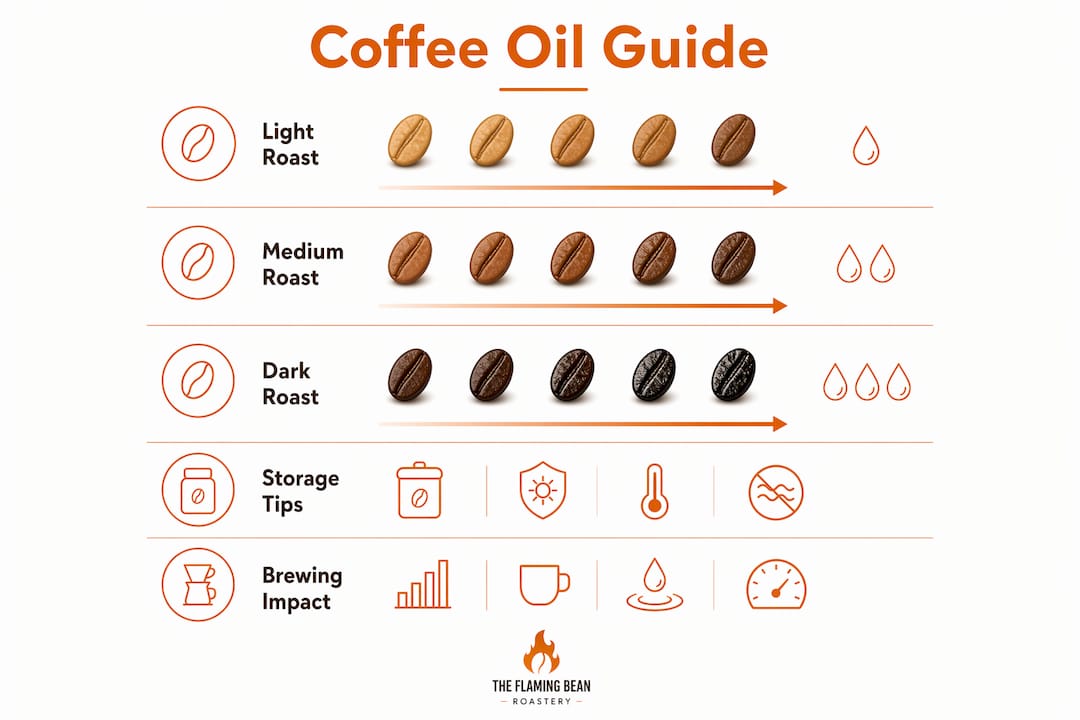
The refrigerator is a common mistake. Moisture and odors from other foods penetrate coffee bags and accelerate flavor loss. A sealed canister on a pantry shelf beats a bag in the fridge every time. Buy in smaller quantities more often rather than stockpiling. Fresh beans always outperform beans stored for months, no matter how good the container.
Key Takeaways
Coffee beans are oily because they naturally contain lipids, and roasting determines whether those oils stay inside the bean or migrate to the surface.
| Point | Details |
|---|---|
| Oil is always present | Every coffee bean contains 10–15% lipids by weight, regardless of roast level. |
| Roasting reveals surface oil | Dark roasts reach second crack, shattering cell walls and pushing oil to the surface. |
| Oil on light roasts signals age | A shiny light or medium roast bean has likely oxidized and will taste stale. |
| Grinding releases oil in all roasts | Light roast grounds release oil too; clean equipment is critical for every roast level. |
| Storage slows oxidation | Airtight, dark, room-temperature storage preserves oil quality and extends peak flavor. |
What I’ve learned from years of brewing oily beans
By Tony
Most home brewers fixate on the sheen of the bean and draw the wrong conclusions. A glossy dark roast looks premium, so people assume oilier means better. That is not always true. I have brewed beans that looked like they were coated in olive oil and tasted flat, and I have brewed completely matte light roasts that were some of the most complex cups I have ever had.
The sheen tells you about roast level and age. It does not tell you about quality. What actually matters is the roast date. A dark roast that was roasted four days ago and looks slightly oily will beat a dark roast that was roasted six weeks ago and looks identical. Buy from roasters who print the roast date clearly on the bag. That single habit changes everything.
The equipment cleaning piece is where most people lose the most flavor without realizing it. I went through a phase where I was buying excellent beans and wondering why my cups were inconsistent. The problem was my grinder. I cleaned it properly once and the difference was immediate. Rancid oil buildup is invisible but it is always there if you are not cleaning regularly.
My honest suggestion: do not chase the shiniest beans. Chase the freshest beans, match your roast to your brew method, and clean your grinder more than you think you need to. Those three habits will improve your coffee more than any single bean purchase.
— Tony
Fresh roasts, real flavor from The Flaming Bean
If you want to taste what coffee bean oil actually contributes to a great cup, start with beans roasted to order and shipped fresh.
The Flaming Bean’s Evening Roast is a great example of a dark roast done right. It carries that characteristic surface oil and delivers a bold, smooth cup without tipping into bitterness. For brewers who want to explore across roast levels, the signature blends collection covers everything from bright and matte light roasts to rich, oily dark roasts. Every bag ships with a clear roast date so you always know exactly what you are working with. Pair your beans with the right grinder and keep it clean, and you will taste the difference in every cup.
FAQ
Why are some coffee beans shiny and others are not?
Shiny beans have surface oil that migrated out during roasting. Dark roasts reach temperatures that shatter cell walls and push oil to the surface, while light roasts keep their oil locked inside intact cells.
Does oily mean fresher or better quality?
Not necessarily. A shiny surface on a dark roast is normal, but oil on a light or medium roast signals oxidation and age. Roast date is a more reliable quality indicator than surface appearance.
Can oily beans damage my grinder?
Oily grounds coat grinder burrs and trap old coffee residue that goes rancid over time. Regular cleaning with a brush and grinder cleaning tablets prevents buildup and protects flavor.
Do light roast beans have any oil in them?
Yes. All coffee beans contain oil internally. Light roast beans look dry because the oil stays inside the cell walls. Grinding fractures those walls and releases the oil into your grounds and your brew.
How long do oily dark roast beans stay fresh?
Use oily dark roast beans within two to three weeks of opening the bag. Surface oils oxidize quickly when exposed to air, and the flavor degrades noticeably after that window.
Recommended
- What Does Bold Coffee Mean? Flavor and Brewing Guide – The Flaming Bean Roastery
- Bold Coffee Blends: 9 Examples Worth Brewing – The Flaming Bean Roastery
- What Does Balance Mean in Coffee? A Flavor Guide – The Flaming Bean Roastery
- How to Choose the Right Coffee Roast for Your Cup – The Flaming Bean Roastery
Comments