
Why Coffee Roast Date Matters for Peak Flavor

The coffee roast date is the exact day beans are roasted and is the single most reliable measure of freshness. Unlike a best-by date, which tracks food safety and shelf rotation, the roast date tells you where the coffee sits in its flavor life cycle. Most specialty coffee reaches peak flavor between 5 and 21 days after roasting. Understanding why coffee roast date matters is the difference between a cup that sings and one that falls flat, no matter how good your brewing setup is.
How does coffee roast date affect flavor and aroma?
Roasting triggers a cascade of chemical reactions that do not stop the moment the beans cool down. Carbon dioxide (CO2) builds up inside the bean during roasting and slowly escapes over the following days. This process is called degassing, and it is central to understanding coffee freshness.
Too much CO2 in the bean causes problems at the brewing stage. Excess CO2 interferes with extraction, producing sour, uneven flavors that make even a high-quality bean taste off. Waiting just 2–3 days after roasting lets enough gas escape for a cleaner, more balanced cup. That is why coffee roasted this morning is not the best coffee you could drink today.
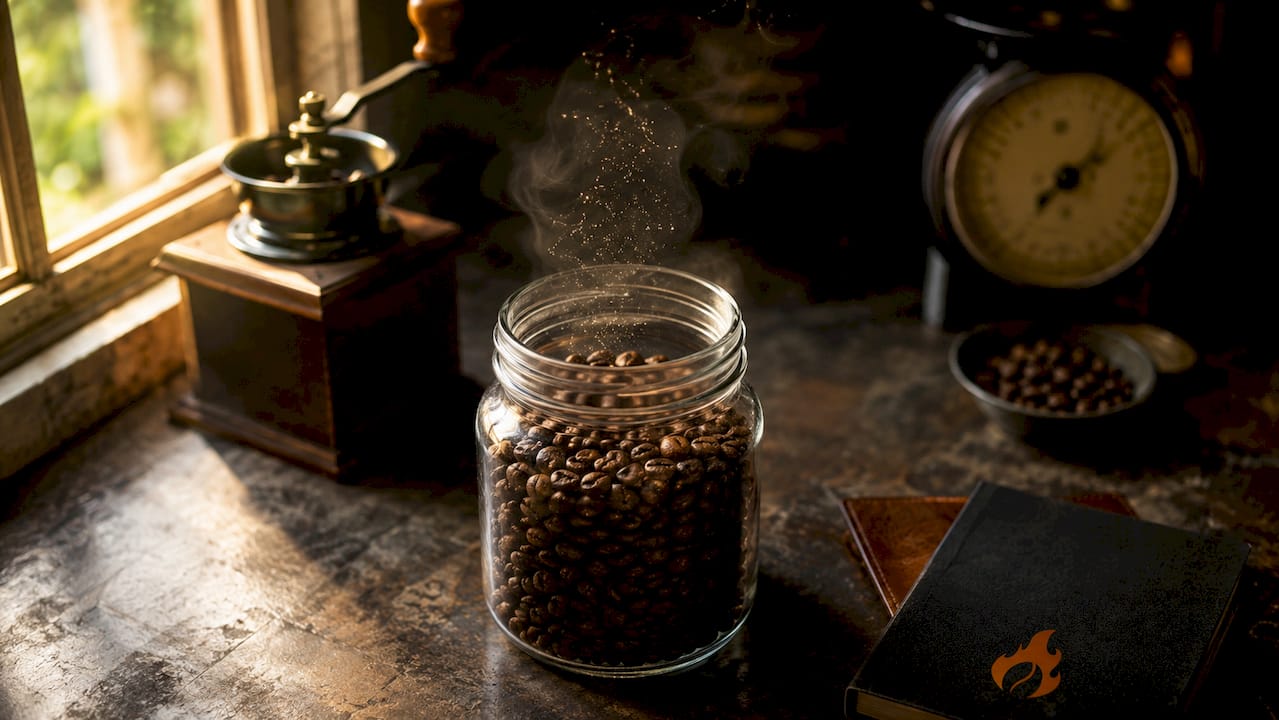
The flip side is equally real. Once degassing slows, oxidation takes over. 40 major aromatic compounds dissipate within 2–3 weeks at room temperature. That loss means the bright, complex notes you paid for in a specialty roast gradually flatten into something generic and stale.
Roast level also shifts the timeline. Light roasts tend to have a longer flavor peak because they retain more volatile aromatic compounds. Dark roasts degas faster and oxidize more quickly, so their optimal window is often shorter. Knowing your roast level and brewing style helps you time your purchase and consumption more accurately.
- Days 1–3 post-roast: Heavy CO2 off-gassing. Flavors taste sharp, sour, or hollow.
- Days 4–7 post-roast: CO2 stabilizes. Flavor opens up. Fruity, floral, and acidic notes become clear.
- Days 8–21 post-roast: Peak flavor window for most brew methods. Sweetness and body are at their best.
- Days 22 and beyond: Oxidation accelerates. Brightness fades. Nutty or cardboard notes appear.
Pro Tip: For espresso, wait at least 7–10 days after the roast date before pulling shots. Espresso is especially sensitive to CO2, and a bag roasted too recently will produce a thick, foamy crema that looks great but tastes sour and under-extracted.
Why best-by dates mislead you more than they help
A best-by date reflects when a product is safe to consume and when a retailer should rotate stock. It does not reflect when coffee tastes best. The roast date is the only reliable marker for brewing quality and chemical freshness.
Mass-market coffee often carries best-by dates set 12–18 months from packaging, while the actual roast date may be months before that. A bag stamped “best by december 2026” could have been roasted in january 2025. That coffee is technically safe to drink, but its flavor peak passed long ago.
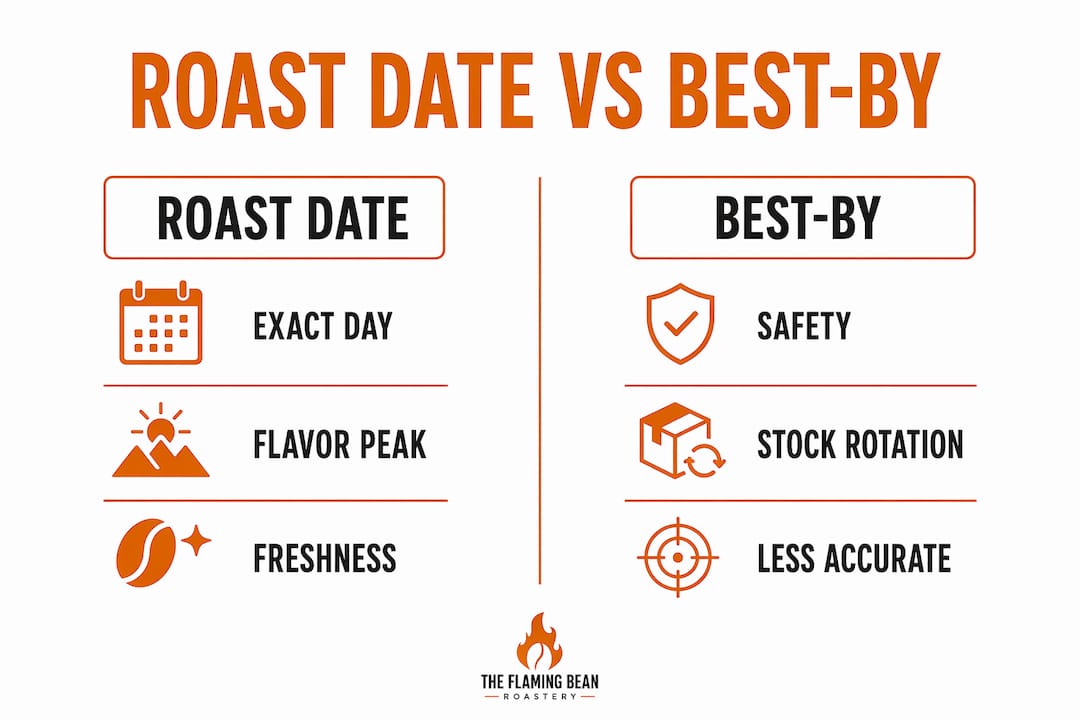
Specialty roasters operate differently. They print the roast date directly on the bag because they want you to know exactly where the coffee is in its flavor cycle. Some specialty roasters include a best enjoyed by date set about 60–90 days from the roast as a general guideline, not a hard deadline. That window is far more useful than a generic shelf-life stamp.
| Label | What it tells you | What it misses |
|---|---|---|
| Roast date | Exact day beans were roasted | Nothing. This is the full picture. |
| Best-by date | Safe consumption and stock rotation window | When flavor actually peaks or fades |
| Best enjoyed by | Roaster’s suggested flavor window | May still be set conservatively |
Pro Tip: When buying coffee, flip the bag and look for a roast date first. If you only see a best-by date with no roast date listed, the roaster is not giving you the information you need to brew at peak flavor.
How to use roast dates to get the most from every cup
Buying coffee with a visible roast date is step one. Using that date to guide your brewing habits is where the real difference shows up.
For filter coffee methods like pour-over or drip, the sweet spot is generally 7–21 days after the roast date. Filter brewing is forgiving enough to handle slightly fresher beans without the CO2 problems that plague espresso. For espresso roast timing, the window shifts later, with most baristas preferring 10–21 days post-roast for consistent extraction.
Storage matters just as much as timing. Once a bag is opened, peak aromatic intensity typically diminishes within about 7 days due to oxidation. An airtight container kept in a cool, dark place extends that window meaningfully. Avoid the freezer unless you are storing beans for more than a month and can seal them completely. Avoid the counter next to the stove. Heat and light are the fastest routes to a flat cup.
Here is a practical checklist for getting the most from your beans:
- Buy coffee roasted within the past 2–4 weeks whenever possible.
- Check the roast date before the price tag.
- Transfer beans to an airtight container immediately after opening.
- Store in a cool, dark cabinet away from heat sources.
- Grind only what you need right before brewing. Pre-ground coffee loses aroma within minutes.
- Plan your purchase so you finish the bag within 3–4 weeks of opening.
Pro Tip: Buying whole bean coffee and grinding fresh before each brew preserves aromatic compounds far longer than buying pre-ground. The grind surface area exposed to oxygen is dramatically larger in pre-ground coffee, which speeds up flavor loss.
Common myths about coffee freshness and roast dates
The biggest myth is that fresher always means better. Coffee roasted today is not ready to drink today. Excess CO2 in the first 48–72 hours post-roast causes extraction issues that produce sour, gassy flavors. Freshness has a starting line, not just a finish line.
The second myth is that freshness is simply a countdown clock. Coffee freshness is better defined by chemistry than by elapsed days alone. Sulfur compound ratios, specifically MeSH and DMDS, shift as coffee moves from a reactive post-roast state to a more stable aroma phase. Those chemical transitions determine flavor quality more accurately than any calendar date. Days are a useful shorthand, but they are not the whole story.
A third misconception is that coffee becomes undrinkable after its peak window. Flavor changes rather than abruptly spoils. A bag that is 30 days past roast is not ruined. It has simply moved into a different flavor profile, one that is less bright and more muted. Well-stored coffee can still be enjoyable well past the 21-day mark.
- Myth: Fresh-roasted coffee is always best. Reality: Coffee needs 2–3 days minimum to degas before it brews cleanly.
- Myth: Best-by dates signal freshness. Reality: Best-by dates reflect safety and shelf rotation, not flavor quality.
- Myth: Coffee goes bad after 3 weeks. Reality: Flavor fades gradually. Proper storage extends enjoyable drinking well beyond that window.
- Myth: Freezing ruins coffee. Reality: Freezing sealed, whole beans for long-term storage works well. The problem is repeated freeze-thaw cycles and moisture exposure.
Storage conditions affect perceived freshness as much as the roast date itself. A bag stored in a hot pantry next to the oven will taste stale far sooner than the same bag kept in a sealed container in a cool cabinet. The roast date sets the clock. Your storage habits determine how fast it runs.
Key Takeaways
The roast date is the only label that tells you where coffee actually sits in its flavor life cycle, and using it correctly is the fastest way to improve every cup you brew.
| Point | Details |
|---|---|
| Roast date defines freshness | The roast date is the only reliable indicator of flavor quality and chemical freshness. |
| Peak flavor window is 5–21 days | Most specialty coffee tastes best between 5 and 21 days after roasting, not immediately. |
| Best-by dates mislead drinkers | Mass-market best-by dates can be set 12–18 months out, long after peak flavor has passed. |
| Storage extends your window | Airtight, cool, dark storage slows oxidation and keeps beans flavorful longer after opening. |
| Grind fresh, buy whole bean | Grinding right before brewing preserves aromatic compounds that pre-ground coffee loses quickly. |
Why I think most coffee drinkers are leaving flavor on the table
I have tasted the same bean at day 4, day 12, and day 28 post-roast. The differences are not subtle. At day 4, the cup is sharp and a little hollow. At day 12, it is alive. At day 28, it is still good, but the brightness is gone. Most drinkers never experience that day 12 version because they buy coffee without knowing when it was roasted.
The roast date is not a specialty coffee nerd detail. It is the most basic piece of information a roaster can give you, and the fact that many brands still hide it behind vague best-by stamps tells you something about their priorities. Roasters who print the roast date on every bag are making a commitment. They are saying: we roasted this recently, and we want you to drink it at its best.
The Flaming Bean operates that way. Every roast is designed to be experienced at peak flavor, and that means giving you the information to actually do that. I have seen too many coffee lovers blame their grinder or their water when the real issue was a bag that was already 3 months past its roast date before it even hit the shelf.
My advice: treat the roast date the way you treat the date on fresh produce. You would not buy strawberries without knowing how old they are. Your coffee deserves the same attention. Experiment with brewing the same bag at different points in the freshness window. You will quickly find your personal sweet spot, and you will never go back to buying blind.
— Tony
Fresh coffee, real roast dates, from The Flaming Bean
The Flaming Bean roasts every batch with flavor timing in mind. Each product ships with a clear roast date so you know exactly where your coffee sits in its peak window.
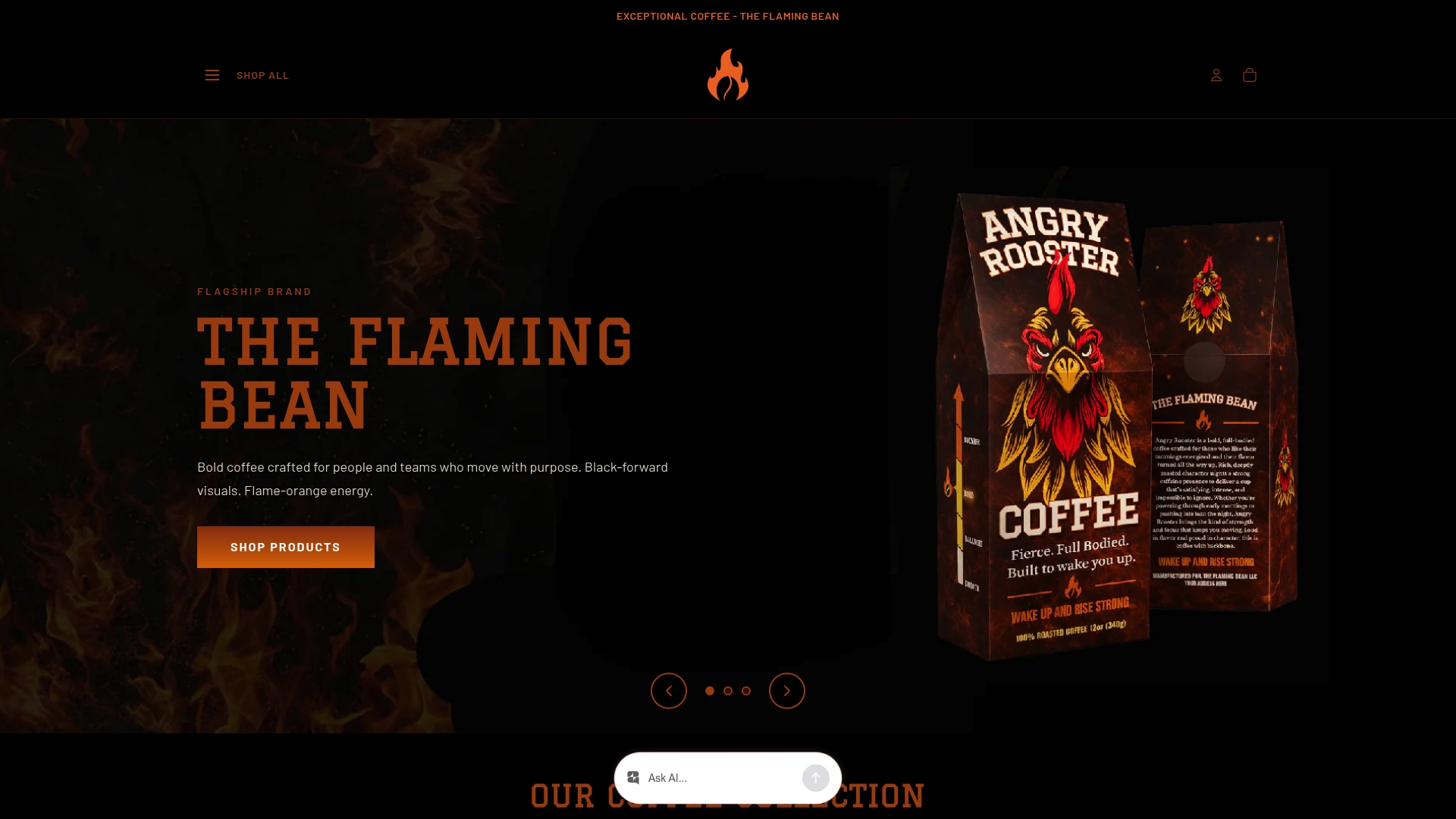
The Evening Roast is a great starting point if you want to experience what a well-timed, freshly roasted coffee actually tastes like. Smooth, approachable, and crafted for the moments when you want a cup that delivers without the guesswork. The Flaming Bean’s signature blends cover the full range from bold morning fuel to relaxed evening sipping, all roasted to order and dated for transparency. When you know your roast date, every cup becomes intentional.
FAQ
What is a coffee roast date?
A coffee roast date is the exact day the beans were roasted. It is the most accurate indicator of freshness and flavor quality, unlike best-by dates which reflect shelf life for safety purposes.
When is coffee at its best after roasting?
Most specialty coffee reaches peak flavor between 5 and 21 days after the roast date. Espresso benefits from waiting closer to 10 days, while filter methods can work well from day 7 onward.
Why does fresh-roasted coffee sometimes taste bad?
Coffee roasted within the past 48–72 hours contains excess CO2 that interferes with extraction. This produces sour, uneven flavors. Waiting a few days allows enough gas to escape for a clean, balanced brew.
How long does coffee stay fresh after opening?
Once opened, peak aromatic intensity typically diminishes within about 7 days due to oxidation. Storing beans in an airtight container in a cool, dark place helps extend that window.
Is a best-by date the same as a roast date?
No. A best-by date reflects food safety and stock rotation timelines. Mass-market coffee often carries best-by dates set 12–18 months from packaging, while the actual roast date may be months earlier. Always look for the roast date when buying coffee.
Recommended
- How to Choose the Right Coffee Roast for Your Cup – The Flaming Bean Roastery
- How Roasting Shapes Coffee Flavor Development – The Flaming Bean Roastery
- Coffee Roast Levels Explained: Your Flavor Guide – The Flaming Bean Roastery
- What Is Espresso Roast? Flavor, Brew & Buying Tips – The Flaming Bean Roastery
Comments