
Why Gyms Sell Branded Coffee: Performance, Profit, and Community

Gyms sell branded coffee because it combines an evidence-backed performance product, strong profit margins, and a community experience that keeps members coming back. Sports-nutrition research puts optimal pre-exercise caffeine at 3–6 mg per kilogram of bodyweight, taken about 60 minutes before training. That translates to several cups of brewed coffee for most adults, making a gym’s coffee bar a genuinely useful stop before a workout, not just a convenience. On the business side, venues that treat coffee as a core offering have reported meaningful lifts in member spend and retention. The Flaming Bean’s purpose-driven blends, including Safe Ground, give gym partners a product with a story members actually want to share.
Table of Contents
- Why gyms and studios sell coffee: the quick picture
- How branded coffee improves a gym’s bottom line
- What the science says about coffee and fitness performance
- How gyms actually serve branded coffee: operational models compared
- How coffee builds community and keeps members longer
- What to ask a roaster before you sign anything
- Key Takeaways
- What success actually looks like in a gym coffee partnership
- The Flaming Bean is ready to help your gym get started
- Useful sources
Why gyms and studios sell coffee: the quick picture
- Revenue diversification. Coffee adds a profitable revenue stream that does not require expanding square footage or hiring specialized staff.
- Performance alignment. The ISSN recommends 2–4 cups of coffee roughly 60 minutes before exercise for ergogenic benefits, making it a natural fit for a pre-workout menu.
- Member retention and longer visits. A coffee bar gives members a reason to arrive early and linger after class, extending visit duration and social connection.
- Brand alignment. Co-branded or white-label coffee signals that a gym cares about quality across every touchpoint, not just equipment.
- Low operational footprint. A staffed bar or self-serve kiosk adds revenue without the overhead of a full retail lease.
How branded coffee improves a gym’s bottom line
Coffee is one of the highest-margin consumables a gym can sell. A bag of specialty whole-bean coffee that costs a roaster $6–$8 to produce retails comfortably at $18–$22 on a gym floor. Espresso drinks carry similar logic: a double shot with milk costs roughly $0.60–$0.90 in ingredients and sells for $4–$6 at the counter. That gross margin profile beats most supplement and snack categories.
Revenue does not stop at the cup. Gyms can layer in retail bag sales, event tastings, subscription bundles, and cross-sells with protein snacks or recovery bars. Case reporting from Sydney fitness venues shows that gyms treating coffee as a core offering have seen revenue and retention gains worth paying attention to, with examples such as a 27% improvement in member retention, a 38% increase in revenue, and a 34% higher spend on wellness add-ons in some venues.
| Revenue stream | Typical price point | Estimated gross margin |
|---|---|---|
| Espresso drink (on-site) | $4–$6 | — |
| Retail whole-bean bag | $18–$22 | — |
| Branded subscription (monthly) | $18–$22 | — |
| Event tasting / pop-up | $4–$6/person | — |
Partnership models shape the cost structure significantly. A flat-fee wholesale arrangement gives the gym predictable costs and full control over pricing. A profit-share model aligns the roaster’s incentives with the gym’s traffic, since the roaster earns more when the gym promotes the offering well.
Pro Tip: If your membership skews toward high-frequency visitors (4+ sessions per week), a profit-share arrangement usually outperforms flat-fee wholesale because volume is reliable. Smaller or newer studios with variable traffic often do better locking in a flat wholesale rate until they know their numbers.
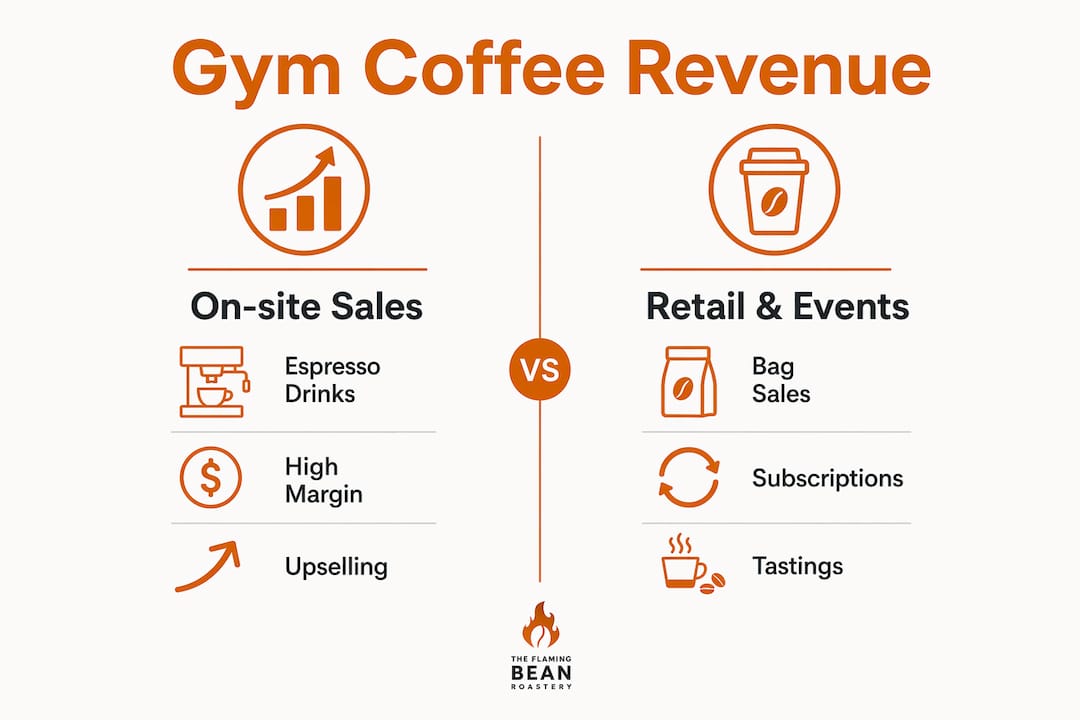
The benefits of custom-branded coffee extend beyond the margin on each cup. Members who buy a bag of the gym’s own coffee take the brand home, reinforcing loyalty every morning.
What the science says about coffee and fitness performance
“The International Society of Sports Nutrition concludes that coffee can improve performance across a range of exercise types, with an effective dose of caffeine per kilogram of bodyweight consumed roughly 60 minutes before activity.” — ISSN Position Stand
That dosing guidance translates practically for gym members:
| Body weight | Caffeine target (3–6 mg/kg) | Approximate brewed coffee |
|---|---|---|
| 60 kg | 180–360 mg | 2–4 cups (8 oz each) |
| 70 kg | 210–420 mg | 2–4 cups (8 oz each) |
| 80 kg | 240–480 mg | 3–6 cups (8 oz each) |
Coffee is not simply a caffeine delivery vehicle. Its matrix of chlorogenic acids, diterpenes, and polyphenols can influence glucose metabolism and antioxidant status in ways isolated caffeine supplements do not replicate. Research also shows that coffee and isolated caffeine are not interchangeable: coffee tends to be better tolerated by many users, though individual responses vary more. Post-workout, pairing coffee with carbohydrates may support glycogen resynthesis, giving recovery menus a solid scientific basis.
Safety notes for gym operators: Pregnant members, people on certain medications (particularly MAOIs or blood-pressure drugs), and those with high caffeine sensitivity should limit intake. A simple menu label noting caffeine content per serving and a brief staff recommendation checklist covers most liability concerns and builds trust with health-conscious members.
How gyms actually serve branded coffee: operational models compared
The right model depends almost entirely on membership size and staff capacity.
- Staffed café or bar. Best for clubs with 2,000+ members or boutique studios with strong community culture. Requires a commercial espresso machine, grinder, refrigerated unit, and at least one trained barista. Highest revenue ceiling, highest labor cost.
- Bar-cart or embedded bar. A semi-staffed station positioned on the path from the locker room to the lobby. Captures impulse orders without a full café buildout. Works well for mid-size gyms (500–2,000 members).
- Self-serve kiosk or bean-to-cup machine. Minimal staffing, consistent output, lower capital outlay. Ideal for corporate wellness centers or 24-hour facilities. Limits customization but removes labor dependency.
- Retail bag only. The lowest-friction entry point. Stock branded whole-bean bags at the front desk or in a display case. No equipment investment, though per-visit revenue is lower.
A specialty coffee bar embedded inside a fitness studio, like the Attention Coffee model inside a Portland fitness space, shows how a captive, health-aligned audience can sustain a full café operation without the overhead of a standalone retail location.
| Model | Capital outlay | Labor need | Best for |
|---|---|---|---|
| Staffed café | High | High | Large clubs, boutique studios |
| Bar-cart / embedded bar | Medium | Medium | Mid-size gyms |
| Self-serve kiosk | Low–Medium | Minimal | Corporate wellness, 24-hr gyms |
| Retail bags only | Very low | None | Any size, entry-level launch |
Sourcing options follow the same spectrum. White-label roast-to-order lets the gym put its own name on the bag. Co-branded packaging with a specialty roaster adds credibility. Carrying a roaster’s retail bags is the fastest path to launch. The Flaming Bean’s wholesale program covers all three approaches.
How coffee builds community and keeps members longer
Coffee turns a transactional gym visit into something people actually look forward to. The “third space” concept, a place that is neither home nor work, is exactly what a well-placed coffee bar creates inside a fitness facility. Members finish a class, grab a cup, and stay to talk. That social accountability is one of the strongest predictors of long-term membership retention.
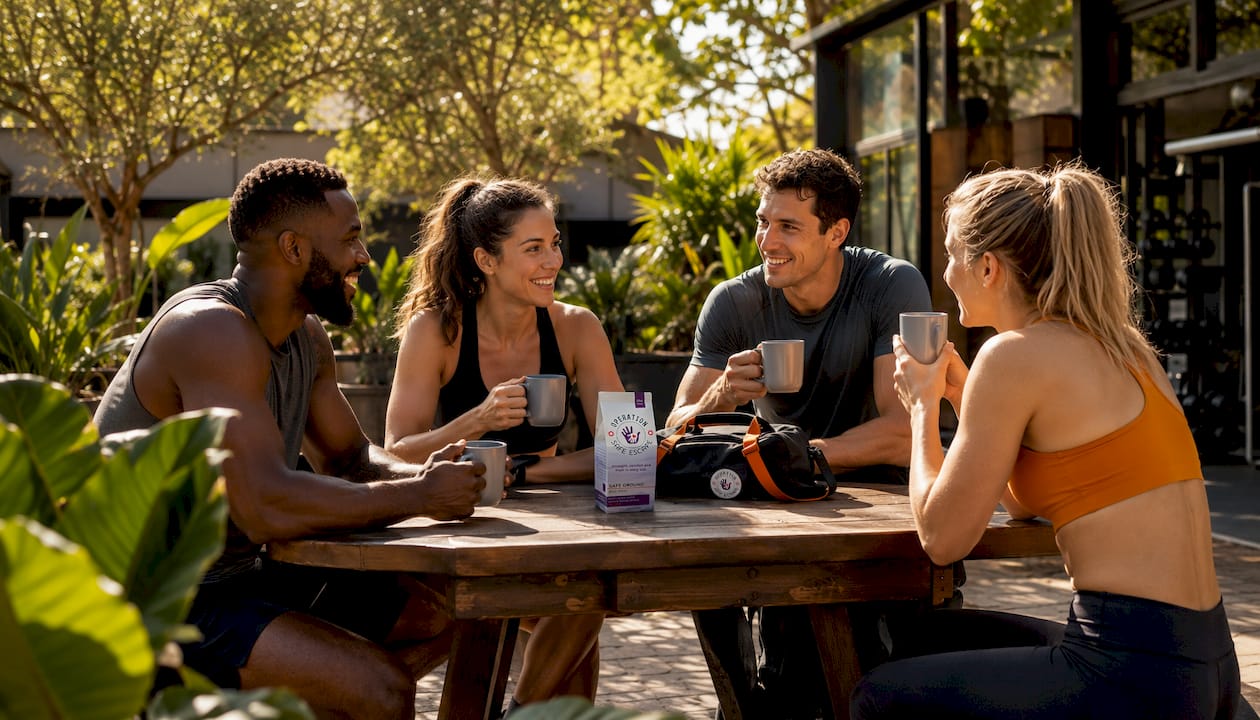
Programming amplifies the effect. Recovery pop-ups pairing coffee with a mobility session, meet-the-roaster nights, or tasting events tied to a nutrition workshop give members experiences they cannot get from a home gym or a streaming app. Storytelling about coffee origin, farmer partnerships, or a cause-driven blend like Safe Ground gives members something to connect with beyond the caffeine.
Pro Tip: Position menu items that align with fitness goals: protein add-ons, lower-sugar options, and carb-paired recovery drinks. Members who see the menu as an extension of their training plan spend more per visit and recommend the gym to others.
Coffee brings people together in a way that a supplement shelf simply cannot. A gym that understands this uses its coffee program as a marketing channel, not just a revenue line. Loyalty programs built around coffee purchases, including reward promotions designed for venue-based coffee retail, can increase repeat visits and average spend per member.
What to ask a roaster before you sign anything
Choosing the wrong coffee partner costs more than a bad cup. Here are the questions every gym should ask and the red flags to watch for.
Core questions:
- What are your wholesale minimums and pricing tiers?
- Can you roast to order, and what is your lead time?
- Do you offer co-branding or white-label packaging?
- What staff training and menu development support do you provide?
- Can we get samples before committing?
Red flags:
- Vague sourcing claims with no origin information
- No training support for gym staff
- No POS or inventory integration guidance
- Promises of specific revenue outcomes without data
Operational commitments to clarify:
- Delivery cadence and minimum order frequency
- Packaging customization options and lead times
- Food-safety compliance and labeling practices
- Insurance and liability coverage for on-site service
Contract considerations: Ask for a trial period before exclusivity kicks in. Clarify profit-share terms, equipment financing options, and termination clauses. A roaster confident in their product will offer a trial. Understanding what co-branding means for coffee brands before you negotiate saves time and protects both parties.
Key Takeaways
Gyms that treat branded coffee as a core offering, not an afterthought, gain a high-margin revenue stream, stronger member retention, and a community anchor that no piece of equipment can replicate.
| Point | Details |
|---|---|
| Performance evidence is solid | ISSN recommends 3–6 mg of caffeine per kilogram of bodyweight, or roughly 2–4 cups of brewed coffee about an hour before exercise, for ergogenic benefits. |
| Margins are strong across models | Espresso drinks and retail coffee bags typically offer high gross margins exceeding many supplement categories. |
| Community effect drives retention | Coffee bars extend visit duration and create social accountability, directly supporting long-term membership retention. |
| Not every gym is ready | Retail-bag-only entry works for small or new facilities; a full staffed café requires consistent 2,000+ member traffic to justify labor costs. |
| The Flaming Bean as a partner | The Flaming Bean offers wholesale, white-label, and purpose-driven blends like Safe Ground for gyms ready to launch a branded coffee program. |
What success actually looks like in a gym coffee partnership
Most gym operators expect a coffee program to pay for itself in 90 days. The ones that succeed usually do it in 60, but not because the coffee is exceptional on day one. They succeed because they put the service in the right place, trained at least one staff member to talk about it confidently, and tied it to something members already cared about.
The Flaming Bean’s purpose-driven positioning, including blends like Safe Ground that support organizations protecting vulnerable communities, gives gym partners a story worth telling. Members who buy a bag because they believe in what it supports become advocates, not just customers. That is a different kind of retention than a loyalty punch card.
The realistic warning: underinvesting in training is the most common failure point. A beautiful espresso machine sitting behind a counter with no one who knows how to use it, or explain why the coffee matters, is a missed opportunity every single day.
The Flaming Bean is ready to help your gym get started
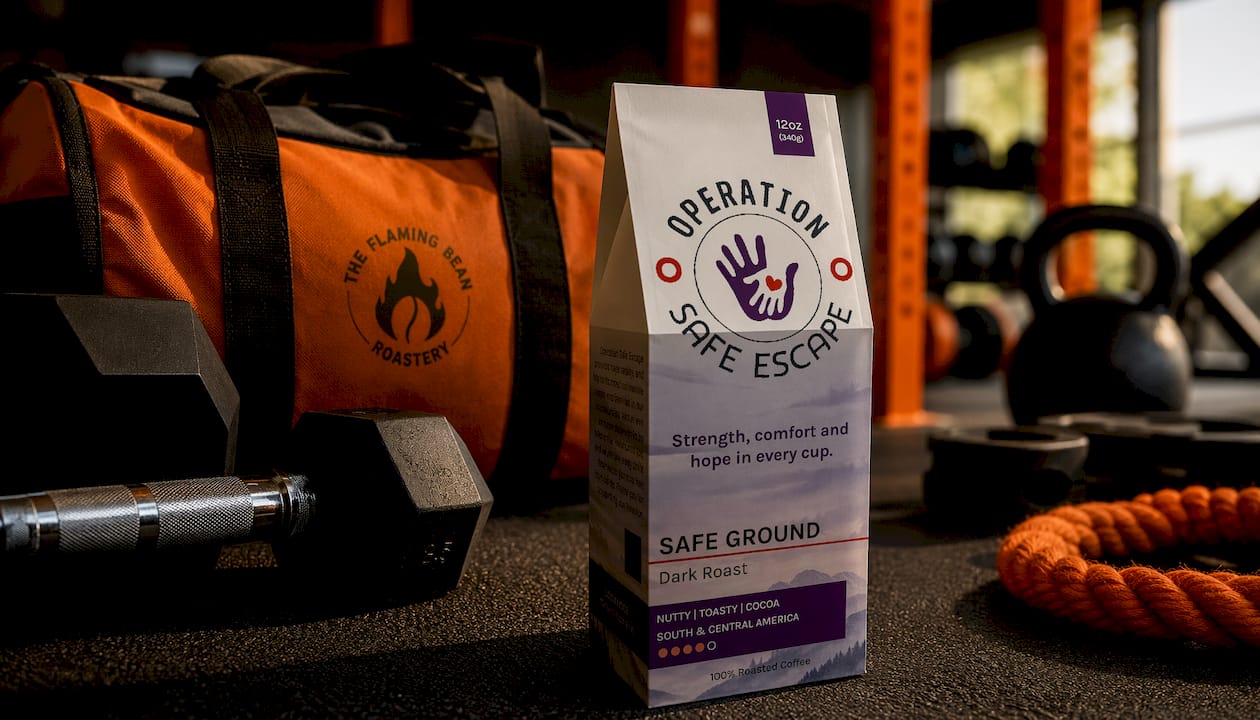
We work with gyms, studios, and wellness spaces that want a coffee program worth talking about. The Flaming Bean offers custom roasting and labeling, flexible wholesale terms, staff training, menu development, and launch support, so you are not figuring it out alone. Our purpose-driven blends, including Safe Ground, give your members a reason to buy beyond the caffeine. Whether you are starting with a retail bag display or building out a full bar, we have a path that fits your space and your budget. Reach out to The Flaming Bean today to request wholesale pricing and a sample pack for your team.
Useful sources
- Caffeine and exercise performance (PMC7777221) — Sports-nutrition review on optimal pre-exercise caffeine dosing (3–6 mg/kg).
- ISSN Position Stand: coffee and sports performance — Primary authority on coffee’s ergogenic benefits and dosing guidance.
- Coffee vs. isolated caffeine as ergogenic aids (MDPI) — Narrative review on tolerability and matrix effects.
- Coffee bioactives and metabolism (MDPI Nutrients) — Covers chlorogenic acids, diterpenes, and metabolic effects.
- Coffee and glycogen resynthesis post-exercise — Emerging research on coffee paired with carbohydrates for recovery.
- Sydney fitness cafes revenue boost (Coffee On Cue) — Real-world case data on revenue and retention outcomes.
- Attention Coffee Portland fitness partnership (Coffee Glee) — Embedded café model analysis.
- The Flaming Bean wholesale program — Wholesale terms, co-branding, and launch support for gym partners.
- Safe Ground blend, The Flaming Bean — Purpose-driven coffee supporting community safety organizations.
Comments