
Why Some Coffee Tastes Chocolatey: A Flavor Guide

Chocolatey flavor in coffee is defined by a group of natural chemical compounds formed during roasting, not by any added flavoring or artificial ingredient. Understanding why some coffee tastes chocolatey comes down to three interlocking factors: bean genetics and origin, processing method, and roast chemistry. The Maillard reaction and caramelization are the two core processes that produce cocoa and chocolate sensations in the cup. These reactions transform amino acids and sugars already present in the raw bean into chocolate and cocoa compounds that your palate reads as rich, sweet, or bittersweet. Origin, fermentation, and brewing then shape how those compounds express themselves.
Why some coffee tastes chocolatey: origin and variety
The chocolatey character in a cup often starts in the ground, not the roaster. Certain coffee varieties and growing regions carry a natural predisposition toward chocolate notes because of their genetics and terroir.
Bean genetics and terroir influence the flavor precursors that form chocolate notes after roasting. That means the compounds responsible for chocolate taste are already present in the raw cherry before heat is ever applied. Roasting simply unlocks them.
Here is what shapes those precursors at origin:
- Variety. Bourbon and Typica are two of the most widely cited chocolatey coffee varieties. Both tend toward lower acidity and higher natural sugar content, which translates directly into chocolate and caramel notes after roasting.
- Altitude. Higher altitudes slow bean development, concentrating sugars and producing a denser bean. That density supports deeper, more complex flavor development during roasting, including chocolate undertones.
- Soil and climate. Volcanic soils rich in minerals feed the plant compounds that become flavor precursors. Consistent temperatures and adequate rainfall allow sugars to accumulate steadily in the cherry.
- Regional examples. Brazil produces some of the most recognized chocolatey coffees in the world, with low acidity and a naturally nutty, milk chocolate character. Guatemala, particularly from the Antigua region, delivers a darker, bittersweet chocolate profile supported by volcanic soil and high altitude.
You can read more about how growing regions shape what ends up in your cup in this coffee origins flavor guide from The Flaming Bean.
How does processing method affect chocolate notes in coffee?
Processing is the step between harvesting the cherry and delivering the green bean to the roaster. It has a direct impact on the sugars and amino acids available for roasting chemistry.
Drying and fermentation techniques preserve or enhance the sugars that convert into chocolate compounds during roasting. The method a producer chooses can amplify or suppress the chocolatey potential already present in the bean.
- Natural (dry) processing. The whole cherry dries intact around the bean for several weeks. This extended contact allows fruit sugars to absorb into the bean, producing a sweeter, fuller body with pronounced chocolate and fruit notes.
- Washed processing. The fruit is removed before drying, which strips away much of the fruit sugar. Washed coffees tend to be cleaner and brighter, with chocolate notes that are more restrained and often paired with higher acidity.
- Honey processing. A middle path where some fruit mucilage remains on the bean during drying. The result sits between natural and washed: moderate sweetness with a soft chocolate body.
- Fermentation length. Longer anaerobic fermentation can increase chocolatey flavor precursors by allowing more complex sugar and amino acid development. Producers who control fermentation carefully can dial in specific flavor outcomes, including deeper cocoa tones.
- Drying speed. Slow, even drying preserves more sugars for the roaster to work with. Beans dried too quickly can lose volatile compounds that contribute to sweetness and chocolate complexity.
The practical takeaway: if you want a coffee with rich chocolate notes, look for naturally processed or honey processed beans from Brazil or Guatemala. The label on the bag often tells you exactly what you need to know.
How does roasting develop chocolatey flavors in coffee?
Roasting is where chocolate flavor is made. The raw bean carries the potential; the roaster’s skill determines whether that potential becomes milk chocolate sweetness or dark chocolate bitterness.
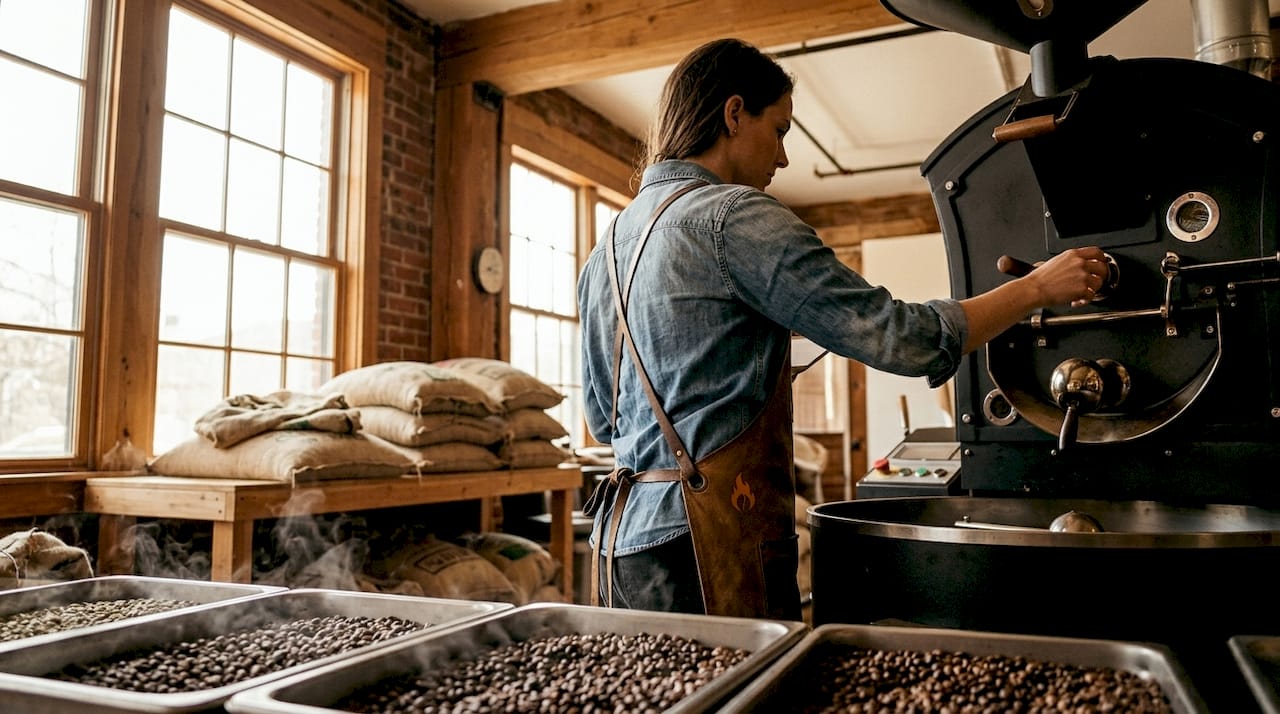
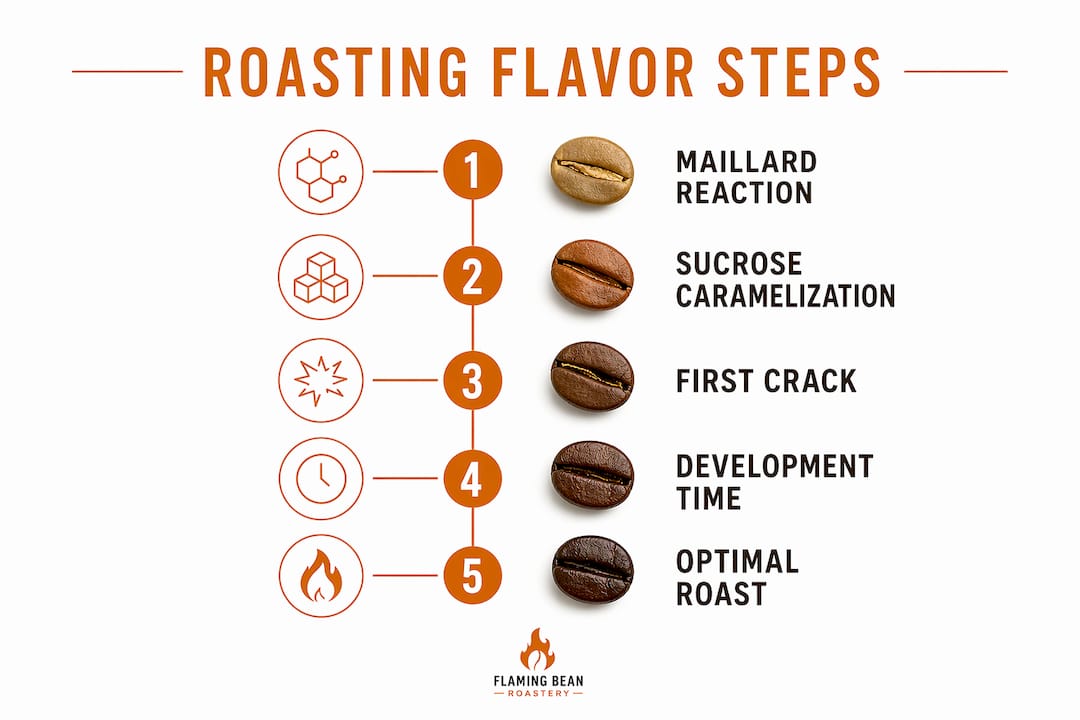
Two chemical reactions drive this transformation. The Maillard reaction and sucrose caramelization work together to generate chocolate complexity and sweetness. The Maillard reaction occurs between amino acids and reducing sugars under heat, producing hundreds of flavor compounds including pyrazines, which deliver earthy, roasted, and cocoa-powder aromas. Caramelization breaks down sucrose into simpler sugars that register as sweet, toasted, and caramel-like.
Roast level and chocolate character
The roast level you choose shifts the type of chocolate note in the cup.
- Light roast. Chocolate notes are minimal. The bean’s natural acidity and fruit character dominate. You may detect faint cocoa hints, but they are secondary.
- Medium roast. This is the sweet spot for milk chocolate flavor. Medium roasts favor milk chocolate sweetness because enough Maillard compounds have formed without the bitterness of a darker roast taking over. Sweetness is high, body is syrupy, and acidity is balanced.
- Medium-dark roast. Bittersweet and dark chocolate notes emerge. The roast pushes deeper into caramelization territory, adding a slight roasty edge that mimics 70% dark chocolate.
- Dark roast. Bitter dark chocolate and cocoa powder aromas dominate. Acidity drops significantly. The body is heavy, and the finish is long and slightly tannic.
Development time after first crack
The period between first crack and the end of the roast is called development time. A longer development time at medium roast produces a fuller, sweeter chocolate note. A shorter development time can leave the bean underdeveloped, producing woody or grain-like flavors instead of chocolate. Underdeveloped roasting is one of the most common reasons a coffee that should taste chocolatey ends up tasting flat or papery.
Overroasting carries the opposite risk. Push too far past the ideal window and the chocolate compounds burn off, leaving acrid, ashy flavors that mask everything you worked to develop.
Pro Tip: When buying whole beans, ask the roaster for the development time ratio. A ratio of 20–25% of total roast time typically produces the most balanced chocolate expression in medium roasts.
The Flaming Bean’s approach to roasting and flavor development covers this in detail if you want to go deeper on the chemistry.
How does brewing method affect chocolatey coffee flavor?
Even a perfectly roasted, chocolatey bean can taste flat or sharp depending on how you brew it. Extraction variables affect the balance of acids, sugars, and oils responsible for chocolatey taste expressions.
- Espresso. High pressure and a fine grind extract oils and sugars quickly and intensely. Espresso concentrates chocolate notes into a dense, syrupy shot. This is why espresso often reads as dark chocolate or cocoa.
- French press. Full immersion brewing and a metal filter allow oils to pass through into the cup. Those oils carry a lot of the chocolatey body and mouthfeel. French press is one of the best methods for highlighting rich, milk chocolate character.
- Pour-over. A paper filter removes most of the oils, producing a cleaner, brighter cup. Chocolate notes are present but lighter. Pour-over tends to emphasize acidity and fruit, which can push chocolate to the background.
- Drip. Similar to pour-over in extraction style. Chocolate notes register as mild and smooth rather than rich and heavy.
- Grind size. A coarser grind underextracts, which can make chocolate notes taste thin or sour. A finer grind overextracts, which can make them taste bitter and harsh. Medium grind for drip and coarse for French press are reliable starting points.
Acidity also shapes how you perceive chocolate in the cup. High acidity can mask chocolate or push the flavor toward fruity-dark hybrids. Lower acidity lets sweetness and chocolate come forward cleanly.
How to tell chocolate notes apart from other coffee flavors
Coffee tasting notes like “chocolatey,” “caramel,” “nutty,” and “fruity” can blur together, especially for newer tasters. Knowing what to look for makes identification much easier.
Chocolate notes vary from sweet milk chocolate to bitter dark chocolate and dry cocoa powder aromas, differentiated by acidity, sweetness, and mouthfeel. Here is a quick reference:
| Flavor note | Aroma | Taste | Mouthfeel |
|---|---|---|---|
| Milk chocolate | Sweet, creamy | Smooth, sweet | Syrupy, round |
| Dark chocolate | Roasty, slightly bitter | Bittersweet, tannic | Full, drying |
| Cocoa powder | Dry, earthy | Astringent, dry | Thin, chalky |
| Caramel | Sweet, buttery | Rich, sugary | Thick, coating |
| Nutty | Toasted, warm | Mild, savory | Medium, dry |
The key difference between chocolate and caramel is the finish. Caramel fades sweet and clean. Chocolate lingers with a slight bitterness or dryness. Nutty notes are drier and more savory than either.
Pro Tip: Smell the coffee before you taste it. Cocoa powder aroma is dry and slightly dusty. Milk chocolate aroma is sweet and creamy. Your nose will often identify the type of chocolate note before your tongue does.
For a deeper look at how sweetness and acidity interact in the cup, The Flaming Bean’s guide on coffee flavor balance is worth reading.
Key Takeaways
Chocolatey coffee flavor results from natural roasting chemistry, bean genetics, and processing choices working together, not from any added ingredient.
| Point | Details |
|---|---|
| Origin drives potential | Bourbon and Typica varieties from Brazil and Guatemala carry the highest natural chocolate precursors. |
| Processing shapes sweetness | Natural and honey processed beans preserve more sugars, amplifying chocolate notes after roasting. |
| Roast level sets the type | Medium roasts produce milk chocolate; dark roasts shift toward bitter dark chocolate and cocoa powder. |
| Brewing controls expression | French press and espresso highlight chocolate body; pour-over and drip emphasize brightness over chocolate. |
| Acidity is the modifier | Lower acidity lets chocolate sweetness come forward; high acidity pushes flavor toward fruity or sharp. |
What I’ve learned about chasing the perfect chocolate cup
Identifying chocolate notes in coffee sounds simple until you sit down with a flight of five different roasts and realize your palate keeps second-guessing itself. I’ve been there. The honest truth is that chocolate flavor in coffee is not a single thing. It shifts constantly based on temperature, grind, water quality, and even how long the bag has been open.
The biggest mistake I see coffee enthusiasts make is chasing roast level as the only variable. They go dark because they associate dark roast with chocolate, and then they wonder why the cup tastes bitter and flat instead of rich and sweet. The reality is that a well-developed medium roast from a naturally processed Brazilian Bourbon will out-chocolate a dark roast from a washed Ethiopian bean every single time. Bean selection and processing matter more than most people realize.
My advice is to start with origin. Find a Brazilian or Guatemalan bean, ask for a natural or honey process, and request a medium roast. Brew it in a French press. That combination stacks every variable in favor of chocolate. Once you have a reference point for what genuine milk chocolate coffee tastes like, you can start adjusting one variable at a time and train your palate from there. Sensory memory is everything in coffee tasting, and you build it through repetition, not theory.
— Tony
Rich chocolate coffee from The Flaming Bean
If you want to taste what a well-crafted chocolatey roast actually delivers, The Flaming Bean’s Evening Roast is a great place to start. It is roasted to highlight rich, smooth chocolate notes with a balanced sweetness that makes it approachable any time of day.
The Flaming Bean selects beans with the origin, processing, and roast profile needed to bring genuine chocolate character to the cup. Every batch is roasted with the kind of attention to development time and temperature that separates a truly chocolatey coffee from one that just claims to be. If you are ready to taste the difference, the Evening Roast is waiting.
FAQ
Why does coffee taste chocolatey without any chocolate added?
Coffee produces chocolate-like compounds naturally during roasting through the Maillard reaction and caramelization. These reactions transform amino acids and sugars in the bean into pyrazines and furans that your palate reads as cocoa and chocolate.
What coffee varieties taste most chocolatey?
Bourbon and Typica varieties, particularly from Brazil and Guatemala, are known for their naturally chocolatey profiles. Their lower acidity and higher sugar content produce strong chocolate notes after roasting.
Does roast level change the type of chocolate flavor?
Medium roasts produce milk chocolate sweetness with a syrupy mouthfeel, while dark roasts shift toward bitter dark chocolate and dry cocoa powder aromas. The roast level is the primary dial for controlling which type of chocolate note dominates.
Which brewing method brings out the most chocolate flavor?
French press and espresso highlight chocolate notes most effectively because they preserve oils and extract sugars intensely. Pour-over and drip methods produce cleaner cups where chocolate is present but less prominent.
Is chocolatey coffee the same as flavored coffee?
No. Chocolatey coffee gets its flavor from natural roasting chemistry, not from added syrups or flavoring agents. A coffee labeled “chocolatey” in tasting notes describes a naturally occurring flavor profile, not an ingredient.
Recommended
- Types of Coffee Bean Origins: A Flavor Guide – The Flaming Bean Roastery
- Coffee Flavor Wheel Explained: Your Complete Tasting Guide – The Flaming Bean Roastery
- Coffee Roast Levels Explained: Your Flavor Guide – The Flaming Bean Roastery
- What Is a Coffee Blend? Your Complete Flavor Guide – The Flaming Bean Roastery
Comments